

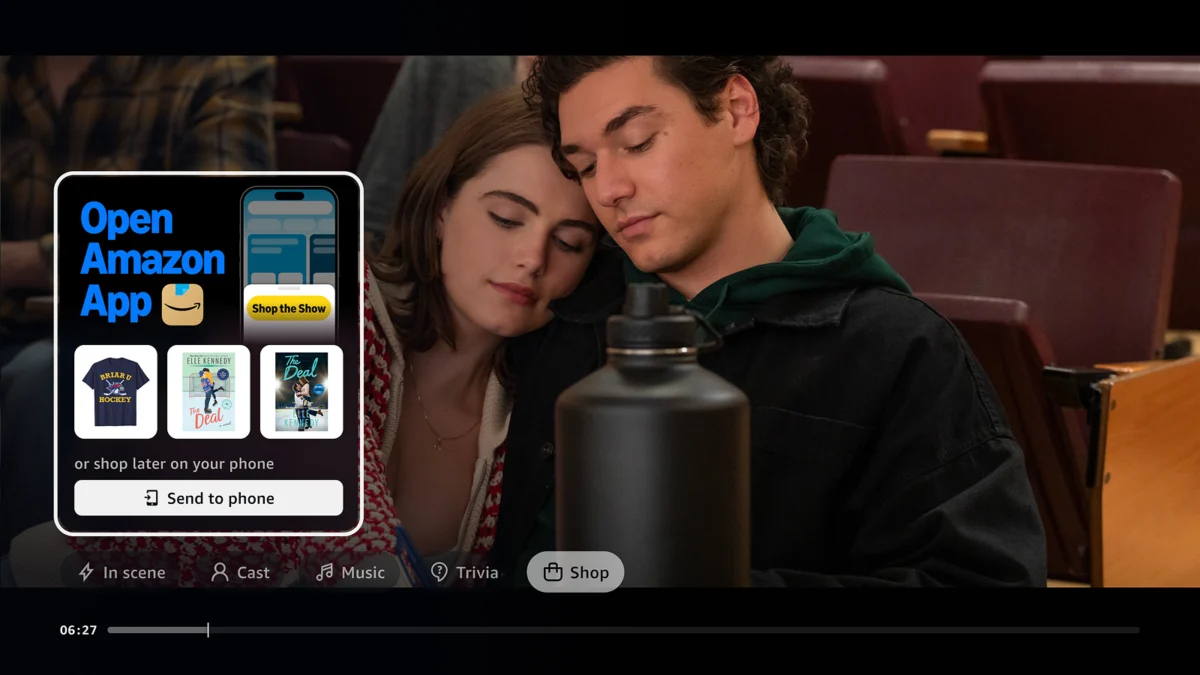
Amazon announced on Thursday a significant expansion of its shoppable TV capabilities within Prime Video, integrating new features directly into its existing X-Ray experience and introducing a novel "Shop the Scene" functionality powered by Amazon Lens technology. These updates mark a strategic evolution in the retail giant’s efforts to seamlessly blend entertainment with e-commerce, transforming the passive viewing experience into an interactive shopping journey across thousands of Prime Video titles. The move is set to make product discovery more prominent and accessible for viewers, following last year’s introduction of "Shop the Show," which required a more manual engagement.
Key Features Unveiled: A Deeper Dive into Seamless Shopping
The core of Amazon’s latest initiative lies in two primary enhancements: a direct "Shop" tab within the Prime Video X-Ray interface and the innovative "Shop the Scene" feature. The X-Ray experience, long lauded for providing real-time information about actors, characters, and soundtracks, will now serve as a direct portal to product discovery. When viewers pause a video and access X-Ray—typically by pressing up on a Fire TV remote—they will encounter a new "Shop" tab. This tab will showcase a curated selection of products directly related to what is on screen, ranging from a character’s outfit and accessories to home decor items, gadgets, or even thematic merchandise inspired by the show’s universe.
To facilitate a purchase, users will be prompted to open the Amazon Shopping app on their mobile device. Critically, this mobile app has been engineered to recognize the specific Prime Video title currently being watched and, in many cases, even the exact moment in the content. This synchronization immediately drops the user into a dedicated feed within the app, tailored to that specific scene or episode, where they can browse and purchase the displayed products with minimal friction. This integrated approach aims to reduce the barrier between interest and acquisition, leveraging the existing X-Ray user habit for informational lookup into a shopping opportunity.
The "Shop the Scene" feature represents an even more advanced application of technology, leveraging Amazon’s visual search capability, Amazon Lens. Available on iOS and Android within the Amazon Shopping app, "Shop the Scene" allows viewers to tap on an image of a character or a specific item within a frame. Amazon Lens then employs sophisticated artificial intelligence and machine learning algorithms to identify and present similar or exact products. While it acknowledges that high-end designer items or custom-made costumes might not have direct Amazon stock, the technology is designed to provide "inspired by" alternatives, guiding users to products that help them achieve a similar aesthetic or style. This feature currently supports over 600 titles in the U.S., offering a broad canvas for visual product discovery.
Beyond these direct integrations, Amazon has also significantly refined its second-screen shopping experience. The previous "Shop the Show" feature, launched last year, required users to manually type "shop the show" into the Amazon Search app to access product listings related to a given title. This step, while functional, added a layer of friction. The updated second-screen experience eliminates this requirement. Now, simply opening the Amazon Shopping app while a movie, show, or live sports event is playing on Prime Video will automatically direct the user to a dedicated storefront for that specific title. This streamlined access makes product exploration intuitive and reduces the cognitive load on the viewer, ensuring a more fluid transition from content consumption to retail engagement. The number of titles supported by this enhanced "Shop the Show" feature has expanded dramatically from 1,300 to more than 8,000 in the U.S., encompassing Prime Originals, a selection of licensed favorites, and live sports events, demonstrating Amazon’s commitment to broad implementation.
The Evolution of Shoppable Entertainment: Amazon’s Strategic Imperative
Amazon’s latest push into shoppable TV is not an isolated development but rather a significant acceleration of a long-term strategic vision to intertwine its vast retail ecosystem with its entertainment offerings. The company’s journey in this domain began with the establishment of Prime Video as a key differentiator for its Prime subscription service, offering a wealth of content alongside expedited shipping and other benefits. The initial X-Ray feature, powered by Amazon’s IMDb subsidiary, was a testament to the company’s understanding of viewer engagement—providing contextual information without interrupting the viewing flow.
The "Shop the Show" initiative, launched in the preceding year, represented Amazon’s first explicit foray into direct, on-demand shopping tied to specific content. While a pioneering step, its reliance on a manual search query highlighted the initial experimental nature and the need for greater integration. The current enhancements directly address these limitations, making product recommendations more pervasive and the purchasing pathway more intuitive. This evolution underscores Amazon’s continuous effort to leverage its technological prowess, particularly in AI and visual search, to reduce friction in the consumer journey and maximize the monetization potential of its diverse platforms.
The Broader Landscape: A Competitive Arena for Shoppable Content

Amazon’s intensified focus on shoppable TV places it squarely within a burgeoning competitive landscape, where major streaming platforms and tech companies are vying for a share of the burgeoning video commerce market. This trend reflects a broader industry shift towards blurring the lines between entertainment, advertising, and direct retail.
- YouTube: A pioneer in content monetization, YouTube has long offered creators "merch shelves" to sell products directly linked to their channels. Since 2021, it has also introduced shoppable connected TV ads, allowing viewers to engage with advertisements and make purchases directly through their smart TVs, leveraging the platform’s massive user base and extensive advertising infrastructure.
- Peacock: NBCUniversal’s streaming service, Peacock, entered the arena in 2023 with its "Must ShopTV" feature. This innovation enables viewers to purchase products that have appeared within its content, creating a direct link between on-screen items and transactional opportunities.
- Roku: As a leading streaming device platform, Roku has also embraced shoppable TV. It offers integrations, notably with Shopify merchants, allowing users to browse and purchase products using their TV remote. This platform-agnostic approach capitalizes on Roku’s wide reach across various streaming services.
- Disney: A powerhouse in merchandising, Disney has been actively experimenting with shoppable TV. This includes exclusive merchandise shops for subscribers and the integration of shoppable streaming ads across its platforms like Disney+, Hulu, and ESPN. Disney’s approach often leverages its iconic characters and intellectual property to drive direct-to-consumer sales.
These developments across the industry signify a collective recognition of the immense potential in converting viewer interest into immediate commercial action. The convergence of entertainment and commerce is becoming a standard expectation rather than a niche feature, driving platforms to innovate rapidly in this space.
Technological Underpinnings: The AI and Data Behind the Experience
The seamless integration of shopping into Prime Video is heavily reliant on Amazon’s sophisticated technological infrastructure, particularly in artificial intelligence, machine learning, and data analytics.
- X-Ray: At its core, X-Ray relies on metadata from IMDb (which Amazon owns) and advanced content analysis. By expanding X-Ray to include a "Shop" tab, Amazon is leveraging its existing framework for contextual information delivery and extending it to include product metadata. This requires robust cataloging of items seen in thousands of films and shows and linking them to Amazon’s vast product inventory.
- Amazon Lens: This visual search technology is a critical component of "Shop the Scene." Amazon Lens employs deep learning models trained on billions of images to recognize objects, patterns, and styles within a given frame. When a user taps on an item, Lens rapidly analyzes its visual attributes (color, shape, texture, material) and cross-references them with Amazon’s product database to find exact matches or visually similar alternatives. This technology is a prime example of how AI is bridging the gap between the visual world of entertainment and the transactional world of e-commerce.
- Data Synchronization and Personalization: The ability of the Amazon Shopping app to instantly recognize what’s playing on Prime Video and synchronize to the exact moment is a testament to sophisticated data sharing and real-time processing capabilities between Amazon’s various services. Furthermore, Amazon’s extensive user data, including past purchases and viewing habits, will likely be leveraged to personalize product recommendations, making the shoppable experience even more relevant and effective for individual users.
Strategic Rationale and Economic Implications
Amazon’s intensified focus on shoppable TV is driven by several key strategic and economic imperatives:
- Revenue Diversification: While Prime Video primarily serves as a subscriber retention tool for the broader Prime ecosystem, shoppable TV opens new direct revenue streams beyond subscriptions and traditional advertising. These include affiliate commissions from third-party sellers whose products are featured, direct sales of Amazon’s own brands or licensed merchandise, and potentially new advertising models where brands pay for prominent placement within shoppable content.
- Enhanced Customer Engagement and Ecosystem Lock-in: By making shopping an integral part of the viewing experience, Amazon aims to increase the time users spend within its ecosystem. The seamless transition from entertainment to retail reinforces the value proposition of Prime and encourages greater utilization of Amazon’s services, strengthening customer loyalty and reducing churn.
- Dominance in Retail Media Networks: Amazon is a leader in retail media, leveraging its first-party shopper data to offer highly targeted advertising solutions to brands. Shoppable TV extends this capability into a new, immersive format, providing brands with unprecedented opportunities to connect with consumers at moments of high engagement and inspiration. The global retail media market is experiencing rapid growth, projected to exceed $100 billion in the coming years, and Amazon is positioning itself to capture a significant share of this expansion.
- Capitalizing on E-commerce Growth: The global e-commerce market continues its robust expansion, with Statista projecting revenues to surpass $6.3 trillion in 2024. Within this, video commerce, or "v-commerce," is an accelerating trend, particularly among younger demographics. Amazon’s move is a direct response to this shift, aiming to integrate its retail dominance with the explosive growth of streaming and video consumption. With Prime Video boasting over 200 million global subscribers, the potential reach for shoppable content is immense.
- Driving Impulse Purchases: By shortening the path from discovery to purchase, shoppable TV is designed to capitalize on impulse buying. When a viewer is captivated by an item on screen, the immediate availability of that product or a similar one dramatically increases the likelihood of a spontaneous purchase.
Challenges and Considerations for the Future
While the potential benefits are substantial, Amazon’s foray into advanced shoppable TV also presents several challenges and considerations:
- User Experience and Intrusiveness: The primary challenge lies in balancing convenience with potential intrusiveness. While some viewers may welcome the direct shopping links, others might find overt commercialization distracting or disruptive to their entertainment experience. Amazon will need to fine-tune the presentation to ensure it enhances rather than detracts from content consumption.
- Content Integrity and Artistic Vision: There is a delicate balance between monetizing content and preserving its artistic integrity. Content creators and filmmakers may express concerns if commercial interests begin to dictate creative choices or if the viewing experience becomes overly commodified.
- Brand Fit and Authenticity: For shoppable content to be effective, product recommendations must feel authentic and naturally integrated into the narrative. Forced or irrelevant product placements could alienate viewers and dilute the perceived value of the feature.
- Privacy Concerns: The integration of viewing data with shopping habits raises questions about data privacy and how Amazon will use this combined information for personalized recommendations and advertising. Transparent data practices will be crucial for maintaining user trust.
- Logistical Complexity: Managing product links for thousands of titles, including variations in inventory, pricing, and affiliate relationships, represents a significant logistical undertaking. Ensuring accuracy and availability across such a vast catalog will be an ongoing challenge.
The Future of Content and Commerce: A Converging Landscape
Amazon’s latest initiatives signal a clear trajectory towards a future where the lines between entertainment, advertising, and retail are increasingly blurred. The company, with its unparalleled ecosystem spanning cloud computing (AWS), e-commerce, logistics, and digital media, is uniquely positioned to lead this convergence. The advancements in shoppable TV are not merely about selling more products; they represent a fundamental shift in how consumers will interact with content and how brands will engage with audiences.
As AI and machine learning continue to evolve, the personalization of shoppable experiences will become even more sophisticated, anticipating viewer desires and offering highly relevant products at precisely the right moment. This evolution promises to unlock new business models for content creators, provide richer monetization opportunities for platforms, and offer unprecedented convenience for consumers. The move by Amazon, alongside its industry peers, solidifies the notion that the future of television is not just about watching; it’s about experiencing, discovering, and, ultimately, shopping.
