

TOKYO — SoftBank Group’s ambitious 1 trillion yen ($6.4 billion) bond offering, specifically targeting retail investors, will feature a coupon rate of 4.75%. This marks the highest yield for the technology investment giant’s straight bonds in 17 years, signaling a strategic move to tap into a broad investor base amidst evolving market conditions. The issuance is also noteworthy for its sheer scale, tying with NTT Finance’s previous record for the largest offering by a Japanese company aimed at individual investors.

The decision to offer such a substantial amount to retail investors underscores SoftBank’s evolving capital-raising strategies and its keenness to diversify its funding sources. Historically, major corporate bond issuances in Japan have leaned heavily towards institutional investors. However, this move by SoftBank suggests a deliberate effort to broaden its appeal and secure significant capital from a more accessible market segment. The 4.75% coupon rate, while attractive in the current low-interest-rate environment, also reflects the elevated cost of borrowing for SoftBank, a company that has seen its fortunes fluctuate with the volatile tech market.
A Strategic Pivot in Funding
The sheer magnitude of SoftBank’s retail bond offering – 1 trillion yen – is unprecedented for a company of its stature in this specific segment. This figure is significant not only for SoftBank but also for the Japanese capital markets, as it sets a new benchmark for retail-focused corporate debt. The previous record holder, NTT Finance, also achieved the 1 trillion yen mark with its retail bond issuance, highlighting a growing trend among major Japanese corporations to leverage the vast savings of individual investors.

This strategy allows companies to reduce reliance on traditional bank loans and institutional bond markets, which can sometimes be more sensitive to market volatility and require more stringent covenants. For retail investors, it offers a compelling opportunity to invest in a globally recognized technology conglomerate, albeit with the inherent risks associated with such an investment.
Historical Context and Market Dynamics
SoftBank’s foray into such a large retail bond offering is not a spontaneous event but rather a calculated response to a confluence of factors. The company, under the leadership of Chairman and CEO Masayoshi Son, has navigated a period of significant investment and divestment, particularly through its Vision Fund. While the Vision Fund has been instrumental in backing numerous tech startups globally, its performance has been subject to market fluctuations, impacting SoftBank’s overall financial standing.

In recent years, SoftBank has been actively deleveraging and seeking to strengthen its balance sheet. This bond issuance can be viewed as part of that broader strategy, providing substantial liquidity that can be used for debt repayment, strategic investments, or to weather potential economic downturns. The elevated coupon rate of 4.75% is a testament to the current cost of capital. For comparison, the Bank of Japan has maintained an ultra-loose monetary policy for years, but rising inflation concerns and potential shifts in global interest rate landscapes are likely influencing the pricing of corporate debt. A 4.75% coupon for a straight bond from a company like SoftBank, while high by historical Japanese standards, may be considered competitive given the risk profile and the prevailing economic outlook.
The last time SoftBank issued straight bonds with a comparable coupon rate was approximately 17 years ago, placing this offering in a unique historical context. This suggests a significant shift in borrowing costs for the company, reflecting both macroeconomic trends and SoftBank’s specific financial situation.

Timeline of the Offering
While specific details of the offering’s timeline are not fully elaborated in the initial announcement, the process typically involves several key stages:
- Announcement and Regulatory Filings: SoftBank would have first announced its intention to issue bonds and filed the necessary documentation with the relevant Japanese financial regulators. This process likely began several weeks or months prior to the public offering.
- Roadshows and Investor Briefings: To gauge investor interest and determine the final coupon rate, SoftBank would have conducted presentations and meetings with potential investors. For a retail-focused offering of this scale, this would involve extensive marketing efforts aimed at financial institutions that distribute to individual investors, as well as direct communication channels.
- Pricing and Allocation: Based on investor demand, the coupon rate was set at 4.75%. The period for retail investors to subscribe to the bonds would then have been opened.
- Issuance and Listing: Upon successful subscription, the bonds would be issued and listed on the Tokyo Stock Exchange, allowing for secondary market trading.
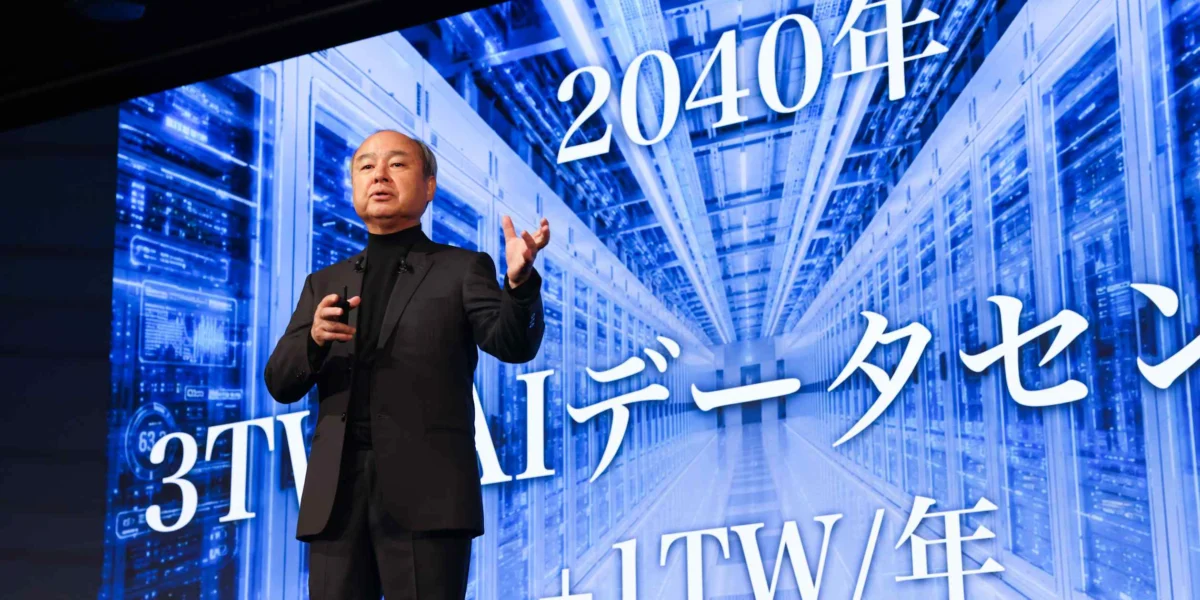
The image accompanying the announcement, showing Chairman and CEO Masayoshi Son speaking in Tokyo on August 14, suggests that the decision-making and public relations surrounding this significant financial move were actively underway around that time. The date of the article, September 5, 2026, indicates that the offering is either imminent or has recently been launched, with the coupon rate now publicly confirmed.

Supporting Data and Market Impact
The 1 trillion yen issuance is substantial. To put this into perspective:
- Global Tech Valuations: The value of the offering is equivalent to the market capitalization of several mid-sized publicly traded technology companies.
- Japanese Household Savings: Japan is known for its high household savings rate. A significant portion of this capital is held in low-yield savings accounts, making a 4.75% coupon bond from a prominent company like SoftBank an attractive alternative for diversifying portfolios.
- Comparison with Other Issuers: The tie with NTT Finance’s record highlights a broader trend. Other major Japanese corporations may follow suit if SoftBank’s offering proves successful, potentially increasing the supply of retail-accessible corporate debt in the market.
The implications of this offering are multifaceted:

- For SoftBank: It provides a significant injection of capital without diluting existing equity. It also strengthens SoftBank’s financial flexibility, allowing it to pursue its strategic objectives more confidently. The high coupon rate, however, represents a sustained cost that will need to be managed through profitable investments and operations.
- For Retail Investors: It offers a relatively high-yield investment opportunity in a market that has historically been characterized by low returns. However, investors must be aware of the risks associated with corporate bonds, including interest rate risk, credit risk (the risk that SoftBank might default), and liquidity risk.
- For the Japanese Capital Markets: This issuance pushes the boundaries of retail bond offerings, potentially democratizing access to corporate financing for a wider range of investors and encouraging greater participation in the capital markets. It could also lead to increased competition among issuers for retail investor capital.
Reactions and Future Outlook
While direct quotes from related parties are not yet available, one can infer potential reactions and expectations. Financial analysts are likely to closely scrutinize the demand for these bonds. Strong retail subscription would validate SoftBank’s strategy and could encourage other companies to adopt similar approaches. Conversely, weaker-than-expected demand might suggest that the 4.75% coupon, while high, may not be enough to attract sufficient interest, or that retail investors are becoming more risk-averse.
Masayoshi Son, known for his bold vision and strategic acumen, is likely to view this offering as another calculated step in SoftBank’s long-term growth narrative. The success of this bond issuance could provide him with the financial ammunition to pursue new investment opportunities or to reinforce existing ventures.

The broader implications extend to the evolving landscape of corporate finance in Japan. As interest rates gradually normalize and investors seek higher yields, innovative financing mechanisms like large-scale retail bond offerings are likely to become more prevalent. SoftBank’s pioneering role in this specific instance, by matching the record for the largest retail bond issuance, positions it as a trendsetter in the Japanese financial ecosystem. The company’s ability to successfully execute this massive offering and subsequently deploy the raised capital effectively will be closely watched by investors, analysts, and competitors alike, shaping future strategies for both issuers and investors in the Japanese market. The coming months will reveal the true impact of this landmark financial maneuver on SoftBank’s balance sheet and the broader investment landscape.
