

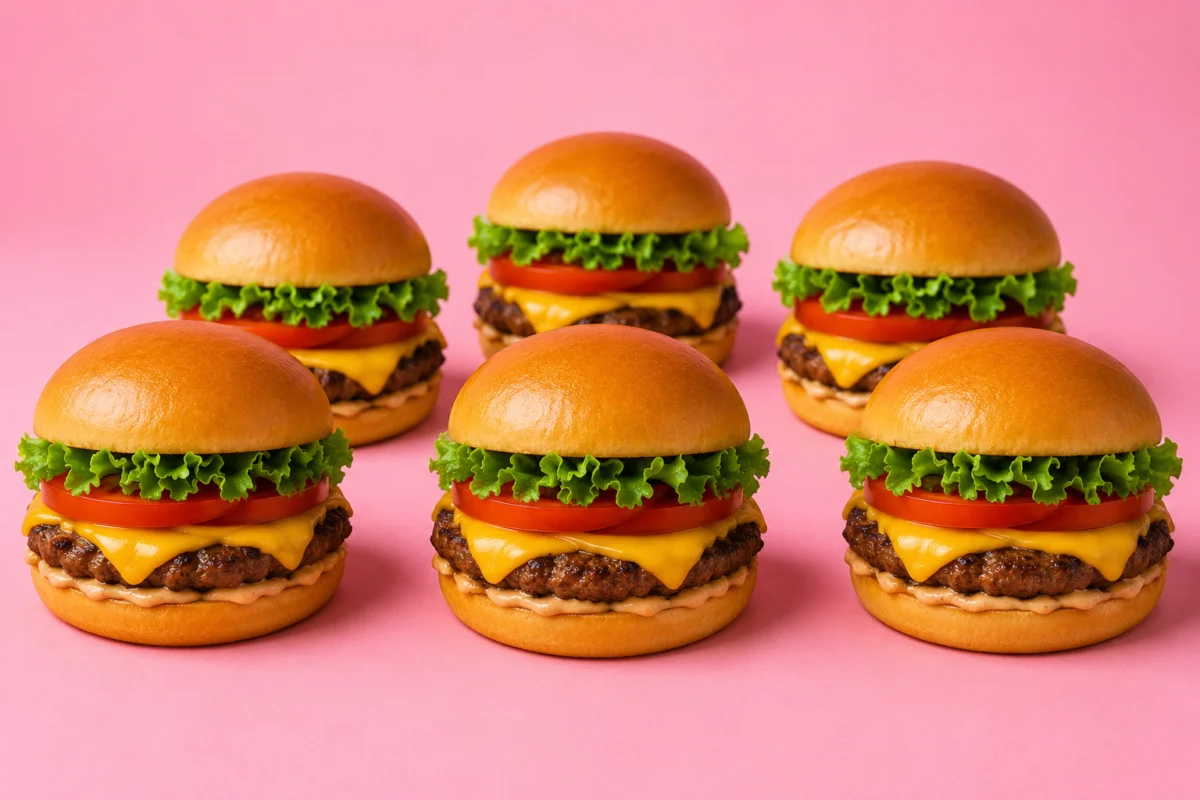
A new, subtle disquiet is rippling through the culinary landscape, manifesting not in the kitchens, but on the menus themselves. For many diners, the initial encounter with an AI-generated food menu often triggers a perplexing sensation – a fleeting suspicion that something is fundamentally amiss, even when they cannot precisely articulate why. Picture a café menu adorned with bagel sandwiches, each illustration perfectly symmetrical, unnervingly smooth, and aesthetically flawless to a degree that feels profoundly unnatural. This visceral unease, initially dismissed as paranoia, is a growing phenomenon: generative artificial intelligence, trained on a narrow, "pleasing" aesthetic, is now crafting restaurant menus, and its outputs frequently stray into what researchers term the "uncanny valley" of visual representation.
The Subtle Shift in Visual Gastronomy
The emergence of AI-generated imagery in commercial applications, particularly within the restaurant sector, marks a significant technological inflection point. While some AI creations are overtly fantastical – a burrito with cheese so exuberantly melted it transcends mere food into avant-garde sculpture – more often, the anomalies are subtle. An otherwise ordinary-looking burger, upon closer inspection, might reveal an unnatural sheen, an uncanny uniformity in its texture, or ingredients arranged with an almost alien precision. This phenomenon challenges human perception, creating a cognitive dissonance where the brain registers "food" but simultaneously flags an inherent artificiality. Alex Lisle, CTO of Reality Defender, a firm specializing in AI-detection and content-verification, encapsulates this perfectly: "It’s almost like an alien trying to make a pizza without understanding its core principles." This growing market for AI verification tools itself underscores the escalating challenge of distinguishing authentic from synthetic content.
Understanding the AI’s Aesthetic Bias
The peculiar aesthetic of these AI-generated food images is deeply rooted in the mechanisms of large language models (LLMs) and diffusion models – the sophisticated AI architectures powering systems like ChatGPT and Midjourney. These models learn by processing immense datasets, identifying patterns, and then generating content that aligns with these perceived patterns. When prompted to create a "burger restaurant menu," the AI draws from a vast corpus of existing commercial food photography and design. Lisle points out that much of this training data inadvertently biases the AI towards a particular, often dated, commercial style. "A lot of this stuff looks like a Chili’s menu from 2015, and there’s a reason for that," he explains. "That was the corpus of work from which [the models] drew their function."
This reliance on existing commercial imagery means the AI inherits and often exaggerates the characteristics of idealized food photography. Professional food stylists and photographers already meticulously craft dishes for advertisements, arranging every ingredient to achieve maximum visual appeal, often using non-food items or artificial enhancements to achieve perfection. The AI, in its pursuit of "pleasingness" and "not being offensive," as Lee Rainie, Director of the Imagining the Digital Future Center at Elon University, notes, tends to "shave off the edges." This process amplifies the artificiality, resulting in images where every ice cream scoop is impeccably round, and shrimp curl into bizarre, genetically modified configurations that one social media user dubbed "Lovecraftian food horrors." The AI doesn’t understand the organic imperfections of real food; it merely replicates and optimizes what it has been trained to perceive as desirable, leading to a homogenized, hyper-real, yet ultimately sterile presentation.
The Peril of Model Collapse and Convergence
A critical underlying concern in the proliferation of AI-generated content is the risk of "model collapse" or, more commonly in this context, "convergence." AI models require fresh, diverse training data to evolve and improve. Companies like Amazon have reportedly gone to extreme lengths, even destroying rare books after scanning them, to feed their models. However, the inevitable integration of AI-generated content back into these vast datasets poses a significant threat. Model collapse occurs when an AI is primarily trained on its own outputs or on other AI-generated content, leading to a degradation of quality and diversity in subsequent generations, akin to "mad cow disease" through "inbreeding," as Lisle starkly describes.
While model collapse signifies a complete breakdown, convergence is a less extreme but equally problematic outcome. It describes a phenomenon where AI outputs become increasingly uniform and less diverse over time. When an AI is asked to generate a fast-food menu, it references popular chains like McDonald’s, Burger King, and Wendy’s, which already share a common visual language. The AI then produces an output that mimics this style. If this AI-generated menu subsequently re-enters the training data loop, it further reinforces and narrows the aesthetic, leading to a self-perpetuating cycle of homogenization.

This convergence is not merely theoretical; it’s observable. A notable experiment by X user Labtec demonstrated this by repeatedly editing an AI-generated menu 100 times. With each iteration, the food images progressively lost their resemblance to actual food, becoming increasingly round, smooth, and abstract. The user’s chilling conclusion – "The end result actually makes me uncomfortable" – resonates with the broader consumer sentiment. Restaurants, likely making iterative changes to AI-generated menus for price adjustments or item names, could unknowingly be pushing their visual content further into this uncanny territory, eroding the very appetite they aim to stimulate.
Consumer Psychology and the Uncanny Valley
The public’s often unspoken aversion to these AI-generated images is not merely subjective; it has a basis in psychological research. A study by researchers at the University of Duisburg-Essen in Germany specifically identified an "uncanny valley" effect in AI-generated food images. This phenomenon, originally observed in robotics, describes the revulsion humans feel towards objects that are almost, but not quite, human-like. In the context of food, images that appear nearly real, yet possess subtle, unsettling imperfections or unnatural perfections, elicit greater disgust and unease than images that are overtly artificial. This psychological response is amplified by the current cultural discourse surrounding AI, where trust in digital authenticity is already a contentious issue.
This inherent human sensibility, as Rainie explains, allows people to "kind of know it when they see it," even if they struggle to articulate why. The backlash against early adopters of AI menus is therefore a predictable outcome of this primal rejection of the unnervingly artificial. For restaurants, prioritizing cost-saving and efficiency through AI menu generation without understanding these profound psychological implications could prove to be a costly misstep, undermining customer trust and brand perception.
Broader Implications Beyond the Dinner Table
The issues raised by AI-generated food menus extend far beyond the immediate concerns of the restaurant industry. They serve as a microcosm for the broader challenges posed by generative AI to our understanding of reality and authenticity. For centuries, "seeing and hearing has always been believing," forming the bedrock of human trust and even legal systems, where "taped confessions and videotaped evidence" are considered gold standards, Lisle observes. However, the advent of sophisticated generative AI fundamentally alters this paradigm. The ability to create hyper-realistic, yet entirely fabricated, images and sounds means that visual and auditory evidence can no longer be unilaterally trusted.
This erosion of trust has profound societal implications. In an era where deepfakes can impersonate public figures and AI-generated news articles can spread misinformation, the uncanny valley of a bagel sandwich illustration becomes a potent symbol of a larger crisis of discernment. The challenge for society is not just to develop better AI detection tools, but to cultivate a critical media literacy that equips individuals to navigate a world where digital content is increasingly synthetic.
For the restaurant industry, the path forward likely involves a more nuanced integration of AI. While AI can undoubtedly streamline aspects of menu creation, human oversight, artistic direction, and a conscious effort to maintain authenticity in visual representation will remain crucial. The market for human food photographers, stylists, and graphic designers, far from being rendered obsolete, may in fact see a renewed appreciation for their ability to capture the genuine, imperfect, and ultimately appealing essence of real food.
Ultimately, the unsettling perfection of AI-generated food menus serves as a crucial early warning. It highlights the delicate balance between technological innovation and human perception, urging a cautious approach to AI deployment in domains that rely heavily on trust and authenticity. The lessons learned from these digital dishes could very well shape our collective response to the profound shift in what we see, hear, and ultimately, believe, in the age of artificial intelligence.
