

The booming defense industry is reshaping industrial landscapes across Germany, with companies like KNDS and Rheinmetall significantly expanding their production capabilities. This surge is driven by a substantial increase in defense spending, a direct response to the evolving geopolitical climate and the need to bolster national security and support allied nations. Local municipalities, such as those in Kassel, Görlitz, and Unterlüß, are experiencing the tangible effects of this industrial revival, with new investments and job creation becoming increasingly prominent.
The "Zeitenwende" and its Economic Ripple Effect
The term "Zeitenwende," or turning point, coined by German Chancellor Olaf Scholz in early 2022, signifies a fundamental shift in Germany’s foreign and security policy following Russia’s full-scale invasion of Ukraine. A cornerstone of this policy shift is a significant increase in defense spending. Unlike previous decades where defense budgets were often constrained by fiscal prudence and a prevailing pacifist sentiment, the current security environment has necessitated a more robust military posture.
A critical element of this shift is the establishment of a special €100 billion fund for modernizing the German armed forces (Bundeswehr). Furthermore, the defense budget itself has been removed from the constraints of the constitutional debt brake, allowing for sustained and increased investment. Projections indicate that the defense budget will nearly double by 2030, reaching approximately €180 billion, a substantial leap from the €2025 budget. This financial commitment provides a strong foundation for long-term growth and expansion within the defense sector.
KNDS and Rheinmetall: At the Forefront of Expansion
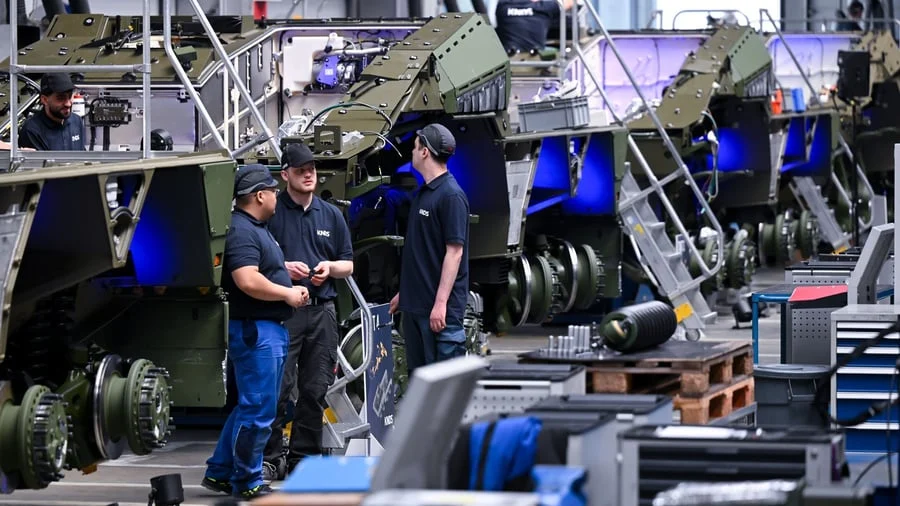
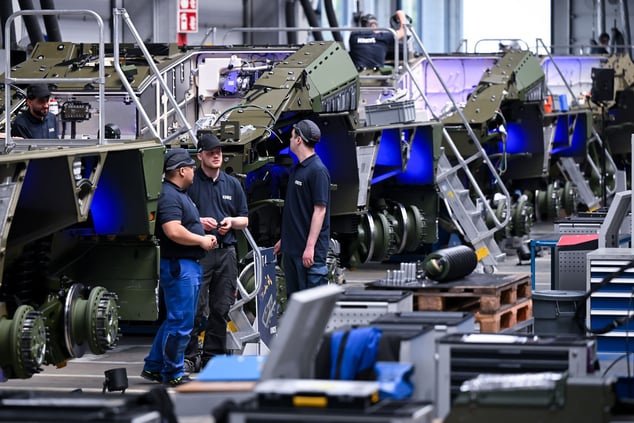
KNDS, a joint venture between Germany’s Krauss-Maffei Wegmann and France’s Nexter Systems, is a key player in this expansion. The company is significantly scaling up its production, with a notable plan to double its workforce in Germany by 2030. This ambitious growth strategy underscores the escalating demand for armored vehicles and other defense equipment. The image accompanying this report showcases tank production at KNDS, symbolizing the tangible output of this industrial ramp-up.
Rheinmetall, another prominent German defense contractor, is also heavily investing in expanding its manufacturing capacity. The company’s presence in various industrial hubs across Germany highlights its strategic approach to meeting the increased demand. Alongside these major players, a network of suppliers is also experiencing a boom, as they are crucial for providing the components and materials necessary for large-scale defense production.

Regional Economic Transformation: From Auto to Armor
For many regions in Germany that have historically relied on the automotive and mechanical engineering sectors, the defense industry’s resurgence represents a significant economic opportunity. These sectors have faced considerable challenges in recent years, particularly due to the global shift towards electromobility and the impact of geopolitical tensions on international markets, notably in China and the United States. The defense industry offers a potential lifeline, providing new avenues for growth and employment.
Indeed, thousands of individuals are transitioning into the defense sector, leveraging their existing skills in manufacturing and engineering. This shift is particularly evident in areas like Görlitz, where the focus has pivoted from producing railway wagons to manufacturing tank hulls. This transition highlights the adaptability of German industry and its capacity to reorient its production lines to meet new demands. The inherent need for mechanical precision and robust engineering in the defense sector, particularly for vehicles that rely on conventional internal combustion engines, makes these regions well-suited for this industrial evolution.
Broader Implications and Challenges
The expansion of the defense industry brings with it a complex set of implications. On one hand, it signifies a strengthened national defense capability and a contribution to European security. It also represents a significant economic stimulus, creating jobs and fostering technological innovation. The increased demand for skilled labor is likely to lead to higher wages and improved working conditions in the sector, potentially attracting talent from other industries.
However, this rapid expansion also presents challenges. The ethical considerations surrounding the production of weapons are always a subject of debate. Furthermore, ensuring the sustainable integration of new employees and the responsible management of supply chains are crucial for long-term success. The potential for increased militarization and its impact on international relations also warrant careful consideration.
Future Outlook and Strategic Investments
The commitment to significantly increased defense spending until at least 2030 provides a clear trajectory for the defense industry. Companies are investing in research and development to ensure they remain at the cutting edge of military technology. The focus is not only on traditional hardware like tanks and artillery but also on emerging areas such as cyber defense, drones, and advanced communication systems.
The strategic decisions made today regarding defense procurement and industrial capacity will have long-lasting effects on Germany’s security and its role on the global stage. The current expansion phase is a direct response to immediate security concerns, but it also lays the groundwork for a more self-sufficient and capable European defense industrial base. The challenge for policymakers and industry leaders will be to navigate this period of growth responsibly, ensuring that economic benefits are realized while upholding ethical standards and contributing to a stable international order.
Key Developments and Timeline:
- Early 2022: Following Russia’s full-scale invasion of Ukraine, Germany announces a significant shift in its defense policy, termed "Zeitenwende."
- February 2022: Chancellor Olaf Scholz announces the creation of a €100 billion special fund for the Bundeswehr.
- Ongoing: Defense companies like KNDS and Rheinmetall begin substantial expansions of their production facilities and workforces across Germany.
- Budgetary Changes: The German defense budget is removed from the constraints of the constitutional debt brake, allowing for sustained increases.
- Projected Growth: Defense budget is projected to reach €180 billion by 2030, nearly doubling from 2025 levels.
- Regional Impact: Municipalities in areas like Kassel, Görlitz, and Unterlüß witness increased investment and job creation in the defense sector.
- Workforce Transition: Thousands of workers transition from industries like automotive and mechanical engineering to the defense sector.
- Specific Examples: In Görlitz, a facility previously manufacturing railway wagons shifts to producing tank hulls.
Data and Figures:
- Special Defense Fund: €100 billion allocated for modernizing the Bundeswehr.
- Projected Defense Budget (2030): Approximately €180 billion.
- Comparison: This figure represents nearly double the defense budget of 2025.
- Workforce Expansion: KNDS aims to double its workforce in Germany by 2030.
- Sectoral Shift: Thousands of individuals are moving into the defense sector from other industries.
Analysis of Implications:
The current surge in defense manufacturing in Germany is a multifaceted phenomenon with significant economic, social, and geopolitical implications. Economically, it provides a much-needed boost to regions previously struggling with industrial decline, particularly those impacted by the energy transition in the automotive sector. The creation of high-skilled jobs and the stimulation of ancillary industries are positive outcomes.
Socially, the transition of workers into the defense sector requires careful management. Retraining programs and support for workers are essential to ensure a smooth integration and to mitigate any potential social disruption. The perception and acceptance of the defense industry within society will also be a factor.
Geopolitically, Germany’s increased defense spending and production capacity directly contribute to NATO’s collective security and European deterrence. It signals a renewed commitment to defense and a willingness to shoulder greater responsibility in ensuring regional stability. However, this increased military capacity also necessitates a continued focus on diplomatic solutions and arms control measures to prevent potential escalations. The focus on mechanical precision and robust engineering for traditional military hardware underscores the continued relevance of these capabilities in modern warfare, even as technological advancements in other domains accelerate. The strategic decision to invest heavily in this sector reflects a pragmatic response to immediate threats while also acknowledging the long-term strategic importance of a strong national defense.
