

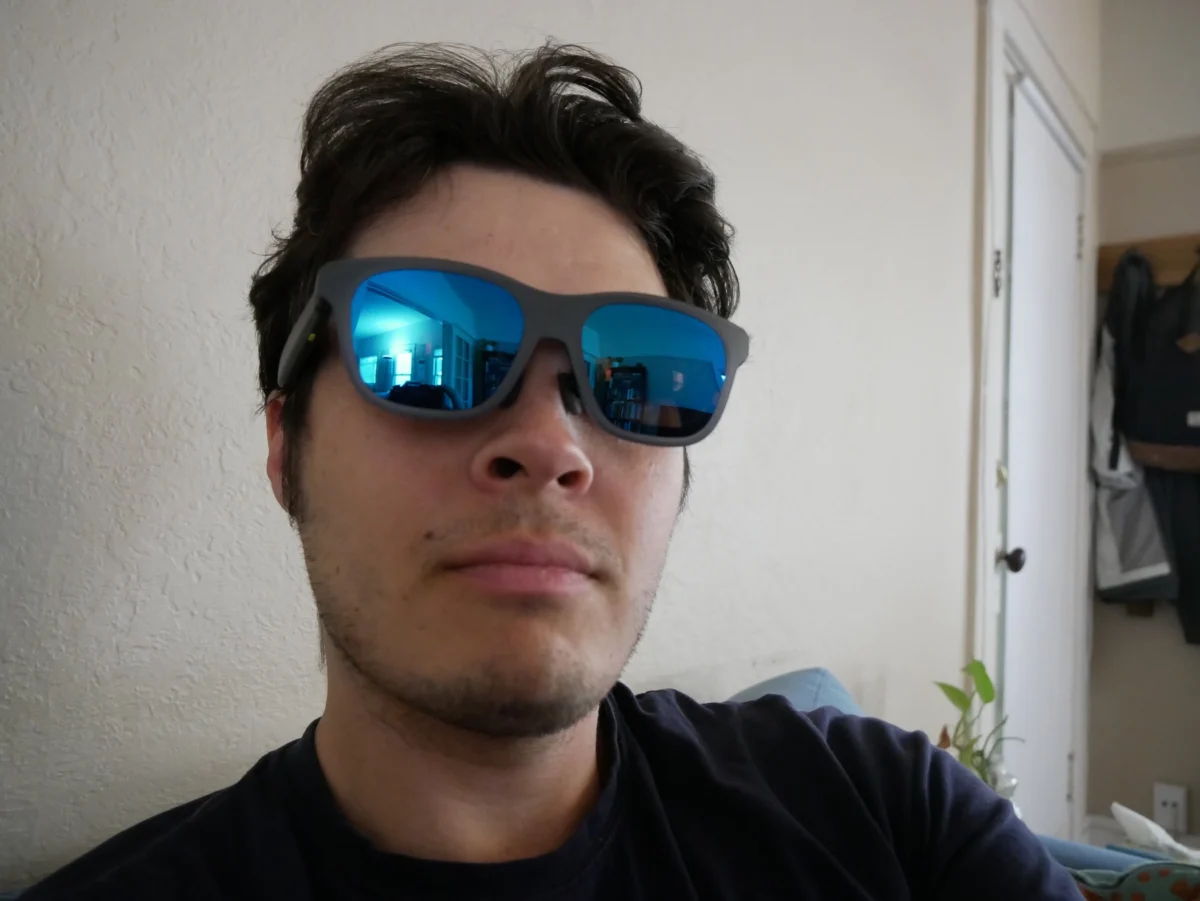
The XREAL a01, a recent addition to the smart glasses market, released in May of this year, presents itself as a portable display solution aimed at both gamers and media enthusiasts. Positioned at an accessible price point of approximately $300, the a01 is designed primarily as an external monitor, contrasting with more sophisticated, software-heavy augmented reality (AR) glasses such as Meta Orion or Snap’s Specs. Its fundamental design choice – a reliance on external power and processing via a simple USB-C connection to a host device – shapes its user experience and defines its niche within a rapidly developing industry. This article delves into the device’s capabilities, its practical applications, the challenges it faces, and its broader implications for the future of wearable technology, particularly in the realm of entertainment.
Understanding the XREAL a01: A Deep Dive into a Portable Display Solution
At its core, the XREAL a01 is engineered to extend the display capabilities of existing devices rather than function as a standalone computing platform. Lacking an internal battery or processing unit, it draws power and content directly from a connected smartphone, laptop, or handheld gaming console via a USB-C cable. This design choice contributes to its lightweight profile and affordability, but also introduces specific operational dependencies.
The visual experience provided by the a01 is a key selling point. The glasses are outfitted with dual mini OLED panels, offering a 1080p resolution complemented by up to 1,600 nits of brightness. This combination aims to deliver vibrant colors and a sharp image, creating a virtual display experience that XREAL claims is equivalent to viewing content on a 147-inch screen. This immersive potential is particularly highlighted when the device is used in a darkened environment, simulating an in-theater experience or a vivid home projector.
While XREAL advertises the a01 for general media consumption, its optimization for gaming is evident. The device is particularly suited for integration with handheld gaming devices like the Steam Deck, providing a large, private screen for portable gaming. However, its broader appeal is also targeted at individuals seeking a novel way to consume movies and television content. For instance, testing the device with a personal laptop and streaming from the Criterion Channel, users can experience classic cinema in an intimate, albeit tethered, format. The quality of the projected images, with their vibrant colors and crisp resolution, undeniably stands out as a significant strength of the a01.
The Cinematic Experience: Promise Versus Reality
Despite the impressive visual fidelity, the practical application of the a01 for media consumption raises several questions regarding its utility and convenience. The most prominent issue identified by users is the inherent redundancy when the device is connected to a laptop. Watching content projected onto the glasses while the same content simultaneously plays on a laptop screen merely 14 inches away can feel counterintuitive, prompting users to question the actual purpose of the wearable display in such a scenario.
XREAL has suggested the a01 can function as a "second monitor" or a "wearable display," implying a potential for enhanced productivity or multitasking. However, this functionality is also debatable. The immersive nature of the projected display often makes it challenging to perceive anything beyond what the glasses are showing, thereby hindering the ability to simultaneously work on the connected laptop. This limitation suggests that the a01’s current iteration is less suited for dual-screen productivity and more aligned with dedicated, singular content consumption.
Connectivity with smartphones offers a potential solution to the indoor, tethered experience of a laptop. By linking the a01 to a smartphone, users envision greater mobility, enabling movie watching during travel on planes or trains, or even in more unconventional settings. However, compatibility issues can arise, particularly with older phone models that may require an adapter for the USB-C connection. Even with a compatible phone, the underlying redundancy persists: the phone’s screen must remain active, mirroring the content displayed on the glasses. While the phone could be placed in a pocket to minimize distraction, the risk of playback disruption due to movement remains. This design choice, while simplifying the glasses’ internal components, complicates the ideal user experience for truly mobile, untethered viewing.

Addressing Core User Experience Hurdles
Beyond the connectivity and redundancy issues, the XREAL a01, like many smart glasses before it, contends with fundamental hardware challenges that impact user comfort and overall satisfaction.
The Overheating Conundrum: A common affliction in the compact world of XR glasses is heat generation. The a01 is no exception; prolonged use can lead to a noticeable warming sensation on the bridge of the nose and around the eyes. This phenomenon is a well-documented engineering challenge across the industry, stemming from the concentrated electrical processing within a small, wearable device. While not unique to XREAL, the discomfort caused by heat can detract significantly from the immersive experience, particularly for extended viewing sessions, underscoring the need for advanced thermal management solutions in future iterations.
Ergonomics and Comfort: Despite the heating issue, the a01 generally earns praise for its relatively lightweight and comfortable design. Compared to some heavier and more cumbersome smart glasses, such as certain iterations of Snap’s Specs which have been noted for their heft, the a01 manages to maintain a less obtrusive form factor. This focus on ergonomics is crucial for a device intended to be worn for extended periods, even if other aspects of the user experience are still being refined.
XREAL’s Ecosystem and Future Trajectory
Recognizing some of the limitations inherent in the a01’s tethered design, XREAL has begun to develop complementary devices and future product lines aimed at enhancing the user experience.
The Beam Pro: An Attempt at Autonomy: To address the need for a more isolated streaming hub, XREAL offers the Beam Pro, a separate mini-tablet device. The Beam Pro allows users to download and store media directly, connecting to the a01 glasses to provide a standalone viewing experience independent of a laptop or phone. However, this solution comes at an additional cost of approximately $200, effectively increasing the total investment for a truly autonomous setup. While it mitigates the redundancy of screen mirroring, it introduces another device into the user’s portable ecosystem.
Evolving the Vision: Project Aura and the Android XR Partnership: XREAL’s commitment to innovation is perhaps best exemplified by its upcoming device, Project Aura, which promises to address many of the existential dilemmas present in the a01. Previewed at Google I/O earlier this year, Project Aura represents a significant leap forward in smart glasses technology.
The Aura is powered by Android XR, an extended reality operating system developed collaboratively by Google and Samsung. This integration signals a move towards a more sophisticated and interactive platform. Key features of Project Aura include native hand tracking, a capability absent in the a01, and direct access to the Google Play Store. These additions are poised to grant the glasses significantly more interactive abilities and unlock greater augmented reality potential, moving beyond simple display mirroring.
Crucially, Project Aura incorporates a tethered "puck" that functions as both the charging source and a compute node. This compact, pocketable puck provides a degree of mobility and independence previously unavailable with the a01, which required a constant connection to a host device. This architectural shift suggests XREAL is moving towards a more self-contained, yet still portable, AR experience, aiming to overcome the tethering and redundancy challenges of its earlier models.

The Broader Landscape of Smart Glasses and AR
The XREAL a01 exists within a dynamic and highly competitive smart glasses and augmented reality market that is still in its nascent stages of mainstream adoption. Industry reports project significant growth in the global AR/VR market, with smart glasses forming a crucial segment. However, widespread consumer uptake has been challenged by factors such as high costs, limited compelling applications, bulky designs, and user comfort issues – many of which the a01 attempts to navigate.
Market Growth and Consumer Adoption Trends: While devices like the Apple Vision Pro have generated considerable buzz for their advanced capabilities, their premium price point and intricate feature sets place them in a different category than the more accessible XREAL a01. XREAL, formerly Nreal, has strategically focused on "air glasses" or "wearable displays," carving out a niche for devices that prioritize high-quality visuals and portability without aiming for full-fledged spatial computing. This strategy is distinct from companies like Meta and Snap, which are investing heavily in comprehensive AR platforms with complex sensor arrays and software ecosystems. The a01’s simpler approach allows for a lower price point and lighter form factor, potentially appealing to a broader audience looking for enhanced media consumption rather than a new computing paradigm.
Technological Evolution: From Niche to Mainstream: The evolution of smart glasses hinges on advancements in several key areas: miniaturization of components, increased processing power, improved battery efficiency, and sophisticated display technologies. The a01’s dual OLED panels represent a significant step in delivering high-quality visuals in a compact form. However, the industry continues to grapple with the challenge of integrating powerful computing within a comfortable and aesthetically pleasing eyewear form factor without generating excessive heat or requiring bulky external components. The transition towards integrated solutions like Android XR and dedicated compute pucks, as seen with Project Aura, signals a maturing industry attempting to solve these core engineering challenges.
Defining Use Cases: Who are these devices really for? The smart glasses market is segmenting into various use cases. Enterprise applications (e.g., remote assistance, training, data visualization) have seen earlier adoption due to clear ROI. For consumers, the "killer app" remains elusive. Devices like the a01 primarily target entertainment and gaming, offering a private, large-screen experience. Future AR glasses aim for more pervasive integration into daily life, offering heads-up displays for navigation, communication, and information overlay. The a01 serves as an important evolutionary step, testing the waters for consumer readiness for wearable displays, particularly for niche applications like private media consumption on the go.
Implications for Media Consumption
From the perspective of a dedicated cinephile, the XREAL a01 presents a unique proposition that challenges traditional preferences. Movie enthusiasts often prioritize a large, expansive screen for their viewing pleasure. In a world increasingly dominated by gargantuan 4K OLED televisions, offering varying sizes up to 55 inches or more (like a TCL S-series TV), the home viewing experience has become highly refined and comfortable. Many argue that watching a movie at home on a large flat screen is second only to the communal and immersive experience of a cinema.
Watching a film on tiny screens positioned mere inches from the eyes, as with the a01, offers a distinct sense of personal immersion and privacy. However, it fundamentally alters the viewing dynamic. While the virtual 147-inch screen claim suggests grandeur, the practical reality of wearing glasses for extended periods, dealing with potential heat, and the visual isolation can diverge from the comfortable, communal, or expansive experience many movie fans seek. It is an interesting technological experience, showcasing the potential for personal cinema, but it may not yet be considered the optimal or preferred method for serious film appreciation by a majority of consumers.
The XREAL a01 stands as an intriguing glimpse into a hardware industry that continues its rapid evolution, still actively seeking its definitive footing with consumers. It effectively demonstrates the potential for high-quality, portable visual immersion at an accessible price point, particularly for gaming and private media consumption. However, its current iteration highlights persistent challenges related to power dependency, operational redundancy, and thermal management. The promising advancements hinted at by XREAL’s Project Aura, with its integration of Android XR, hand tracking, and a dedicated compute puck, indicate a clear strategic direction towards a more sophisticated, autonomous, and truly immersive augmented reality experience. As the technology matures, and as companies like XREAL continue to iterate and refine their products, the landscape of personal entertainment and wearable computing is poised for significant transformation, warranting ongoing reevaluation of consumer preferences and technological capabilities.
