

The persistent fascination with humanoid robots, often fueled by visionary figures like Tesla CEO Elon Musk and the compelling demonstrations of Boston Dynamics’ Atlas, has long hovered between science fiction and tangible engineering ambition. However, beneath the surface of this enduring hype, a significant technological convergence is now propelling these sophisticated machines from experimental marvels into the realm of imminent commercial viability. Real progress in both the physical capabilities of robots and, crucially, the application of advanced artificial intelligence techniques—particularly those underpinning large language models (LLMs)—is enabling complex robots to learn and perform a vast array of tasks with unprecedented adaptability. This confluence of hardware prowess and intelligent software marks a pivotal moment, encouraging a new wave of investment and innovation, with a notable and aggressive entry from Chinese automakers.
The Convergence of AI and Robotics: A New Era
For decades, robotics development often involved painstaking, task-specific programming. Robots were excellent at repetitive, pre-defined movements in controlled environments, such as assembly lines. However, their ability to adapt to unforeseen circumstances or learn new tasks on the fly was severely limited. This paradigm began to shift dramatically with breakthroughs in artificial intelligence, especially in machine learning and neural networks. The advent of large language models (LLMs) has provided a critical missing piece: the capacity for robots to understand and interpret high-level human commands, reason about their environment, and generate complex action sequences.
These advanced AI techniques are transforming robots from mere programmable machines into "embodied AI" systems – intelligent agents built directly into physical machines that can perceive, reason, and act in the physical world. Researchers are actively exploring how foundation models, trained on vast datasets, can be adapted to robotics, allowing a single model to learn a multitude of skills and generalize across different tasks and environments. This promises to drastically reduce the development time and cost for deploying robots in new scenarios. The physical hardware has also advanced considerably. Lighter, stronger materials, more efficient actuators, advanced sensors (lidar, cameras, force sensors), and improved battery technologies now allow for robots that are more agile, powerful, and capable of operating autonomously for longer durations. This dual advancement in both the ‘brain’ (AI) and the ‘body’ (hardware) is creating an inflection point, making the dream of versatile, commercially deployable humanoid robots increasingly attainable.
China’s Automotive Giants Enter the Fray
Against this backdrop of rapid technological advancement, a distinct trend has emerged: Chinese automotive manufacturers are making substantial commitments to humanoid robotics. Historically known for their prowess in large-scale manufacturing and increasingly for their innovation in electric vehicles (EVs) and autonomous driving, these companies are now leveraging their existing expertise to carve out a significant share in the burgeoning robotics market. Their motivations are multifaceted, ranging from seeking new high-margin revenue streams amidst intense competition in the automotive sector to strategically positioning themselves at the forefront of the next industrial revolution.
The global market for humanoid robots is projected for explosive growth. Industry reports from firms like Statista and Fortune Business Insights suggest the market, valued in the hundreds of millions in recent years, could reach tens of billions by the early 2030s, exhibiting a compound annual growth rate (CAGR) exceeding 50% in some forecasts. This immense potential has not gone unnoticed by China’s tech-savvy industrialists and investors.
Xpeng Leads the Charge with Significant Investment
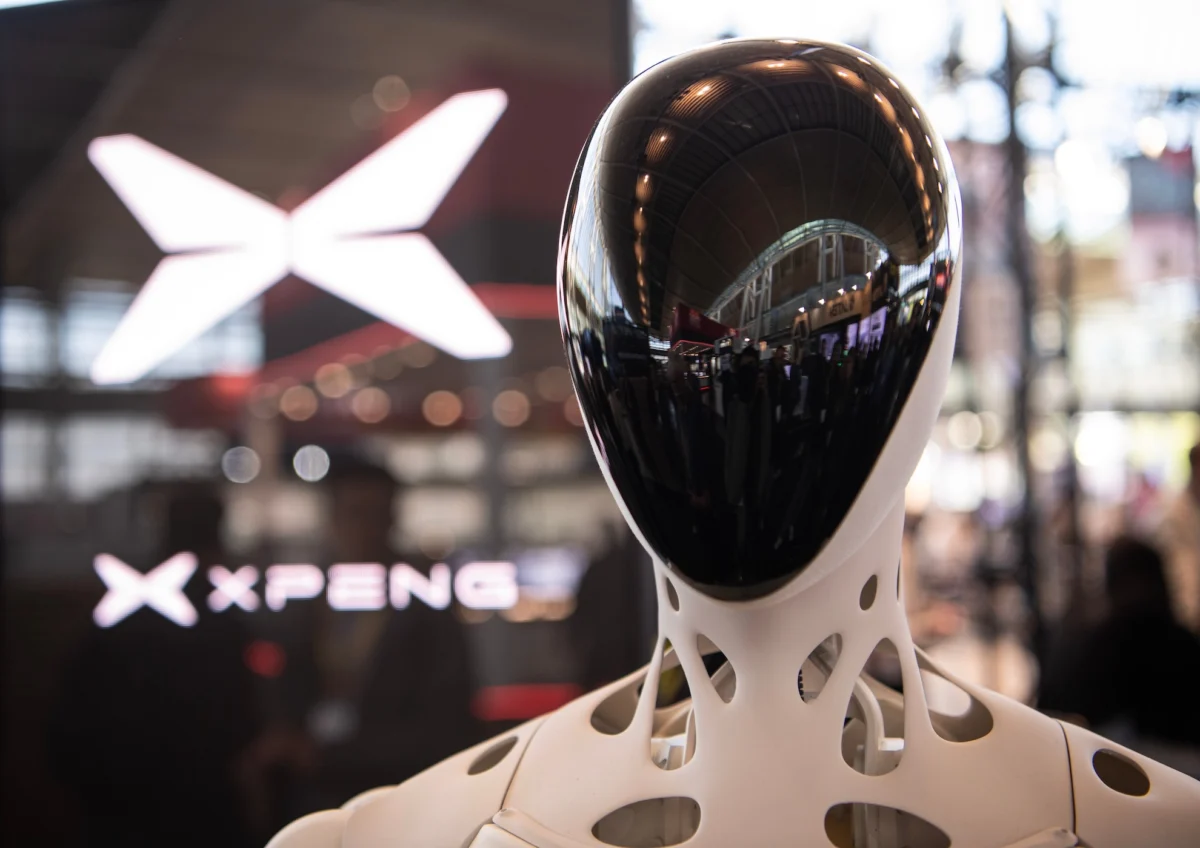
Leading this aggressive push is Xpeng, a prominent Chinese electric vehicle manufacturer. Its robotics unit recently secured an astonishing private financing round, raising over $900 million at a post-money valuation exceeding $6.3 billion. This monumental investment, led by IDG Capital with significant participation from Gaorong Ventures, Tencent, and Alibaba, has been heralded by Xpeng as the largest single-round private financing ever recorded in China’s "embodied AI" industry. The scale of this funding underscores both the perceived potential of humanoid robotics and the confidence investors place in Xpeng’s strategic direction.
Michael Dunne, CEO of San Diego- and Singapore-based advisory firm Dunne Insights, highlights Xpeng’s unique position, stating, "It’s the most focused on autonomy, it’s the first to commit in a big way to humanoid robots." Dunne points to Xpeng founder He Xiaopeng’s reputation as a tech billionaire known for his agility and responsiveness to market shifts. "He sees razor-thin profit in cars on the near horizon. Robots look much more promising," Dunne elaborated, offering a glimpse into the strategic thinking driving Xpeng’s diversification.
The personal conviction of Xpeng’s leadership is also evident. He Xiaopeng and Xpeng co-president Brian Gu have personally invested approximately $100 million into the recent fundraising round, according to reports from The Wall Street Journal. This direct financial commitment signals a profound belief in the robotics unit’s future, aligning their personal fortunes with the success of their ambitious humanoid robot project, named "Iron." Iron is designed with a realistic human shape and is specifically engineered for commercial deployment, suggesting Xpeng’s immediate focus is on practical, scalable applications rather than purely research-oriented endeavors.
Other Chinese Automakers Make Their Moves
Xpeng is not an isolated case. The momentum within China’s automotive sector to embrace humanoid robotics is widespread and intensifying. This month, AiMOGA, the robotics subsidiary of China’s Chery Automobile, reportedly initiated preparations for an Initial Public Offering (IPO), signaling its intent to raise capital and expand operations further. Chery, a major state-owned automaker, brings substantial manufacturing capacity and a vast domestic market presence to the robotics field.
Similarly, BYD, the global leader in electric vehicle sales, recently unveiled its own humanoid robot, named "Xiao Di." While details about Xiao Di’s specific capabilities and deployment timeline are still emerging, BYD’s entry into the space is particularly significant given its immense manufacturing scale, advanced battery technology, and aggressive global expansion strategy. The company’s established supply chains and engineering expertise could accelerate the mass production and deployment of humanoid robots.
Beyond these headline-grabbing announcements, a constellation of other prominent Chinese automakers are actively engaged in humanoid robot development. This includes Changan Automobile, GAC Group, Li Auto, SAIC Motor, and Seres. Each of these companies brings unique strengths, from Changan’s deep roots in traditional automotive manufacturing to Li Auto’s focus on intelligent electric vehicles. Their collective entry indicates a strategic consensus within the Chinese automotive industry that humanoid robots represent a critical future market, offering synergies with their existing businesses in autonomous driving, smart manufacturing, and potentially, smart home solutions.
Strategic Motivations: Beyond Vehicle Manufacturing
The aggressive pivot of Chinese automakers into humanoid robotics is driven by a confluence of strategic factors. Firstly, the automotive industry, particularly in the EV sector, is experiencing intense competition and rapidly compressing profit margins. Diversifying into robotics offers a promising avenue for higher-margin revenue streams and future growth.
Secondly, there are significant technological and manufacturing synergies. Automakers possess extensive expertise in complex systems integration, advanced manufacturing processes, supply chain management, and quality control – all directly transferable to robotics production. Their experience with sensors, AI algorithms for autonomous driving, battery management systems, and electric powertrains provides a solid foundation for developing sophisticated robots. Furthermore, the development of humanoid robots can provide valuable insights and technologies that loop back into enhancing their core automotive products, particularly in areas like advanced driver-assistance systems (ADAS) and autonomous vehicles.
Thirdly, China’s national strategic initiatives heavily emphasize technological self-reliance and leadership in advanced industries like AI and robotics. Government support, both through direct funding and policy incentives, plays a crucial role in encouraging these companies to invest heavily in cutting-edge technologies. This aligns with broader goals of industrial upgrading and establishing China as a global leader in high-tech manufacturing.
Global Competition and Key Players
The race for humanoid robot supremacy is, however, a global one, with formidable players from various sectors actively pursuing commercial deployment at scale. Tesla’s Optimus, with Elon Musk’s ambitious vision for mass production and deployment in factories and homes, remains a significant benchmark. Musk envisions Optimus performing a wide range of tasks, from mundane factory work to household chores, at a cost potentially lower than a human worker.
Boston Dynamics, now owned by Hyundai, continues to push the boundaries of robotic agility and dexterity with its Atlas humanoid robot. Hyundai’s strategic acquisition has accelerated the commercialization path for Atlas. The Korean automaker plans to integrate Atlas into its Georgia factory as early as this year, with a broader deployment for tasks like parts sequencing anticipated by 2028. To further this goal, Hyundai has partnered with Google’s AI research lab DeepMind to expedite Atlas’s development, particularly in areas requiring advanced learning capabilities. Hyundai is also establishing a U.S. facility, the Robot Metaplant Application Center, specifically designed to teach robots complex movements, mapping lifts and turns for industrial applications.
Beyond these giants, a vibrant ecosystem of specialized robotics companies is also competing intensely. Agility Robotics, known for its bipedal robot Digit, is focusing on logistics and warehouse automation. Apptronik, with its humanoid robot Apollo, aims to address labor shortages in various industries. Figure AI, another well-funded startup, is also developing human-like robots for a range of commercial applications. All these companies share the common objective of achieving robust, cost-effective commercial deployment.
The automotive sector’s interest extends beyond vehicle manufacturers. Mobileye, an Intel subsidiary and a leading supplier of advanced driver-assistance systems, acquired humanoid robot startup Mentee Robotics earlier this year for $900 million. This acquisition highlights the convergence of automotive sensor technology, AI, and robotics. Even Rivian, the American electric vehicle manufacturer, has ventured into robotics with its Mind Robotics spinout, although its robots are reportedly not designed to mimic humanoids in appearance, suggesting a focus on specific industrial applications rather than general-purpose human-like interaction.
Manufacturing Prowess vs. AI Innovation
A critical aspect of this global competition lies in the interplay between manufacturing capabilities and AI innovation. Michael Dunne aptly summarizes this dynamic: "They have all the hardware to get the job done. Question is if they can catch Tesla on the AI side of the equation." Chinese automakers undoubtedly possess unparalleled experience in scaling production and managing complex supply chains, which is crucial for bringing humanoid robots to market at competitive prices. Their robust manufacturing infrastructure and cost-efficient production methods could give them a significant advantage in hardware development and mass production.
However, the "AI side of the equation" remains a formidable challenge. Developing advanced, general-purpose AI that allows a robot to truly learn, adapt, and operate autonomously in unstructured environments requires massive datasets, sophisticated algorithms, and top-tier talent. While China has made immense strides in AI, particularly in areas like facial recognition and surveillance, the kind of embodied AI needed for truly versatile humanoid robots is still an evolving field. Western companies, particularly those with deep roots in AI research like Google’s DeepMind or Tesla’s expansive data collection from its vehicle fleet, may hold an edge in this crucial domain. The ability to bridge this AI gap will likely determine the ultimate winners in the humanoid robotics race.
The Road Ahead: Challenges and Opportunities
The path to widespread commercial deployment of humanoid robots is not without significant hurdles. Cost remains a major barrier; current prototypes are incredibly expensive. Mass production and economies of scale are essential to drive down unit costs to a point where they are economically viable for widespread adoption in factories, logistics, and eventually, homes. Reliability and robustness are also critical. Robots must operate consistently and safely in diverse environments without constant human supervision. Any malfunction or safety incident could severely impact public trust and adoption.
Safety and ethical considerations are paramount. Ensuring that robots can interact safely with humans in shared spaces, particularly in unforeseen situations, requires rigorous testing and robust safety protocols. The ethical implications of widespread robot deployment, including job displacement and the nature of human-robot interaction, also need careful consideration and policy frameworks.
Despite these challenges, the opportunities are immense. Humanoid robots could address critical labor shortages in industries ranging from manufacturing and logistics to healthcare and elderly care. They could perform dangerous or repetitive tasks, improving workplace safety and efficiency. In the long term, they could revolutionize daily life, assisting with household chores, providing companionship, and enabling new forms of interaction with technology.
Potential Societal and Economic Impact
The full societal and economic impact of humanoid robots is difficult to overstate. On the economic front, the rise of "lights-out" factories, fully automated by robots, could significantly boost productivity and reshape global supply chains. Nations with advanced robotics capabilities could gain a substantial competitive edge. New industries will emerge around robot maintenance, programming, and specialized applications, creating new job categories even as others are transformed.
Socially, the integration of humanoid robots into daily life could be transformative. From providing assistance to the aging population to acting as educational tools or companions, their presence will necessitate new societal norms and ethical guidelines. Discussions around universal basic income, retraining programs, and the fundamental definition of work will likely intensify as robots take on more complex roles traditionally performed by humans.
Conclusion
The current surge in humanoid robot development, particularly driven by Chinese automakers, signals a profound shift in the technological landscape. The convergence of advanced AI, especially foundation models, with sophisticated hardware is unlocking unprecedented capabilities. While Chinese firms bring formidable manufacturing prowess and strategic intent, the race for AI superiority remains open, with global players fiercely competing to bridge the gap between impressive prototypes and commercially viable, scalable solutions. The next decade promises to be a period of intense innovation and competition, ultimately shaping a future where humanoid robots play an increasingly integral role in industry, commerce, and daily life, heralding a new era of embodied artificial intelligence.
