

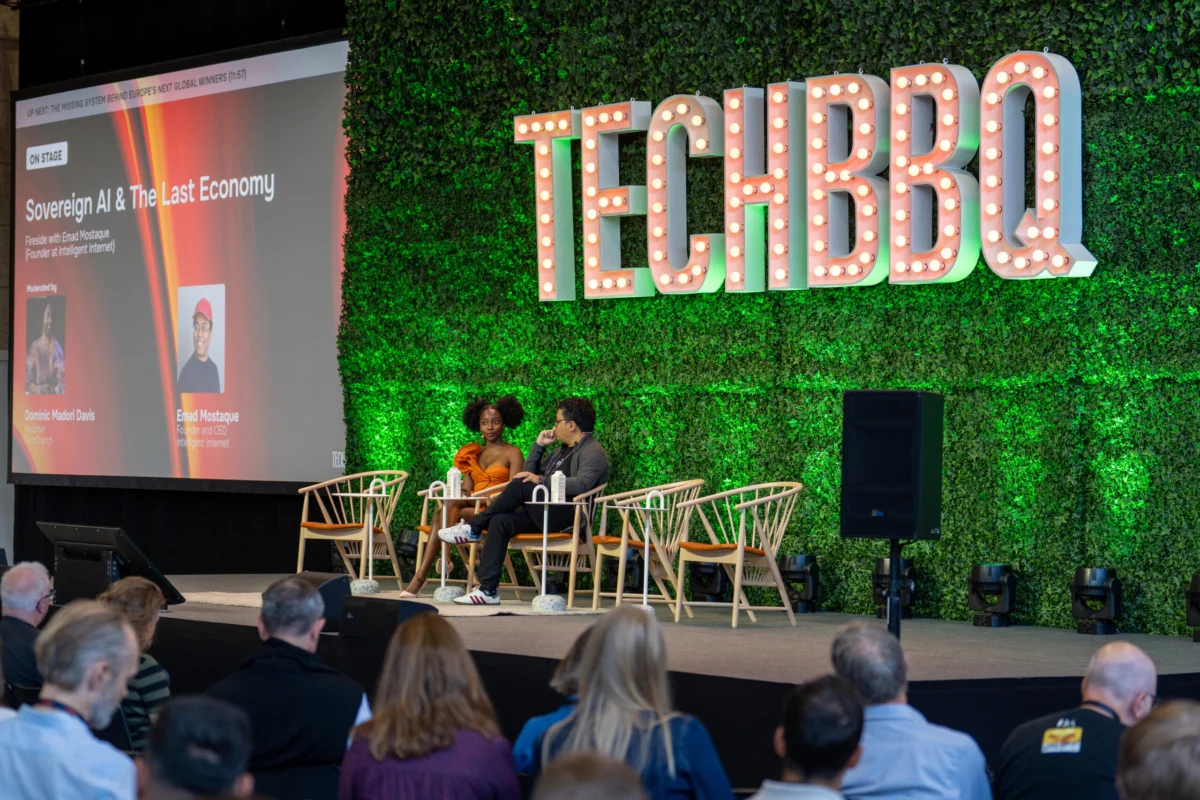
Copenhagen, Denmark, served as the vibrant backdrop for TechBBQ, the annual Nordic conference that concluded on August 27, where the prevailing discourse among Europe’s leading investors, founders, and operators transcended mere technological innovation. While the capabilities of artificial intelligence remained a significant topic, the underlying and increasingly urgent question was not just what to build with AI, but who should control its foundational infrastructure and models. This critical debate, permeating every corner of the event from keynote stages to intimate cocktail hours and exclusive after-parties, underscored a profound shift in European strategic thinking: the imperative to gain greater autonomy over the technology powering the AI revolution.
The Genesis of a New European Imperative
The theme of this year’s TechBBQ, "Emerging from Agency," proved remarkably prescient and timely, directly mirroring the intensifying discussions around technological independence. This newfound urgency was notably catalyzed by a specific incident earlier in the year when Anthropic’s advanced AI models, Mythos and Fable, became unexpectedly unavailable to users outside Europe. This disruption, though seemingly isolated, sent ripples across the European tech ecosystem, compelling many to confront the stark realities of relying on external powers for critical technological resources. The incident highlighted the precariousness of "renting" AI power from dominant players in the United States and China, sparking a serious introspection into what it truly means for Europe to "own" the models and the underlying infrastructure that drive this transformative AI wave.
For some startup executives, the Anthropic incident represented a tangible and immediate challenge. One executive recounted the significant disruption it caused his software development team, underscoring the operational vulnerabilities inherent in such dependencies. Others, while acknowledging the potential long-term risks, adopted a more sanguine view, suggesting that for now, the system largely functioned without severe widespread consequences. This divergence of immediate impact perception notwithstanding, the incident solidified the understanding that a reliance on two distinct geopolitical powers for foundational AI capabilities could, in the future, pose severe economic, strategic, and even national security headaches for Europe.
TechBBQ: A Nexus for European Innovation and Strategy
TechBBQ has steadily grown since its inception in 2013 from a modest startup gathering into one of Europe’s most influential tech conferences, drawing thousands of attendees annually. Its mission to foster innovation, connect stakeholders, and facilitate investment within the Nordic and broader European tech landscape has made it a crucial barometer for emerging trends and strategic priorities. This year’s focus on "agency" and sovereignty was not an arbitrary choice but a direct reflection of a continent grappling with its role in a rapidly evolving global technological order. The choice of Copenhagen, a city synonymous with digital leadership, sustainability, and a thriving startup scene, further amplified the significance of these discussions. The Nordic region, often at the forefront of digital transformation and ethical technology, provides a fertile ground for such debates, influencing broader European policy and investment strategies.
The conference’s agenda was diverse, featuring panels on the future of women’s health, a dedicated summit exploring collaboration opportunities between the Nordic and African ecosystems for innovation and investment, and extensive discussions on strategies to inject more growth capital into European ventures. However, beneath these varied topics, AI remained an omnipresent underlying theme. As Ellen de Brever, an angel investor and head of partnerships at the Novo Nordisk Foundation Cellerator, observed during the conference, "TechBBQ’s theme of agency felt particularly timely this year as the conversation shifted from what AI can do to what we’re actually willing to let it do." This shift, she noted, meant that "the debates weren’t about smarter machines, but about human judgment and who gets to stay in the driver’s seat." Her powerful assertion, "The age of AI agents isn’t really a story about machines gaining agency; it’s a story about humans deciding what to give up," resonated deeply, encapsulating the ethical and governance challenges at the heart of the sovereignty debate.
The Geopolitical and Economic Stakes of AI Sovereignty
The concept of AI sovereignty extends far beyond mere access to technology; it encompasses control over data, algorithms, ethical frameworks, and the economic benefits derived from AI. The global AI market is projected to reach trillions of dollars in the coming decade, with significant portions currently dominated by US and Chinese tech giants. For Europe, this concentration of power raises serious concerns about competitive disadvantage, intellectual property leakage, and the potential for foreign influence over critical societal functions that increasingly rely on AI.
The European Union has been proactive in attempting to shape the global AI landscape, most notably with the development of the EU AI Act, the world’s first comprehensive legal framework for AI. While the Act primarily focuses on safety, fundamental rights, and ethical principles, its very existence is an assertion of Europe’s desire to control the terms of AI deployment within its borders. This regulatory push, however, is seen by many as only one piece of the sovereignty puzzle. True sovereignty, as articulated at TechBBQ, requires not just regulation but also robust domestic capacity in AI research, development, and infrastructure. This includes fostering leading European AI companies, investing in high-performance computing, and building secure data centers.
Voices from the Forefront: Privacy, Power, and Societal Transformation
Among the most impactful sessions was a panel moderated by this reporter, featuring Meredith Whittaker, President of Signal, which delved into the complex question of whether privacy and AI can coexist. Whittaker, known for her uncompromising stance on digital rights, delivered a trenchant critique against the unchecked integration of AI assistants and agents into fundamental operating systems, citing examples like ChatGPT’s planned integration with iMessage. She warned that this current AI era is rapidly creating an unprecedented "data collection apparatus," where AI labs, through clever marketing and user convenience, subtly encourage individuals to overlook the "collateral consequences" of surrendering vast amounts of personal data.
Whittaker’s assertion that "there is still a huge market need for privacy" and that "particularly with the sovereignty concerns, we will have customers here" underscored a potential competitive advantage for Europe. Given the continent’s stringent data protection regulations, exemplified by the General Data Protection Regulation (GDPR), European AI solutions built with privacy-by-design principles could carve out a significant niche, appealing to users and businesses globally who prioritize data security and autonomy.
The discussion on sovereignty extended to the economic and societal ramifications of an agentic workforce. Emad Mostaque, co-founder of Stability AI and Intelligent Internet, participated in a panel exploring how AI agents would impact the economy and the very notion of personal sovereignty. Mostaque defined sovereignty as "the ability to resist power being exerted over you." He articulated a stark vision of power concentration, stating that "inevitably, every country will be run by AI," and consequently, "the person that controls the AI controls the country." This perspective highlights the profound geopolitical and governance implications of AI, transforming it from a mere technological tool into a strategic asset of national and international control.
Mia Negru, the advocacy and engagement director for the nonprofit Life With Artificials, echoed these concerns, offering a profound reflection after the panel: "If intelligent agents perform cognitive work and robots increasingly perform physical work, we may be approaching something much bigger than another technological revolution. We may have to rethink ownership, work, democracy, economic participation and eventually even who gets to participate in society." Negru’s statement encapsulates the potentially revolutionary and disruptive nature of advanced AI, suggesting that humanity is on the cusp of re-evaluating fundamental societal structures and values. This analytical perspective underscores the broad implications of AI, compelling policymakers and thought leaders to consider systemic changes rather than incremental adjustments.
Europe’s Strategic Response: Investment and Collaboration
To counter the dominance of US and Chinese tech giants, Europe is actively pursuing a multi-pronged strategy. This includes significant public and private investment in AI research and development, fostering a robust ecosystem of AI startups, and developing crucial digital infrastructure. Initiatives like the European High Performance Computing Joint Undertaking (EuroHPC JU) aim to build a world-class supercomputing infrastructure, essential for training and deploying large-scale AI models. Member states are also implementing national AI strategies, allocating billions of euros to strengthen their domestic AI capabilities.
The emphasis on collaboration, as highlighted by the Nordic-African Startups Summit at TechBBQ, is another key component. By forging partnerships with emerging ecosystems, Europe seeks to diversify its technological alliances, share expertise, and create new markets for its AI innovations. This approach not only strengthens Europe’s geopolitical standing but also promotes a more equitable global distribution of AI development and benefits, moving away from a purely extractive model of technological advancement. Furthermore, there is a concerted effort to cultivate and retain top-tier AI talent within Europe through educational programs, research grants, and attractive startup environments, ensuring that the continent remains a hub for cutting-edge AI innovation.
Beyond the Code: The Indispensable Human Element
While the intellectual rigor of the panels and discussions dominated the daytime agenda, TechBBQ also provided ample opportunities for attendees to connect on a more personal level. Happy hours, rooftop soirées, and networking events were integral to the conference experience, allowing for lighter conversations and the forging of new relationships. Companies like Lovable, Nvidia, OpenAI, AWS Startups, and HSBC co-hosted a memorable rooftop barbecue, where discussions naturally shifted to the burgeoning tech hubs across Denmark. Ada Ventures, a London-based VC firm, hosted a gathering at the cocktail bar Bird, facilitating exchanges on topics such as the increased innovation in women’s brain health. The speakers’ dinner on an island in Copenhagen, complete with fire dancers, provided a unique backdrop for international press and industry leaders to unwind and share insights. These informal settings, often extending into after-parties, fostered an environment of camaraderie and collaborative spirit.
As Ellen de Brever eloquently concluded, "In a room full of conversations about machines, the most memorable moments still come from the simplest thing: Human connection, face-to-face, building relationships, sharing ideas, and reminding each other of what technology can never quite replace." This sentiment served as a poignant reminder that even as humanity grapples with the profound implications of advanced artificial intelligence, the fundamental human need for connection, collaboration, and shared experience remains paramount. It underscores that the quest for AI sovereignty is not merely a technological or economic endeavor, but ultimately a human one, aiming to ensure that technology serves humanity’s best interests and values.
The dialogue at TechBBQ 2024 thus marked a pivotal moment for Europe, signaling a clear strategic pivot towards asserting greater control over its technological destiny. The Anthropic incident served as a potent wake-up call, catalyzing a broader discussion on the need for indigenous AI capabilities, robust data governance, and ethical frameworks that prioritize human agency. As the global AI landscape continues to evolve, Europe’s commitment to "Emerging from Agency" will be closely watched, determining not only its economic competitiveness but also its role in shaping a future where AI empowers rather than controls. The journey towards true AI sovereignty will be long and complex, but the conversations initiated and deepened at TechBBQ have undeniably charted a clearer course forward.
