

The landscape of American renewable energy witnessed a significant shift this week as PacWave South, the first utility-scale, grid-connected wave energy test site in the continental United States, officially commenced operations off the coast of Newport, Oregon. The facility’s opening follows a rigorous federal approval process, culminating in a critical "go/no-go" review by the Department of Energy under the Trump administration. This milestone represents a culmination of nearly a decade of planning, engineering, and regulatory navigation, positioning the Pacific Northwest as a central hub for the burgeoning marine energy sector.
The approval of PacWave South arrives amidst a complex political environment for renewable energy. While President Donald Trump has historically expressed skepticism toward certain green energy initiatives—most notably offshore wind, which his administration has curtailed through lease buybacks, grant cancellations, and enhanced permitting hurdles—federal officials have identified wave energy as a strategic priority. This distinction stems largely from the technology’s potential applications in national security and its lower visual and environmental profile compared to massive offshore wind turbines. With the final federal hurdles cleared, the facility is now poised to bridge the gap between laboratory prototypes and commercial-scale energy production.
Bridging the Gap Between Innovation and Commercialization
For decades, the primary obstacle facing the marine energy industry has been the lack of accessible, pre-permitted environments where developers can test large-scale hardware in the unforgiving conditions of the open ocean. PacWave South was designed specifically to address this "bottleneck," as described by facility directors. Developed by Oregon State University (OSU), the site offers a sophisticated infrastructure that allows private companies and research institutions to deploy Wave Energy Converters (WECs) and monitor their performance in real-time while feeding electricity directly into the local utility grid.
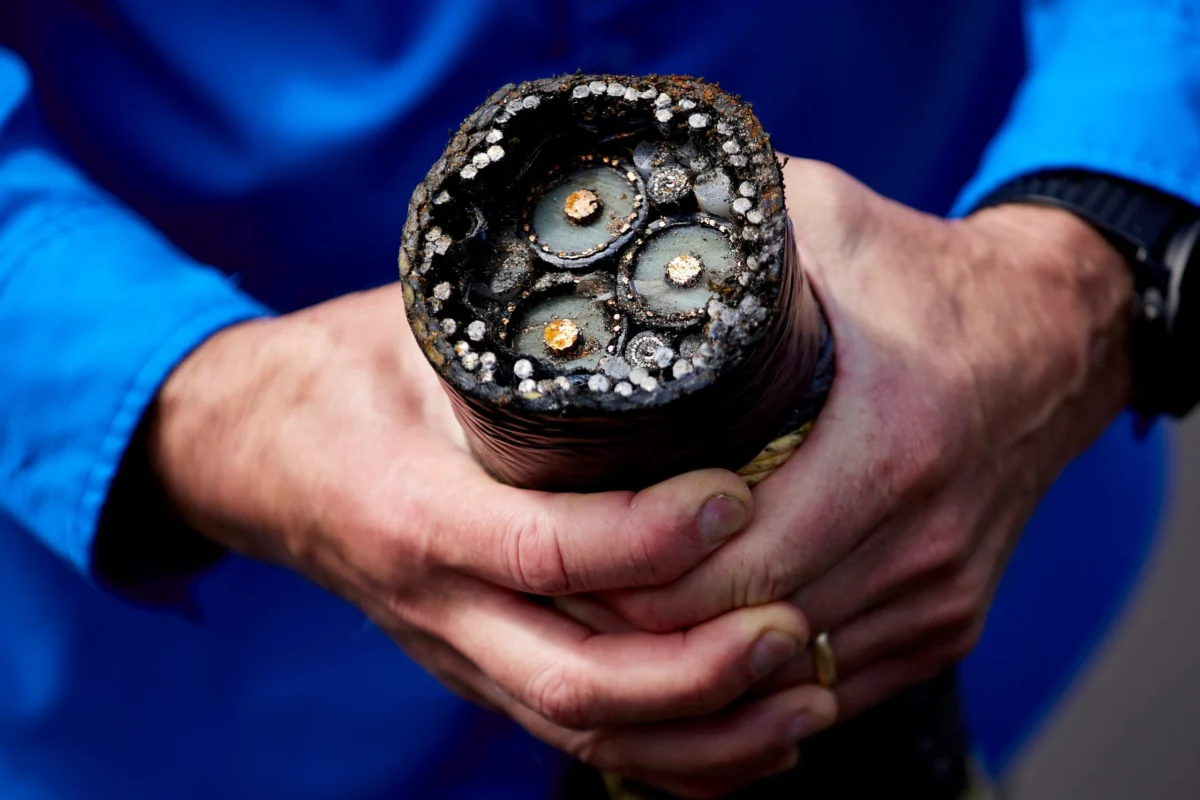
The facility is located approximately seven miles offshore, situated in a high-energy environment characterized by the consistent, powerful swells of the North Pacific. The site features four distinct "test berths," each capable of hosting multiple energy devices. These berths are connected to the shore via a series of heavy-duty subsea cables buried deep beneath the seabed to protect them from anchors and shifting sands. These cables terminate at a Utility Connection and Monitoring Facility (UCMF) in Newport, where the captured energy is conditioned and distributed to the regional power grid.
While the facility is officially open and grid-connected, it currently awaits the arrival of its first wave energy devices. This delay is attributed to shifts in the timing of federal funding for developers, many of whom rely on Department of Energy (DOE) grants to finance the expensive process of transporting and deploying multi-ton machinery in the ocean. However, the completion of the site’s infrastructure ensures that once funding cycles align, the United States will have a "plug-and-play" environment ready for immediate use.
A Strategic Alignment with National Security Interests
The Trump administration’s support for PacWave South, despite its broader pivot toward fossil fuels and away from offshore wind, is rooted in the perceived strategic advantages of marine energy. Department of Energy officials have highlighted that wave energy technologies are uniquely suited for national security applications. Unlike offshore wind farms, which have been characterized by the administration as potential risks to maritime navigation and radar systems, wave energy devices are often low-profile or entirely submerged.
The DOE has emphasized that wave-to-electricity conversion is ideal for providing persistent, low-visibility power in remote offshore environments. These applications include powering remote sensors for maritime domain awareness, charging autonomous underwater vehicles (AUVs) used for surveillance, and providing energy resiliency for forward-operating military bases in coastal regions. By developing a domestic supply chain and testing ground for these technologies, the administration views PacWave as a contributor to "energy dominance" and national defense rather than merely a climate-mitigation tool.
The Technical Architecture of PacWave South
The construction of PacWave South was an engineering feat that required the installation of approximately 12 miles of subsea cable and the development of specialized terrestrial infrastructure. The $150 million project, largely funded by the Department of Energy with additional support from the State of Oregon and Oregon State University, utilizes a sophisticated monitoring system to track the interaction between the machines and the marine environment.

The site is "pre-permitted," a designation that significantly lowers the barrier to entry for developers. Under typical circumstances, a company wishing to test a device in federal waters would have to spend years securing permits from a myriad of agencies, including the Federal Energy Regulatory Commission (FERC), the Bureau of Ocean Energy Management (BOEM), and the National Oceanic and Atmospheric Administration (NOAA). By securing these permits at the site level, PacWave allows developers to bypass much of the individual bureaucracy, saving millions of dollars and years of lead time.
Developers at the site are expected to test three primary types of wave energy converters:
- Point Absorbers: These are buoy-like structures that float on the surface or just below it. They generate power by capturing the vertical motion of the waves, using the relative movement between the floating body and a fixed base (or a secondary floating body) to drive a hydraulic or electric generator.
- Oscillating Water Columns: These devices resemble large, partially submerged chambers. As waves enter the chamber, they cause the water level inside to rise and fall, which compresses and decompresses the air trapped above. This moving air is forced through a turbine, which spins to generate electricity.
- Attenuators: These are long, multi-segmented floating structures oriented parallel to the direction of wave travel. As the segments flex and bend with the passing waves, the motion is captured by hydraulic rams or other energy-conversion systems located at the joints.
Chronology of Development and Federal Investment
The journey toward the opening of PacWave South began nearly a decade ago, reflecting the long-term commitment required to bring marine energy to the forefront of the national portfolio.
- 2016: The Department of Energy’s Water Power Technologies Office (WPTO) selects Oregon State University to lead the development of a grid-connected wave energy test site. Initial funding is allocated for site selection and environmental impact studies.
- 2018–2020: Extensive community outreach and environmental assessments are conducted. The project receives strong support from local stakeholders in Newport, who view the facility as a driver for economic diversification in a region traditionally dependent on fishing and tourism.
- 2021: Construction begins on the terrestrial components, including the Utility Connection and Monitoring Facility.
- 2022–2023: Offshore construction commences. Specialized vessels are used to lay the subsea cables and install the "vaults" that house the electrical connections on the seafloor.
- Early 2025: Following the transition in the federal government, the project undergoes a mandatory "go/no-go" review. Energy Secretary approval is required to proceed with the final grid connection.
- Summer 2025: The facility receives final federal approval and successfully connects its subsea infrastructure to the regional utility grid, marking the official completion of the construction phase.
The Economic and Environmental Promise of Marine Energy
The potential for wave energy in the United States is vast. According to federal estimates, the total available marine energy resource in the U.S. is equivalent to approximately 57% of the nation’s total electricity generation. While capturing 100% of this resource is technically and economically unfeasible, even a modest penetration of wave energy into the grid could provide a stable, carbon-free source of "baseload-like" power.
Unlike wind and solar energy, which are subject to rapid fluctuations based on weather patterns, wave energy is highly predictable. Ocean swells can be forecasted days in advance with high accuracy, allowing grid operators to better integrate wave power into the energy mix. Furthermore, the highest energy density in waves often occurs during the winter months when energy demand for heating is at its peak, providing a natural hedge against the seasonality of solar power.
In Oregon, the project is also viewed through an economic lens. The presence of PacWave South is expected to attract international technology firms to the region, creating high-tech jobs in marine engineering, cable maintenance, and data analysis. The local port of Newport is already seeing increased activity as it prepares to serve as the primary staging area for the deployment and maintenance of the massive wave energy devices.
Addressing Challenges and Future Outlook
Despite the optimism surrounding the facility’s opening, the wave energy industry remains in its "infancy," as noted by PacWave Director Dan Hellin. The primary challenge remains the durability of the machines. The Pacific Ocean is a "harsh mistress," with salt-water corrosion, extreme pressure, and the sheer physical force of storm surges presenting constant threats to mechanical integrity.
The "valley of death"—the gap between successful small-scale testing and commercial viability—has claimed many previous wave energy startups. By providing a controlled yet realistic environment, PacWave South aims to help companies survive this phase. The facility will provide invaluable data on how these machines interact with local marine life, including whale migrations and crab fisheries, ensuring that the industry grows in an environmentally responsible manner.
As the first wave energy converters arrive in the coming months, the eyes of the global renewable energy community will be on the Oregon coast. The success of PacWave South will likely determine whether wave energy becomes a cornerstone of the American blue economy or remains a niche technology relegated to specialized military applications. For now, the successful grid connection and federal approval represent a hard-fought victory for the scientists and engineers who believe that the power of the ocean is the next great frontier in American energy.
