

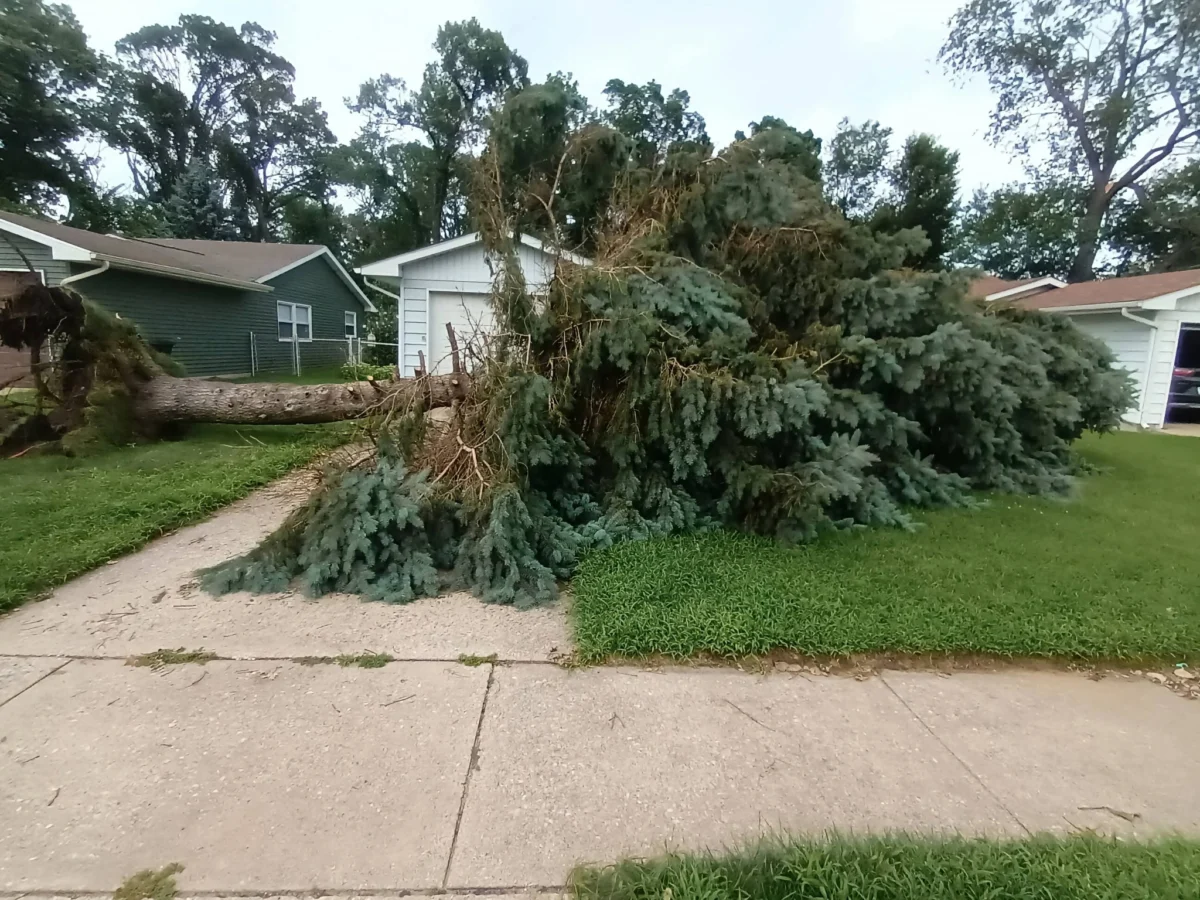
More than a week after a series of catastrophic storms decimated the electrical infrastructure of Northwest Indiana, tens of thousands of residents remain in the dark, grappling with a prolonged recovery effort that has tested the limits of regional emergency services and utility providers. As of Wednesday afternoon, Northern Indiana Public Service Co. (NIPSCO) reported that approximately 75,000 customers were still without electricity, a figure that underscores the sheer magnitude of the damage inflicted by the August 11 weather event. While utility crews have worked around the clock to restore service to hundreds of thousands of homes, the remaining outages are concentrated in Lake County, particularly in the city of Gary, where the timeline for full restoration has been pushed back to late August.
The crisis began on August 11, 2026, when a line of severe thunderstorms, characterized by "historic" wind speeds, tore through the southern tip of Lake Michigan. The storm system produced straight-line winds measured at 99 mph (159 kilometers per hour)—speeds equivalent to a Category 2 hurricane. The impact was immediate and devastating, initially plunging 300,000 customers into darkness across the NIPSCO service territory. In the days following the initial blast, the region has struggled to move from emergency response to a state of stabilization, with the human and economic costs mounting as the outage enters its second week.
A Timeline of Destruction and Recovery
The chronology of the disaster reveals a complex recovery process hampered by the severity of the infrastructure failure. On the evening of August 11, the storm front moved rapidly from the Illinois border across Northwest Indiana, leveling centuries-old trees and snapping utility poles like matchsticks. By the morning of August 12, NIPSCO and state officials realized they were facing one of the most significant power events in the state’s history.
By August 14, three days after the storm, crews had restored power to roughly half of the affected customers, but the remaining repairs involved the most difficult and labor-intensive sections of the grid. By August 18, the focus shifted heavily toward Lake County and the city of Gary, where the density of the damage was highest. On Wednesday, August 20, NIPSCO officials held a press conference to manage expectations, revealing that for many in Gary, the lights would not return until at least August 25. This two-week duration for a power outage in a major metropolitan area is rare in modern American utility management, signaling that the task at hand is not merely a "repair" but a wholesale "reconstruction."
The Human Cost: Fatalities and Public Health Concerns
The storms have proven to be more than an inconvenience; they have been deadly. Liz Woods, a spokesperson for the Indiana Department of Homeland Security, confirmed that seven individuals have lost their lives in connection with the weather event and its aftermath. Among the deceased are a 4-year-old boy, three men, and three women. While the specific causes of death vary, such events often involve falling trees, carbon monoxide poisoning from improperly ventilated generators, or health complications exacerbated by the loss of climate control and medical equipment.
For the survivors, the daily struggle for basic necessities has become an exhausting routine. In Portage, Indiana, residents like 51-year-old Jeremy Spurrier have described a life of expensive improvisation. Spurrier, who relies on a gas-powered generator to keep his household functioning, reported spending approximately $75 per day on fuel. Beyond the financial strain, the outage poses a direct threat to his health. As a diabetic, Spurrier must keep his insulin refrigerated; with his home power out, he has been forced to make regular trips across the border to Illinois to purchase ice to preserve his life-saving medication. "If I run out of ice, that’s several hundred dollars of insulin just ruined," Spurrier noted, highlighting the precarious situation facing many residents with chronic illnesses.
In Whiting, another lakeside community, the frustration is compounded by the perceived randomness of the outages. Myra Carden, 74, reported that her home sustained no physical damage—not even a lawn chair was displaced—yet she has suffered through two separate blackouts since the storm began. After losing power for two days last week, her electricity was restored, only to fail again on Tuesday. Carden’s experience reflects the instability of a grid that is being patched together while still under immense strain. Like many others, she faces the prospect of losing hundreds of dollars in groceries stored in her deep freeze.
Technical Challenges and Infrastructure Reconstruction
The delay in restoration is rooted in the physical reality of the grid’s destruction. Melody Birmingham, an executive at NIPSCO’s parent company, NiSource, clarified that the utility is dealing with a system that must be rebuilt from the ground up in several areas. In Gary alone, the storm destroyed approximately 300 distribution poles and 44 massive power transmission poles. Transmission poles are the backbone of the electrical grid, carrying high-voltage power over long distances; their destruction often means that even if local neighborhood lines are fixed, there is no power source to feed into them.

The 99 mph winds did more than just blow lines down; they created "entangled" damage where fallen trees are intertwined with live wires and telecommunications equipment. This requires a coordinated effort between tree-trimming crews and linemen, a process that is significantly slower than standard line repair. Currently, more than 600 linemen are concentrated in Gary, part of a massive mutual aid effort that has brought in utility workers from neighboring states and regions to assist NIPSCO’s local teams.
Socioeconomic Tensions and Official Responses
The prolonged nature of the outage has exacerbated existing social tensions in Gary, a majority-Black city that has historically faced economic challenges. Some residents have expressed concerns that wealthier or more suburban areas were prioritized for restoration, leaving Gary’s low-income neighborhoods to suffer longer.
Melody Birmingham, who is Black, addressed these allegations directly during a recent press briefing, denying that race or income played any role in the restoration hierarchy. She attributed the delays strictly to the geography of the storm’s path and the density of the damage. "We have areas that are probably affluent where we still have customers out as well," Birmingham said. "This has nothing to do with race or any type of division. It’s really a matter of where the storm hit."
Gary Mayor Eddie Melton has attempted to balance the frustration of his constituents with the reality of the technical challenges. While acknowledging that the city’s residents are "frustrated and exhausted," he emphasized that the crisis is a regional one affecting all of Northwest Indiana. The city has opened community centers to serve as cooling stations and charging hubs, providing hot meals to thousands who have lost the ability to cook at home.
Broader Economic and Policy Implications
The Northwest Indiana power crisis of 2026 serves as a stark reminder of the vulnerability of the American power grid to extreme weather events. The economic impact on the region is expected to be significant. Beyond the millions of dollars in lost perishable food and the direct costs of repair for NIPSCO, local businesses have lost over a week of revenue. For a city like Gary, which has been working toward an economic domestic resurgence, a two-week shutdown of major commercial corridors represents a significant setback.
Industry analysts suggest that this event will likely trigger a review of "grid hardening" initiatives in the Midwest. As climate patterns shift and high-wind events like derechos become more frequent or intense, the traditional model of above-ground wooden utility poles is increasingly seen as a liability. However, the cost of undergrounding lines or replacing wooden poles with steel or concrete alternatives is immense and often passed on to consumers through rate hikes.
Furthermore, the reliance on private generators during such crises has raised questions about public safety and energy equity. Those who can afford generators and the rising cost of gasoline can maintain a semblance of normalcy, while those in lower-income brackets are forced to rely on overstretched municipal services.
As the August 25 deadline for Gary approaches, the focus remains on the immediate safety of the 75,000 people still waiting for the hum of a refrigerator or the relief of air conditioning. Once the lights are back on, the conversation will inevitably shift toward how to prevent a "historic" storm from becoming a historic humanitarian crisis in the future. For now, the sound of chainsaws and the sight of utility trucks remain the primary features of the Northwest Indiana landscape, as a region tries to piece itself back together in the wake of nature’s fury.
