

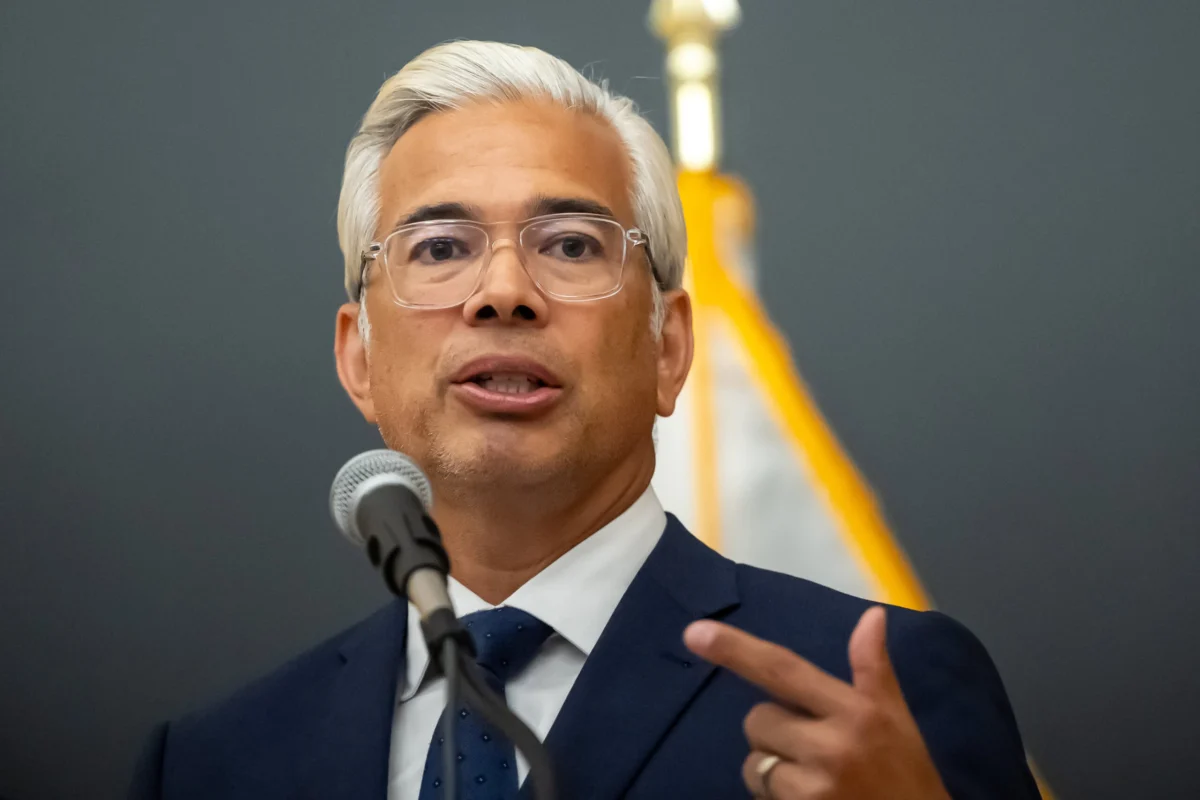
California Attorney General Rob Bonta declared on Thursday that the coalition of states seeking to block the proposed acquisition of Warner Bros. Discovery (WBD) by Paramount Global (via Skydance Media) would insist on "robust structural remedies" to reach any settlement in the burgeoning antitrust case. Speaking to CNBC’s David Faber, Bonta articulated a clear distinction between the states’ focused allegations and what he perceives as Paramount’s attempts to broaden the discussion beyond the specific market concentrations outlined in the complaint.
"They wanted to talk about everything except for what this case is about," Bonta stated, referring to Paramount’s apparent desire to discuss the broader streaming market, the fate of CNN, or the involvement of foreign regulators. "We want to talk about the three markets that we set forth in our complaint, where we think there’s antitrust violation." This resolute stance underscores the depth of the states’ commitment to their legal challenge, signaling a challenging path forward for the media giants hoping to merge.
The Heart of the Antitrust Challenge: Market Concentration
At the core of the multi-state lawsuit lies the concern over the potential market concentration that would result from the merger. Filed in July by Bonta and 11 other state attorneys general – including Arizona, Colorado, Connecticut, Massachusetts, Minnesota, Nevada, New Jersey, New Mexico, New York, Oregon, and Washington – the complaint specifically targets the combined entity’s control over significant portions of the film production and basic cable television programming markets. The lawsuit alleges that a combined Paramount-WBD would control nearly one-third of films and a similar share of basic cable TV programming, a threshold that regulators argue would stifle competition and harm consumers.
Bonta emphasized that the states’ legal strategy is rooted in a straightforward application of antitrust law. "We are the ones who’ve looked at this from a straight-up law and facts perspective in the American economy under American law under Clayton Act Section 7, which applies here as antitrust law," Bonta explained. He characterized the situation as a "straight up, meat-and-potatoes, black-and-white, bread-and-butter, antitrust case." The Clayton Antitrust Act, a more than 100-year-old federal statute, specifically prohibits anticompetitive mergers and acquisitions, providing the legal framework for the states’ challenge. Section 7 of the Act empowers the government to prevent mergers that "substantially lessen competition, or tend to create a monopoly."
Proposed Merger at a Glance: A Colossal Combination
The proposed merger represents a monumental consolidation within the entertainment industry. Paramount Global, through its parent company Skydance Media, aims to acquire Warner Bros. Discovery, uniting two of Hollywood’s most storied studios: Warner Bros. and Paramount Pictures. Beyond the iconic film divisions, the deal would bring together vast portfolios of television networks and streaming platforms.
Paramount’s assets include the venerable broadcast network CBS, along with a suite of popular pay TV channels such as MTV, BET, Comedy Central, and Nickelodeon. Its streaming arm, Paramount+, has been a key focus of its recent growth strategy. Warner Bros. Discovery, itself a product of a recent merger between WarnerMedia and Discovery Inc., boasts a formidable collection of brands including CNN, HBO, TNT, TBS, truTV, Discovery Channel, HGTV, Food Network, TLC, and Animal Planet, alongside its streaming service HBO Max (now simply Max).

The strategic rationale often cited for such mega-mergers in the media sector includes achieving greater scale to compete with tech giants, consolidating content libraries to attract and retain subscribers in the fiercely competitive streaming wars, and leveraging combined advertising revenues. Proponents argue that a larger, more diversified entity would be better positioned to invest in high-quality content, innovate new technologies, and expand globally. However, these benefits are precisely what antitrust regulators scrutinize for potential negative impacts on competition.
A Chronology of Contention: From Proposal to Impasse
The path to this antitrust showdown has been marked by several key developments:
- Initial Merger Proposal (Early 2026): While specific dates for the initial discussions are not provided, reports indicated that Paramount (through Skydance) and Warner Bros. Discovery had been exploring a merger earlier in the year, aiming to create a media powerhouse. The companies reportedly sought to finalize the deal by September 30.
- July 2026 – Lawsuit Filed: The group of 12 state attorneys general, led by California’s Rob Bonta, filed their lawsuit to block the merger. This intervention signaled a significant regulatory hurdle that had not been widely anticipated, especially at such a scale from state-level authorities.
- July 24, 2026 – Merger Delay Agreement: Following the filing of the lawsuit and likely in response to increasing regulatory pressure, Paramount agreed to delay the proposed acquisition of WBD. The new target for closing the deal was pushed back significantly, to as late as June 2027, indicating the complexity and potential for a protracted legal battle.
- August 2026 – Paramount CEO Expresses Confidence: During Paramount’s Q2 2026 earnings call, CEO David Ellison publicly reiterated his confidence that the deal would ultimately close, despite the legal challenges. This statement underscored the company’s belief in the strategic merits of the merger and its willingness to defend it.
- March [Year Not Specified, but Implied 2027] – Trial Date Set: A trial on the matter has been scheduled for March, setting a firm deadline for either a settlement or a full legal confrontation.
- Thursday [Date Not Specified, but Implied Recent] – Bonta’s Latest Remarks: Bonta’s recent statements to CNBC reaffirm the states’ strong position and their focus on specific remedies, suggesting that any settlement would require significant concessions from the merging parties.
Paramount’s Counter-Arguments and Defense
Paramount has consistently pushed back against the states’ allegations, asserting that the lawsuit "misrepresents competition in the entertainment industry today." The company maintains that the current media landscape, characterized by the explosive growth of streaming services and a multitude of content producers, is highly competitive. From Paramount’s perspective, a merger with WBD would create a stronger entity capable of competing more effectively against tech behemoths like Netflix, Amazon, Apple, and Disney, rather than reducing competition.
Jeffrey Kessler, Paramount’s lead trial counsel, previously told CNBC that Paramount "believes strongly" in the combination of the two companies and is prepared to vigorously defend the transaction. Kessler even indicated the company’s willingness to take the matter to the Supreme Court if faced with a prolonged blockade, highlighting the high stakes involved and Paramount’s determination.
David Ellison’s confidence during the August earnings call further solidified the company’s commitment. Paramount’s defense will likely focus on demonstrating that the media marketplace is dynamic and expansive, rendering the states’ concerns about specific market concentrations outdated or overblown in the context of global, multi-platform competition.
The Nuance of Market Definitions: Streaming vs. Traditional
A significant point of contention revolves around the definition of the relevant market. Paramount, like many media companies facing antitrust scrutiny, seeks to broaden the market definition to include the burgeoning streaming sector and the overall content landscape. Their argument suggests that traditional distinctions between film distribution, basic cable, and even broadcast television are increasingly blurred in an era where consumers access content across a myriad of platforms. They point to the shrinking pay TV subscriber base as evidence of a market in flux, where consolidation might be necessary for survival.
However, Attorney General Bonta firmly rejected this expanded market definition. "Whether the market is shrinking or growing is really irrelevant," Bonta stated, underscoring the states’ focus on the specific markets identified in their complaint. He clarified that the lawsuit does not allege antitrust violations in the streaming market, nor does it focus on assets like CNN. By narrowing the scope to film production and basic cable TV programming, the states aim to demonstrate a "presumptively illegal market concentration" based on traditional, well-established antitrust metrics, regardless of broader industry trends. This strategic decision by the attorneys general is crucial, as the definition of the relevant market often dictates the outcome of antitrust cases. A narrow market definition makes it easier to prove market dominance and potential harm to competition.

The Call for "Robust Structural Remedies"
Bonta’s demand for "robust structural remedies" is a critical aspect of the potential settlement discussions. In antitrust law, remedies typically fall into two categories: behavioral and structural. Behavioral remedies involve imposing rules on how a merged company can operate (e.g., limitations on pricing, access to content). Structural remedies, however, are far more drastic, often requiring the divestiture or sale of specific assets.
For a merger of this scale, "robust structural remedies" would likely entail the merged entity being forced to sell off certain film studios, television networks, or other content assets to alleviate competition concerns. For example, regulators might demand the sale of specific cable channels or film libraries if they determine that their combined ownership would lead to an undue concentration of power. Such divestitures can be complex and costly, potentially altering the strategic rationale for the merger itself.
Bonta’s willingness to engage in settlement talks – "coming to the table has always been on the table" – comes with a clear condition: good faith discussions focused on the actual allegations and the potential for these significant remedies. This indicates that a simple promise of good behavior would not suffice; tangible changes to the combined company’s structure would be required to appease the states.
Broader Implications for the Media Landscape
The Paramount-WBD antitrust case carries significant implications for the broader media and entertainment industry, still reeling from a wave of consolidation over the past decade.
- Impact on Consumers: If the merger proceeds unchecked, the reduction in competition in film distribution and basic cable could lead to fewer choices for consumers, potentially higher prices for content, and less innovative programming. Fewer independent voices might find avenues for distribution, as major studios control more of the market.
- Content Creators and Independent Studios: A highly concentrated market could limit opportunities for independent filmmakers and smaller production companies. With fewer major buyers or distributors, their bargaining power could diminish, making it harder to secure funding, distribution deals, and fair compensation.
- Precedent for Future Mergers: The outcome of this case will send a strong signal to other companies contemplating large-scale mergers in the media sector. A successful block or a settlement requiring significant divestitures could embolden regulators and deter future consolidation attempts, particularly if they involve traditional media assets.
- Regulatory Scrutiny: This lawsuit is indicative of a broader trend of increased antitrust enforcement under the current administration, which has signaled a more aggressive stance against corporate consolidation across various industries. The involvement of a coalition of state attorneys general further amplifies the regulatory pressure, demonstrating a coordinated effort to uphold competition.
The current media environment is in a state of flux, with traditional revenue streams from linear television declining and the streaming market becoming increasingly saturated and expensive to operate. Companies often argue that consolidation is essential for survival and to compete globally. However, antitrust authorities like Attorney General Bonta are making it clear that such arguments do not supersede the fundamental principles of competition law, particularly when it comes to long-established markets for film and television content.
As the March trial date approaches, the entertainment industry watches closely. Whether Paramount and the states can find common ground in the boardroom, or if a courtroom battle becomes inevitable, the resolution of this case will undoubtedly reshape the competitive landscape of Hollywood for years to come.
