

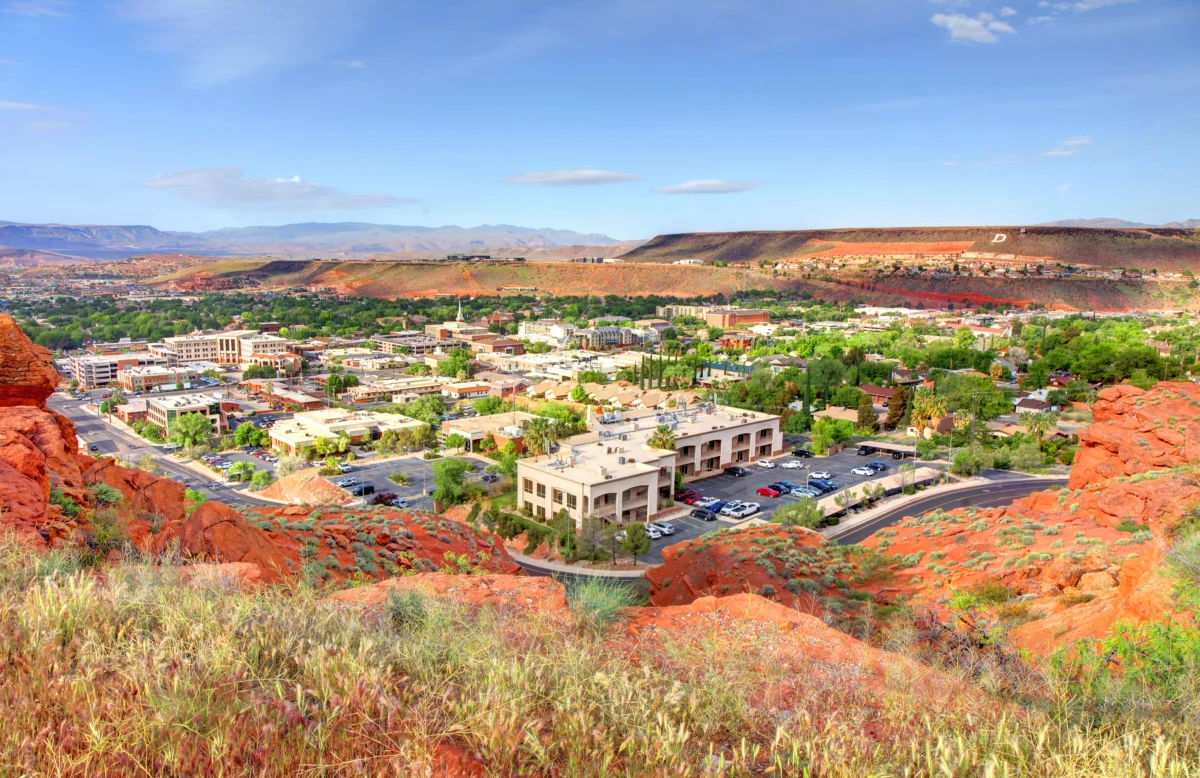
A groundbreaking new index from the National Association of Realtors (NAR) is providing commercial real estate investors with a forward-looking perspective, pinpointing regions poised for significant demand growth. South Carolina has emerged as the top-ranking state overall, signaling robust economic fundamentals across its diverse metropolitan areas. Concurrently, St. George, Utah, has secured the distinction of being the strongest individual metropolitan market, primarily driven by exceptional office employment growth and substantial population influx. These findings underscore a continuing shift in commercial real estate dynamics, moving away from traditionally dominant coastal hubs towards Sunbelt and smaller, high-growth markets.
The NAR’s innovative index, designed as a "crystal ball" for the commercial real estate sector, meticulously evaluates more than 300 metropolitan markets across the United States. Its primary objective is to identify where economic conditions are fostering an environment ripe for future demand in the office, industrial, retail, and multifamily sectors. By analyzing a comprehensive suite of local economic factors, the index offers a data-driven compass for investors seeking to navigate an increasingly complex and evolving market landscape. This sophisticated tool harnesses government data from authoritative sources such as the Bureau of Labor Statistics (BLS) and the U.S. Census Bureau, focusing on critical indicators like population growth and migration patterns, which are deemed foundational to future real estate needs.
Unpacking the Methodology: A Deep Dive into Demand Drivers
The core strength of the NAR index lies in its granular approach to assessing each commercial real estate sector. For the office sector, the index scrutinizes growth in professional and business services employment. This metric serves as a direct proxy for the expansion of companies that require office space, ranging from tech startups to consulting firms and financial services. A thriving professional services sector typically indicates a healthy, diversifying economy that can support new commercial developments.
In the industrial sector, the focus shifts to employment growth within manufacturing, transportation, and warehousing. This segment of the economy has seen a dramatic resurgence and transformation, fueled by e-commerce acceleration, supply chain reconfigurations, and a push for domestic manufacturing. Regions experiencing an uptick in these employment categories are likely to see increased demand for warehouses, distribution centers, and light industrial facilities. The strategic importance of logistics and last-mile delivery has further amplified the significance of these indicators.
For the retail sector, the index measures growth in retail trade employment, complemented by an analysis of leisure and hospitality employment. These combined factors reflect consumer spending power and the vitality of local economies that support brick-and-mortar businesses, restaurants, and entertainment venues. While e-commerce continues to reshape retail, physical retail spaces that offer experiential value or cater to growing populations remain crucial.
The multifamily sector, critical for housing a growing workforce and population, incorporates population growth and net migration — both domestic and international. This holistic view recognizes that an increasing resident base, whether from within the U.S. or from abroad, directly translates into a need for more rental housing units. Understanding migration patterns is particularly vital in the current climate, as demographic shifts continue to redefine urban and suburban living.
Nadia Evangelou, principal economist and director of real estate research at NAR, emphasized the index’s utility, stating, "It doesn’t say, ‘OK, go there and just buy property,’ but it says… where the data shows that the momentum is building, the demand is building." This perspective highlights the index as a strategic guide, offering insights into market fundamentals rather than prescriptive investment advice, encouraging investors to conduct further due diligence based on these foundational indicators.
South Carolina: A State on the Ascendant
South Carolina’s top ranking as the state with the highest future potential demand for commercial real estate is a testament to its sustained economic growth and strategic advantages. Over the past decade, the state has diversified its economy significantly, moving beyond traditional agriculture and tourism to become a major player in advanced manufacturing, automotive production, aerospace, and logistics. Companies like BMW, Volvo, and Boeing have established substantial operations within the state, creating a robust industrial base and a ripple effect of supporting businesses and professional services.
The state’s port system, particularly the Port of Charleston, is one of the busiest on the East Coast, facilitating global trade and driving demand for warehousing and distribution facilities across the region. Furthermore, South Carolina has experienced a consistent influx of new residents, attracted by its relatively lower cost of living, favorable business environment, and attractive coastal and inland communities. This population growth directly fuels demand in the multifamily and retail sectors. Cities like Charleston, Greenville, and Spartanburg have emerged as economic powerhouses, each contributing uniquely to the state’s overall vitality. Greenville, for instance, has become a hub for manufacturing and technology, while Charleston continues to thrive as a tourism and logistics center. This confluence of manufacturing, logistics, tourism, and a growing population provides a fertile ground for broad-based commercial real estate expansion, cementing South Carolina’s position as a national leader in future demand.
St. George, Utah: The Nation’s Metro Market Gem
While South Carolina leads at the state level, St. George, Utah, stands out as the single strongest metropolitan market in the NAR index. Its exceptional performance is attributed to a confluence of factors, most notably the strongest office employment growth in the nation. This surge in office-based jobs indicates a rapidly expanding professional services sector and a growing presence of companies choosing St. George as a strategic location. Situated in southwestern Utah, near the Arizona border, St. George has long been recognized for its stunning natural landscapes, including proximity to Zion National Park, making it an attractive destination for retirees and tourists.
However, its recent economic boom signifies a deeper transformation. The city has become a magnet for domestic in-migration, attracting individuals and businesses seeking a high quality of life, a more affordable cost of living compared to major California cities, and a business-friendly environment. This demographic shift has created a virtuous cycle: population growth fuels demand for housing and retail, while a growing workforce attracts more businesses, particularly in sectors that value an educated talent pool and a pleasant environment. Evangelou highlighted St. George’s multifaceted strength: "It also has very strong population growth and in-migration, and its industrial demand is above average. So St. George, for example, is the No. 1, because one industry happened to have a good year, so there is a broader momentum over there." This indicates that St. George’s growth isn’t reliant on a single sector but is rather a testament to diversified economic momentum.
The Post-Pandemic Realignment: A Shift from Superhot to Sustainable
The NAR index offers a crucial comparison to 2022, a period widely recognized as the peak of the pandemic-driven migration boom, where many "superhot" markets experienced unprecedented growth. The data reveals a significant realignment, with most of these formerly scorching markets now showing a marked decline in relative strength. Cities like Austin, Texas; Miami, Florida; and Naples, Florida, which once dominated headlines for their rapid expansion and soaring real estate values, have seen their momentum wane.
This cooling trend can be attributed to several factors. Rapid appreciation led to affordability challenges, making these markets less attractive to new migrants. The initial rush of remote workers seeking sunnier climes has somewhat normalized, and some companies have begun to implement return-to-office policies, tempering the extreme demand for housing and commercial spaces in these locations. Furthermore, rising interest rates and broader economic uncertainties have introduced a more cautious approach among investors and homebuyers.
In stark contrast to this broader trend, Raleigh, North Carolina, stands out as the only major U.S. market that is stronger today than it was in 2022, according to the index. Raleigh’s resilience can be attributed to its deeply entrenched economic drivers, particularly its role as a cornerstone of the Research Triangle Park (RTP). RTP is a global hub for technology, research, and life sciences, attracting consistent investment and a highly skilled workforce. This robust and diversified economic base provides a stable foundation for commercial real estate demand, insulating it from some of the volatility seen in markets more heavily reliant on speculative growth or a transient remote workforce. Raleigh’s sustained growth underscores the importance of strong institutional anchors and a diverse industry base in fostering long-term commercial real estate vitality.
The Ascendancy of Small and Mid-Sized Markets
A key takeaway from the NAR index is the burgeoning potential within small and mid-sized metropolitan markets. While traditional indices often concentrate on the largest urban centers, Evangelou noted that these smaller regions could offer "some of the best opportunities for investors." This insight challenges conventional wisdom, suggesting that significant returns may now be found beyond the established gateway cities.
Examples provided include Fayetteville, Arkansas; Huntsville, Alabama; and Spartanburg, South Carolina. Fayetteville is experiencing "broad-based growth," indicative of a diversifying economy that is attracting new residents and businesses across various sectors. This broad appeal suggests a sustainable growth trajectory rather than reliance on a single industry. Huntsville, Alabama, has garnered particular attention for achieving "one of the strongest multifamily scores in the nation." This reflects a rapidly expanding population and a high demand for rental housing, likely driven by its significant aerospace and defense industries, including NASA’s Marshall Space Flight Center and the U.S. Army’s Redstone Arsenal. These institutions provide stable, high-paying jobs that attract a steady stream of residents. Spartanburg, as mentioned earlier, contributes to South Carolina’s overall strength, benefiting from manufacturing investments and a strategic location in the rapidly growing Upstate region.
The appeal of these smaller markets stems from several factors: lower operating costs for businesses, a more affordable cost of living for employees, less market saturation, and often a higher quality of life. As larger cities grapple with congestion, high taxes, and escalating real estate prices, these mid-tier markets offer compelling alternatives, making them increasingly attractive for both corporate relocations and individual migration. This decentralization trend, accelerated by pandemic-era shifts, appears to be solidifying into a long-term pattern.
Sector-Specific Insights and Geographic Nuances
The NAR index further refines its analysis by identifying top-performing markets for each of the four commercial real estate sectors. This granular detail allows investors to target specific opportunities based on their portfolio objectives. For instance, Salem, Oregon, and Fairbanks, Alaska, are ranked highest for industrial demand. While seemingly unconventional choices, these rankings highlight the diverse drivers of industrial growth. Salem, as the state capital of Oregon, benefits from its position within the Willamette Valley, a region with agricultural processing, manufacturing, and growing logistics needs due to its proximity to Portland and major transportation arteries. Fairbanks, Alaska, on the other hand, likely sees strong industrial demand linked to resource extraction, military installations (Fort Wainwright, Eielson Air Force Base), and the logistical challenges of serving a remote region, requiring robust warehousing and supply chain infrastructure. These examples underscore that industrial demand is not solely concentrated in traditional manufacturing belts but is influenced by unique regional economic activities and logistical requirements.
Evangelou reiterated the broader trend contrasting large coastal markets with the emerging growth areas: "When we take a look at New York, San Francisco and the big coastal markets, we see that the large markets are still generally weaker than the fast-growing Sunbelt and smaller markets in this index." This statement encapsulates the ongoing paradigm shift. While major coastal cities will always retain their significance as global economic hubs, their commercial real estate markets are facing headwinds from high costs, remote work trends impacting office demand, and a general re-evaluation of urban density. Meanwhile, the Sunbelt and strategically positioned smaller markets are capturing a disproportionate share of new investment and development, driven by demographic shifts and evolving business needs.
Broader Implications for Investors, Developers, and Urban Planning
The findings of the NAR index carry significant implications for various stakeholders in the commercial real estate ecosystem. For investors, the index serves as a powerful tool for recalibrating strategies. It advocates for a more nuanced, data-driven approach that extends beyond traditional investment geographies. Diversification into emerging small and mid-sized markets, coupled with a deep understanding of local economic drivers, will be crucial for identifying resilient and high-growth opportunities. This may involve a shift from "trophy asset" hunting in gateway cities to more granular, boots-on-the-ground analysis in less-charted territories. Understanding sector-specific strengths within these markets becomes paramount, allowing for targeted investments in multifamily, industrial, or retail properties where underlying demand is strongest.
Developers must also adapt by focusing on projects that align with the specific needs of these high-growth areas. This could mean developing more flexible office spaces in markets like St. George, expanding industrial parks in regions like South Carolina, or building new multifamily communities in places like Huntsville. The emphasis will be on creating sustainable, community-centric developments that cater to the evolving preferences of residents and businesses.
For urban planners and local governments, the index offers a roadmap for strategic development. Cities now identified as high-potential markets must proactively manage growth to ensure it is sustainable and equitable. This includes investing in infrastructure (transportation, utilities, public services), planning for affordable housing, and implementing zoning regulations that support responsible development while preserving community character. Failure to manage rapid growth effectively can lead to challenges such as strained resources, increased congestion, and rising housing costs, potentially eroding the very qualities that made these markets attractive in the first place.
The long-term implications suggest that the commercial real estate market is undergoing a profound structural transformation, rather than merely a cyclical adjustment. Factors such as the enduring impact of remote and hybrid work models on office demand, the continued expansion of e-commerce driving industrial and logistics needs, and ongoing demographic shifts towards more affordable and amenity-rich regions will continue to shape investment decisions for years to come. The NAR index provides a timely and essential framework for understanding these complex forces, guiding stakeholders towards informed decisions in an era of unprecedented change.
