

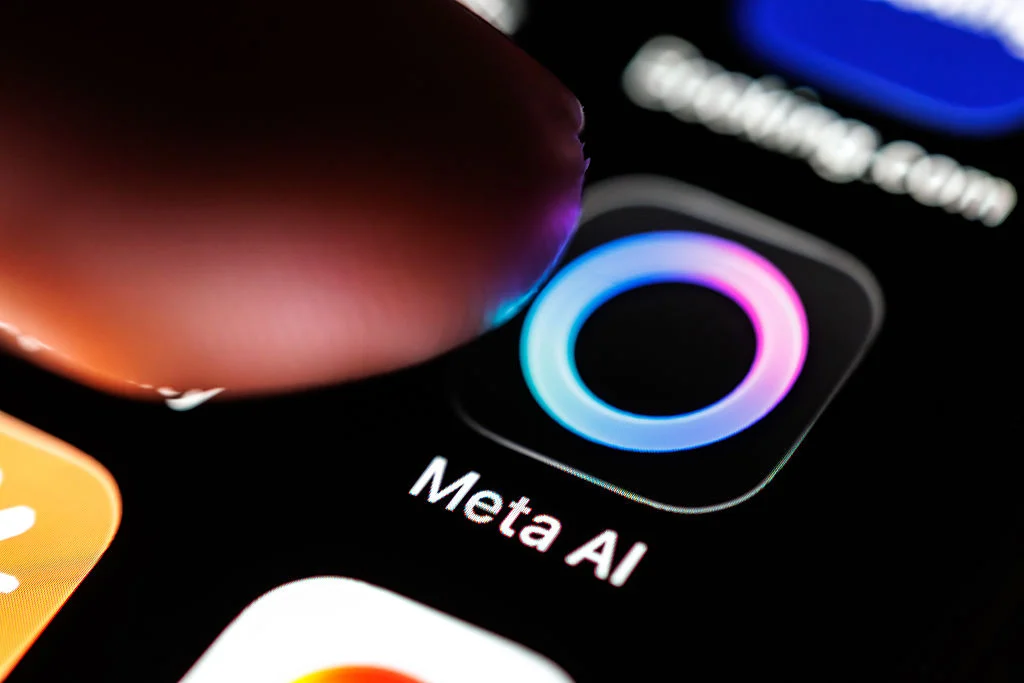
REDMOND, WA – August 20, 2026 – Meta Platforms, Inc. today announced the immediate availability of a new, dedicated Meta AI application for macOS, marking a significant expansion of its artificial intelligence capabilities into the desktop environment. The new Mac app integrates system-wide dictation and advanced contextual understanding powered by its Muse Spark model, alongside a suite of robust features designed specifically to empower business owners and streamline operations across Meta’s extensive ecosystem and beyond. This strategic launch underscores Meta’s escalating commitment to embedding AI deeply into its product offerings, positioning itself as a formidable contender in the rapidly evolving enterprise AI market.
The release, announced at 5:11 AM PDT on August 20, 2026, extends Meta AI’s reach beyond mobile devices and web interfaces, bringing its intelligence directly to the macOS desktop. A central pillar of the new application is its innovative system-wide dictation feature, which allows users to dictate text seamlessly across any application on their Mac. This functionality mirrors established tools like Wispr Flow, Superwhisper, and Monologue, but is enhanced by Meta AI’s underlying conversational intelligence, promising a more accurate and contextually aware transcription experience. This move directly challenges competitors, notably Google, which updated its Gemini app for Mac just last month to also enable a system-wide dictation feature, highlighting the escalating competition among tech giants to capture the productivity market with advanced AI.
Beyond dictation, the Meta AI Mac app boasts an impressive ability to analyze the current content displayed on the user’s screen. Leveraging its advanced Muse Spark model, the AI can interpret visual and textual information present on the desktop and answer questions based on this immediate context. This capability transforms the AI assistant from a simple query engine into a dynamic, on-demand analytical partner. For instance, a user reviewing a complex document or a detailed spreadsheet could simply ask Meta AI questions about its contents, receiving instantaneous, informed responses without needing to manually copy and paste information. This real-time contextual awareness is poised to significantly boost productivity for professionals across various sectors, enabling faster decision-making and more efficient information processing.
Strategic Push into Business AI Solutions
While the system-wide dictation and screen context features cater to a broad user base, the core focus of this Meta AI update is squarely aimed at business owners. Meta has engineered the new Mac app to act as a powerful business intelligence hub, enabling merchants and enterprises to connect their various online assets and gain actionable insights. Specifically, the application allows for direct integration with Instagram and Facebook accounts, Meta ad campaigns, and, crucially, Google Workspace services including Gmail, Docs, Sheets, and Slides. This cross-platform integration facilitates a holistic view of business operations, consolidating disparate data sources into a single, intelligent interface.
The benefits for businesses are multifaceted and immediate. By connecting their social media profiles and advertising campaigns, users can query Meta AI to receive detailed information about campaign performance. This includes metrics such as return on investment (ROI), click-through rates (CTR), conversion rates, reach, impressions, and demographic breakdowns of engaged audiences. The AI can analyze these data points to identify which posts or ad creatives have resonated most effectively with target demographics, providing invaluable feedback for refining future marketing strategies. Furthermore, the assistant can delve into audience engagement metrics, offering insights into likes, comments, shares, saves, and video views, allowing businesses to better understand the nuances of their customer interactions.
A particularly compelling feature for businesses is Meta AI’s capacity to provide intelligence on competitors. By analyzing publicly available data, the AI assistant can offer insights into competitors’ market share, advertising expenditures, content strategies, and engagement patterns. This competitive intelligence equips businesses with the knowledge needed to benchmark their performance, identify market opportunities, and develop more effective competitive strategies. In today’s hyper-competitive digital landscape, access to such data-driven insights can be a critical differentiator for businesses striving to maintain an edge.
Beyond analytical capabilities, the new Meta AI integration with business tools extends to content generation and document drafting. The AI assistant can now create professional proposal decks, draft comprehensive documents, and generate detailed spreadsheets based on user prompts and integrated data. For example, a business owner could instruct Meta AI to "create a proposal deck for a new marketing campaign targeting Gen Z, incorporating our Q1 performance data and competitor analysis," and the AI would generate a structured presentation, pulling relevant information from linked accounts. Similarly, it could draft a marketing report or populate a sales forecast spreadsheet, significantly reducing the manual effort and time typically required for such tasks. This automation of administrative and creative tasks frees up valuable human resources, allowing teams to focus on higher-level strategic initiatives.
Meta’s Broader AI Strategy and Market Positioning
This Mac app launch is not an isolated event but a crucial component of Meta’s overarching strategy to become a leader in artificial intelligence, particularly in the enterprise sector. The company has been aggressively expanding its AI footprint throughout 2026. Just months prior, in June 2026, Meta made its AI agent for WhatsApp Business globally available, enabling automated customer support and inquiry handling directly within the popular messaging platform. This move signaled Meta’s intent to embed AI-powered agents across its family of applications, transforming how businesses interact with their customers.
During Meta’s Q2 2026 earnings call in July, CEO Mark Zuckerberg explicitly articulated the significant opportunity he sees in "selling agents to businesses and automating work on their behalf." This vision extends beyond simple chatbots, aiming for sophisticated AI systems capable of performing complex tasks, managing campaigns, and providing strategic insights. The Mac app, with its deep business integrations and productivity features, is a tangible realization of this vision, offering a desktop-centric interface for these advanced AI capabilities. Zuckerberg’s statements highlight a clear strategic pivot towards monetizing AI through enterprise solutions, diversifying Meta’s revenue streams beyond advertising.

Meta’s commitment to AI is also evidenced by its ongoing research and development in large language models (LLMs) and multimodal AI, including its open-source Llama models. While the Muse Spark model powering the Mac app is a proprietary offering, Meta’s broader AI strategy often involves a dual approach: leveraging open-source contributions to foster innovation and talent, while simultaneously developing cutting-edge proprietary models for its core products and services. This allows Meta to benefit from the wider AI community while maintaining competitive advantages in its commercial offerings.
The company’s substantial investments in AI infrastructure, including vast computing resources and data centers, further underscore its long-term commitment. Industry analysts have pointed out that Meta’s aggressive push into enterprise AI is a direct response to the escalating AI arms race among tech giants. With Google, Microsoft, and OpenAI making significant strides in AI assistants and enterprise solutions, Meta cannot afford to be left behind. By leveraging its immense user base on Facebook, Instagram, and WhatsApp, Meta aims to create a cohesive AI ecosystem that seamlessly integrates into the daily workflows of businesses.
Competitive Landscape and Industry Reactions
The immediate comparison drawn by industry observers is with Google’s Gemini app for Mac. Google’s earlier update to include system-wide dictation on macOS demonstrated a clear intention to capture the desktop AI assistant market. However, Meta AI’s offering, particularly its deep integration with Meta’s own advertising and social platforms, alongside Google Workspace, presents a distinct value proposition. While Gemini focuses on broader productivity and information retrieval, Meta AI appears to be carving out a niche specifically tailored for businesses operating within Meta’s extensive digital advertising and social media ecosystem. This targeted approach could give Meta an edge with small and medium-sized businesses (SMBs) that heavily rely on Facebook and Instagram for their marketing and customer engagement.
Beyond Google, other players like Microsoft with Copilot and specialized dictation tools also vie for market share. Microsoft’s Copilot, deeply integrated into Windows and Microsoft 365, offers similar productivity enhancements within its own ecosystem. Apple, too, is rumored to be enhancing its native AI capabilities for macOS, potentially escalating the competition further. The entry of Meta into this space with a dedicated Mac app signifies a maturing market where AI assistants are no longer confined to mobile or web, but are becoming integral to desktop operating systems.
Initial reactions from industry analysts have been largely positive, recognizing the strategic importance of this launch. "Meta’s move to a dedicated Mac app for Meta AI, especially with its robust business integrations, is a smart play," commented Dr. Evelyn Reed, a lead analyst at TechInsights Group. "It leverages their core strength in social media and advertising, providing a compelling tool for businesses that are already deeply invested in the Meta ecosystem. The screen context feature, powered by Muse Spark, is particularly innovative and could be a significant productivity booster." Other analysts highlighted the importance of Google Workspace integration, noting that it makes Meta AI a more versatile tool for businesses that often operate across multiple platforms.
Implications and Future Outlook
The launch of the Meta AI Mac app carries significant implications for various stakeholders. For businesses, it represents a powerful new avenue for efficiency, data-driven decision-making, and automated task management. Small businesses, in particular, may find these tools invaluable for competing with larger enterprises, enabling them to optimize marketing spend, understand customer behavior, and generate content with unprecedented ease. The potential for reduced operational costs and increased ROI is substantial.
For Mac users, the app offers enhanced productivity, integrating advanced AI capabilities directly into their preferred operating system. The seamless dictation and contextual assistance could redefine how professionals interact with their computers, making workflows smoother and more intuitive. This also signals a broader trend where AI is becoming an invisible layer across operating systems, fundamentally changing the user experience.
For Meta, this launch strengthens its position as an AI innovator and a key player in the enterprise software market. It provides a new monetization channel beyond advertising, aligning with Zuckerberg’s long-term vision for the company. Success in this domain could help Meta diversify its revenue, mitigate reliance on ad revenue fluctuations, and build a more resilient business model. It also helps to solidify Meta’s ecosystem, creating more reasons for businesses to stay within its suite of tools.
However, the expansion also brings challenges. Data privacy and security, especially concerning the screen context feature and the integration with sensitive business data, will be paramount. Meta will need to ensure robust safeguards and transparent data handling policies to maintain user trust. The accuracy and reliability of AI-generated insights and content will also be under scrutiny, requiring continuous refinement of models like Muse Spark. Furthermore, the ethical implications of AI-driven automation, including potential impacts on employment, will require careful consideration and responsible deployment strategies.
Looking ahead, the enterprise AI market is poised for rapid growth and intense innovation. Meta’s dedicated Mac app, with its unique blend of system-wide dictation, contextual awareness, and deep business integrations, positions the company strongly in this competitive landscape. As AI continues to evolve, Meta’s strategy to embed intelligent agents across its platforms and provide powerful tools for businesses will likely be a defining factor in its future trajectory, shaping how millions of enterprises operate in the digital age. The August 20, 2026 launch serves as a clear indicator that Meta is not just participating in the AI revolution, but actively striving to lead it, particularly in the critical domain of business enablement.
