

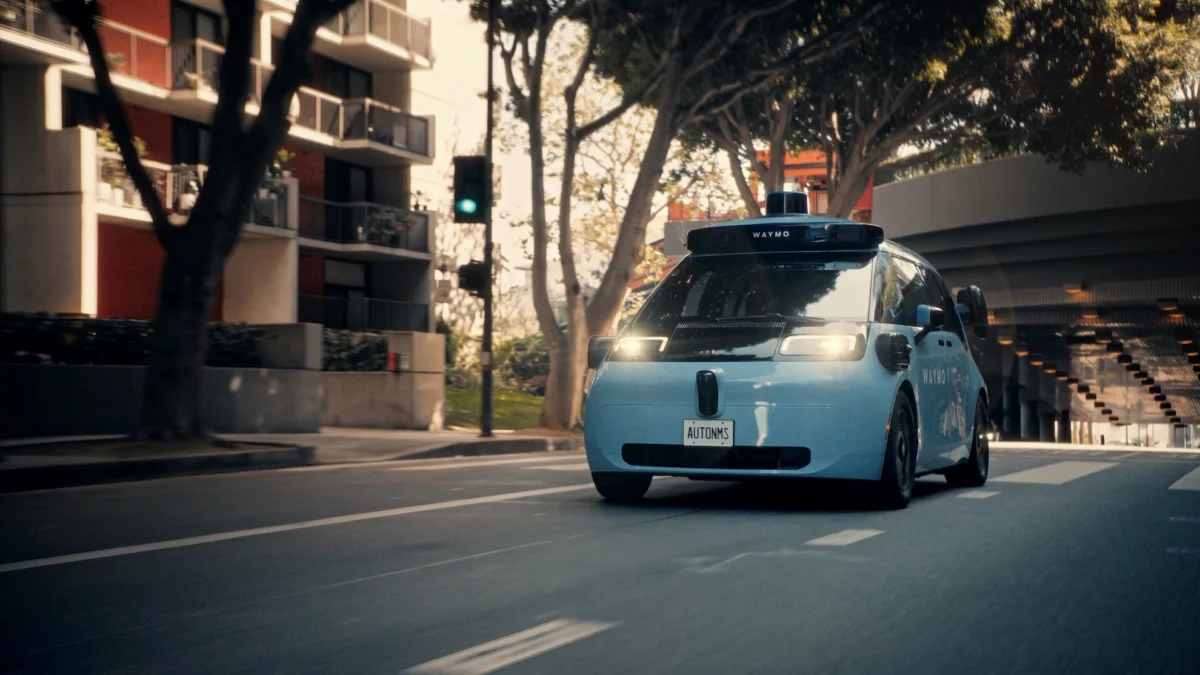
This significant rollout signals a new phase in Waymo’s commercial strategy, moving beyond its modified Jaguar I-Pace fleet to a purpose-built autonomous vehicle designed to achieve mass scale and, ultimately, profitability. For the immediate future, customers requesting a ride in these initial markets may be automatically matched with an Ojai (pronounced oh-hi) when hailing a service. As Waymo progressively integrates a larger number of Ojais into its operational network, the company intends to offer riders the option to specifically select between the newer Ojai model and the existing Jaguar I-Pace robotaxi. A Waymo spokesperson confirmed that approximately 300 Ojai robotaxis are currently active within its commercial fleet, laying the groundwork for a broader deployment.
Waymo’s Ambitious Expansion: The Ojai Rollout Plan
The introduction of the Ojai is not confined to Waymo’s current core markets. The company announced plans to extend the Ojai’s reach to Denver, Las Vegas, and San Diego later in the current year, significantly broadening its geographical footprint and increasing accessibility to its autonomous ride-hailing service. This phased expansion underscores Waymo’s commitment to scaling its operations and making autonomous mobility a tangible reality for a wider segment of the population.
For several years, Waymo’s commercial robotaxi fleet has predominantly relied on specially adapted versions of the all-electric Jaguar I-Pace. These white, sensor-laden autonomous hatchbacks have become a familiar sight in major urban centers like San Francisco, symbolizing the cutting edge of self-driving technology. However, despite their operational success and public recognition, the Jaguar I-Pace vehicles were always considered a transitional solution in Waymo’s grander vision. They served as robust testbeds and early commercial vehicles, but their inherent design and cost structure were not optimized for the long-term goals of mass production, low operational expenditure, and sustained profitability that define Waymo’s ultimate aspirations for ubiquitous autonomous mobility. The Ojai, therefore, represents a fundamental shift towards realizing these long-term strategic objectives.
From Google Self-Driving Car Project to Commercial Reality: A Brief History of Waymo
Waymo’s journey began over 15 years ago, in 2009, as the Google Self-Driving Car Project. Conceived as a moonshot initiative within Google X, the project’s early days were marked by ambitious research and development, pioneering fundamental breakthroughs in autonomous navigation and perception. Initial prototypes, often based on Toyota Priuses and later Lexus SUVs, logged millions of miles on public roads, demonstrating the nascent technology’s potential and laying the foundation for what would become one of the most advanced self-driving systems globally.
In December 2016, the project was spun out into a standalone company, Waymo, under the umbrella of Alphabet Inc., signaling a clear intent to commercialize its technology. This transition marked a strategic pivot from pure research to product development and service deployment. Waymo’s vision crystallized around delivering fully autonomous ride-hailing services, aiming to revolutionize urban transportation by offering safer, more accessible, and eventually more affordable mobility options.
Waymo launched its first public ride-hailing service, Waymo One, in Phoenix, Arizona, in 2018, initially with safety drivers present. By 2020, it became the first company to offer a fully driverless commercial service to the public in a major U.S. city, a monumental achievement that underscored its technological leadership. Subsequent expansions saw Waymo One enter San Francisco in 2021 and Los Angeles in 2023, with ongoing testing and limited operations in other cities. The evolution from early research vehicles to modified production cars like the Jaguar I-Pace was a necessary step, allowing Waymo to refine its "Waymo Driver" system in diverse real-world environments while building out its operational infrastructure. However, the true path to scalable, profitable autonomous mobility necessitated a vehicle designed from the ground up or, at least, heavily optimized for robotaxi service – a role now perfectly embodied by the Ojai.
The Strategic Imperative: Driving Towards Profitability and Scale
The Waymo Ojai robotaxi is specifically engineered to fulfill Waymo’s long-held ambition of achieving mass scale and, critically, profitability in the autonomous vehicle sector. The economic realities of developing and deploying self-driving technology are staggering, with billions of dollars invested annually across the industry. Early-stage robotaxi services, while technologically impressive, have often been characterized by high operational costs, including the expense of highly specialized vehicles, extensive maintenance, and ongoing R&D.
The Ojai addresses these challenges head-on. At its core, the vehicle integrates Waymo’s sixth-generation self-driving system, a modular and highly adaptable platform designed to seamlessly integrate across various vehicle types. This modularity is a cornerstone of Waymo’s commercial strategy, offering flexibility and reducing the per-vehicle cost of deploying its sophisticated AI and sensor suite. Beyond the autonomous hardware and software, the Ojai also features a thoroughly redesigned user interface, intended to enhance the rider experience, and leverages Google’s advanced Gemini AI as an in-car assistant, providing intuitive support and information during rides. These enhancements aim to create a premium, yet efficient, user experience that encourages adoption and repeat usage.
The Zeekr Partnership and the SEA-M Platform: A Global Collaboration
Stripping away the advanced autonomous technology, the Ojai’s foundational vehicle is a minivan manufactured by Zeekr, an emerging electric vehicle brand owned by China’s Geely Holding Group. This strategic partnership, first announced in 2021, reflects a pragmatic approach by Waymo to leverage global manufacturing expertise and specialized vehicle platforms. Waymo has dedicated years to rigorous testing and refinement of prototypes, and later production-intent versions, of this collaborative vehicle.
The Ojai is built upon Zeekr’s SEA-M platform, an advanced iteration of the automaker’s "Sustainable Experience Architecture." This platform was specifically conceived and engineered by Zeekr for mobility-as-a-service applications, such as robotaxis and delivery vans, rather than traditional consumer car ownership. The design philosophy behind the SEA-M platform and the resulting Ojai focused on several critical objectives: creating a vehicle that is aesthetically appealing and easily accessible for riders, while simultaneously being cost-effective to build and maintain, and robust enough to endure the demanding, near-constant operational cycles characteristic of a commercial robotaxi fleet. Features like low floors, wide doorways, and spacious interiors are indicative of this rider-centric design, ensuring comfort and convenience for diverse passengers.
Navigating Trade Winds: Tariffs and the Supply Chain
While the Ojai delivers on many of Waymo’s strategic goals regarding cost-efficiency and design, its journey to U.S. roads is complicated by geopolitical factors, specifically U.S. tariffs on imported Chinese-made vehicles. These tariffs impose significant additional costs on each Ojai unit Waymo imports into the United States, directly impacting the overall economics of its deployment. This scenario highlights the complex interplay between global supply chains, national trade policies, and technological innovation.
Waymo has structured its supply chain to mitigate some of these challenges. The base Zeekr vehicles are shipped to the U.S. without any Chinese connected-car technology, adhering to security protocols and addressing potential concerns about data sovereignty. Upon arrival in the United States, these vehicles are transported to Waymo’s specialized factory in Arizona. It is at this facility that the vehicles undergo their final transformation, being meticulously outfitted with Waymo’s proprietary self-driving system, including the sophisticated array of sensors, computing hardware, and wiring that enable autonomous operation. This localized integration process not only ensures the integrity of Waymo’s core technology but also provides a degree of control over the final product, despite the initial manufacturing taking place overseas.
Ambitious Rollout: Expansion Plans and Market Projections
Independent analysis supports Waymo’s aggressive expansion strategy with the Ojai. New York-based research firm MoffettNathanson, which closely monitors Ojai imports through detailed shipping receipts, projects that Waymo is on track to introduce an impressive 5,000 Ojai vehicles into the United States by the end of 2026. This figure would represent a substantial increase, more than doubling Waymo’s existing Jaguar fleet, which the firm estimates to be around 2,000 vehicles. The pace of this expansion is already evident, with 725 Ojai vehicles entering the country in July alone, underscoring the scale and urgency of Waymo’s efforts to rapidly deploy its next-generation robotaxi.
This planned surge in fleet size is critical for Waymo to achieve its commercial objectives. A larger fleet enables higher service availability, reduced wait times, and greater operational efficiency, all of which are essential for attracting and retaining riders in competitive urban markets. Furthermore, a denser network of robotaxis can facilitate more efficient routing and resource allocation, driving down per-ride costs and accelerating the path to profitability. The ability to quickly scale operations across multiple cities, as planned for Denver, Las Vegas, and San Diego, is a testament to the Ojai’s design for rapid deployment and the maturity of Waymo’s operational infrastructure.
Broader Implications for the Autonomous Vehicle Landscape
Waymo’s launch of the Ojai carries significant implications for the broader autonomous vehicle industry. Firstly, it solidifies the trend towards purpose-built or purpose-adapted vehicles for ride-hailing services. While retrofitting existing consumer cars served as an essential developmental phase, the move to optimized platforms like Zeekr’s SEA-M demonstrates a clear industry shift towards vehicles designed from the ground up for the rigors and specific requirements of autonomous commercial operation. This includes considerations for interior space, durability, maintenance access, and modularity for AV hardware integration.
Secondly, Waymo’s strategic partnership with Zeekr highlights the increasing globalization of the AV supply chain. In an industry dominated by American and Chinese tech giants and automakers, collaborations across borders, even amidst trade tensions, underscore the shared technological challenges and the pursuit of manufacturing efficiencies. It suggests that specialized EV platforms developed in one region can find significant application in another, albeit with necessary adjustments for local market conditions and regulatory frameworks.
Thirdly, the focus on cost reduction and profitability with the Ojai sets a new benchmark for the industry. As autonomous technology matures, the competitive landscape will increasingly hinge not just on technological capability, but on the ability to deliver economically viable services. Waymo’s emphasis on cheaper-to-build, operate, and maintain vehicles directly addresses this crucial aspect, potentially pressuring competitors to likewise optimize their vehicle platforms and operational models.
Finally, the integration of Google’s Gemini AI as an in-car assistant points towards a future where the autonomous vehicle is not merely a mode of transport but an integrated mobile platform offering enhanced services and connectivity. This evolution of the user experience will be critical in differentiating services and adding value beyond the core function of self-driving. As Waymo deploys thousands of Ojais, it will further gather invaluable data, refine its Waymo Driver system, and move closer to its long-term vision of a world where fully autonomous, safe, and efficient transportation is an everyday reality. The Ojai is not just a new vehicle; it is a declaration of Waymo’s intent to lead the charge into the next era of urban mobility.
