

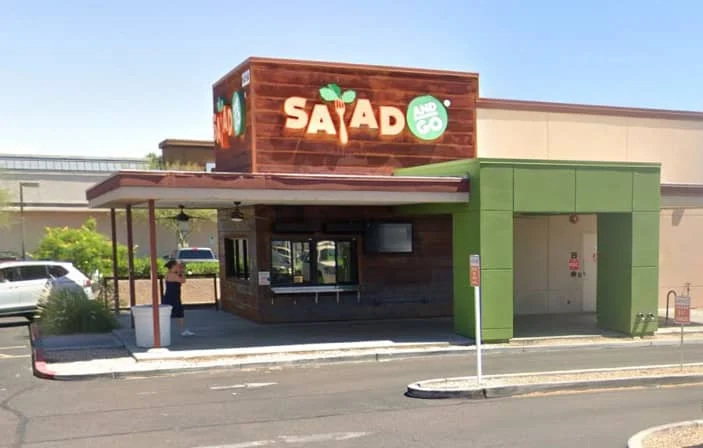
Phoenix, AZ – Salad and Go, the fast-casual chain that once envisioned itself as a formidable competitor to industry giants like Sweetgreen, has officially filed for Chapter 11 bankruptcy protection, announcing the immediate and permanent closure of all its existing locations on Wednesday. The abrupt cessation of operations marks a significant downturn for a company that, just a few years ago, was aggressively expanding its footprint, fueled by private equity investment and a vision for affordable, healthy drive-thru meals. The decision comes after a prolonged period of strategic growth challenges, a noticeable weakening in consumer demand, and a relentless surge in operational costs, all exacerbated by a widespread public health crisis that has cast a long shadow over the fresh produce industry.
The company conveyed in a statement to CNBC that its pursuit of bankruptcy protection was a direct consequence of these multifaceted pressures. While Salad and Go itself was not implicated in the ongoing cyclospora outbreak, the pervasive fear surrounding fresh lettuce consumption has dealt a crippling blow to consumer confidence across the entire food service sector, indirectly compounding the chain’s already precarious financial situation. This water-borne parasite has reportedly sickened at least 10,000 individuals nationwide, according to the Centers for Disease Control and Prevention (CDC), and tragically, two fatalities linked to the outbreak were confirmed in Michigan by the state’s health department on Monday. The broader implications for businesses relying on fresh ingredients have been severe, illustrating the fragile interconnectedness of public health scares and economic stability within the food industry.
The Cyclospora Crisis: A Tipping Point for Consumer Trust
The current cyclospora outbreak, though distinct from the direct operational failures of Salad and Go, has undoubtedly played a critical role in shaping the challenging market environment. Cyclosporiasis, an intestinal infection caused by the microscopic parasite Cyclospora cayetanensis, is typically transmitted through contaminated food or water. Symptoms often include severe diarrhea, loss of appetite, weight loss, abdominal cramps, nausea, and prolonged fatigue. Historically, outbreaks have been linked to various types of fresh produce, including raspberries, basil, cilantro, and lettuce, underscoring the complexities of maintaining a safe supply chain for perishable goods.
The CDC’s ongoing surveillance efforts highlight the seriousness of the current situation. The confirmed cases, reaching into the tens of thousands, have naturally heightened public anxiety about the safety of salads and other fresh vegetable-based dishes. Even for companies like Salad and Go, which maintained strict food safety protocols and were not directly linked to any specific contamination, the mere association of "lettuce" and "outbreak" in public discourse was enough to deter a significant portion of their customer base. A company statement acknowledged this collateral damage: "A Cyclospora outbreak in July, in which Salad and Go was not implicated, weakened confidence across the industry and compounded these challenges." This statement succinctly captures the ripple effect of foodborne illness scares, demonstrating how even an indirect connection can inflict severe reputational and financial harm.
The impact of the cyclospora scare has not been confined to Salad and Go alone. Major fast-food players have also felt the tremors. Yum Brands’ Taco Bell experienced a significant plunge in customer traffic after the Food and Drug Administration (FDA) linked iceberg lettuce served at some of its restaurants to the outbreak. While Taco Bell swiftly responded by pulling the affected supply and Yum executives have since reported a recovery in sales, the incident served as a stark reminder of the vulnerability of even well-established brands to food safety crises. Similarly, Chipotle Mexican Grill, a company with its own history of food safety challenges but not linked to the current cyclospora outbreak, also reported a dip in sales, attributed by analysts to consumers’ newfound mistrust of fresh lettuce generally. These instances underscore a critical lesson for the food service industry: maintaining robust supply chain integrity and transparent communication during public health emergencies is paramount to safeguarding consumer trust and, ultimately, business viability.
A Decade of Ambition: Salad and Go’s Rise and Fall
Founded in 2013 by husband-and-wife team Tony and Roushan Christofellis, Salad and Go emerged with a clear, ambitious mission: to make healthy eating both affordable and accessible, especially through a convenient drive-thru model. At a time when gourmet salad bars like Sweetgreen were gaining traction with higher price points, Salad and Go aimed to disrupt the market by offering substantial, fresh salads and wraps at prices comparable to traditional fast-food menus, often below $6. This value proposition, coupled with speed and a commitment to fresh ingredients, resonated initially with consumers in its home market of Phoenix, Arizona.
The company’s operational model relied heavily on centralized commissary kitchens. This approach allowed Salad and Go to efficiently wash and prepare large quantities of produce, as well as pre-cook protein options like chicken, before distributing these ingredients to individual restaurant locations for final assembly. This centralized preparation was intended to streamline in-store operations, reduce labor costs, and ensure consistent quality and food safety across its expanding network.
The Private Equity Infusion and Aggressive Expansion
The turning point for Salad and Go’s growth trajectory came in 2021 when private equity firm Volt Investment acquired a significant stake in the company, eventually buying out the founders, Tony and Roushan Christofellis. Private equity involvement typically signals an intent for rapid scaling and market penetration, and Salad and Go was no exception. Under the leadership of then-CEO Charlie Morrison, a seasoned executive with a proven track record from his tenure at Wingstop (and currently heading Jersey Mike’s), Salad and Go embarked on an ambitious expansion plan.
Morrison’s strategy involved aggressively more than doubling the company’s store count, pushing into new markets beyond its Arizona stronghold, including Texas and Oklahoma. This period of rapid expansion, while seemingly indicative of success, brought its own set of formidable challenges. Scaling a commissary-based model across diverse geographies required significant capital investment in infrastructure, complex logistical networks, and the recruitment and training of a large workforce. Maintaining brand consistency, operational efficiency, and stringent quality control across dozens of new locations often proves to be a herculean task for even the most well-resourced companies. Reports suggest that Morrison’s tenure, marked by this rapid growth, concluded in late 2024, reportedly due to disagreements with the board, hinting at potential internal struggles over the pace or direction of the company’s aggressive expansion strategy.
A Shift Towards Contraction and the Final Chapter
Following Morrison’s departure, former Krispy Kreme CEO Mike Tattersfield stepped into the leadership role in 2025. Tattersfield’s tenure marked a stark shift from expansion to contraction. Recognizing the unsustainable nature of some of the earlier growth, Salad and Go began to retrench, closing dozens of underperforming stores, particularly in the Texas and Oklahoma markets that had been part of the ambitious expansion drive. These closures were likely an attempt to stabilize the company’s financial footing, consolidate resources, and focus on its most profitable locations.
Despite these efforts to streamline operations and cut losses, the challenges proved insurmountable. The company’s footprint had been whittled down to approximately 70 locations, primarily concentrated in its core markets of Arizona and Nevada. It is these remaining locations that are now permanently shuttered, bringing an end to Salad and Go’s decade-long journey. Mike Tattersfield expressed the profound impact of this decision in a statement: "This is a painful day for everyone who built, worked for and loved Salad and Go." His words encapsulate the disappointment felt by employees, investors, and loyal customers who championed the brand’s vision of affordable, healthy fast food.
Financial Landscape and the Nature of Chapter 11
According to its bankruptcy filing on Tuesday, Salad and Go declared assets valued between $500 million and $1 billion, with liabilities falling within the same considerable range. This broad valuation, while typical in initial bankruptcy filings, indicates a company grappling with significant debt relative to its operational capabilities and remaining assets.
Chapter 11 bankruptcy protection is a legal process designed to allow a business to reorganize its debts and continue operating, typically under a court-approved plan. It provides a temporary shield from creditors while the company attempts to restructure its finances and operations to achieve long-term viability. However, in Salad and Go’s case, the filing is accompanying a complete cessation of operations, suggesting that the path to reorganization was deemed unfeasible, leading instead to a liquidation of assets to satisfy creditors. This outcome underscores the severity of the financial distress and the company’s inability to find a sustainable path forward, even with the protective umbrella of bankruptcy proceedings.
Broader Implications for the Fast-Casual and Healthy Food Sectors
The demise of Salad and Go sends a sobering message to the broader fast-casual dining segment, particularly those focused on healthy eating. The challenges faced by the company—strategic growth missteps, fluctuating consumer demand, and escalating operational costs—are not unique. The highly competitive landscape, coupled with the inherent difficulties of managing fresh produce supply chains and fluctuating food costs, presents significant hurdles for all players.
Salad and Go’s failure highlights several critical lessons:
- Sustainable Growth vs. Aggressive Expansion: The rapid expansion fueled by private equity can often outpace a company’s ability to maintain operational excellence and financial stability, leading to unsustainable overheads and diluted brand focus.
- The Price-Value Equation: While affordability was a core differentiator for Salad and Go, maintaining low price points becomes incredibly challenging in an environment of rising labor, ingredient, and real estate costs. Balancing value with profitability requires astute financial management and potentially flexible pricing strategies.
- Food Safety as a Non-Negotiable: The cyclospora outbreak, even without direct implication for Salad and Go, demonstrated how sensitive consumer trust is to food safety concerns. Brands dealing with fresh produce must invest heavily in transparent, robust, and verifiable food safety protocols, and be prepared for the fallout from broader industry scares.
- Market Dynamics and Consumer Behavior: Shifting consumer preferences, economic downturns affecting discretionary spending, and increasing competition all contribute to a volatile market. Companies must possess agility to adapt to these changes.
- The Drive-Thru Model for Fresh Food: While innovative, the drive-thru model for fresh, customizable salads and wraps introduces operational complexities not found in traditional fast-food drive-thrus. Speed, customization, and ingredient freshness must be meticulously managed.
The closure of Salad and Go also represents a loss for the communities it served, particularly its employees. While specific numbers of affected employees were not immediately available, the closure of 70 locations across Arizona and Nevada will undoubtedly result in significant job losses, impacting local economies. For consumers who valued Salad and Go’s unique offering, the closure removes an affordable and convenient option for healthy meals, leaving a void in the market.
As the dust settles on Salad and Go’s bankruptcy, the industry will undoubtedly scrutinize its trajectory for lessons learned. Its story serves as a poignant reminder of the intricate balance required to succeed in the dynamic and often unforgiving world of fast-casual dining, where even a promising vision can be derailed by a confluence of strategic missteps, economic headwinds, and unforeseen public health crises.
