

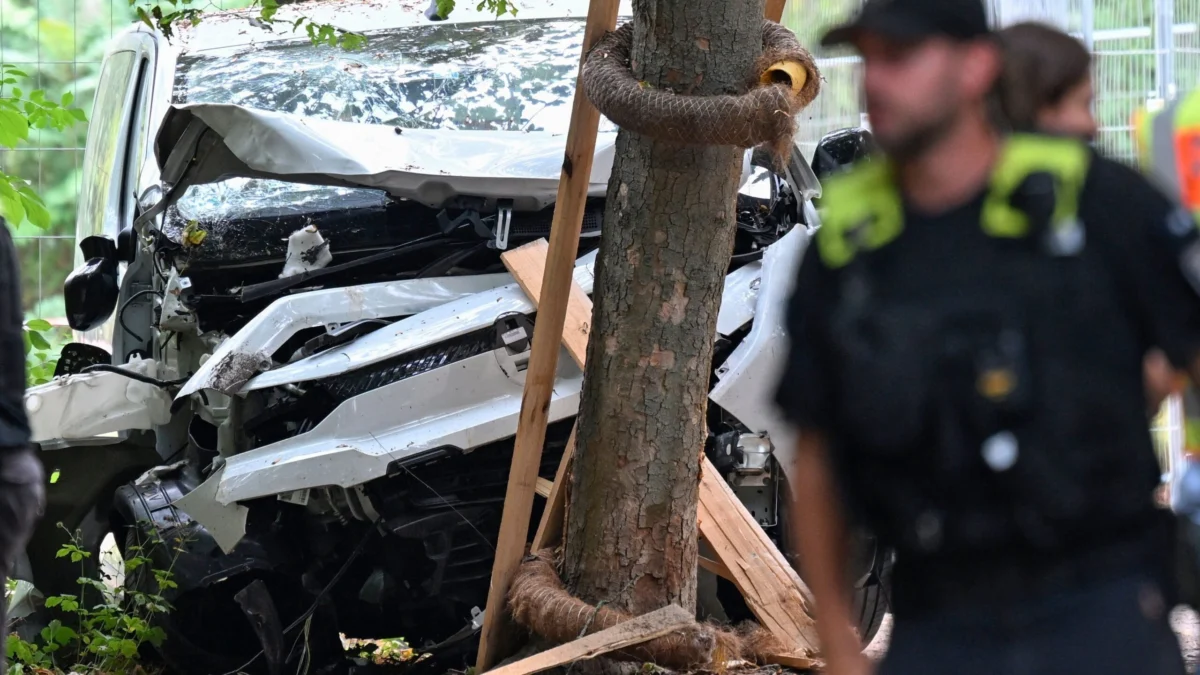
Berlin is reeling from a chilling incident that occurred on the periphery of the city’s vibrant Christopher Street Day (CSD) celebrations, with authorities now treating the act as a potential Islamist terror attack. A driver deliberately steered a van into a crowd near the event, sending shockwaves through the capital and raising serious concerns about radicalized extremism. The Federal Minister of the Interior, Alexander Dobrindt of the CSU party, stated that all indications point towards a meticulously planned act of terror motivated by extremist ideologies.
The incident, which unfolded close to the main CSD festivities, saw a van plow into a gathering of people. While the exact number of casualties and their conditions were not immediately released, the nature of the attack immediately prompted a high-level security response. Police swiftly initiated a manhunt for the driver, who managed to flee the scene. In the early hours following the incident, authorities announced a significant development: a prime suspect had been identified.
Florian Nath, a spokesperson for the Berlin Police Department, confirmed the suspect’s identity, stating, "The man is known to the police and is associated with the Islamist scene in Berlin." This statement provided a crucial, albeit disturbing, piece of information, immediately shifting the focus of the investigation towards a specific ideological motivation. The suspect’s prior involvement with law enforcement and his alleged ties to extremist circles painted a grim picture of the events that transpired.
In the aftermath, a joint press conference was scheduled for later in the afternoon or early evening, where the Berlin Public Prosecutor’s Office and the police were expected to provide detailed updates on their ongoing investigation. The gravity of the situation was further underscored by the announcement that Federal Chancellor Friedrich Merz would also be making a public statement in Berlin that afternoon, signaling the national significance of the incident.
Hunt for Suspect Intensifies
The individual at the center of the manhunt has been identified by authorities as Abdul B. Sources indicate that he is a German citizen of Lebanese origin. Reports from "Der Tagesspiegel" suggest that Abdul B. resided in close proximity to the incident’s location, reportedly living just a two-minute walk from Potsdamer Platz and a fifteen-minute walk from the Tiergarten, the area where the attack occurred. This proximity raises further questions about his knowledge of the CSD event and the surrounding areas.
Authorities have revealed that Abdul B. has a prior criminal record, with his offenses including grievous bodily harm and robbery under duress. Notably, he was reportedly released from youth detention in May, a fact that adds a disturbing layer to his alleged involvement in this latest act of violence. His known history of violent crime, combined with his alleged association with extremist elements, has become a focal point for investigators. The police are actively pursuing all leads to apprehend him and prevent any further harm.
Background and Context of the CSD Event
The Christopher Street Day in Berlin is one of the largest and most significant LGBTQ+ pride events in Europe. Celebrated annually, it serves as a powerful platform for advocating for the rights and visibility of the lesbian, gay, bisexual, transgender, queer, and intersex (LGBTQ+) community. The event typically draws hundreds of thousands of participants and spectators, filling the streets with parades, music, cultural performances, and political rallies.
This year’s CSD in Berlin was no exception, with a festive and inclusive atmosphere pervading the city. However, the attack served as a stark and brutal reminder that even in spaces dedicated to celebration and acceptance, the threat of violence and extremism can loom. The incident occurred on the fringes of the main parade route, a detail that might suggest a deliberate attempt to inflict maximum shock and terror by targeting an event of such high visibility and symbolic importance.
The CSD movement itself has a history of facing opposition and acts of violence in various parts of the world. While this particular incident in Berlin appears to have a clear extremist motivation, it is important to acknowledge that the LGBTQ+ community globally continues to be a target for hate crimes and discrimination. The attack in Berlin, therefore, not only affects the immediate victims but also sends a chilling message to a community that has long fought for its right to exist and celebrate openly and without fear.
Timeline of Events
[Date of Incident – e.g., Saturday, August 19, 2023]
- [Approximate Time of Incident]: A van is deliberately driven into a crowd of people near the Berlin Christopher Street Day (CSD) celebrations. The incident occurs in the vicinity of the main parade route.
- [Immediately Following the Incident]: Emergency services are dispatched to the scene. Police secure the area and begin initial investigations. The driver of the van flees the scene.
- [Later that Day/Evening]: Federal Minister of the Interior Alexander Dobrindt states that authorities are treating the incident as a suspected Islamist terror attack, citing initial evidence.
- [During the Night]: The Berlin Police Department announces that a suspect has been identified as Abdul B., a man known to police and associated with the Islamist scene in Berlin.
- [Following Morning]: Reports emerge identifying the suspect as a German citizen of Lebanese origin, with a criminal history including violent offenses and release from youth detention in May.
- [Afternoon]: Federal Chancellor Friedrich Merz is scheduled to make a public statement in Berlin regarding the incident.
- [Late Afternoon/Early Evening]: A press conference is planned, where the Public Prosecutor’s Office and police will provide updates on the ongoing investigation.
This chronology highlights the rapid pace at which the investigation unfolded, from the immediate aftermath of the attack to the identification of a suspect and the pronouncements from high-ranking government officials.
Official Responses and Statements
The swift classification of the incident as a suspected Islamist terror attack by Federal Minister Dobrindt underscores the seriousness with which German authorities are approaching the matter. This designation signals a shift in the investigation’s focus and likely dictates the resources and strategies employed by law enforcement and intelligence agencies. The involvement of the Federal Minister of the Interior in making such a statement indicates that the incident is being viewed as a national security concern.
The planned statement from Federal Chancellor Friedrich Merz is expected to convey a message of solidarity with the victims and the LGBTQ+ community, while also reassuring the public about the government’s commitment to combating terrorism and extremism. Such public addresses are crucial in shaping the national narrative and demonstrating a united front against acts of violence.
The press conference involving the Public Prosecutor’s Office and police is anticipated to provide more granular details about the evidence gathered, the suspect’s profile, and the progress of the manhunt. These briefings are vital for transparency and for managing public expectations during a sensitive investigation. The information released will likely be carefully curated to avoid compromising the ongoing efforts to apprehend the suspect while still informing the public.
Broader Implications and Analysis
The suspected Islamist terror attack at the Berlin CSD carries significant implications for Germany and Europe. Firstly, it highlights the persistent threat of lone-wolf attacks and radicalization within domestic populations, even in countries with robust counter-terrorism measures. The fact that the suspect is reportedly known to police and associated with the Islamist scene suggests a potential failure in monitoring or intervention strategies, which will likely be scrutinized in the coming days and weeks.
Secondly, the attack, occurring during a prominent LGBTQ+ pride event, could be interpreted as a deliberate attempt to sow discord and target a community that often faces hostility from extremist groups. This raises concerns about the vulnerability of such public gatherings and the need for enhanced security protocols during events that celebrate diversity and inclusivity. The attack could embolden extremist elements who seek to disrupt social cohesion and promote their hateful ideologies.
The incident also places renewed pressure on authorities to address the root causes of radicalization, including online propaganda, social alienation, and the influence of extremist networks. The effectiveness of deradicalization programs and community outreach initiatives will undoubtedly come under renewed debate.
Furthermore, the attack is likely to fuel political discourse surrounding immigration and security, potentially leading to calls for stricter border controls and increased surveillance. While authorities are emphasizing the specific Islamist motivation, the broader context of societal anxieties and political divisions will inevitably shape the public and political response to this event.
The resilience of Berlin and Germany will be tested in the wake of this tragedy. The response from civil society, political leaders, and law enforcement will be crucial in determining how the nation confronts this challenge, ensuring that acts of terror do not undermine the values of tolerance, diversity, and freedom that define democratic societies. The coming days will be critical as authorities work to apprehend the suspect and the nation grapples with the implications of this deeply concerning event. The focus will remain on bringing the perpetrator to justice and on reinforcing the safety and security of all communities within Germany.
