

London. On a seemingly ordinary Monday, the familiar scene outside the British Prime Minister’s residence at 10 Downing Street offered a poignant metaphor for the day’s events: a street cleaner sweeping the narrow lane, a prelude to a significant transfer of power. Within hours, the most famous address in the United Kingdom was to witness the arrival of a new leader, marking a pivotal moment in Britain’s ongoing journey since the 2016 Brexit referendum. Andy Burnham steps into the role of Prime Minister, tasked with steering Great Britain through its persistent post-Brexit challenges, becoming the seventh leader to undertake this formidable responsibility since the nation voted to leave the European Union. Despite the gravity of the occasion, the atmosphere was characterized by a palpable sense of routine and measured composure, a testament to the media’s seasoned familiarity with such political transitions.
A Subtle Shift in Symbolism: From Pedestal to the People
While the cyclical nature of leadership changes has become a familiar narrative for the press, this particular transition carried subtle yet significant undertones. A telling detail emerged concerning the symbolic accoutrements of power. In his farewell address earlier that morning, the outgoing Prime Minister, Keir Starmer, had stood at a wooden lectern, asserting that the United Kingdom was stronger and fairer than when he took office two years prior. He had also formally tendered his resignation to His Majesty King Charles III. However, as Andy Burnham emerged to accept the King’s commission and address the nation, the wooden lectern that had symbolized his predecessor’s tenure had been removed.
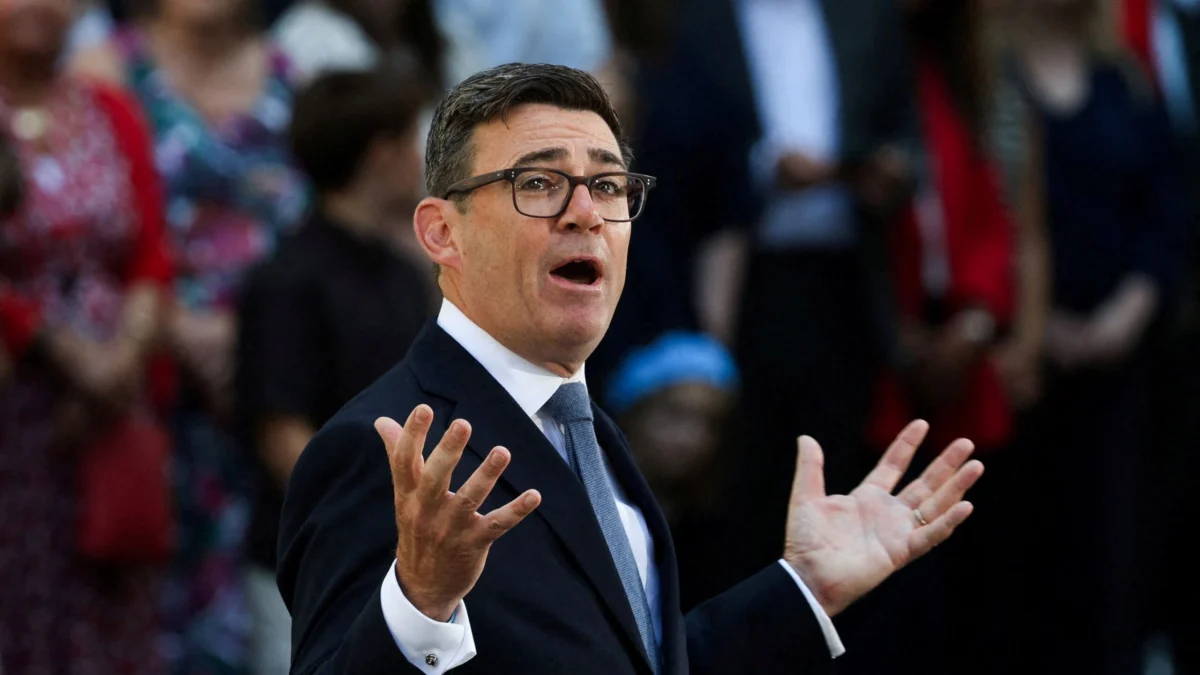
Burnham’s subsequent address was delivered without a script or a lectern, a deliberate departure that signaled a new approach. Speaking directly into the microphone, he appeared to be seeking a more immediate and personal connection with the citizens gathered a few meters away at the entrance to Downing Street, many of whom offered greetings. His unscripted appearance was a powerful statement in itself: a declaration of solidarity, a projection of authenticity, and a promise to govern differently and, he hoped, more effectively. This initial move underscored a potential shift in political communication style, emphasizing a more direct and relatable engagement with the electorate.
The Shadow of Brexit: A Lingering Crisis
The context for Burnham’s premiership is inextricably linked to the turbulent aftermath of the United Kingdom’s departure from the European Union. The 2016 referendum unleashed a period of profound political and economic uncertainty that has continued to shape the nation’s trajectory. Since Brexit, Britain has grappled with a series of interconnected challenges, including trade disruptions, evolving international relations, and domestic economic adjustments. The period has been marked by frequent leadership changes, a testament to the difficulty of navigating these complex issues and maintaining public confidence.
The economic repercussions of Brexit have been a persistent concern. Analysis from various economic institutions, such as the Office for Budget Responsibility (OBR), has indicated a long-term negative impact on UK trade and productivity compared to remaining within the EU. While specific figures are subject to ongoing debate and refinement, the consensus points to a drag on economic growth. Furthermore, the redefinition of the UK’s relationship with its largest trading partner, the EU, has necessitated continuous adjustments in regulatory frameworks and supply chains, creating a dynamic and often unpredictable environment for businesses.
A Timeline of Transition: From Resignation to Resumption
The transfer of power, while seemingly swift, followed established constitutional protocols. The sequence of events typically unfolds as follows:
- Morning: The outgoing Prime Minister formally tenders their resignation to the Monarch. This typically involves a private audience with the Sovereign.
- Midday: Following the resignation, the Monarch invites the leader of the party expected to command a majority in the House of Commons to form a government. This invitation is usually extended after consultations with senior political figures.
- Afternoon: The designated leader accepts the invitation and is formally appointed Prime Minister. This is often followed by a brief address to the nation from the steps of Downing Street.
- Late Afternoon/Evening: The new Prime Minister proceeds to form their cabinet and make key ministerial appointments. The new government then assumes its responsibilities.
In this instance, Keir Starmer’s resignation marked the formal beginning of the process. Andy Burnham, as the leader of the party with the parliamentary majority, then received the royal commission to form a new government. His immediate address, delivered without the customary lectern, signaled a departure from the ceremonial norms, aiming for a more direct and personal connection with the public.
The Burden of Leadership: Previous Challenges and Current Expectations
The challenges facing Andy Burnham are substantial, building upon the unresolved issues left by his predecessors. The period since 2016 has seen a succession of Prime Ministers grapple with the complexities of implementing Brexit, managing the COVID-19 pandemic, and addressing a cost-of-living crisis that has impacted households across the country. Each leader has faced unique pressures, from negotiating trade deals to managing public sector finances and maintaining social cohesion.
Keir Starmer’s tenure, for example, was marked by efforts to stabilize the economy, address public service backlogs, and rebuild trust following a period of significant political upheaval. His government oversaw efforts to manage inflationary pressures and invest in key public services, though significant challenges remained. The economic data during his term showed a mixed picture, with some sectors demonstrating resilience while others continued to face headwinds. Inflation, a key concern for households, remained elevated for a considerable period, prompting interventions from the Bank of England and the government.
Burnham’s Mandate: A Promise of Change
Andy Burnham’s ascent to the premiership comes with a clear mandate, articulated through his initial unscripted address. His message of being "one of you" and his pledge to "do it differently and better" suggest a focus on a more inclusive and responsive style of governance. This approach is likely to be tested against the backdrop of deeply ingrained economic and social divisions that have been exacerbated by the post-Brexit landscape.
His agenda is expected to address several key areas:
- Economic Recovery and Stability: Prioritizing measures to stimulate growth, control inflation, and address the cost-of-living crisis. This could involve targeted fiscal policies, investment in key industries, and measures to support households struggling with rising expenses.
- Public Services: Addressing the pressures on the National Health Service (NHS), education, and other public services, which have faced significant strain in recent years. This may involve increased funding, reform initiatives, and efforts to improve efficiency.
- Social Cohesion: Seeking to bridge divides within the country and foster a sense of unity, particularly in the wake of the polarizing Brexit debate. This could involve policies aimed at reducing inequality and addressing regional disparities.
- International Relations: Redefining Britain’s place on the global stage, particularly its relationship with the European Union and other international partners, while navigating new geopolitical realities.
Reactions and Anticipations: A Nation Watching Closely
While specific reactions from all stakeholders would naturally emerge over time, the initial response from political circles is likely to be a mix of cautious optimism and scrutiny. Opposition parties will be quick to highlight past challenges and question the feasibility of Burnham’s promises. Business leaders will be looking for clarity on economic policy and reassurance regarding trade relationships. Trade unions will likely press for measures to protect workers’ rights and improve living standards.
The public, weary of prolonged uncertainty, will be eager to see tangible improvements in their daily lives. Polling data, which often reflects public sentiment, will be a key indicator of whether Burnham’s message of change is resonating. Early indications of public opinion will shape the political narrative and influence the government’s room for maneuver.
Analysis: The Road Ahead for a Post-Brexit Britain
The appointment of Andy Burnham represents a significant juncture for the United Kingdom. The departure from the European Union has fundamentally reshaped the nation’s economic, political, and social landscape. The challenges are multifaceted and deeply rooted, requiring not only decisive policy decisions but also a renewed sense of national purpose and unity.
Burnham’s emphasis on a direct, unmediated connection with the electorate suggests a strategy to bypass traditional political gatekeepers and foster a sense of shared endeavor. This approach, if successful, could help to rebuild public trust and create a more engaged citizenry. However, the practical implementation of his agenda will require navigating complex economic realities, managing competing interests, and demonstrating tangible progress in addressing the pressing concerns of the British people.
The coming months will be crucial in determining the direction of Burnham’s premiership and its impact on the nation’s future. The success of his government will hinge on its ability to deliver on its promises, foster stability, and chart a clear path forward for a United Kingdom still very much defining its identity in the post-Brexit era. The simple act of sweeping the street outside Downing Street on this particular Monday was more than just routine maintenance; it was a symbolic cleansing, preparing the ground for a new chapter, with all its attendant hopes and uncertainties. The nation watches, waiting to see if this new dawn will bring the promised brighter future.
