

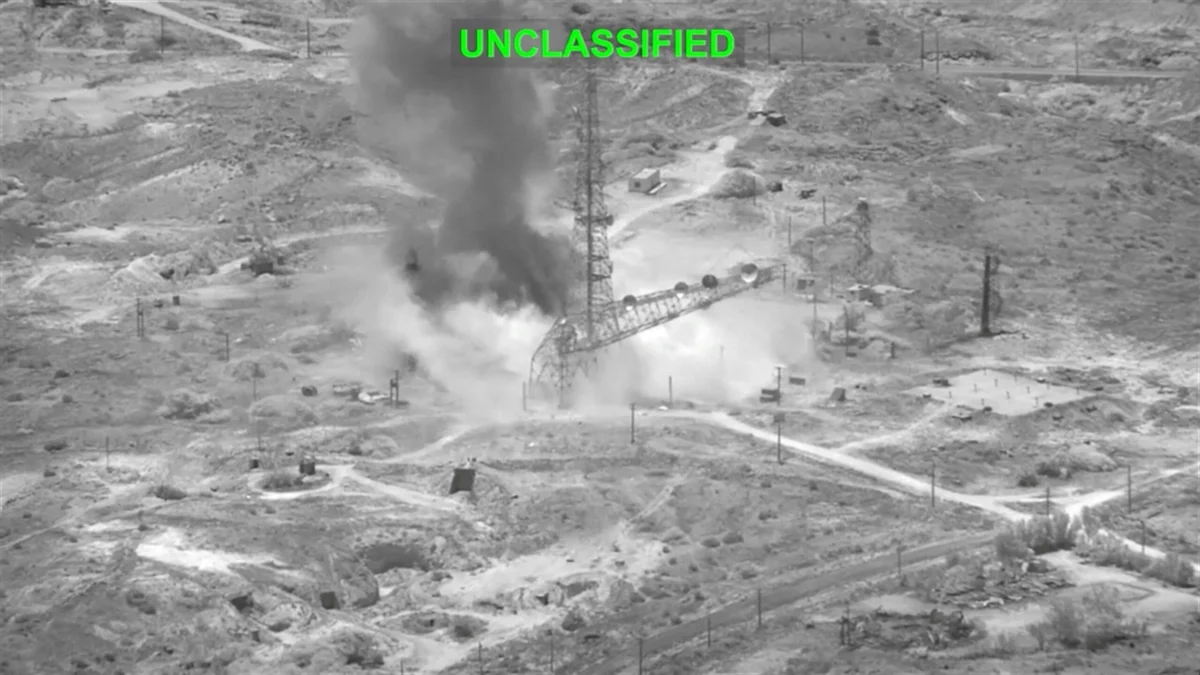
The United States has concluded its seventh consecutive night of airstrikes targeting Iran, with the U.S. Central Command (CENTCOM) reporting strikes against military logistics facilities and other installations. This latest wave of attacks escalates the ongoing conflict in the Gulf region, following renewed retaliatory actions between the two nations. The U.S. military stated that Iranian Revolutionary Guards’ claims of two oil tankers striking mines and exploding were false. CENTCOM emphasized that over 50,000 U.S. soldiers are stationed in the region, remaining “vigilant, capable, and ready to respond.” Meanwhile, Iranian media outlets are reporting explosions in the city of Khorramabad, indicating potential civilian impact or collateral damage.

Escalation and International Concern
The persistent U.S. strikes, now in their seventh night, signal a significant escalation in the conflict, which has been simmering for years and has recently intensified, particularly around the strategic Strait of Hormuz. The U.S. military’s ongoing operations aim to degrade Iran’s military capabilities and deter further aggressive actions. However, the reports of explosions in Khorramabad raise concerns about the potential for civilian casualties and damage to critical infrastructure, a recurring issue in conflicts of this nature. The international community is closely monitoring the situation, with growing calls for de-escalation to prevent a wider regional conflagration.
Background and Context
The current hostilities are deeply rooted in a complex geopolitical landscape. Tensions between the U.S. and Iran have been high for decades, exacerbated by Iran’s nuclear program, its support for regional proxy groups, and its challenging stance on international maritime security. The U.S., in turn, has maintained a strong military presence in the Persian Gulf and has imposed extensive sanctions on Iran. Recent events, including alleged attacks on shipping and the drone downing incident, have served as triggers for the current cycle of direct military action.

The Strait of Hormuz, a vital chokepoint for global oil transit, has become a focal point of this conflict. Iran has previously threatened to disrupt shipping in the strait, and the U.S. has vowed to keep it open. Data from the analytics firm Kpler indicates a significant drop in maritime traffic through the strait following the renewed attacks. On Thursday, only eight ships passed through the strait, the lowest number in three weeks, compared to 15 on Wednesday and a peak of 48 two weeks prior. Prior to the recent escalation, over 100 ships daily transited the Strait of Hormuz. This disruption poses a significant threat to global energy markets and supply chains.
Chronology of Recent Events
The current exchange of hostilities appears to have been triggered by a series of escalating incidents. While specific starting points are often debated, the recent escalation has seen increased Iranian actions in the maritime domain and U.S. responses targeting Iranian military assets.
- Seventh Night of U.S. Strikes: The U.S. military confirms completing its seventh consecutive night of airstrikes against Iran, targeting military logistics and other facilities.
- Explosions in Khorramabad: Iranian media reports explosions in the city of Khorramabad, suggesting potential impacts beyond declared military targets.
- Maritime Traffic Decline: Data shows a sharp decrease in vessel passages through the Strait of Hormuz, highlighting the impact on global trade.
- Houthi Warning to Saudi Arabia: The Iran-aligned Houthi militia in Yemen issues a warning to Saudi Arabia, threatening retaliation for alleged attacks.
- Previous Attacks and Denials: Earlier reports mention U.S. strikes and Iranian claims of hitting oil tankers, which the U.S. military has denied.
Impact on Water Supply and Infrastructure
Beyond direct military targets, the conflict has had tangible consequences for the civilian population. State media in Iran reports that the U.S. attacks have disrupted the drinking water supply for at least 10,000 people in southern Iran. The bombing of a seawater desalination plant in the coastal region of Jask is cited as the cause, affecting 20 villages in the Hormozgan province. With temperatures soaring above 40 degrees Celsius, disruptions to water supply are particularly grave.
Furthermore, reports indicate significant damage to energy infrastructure. In Kuwait, a power generation and seawater desalination plant was reportedly hit, causing substantial damage to electricity generation units. This incident has led to calls for reduced electricity consumption in Kuwait and a race against time for technical crews to restore grid stability. The Iranian Revolutionary Guards have confirmed attacks on Kuwait.

Regional Repercussions and International Reactions
The conflict is not confined to Iran and the U.S. alone. The Houthi militia in Yemen, an ally of Iran, has issued threats against Saudi Arabia, warning of a “siege for a siege” in response to alleged attacks on their positions. This indicates the potential for the conflict to draw in other regional actors and proxy forces.
The German Foreign Minister, Johann Wadephul, has urged progress in the stalled Gaza peace process and cautioned against the rearmament of Hamas. While this statement addresses a different but related conflict, it highlights the broader regional instability and the interconnectedness of various security challenges in the Middle East. Wadephul also rejected sanctions against Israel, emphasizing the complex diplomatic landscape.

Reports also suggest that Iran has targeted U.S. military facilities in Kuwait and Jordan. Sirens were heard in Bahrain, indicating potential threats or defensive measures in the region. The U.S. military has reported intercepting and boarding merchant vessels in the Persian Gulf as part of its efforts to enforce blockades and deter Iranian activities.
Iranian Military Actions and Claims
The Iranian Revolutionary Guards (IRGC) have been active in their own retaliatory actions. They claim to have intercepted four tankers in the Strait of Hormuz, alleging they attempted to pass through the strait without authorization and were stopped using missiles and drones. The IRGC also reported two oil tankers catching fire south of the Strait of Hormuz after traversing a mined sea area, a claim the U.S. military disputes.

In a concerning development, Iran has also reportedly targeted U.S. military installations and allies. Claims have been made of attacking a U.S. special forces command center in Syria and U.S. aircraft stationed in Jordan. However, Syrian military sources have denied any attacks on former U.S. bases, stating that U.S. personnel are no longer stationed there. Jordanian military sources confirmed intercepting three Iranian missiles in their airspace.
Broader Implications and Analysis
The ongoing military exchange between the U.S. and Iran carries significant implications for regional stability, global energy markets, and international relations.

- Economic Impact: The disruption of shipping through the Strait of Hormuz directly impacts oil prices and global supply chains. The damage to desalination plants and power infrastructure in Iran and its neighboring countries exacerbates humanitarian concerns and economic strain.
- Geopolitical Realignments: The conflict could further solidify existing alliances and potentially lead to new alignments as regional powers navigate the escalating tensions. The involvement of proxy groups like the Houthis underscores the potential for a wider, more protracted conflict.
- Humanitarian Crisis: The reported civilian casualties and damage to essential infrastructure like water and power facilities highlight the severe humanitarian consequences of direct military confrontation.
- Diplomatic Challenges: The escalation makes diplomatic solutions more challenging, requiring concerted international efforts to de-escalate tensions and prevent further bloodshed. The statements from various political figures underscore the complex diplomatic maneuvering required to address the crisis.
The situation remains fluid, with reports of attacks and counter-attacks continuing. The U.S. military’s declaration of ending its latest wave of strikes does not necessarily signal an end to hostilities, as Iran’s response and future actions remain uncertain. The coming days will be critical in determining whether de-escalation efforts will prevail or if the conflict will spiral further, with potentially devastating consequences for the entire region.
