

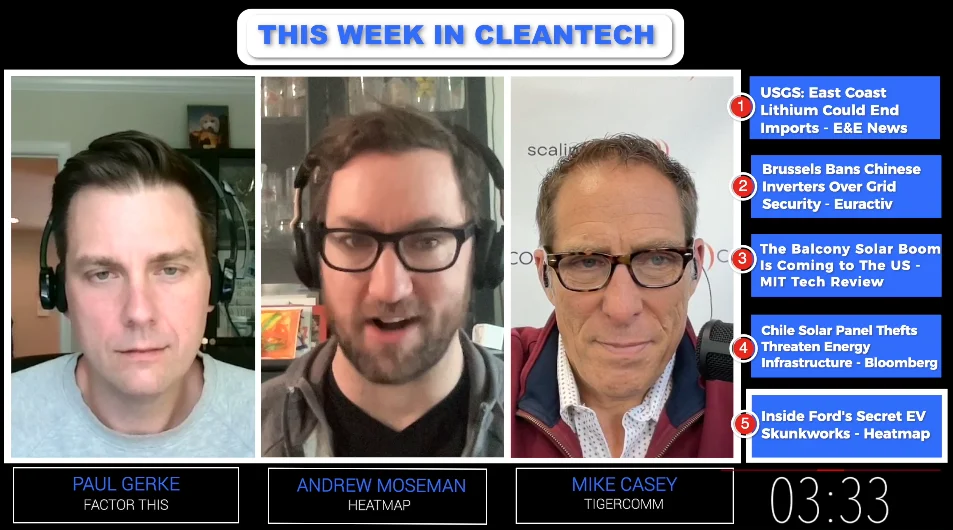
The landscape of global energy is shifting rapidly as new geological discoveries, stringent security regulations, and grassroots technological adoption redefine the transition to a low-carbon economy. This week, a series of developments across the United States, Europe, and South America have highlighted the complexities of securing supply chains, protecting critical infrastructure, and making renewable energy accessible to the general public. From the discovery of massive lithium deposits in the Appalachian region to the strategic maneuvers of legacy automakers like Ford, the clean energy sector is entering a phase defined by industrial pragmatism and heightened geopolitical awareness.
Geologic Breakthrough: The Appalachian Lithium Potential
A significant report released by the United States Geological Survey (USGS) has identified a massive, untapped reserve of lithium located within the Appalachian region of the eastern United States. According to the research, the area—spanning Maine, New Hampshire, and the Carolinas—contains an estimated 2.3 million metric tons of undiscovered, yet economically recoverable, lithium. This volume is statistically significant, representing enough raw material to satisfy current U.S. import demands for approximately 328 years.
The implications for the American automotive and energy storage sectors are profound. Lithium is the primary component in the lithium-ion batteries that power electric vehicles (EVs) and grid-scale storage systems. Currently, the United States is heavily reliant on foreign sources for its lithium supply, importing more than 50% of its annual consumption. China dominates the global processing market, while the "Lithium Triangle" in South America (comprising Chile, Argentina, and Bolivia) holds the largest known reserves. By domesticating the supply chain, the U.S. could insulate its energy transition from geopolitical volatility and shipping disruptions.
The USGS findings suggest that the Appalachian lithium is primarily hosted in spodumene-bearing pegmatites. If fully realized, this resource could power 130 million EVs or provide the necessary components for 1.6 million grid-scale batteries. However, the path from discovery to extraction remains fraught with regulatory and environmental hurdles. Currently, the U.S. has only one operational lithium mine, the Silver Peak mine in Nevada, though several other projects, such as Thacker Pass, are in various stages of development or litigation. The Appalachian discovery adds a new geographic dimension to the domestic mining debate, moving the focus from the arid West to the more densely populated East Coast.
European Energy Security: Restricting Foreign Components
Across the Atlantic, the European Union is taking aggressive steps to fortify its energy grid against potential cyber threats and geopolitical leverage. Effective November 1st, Brussels has instructed European partner banks, including the European Investment Bank (EIB) and the European Bank for Reconstruction and Development (EBRD), to cease the financing of renewable energy projects that utilize grid equipment manufactured in China, Russia, or Iran.
The primary target of this directive is the solar inverter, often described as the "brain" of a solar power system. Inverters perform the critical task of converting the direct current (DC) electricity generated by solar panels into alternating current (AC) used by the grid. Modern inverters are increasingly sophisticated, internet-connected devices that allow for remote monitoring and management. Security experts have long warned that a coordinated cyberattack targeting these devices could allow a hostile actor to shut down large portions of the grid simultaneously, triggering catastrophic blackouts.
This policy shift marks a turning point in European trade relations. Historically, the EU has relied on low-cost Chinese components to meet its ambitious climate goals. However, the rise of "securonomics"—the intersection of economic policy and national security—has led to a preference for "friend-shoring" and domestic manufacturing. The EIB alone was responsible for financing 20% of all EU solar deployments in 2024. By cutting off funding for projects using non-aligned technology, the EU is effectively mandating a shift toward European or Western-made hardware. This restriction extends beyond the EU borders to include projects in the Balkans and Morocco that are designed to connect to the integrated European grid.
The Democratization of Solar: Balcony Systems in the U.S.
While large-scale infrastructure faces geopolitical scrutiny, a grassroots movement is gaining momentum in the residential sector. "Balcony solar," or plug-in solar systems, are poised to become a significant trend in the United States, following their explosive success in Germany. These systems typically consist of one or two panels, totaling approximately 20 square feet, which can be mounted on a balcony railing or a small patio and plugged directly into a standard household outlet.
Unlike traditional rooftop solar, which requires professional installation, complex permitting, and thousands of dollars in upfront costs, balcony solar is designed for the "do-it-yourself" consumer. Generating up to 800 watts, these systems can significantly offset a household’s baseline electricity consumption, such as the power used by refrigerators, computers, and lights.
The regulatory environment in the U.S. is beginning to adapt to this technology. For years, these systems existed in a legal gray area, often discouraged by utilities citing safety concerns regarding "backfeeding" the grid. However, late last year, Utah became the first state to explicitly authorize balcony solar systems. The state’s new regulations bypass traditional interconnection requirements, provided the systems are certified by a national testing facility and maintain a low power output. This move is seen as a major win for renters and apartment dwellers who were previously excluded from the solar transition. Industry analysts suggest that as more states follow Utah’s lead, the U.S. could see a "solar boom" among middle-to-low-income households seeking to lower their utility bills without the commitment of a 25-year rooftop lease.
Infrastructure Vulnerability: The Solar Theft Epidemic in Chile
While the U.S. and Europe grapple with policy and technology, Chile is facing a more visceral challenge: the physical security of its renewable assets. As a global leader in solar energy, Chile’s Atacama Desert hosts some of the world’s largest solar farms. However, these remote installations have become prime targets for organized criminal syndicates.
Data from energy service providers in the region indicates a sharp rise in the theft of solar panels and, more frequently, copper cabling. According to industry reports, copper cables account for 86% of the theft cases. Thieves scale perimeter fences, disable surveillance equipment, and use specialized tools to strip miles of cabling, which is then sold on the black market for its scrap metal value.
The impact on operations is severe. One service manager overseeing 60 solar parks reported that while theft was nearly non-existent five years ago, some sites are now being targeted multiple times a month. These raids do more than just result in the loss of hardware; they cause significant downtime and require expensive repairs to sensitive electrical systems. This "crime spree" highlights a growing global issue: as renewable energy infrastructure becomes more ubiquitous and decentralized, protecting these assets in remote areas becomes a logistical and financial burden. For Chile, the situation has prompted calls for increased government intervention and the deployment of advanced security technologies, such as AI-driven thermal imaging and drone patrols.
Ford’s Strategic Pivot: The California Skunkworks Project
In the corporate sector, the pressure to evolve has led Ford Motor Company to launch a secretive, high-stakes initiative to save its electric vehicle program. Known internally as the "skunkworks" team, this California-based group is tasked with developing a new, low-cost EV platform from the ground up.
The move comes as Ford faces significant financial headwinds in its EV division, "Model e," which has reported substantial losses as it struggles to compete with the lean manufacturing processes of Tesla and the aggressive pricing of Chinese manufacturers like BYD. The skunkworks team, which includes former engineers from Tesla and Rivian, is focused on radical cost reduction. This includes rethinking everything from battery chemistry—moving toward more affordable Lithium Iron Phosphate (LFP) cells—to simplifying the software architecture and manufacturing assembly.
The first product expected from this new platform is an affordable electric pickup truck, slated for release as early as next year. Ford’s CEO, Jim Farley, has emphasized that the company must "right-size" its EV ambitions to focus on smaller, more efficient vehicles that appeal to the mass market, rather than just luxury buyers. This strategic pivot reflects a broader realization within the American automotive industry: to survive the transition, legacy automakers must operate with the agility and cost-consciousness of a tech startup.
Local Impact: Energy Equity and the "Cleantecher of the Week"
While global headlines focus on multi-billion dollar reserves and international trade bans, the human element of the energy transition remains centered on local communities. This week, recognition was given to Brad Rouse, the volunteer Executive Director of the Energy Savers Network (ESN).
Since co-founding ESN in 2016, Rouse has spearheaded an initiative to provide free weatherization and appliance upgrades to income-qualified families in western North Carolina. To date, the non-profit has assisted over 1,500 families, helping them reduce their energy burdens through simple yet effective measures like insulation, air sealing, and LED lighting. This work underscores a critical component of the clean energy transition: energy efficiency. By focusing on the most vulnerable populations, organizations like ESN ensure that the benefits of the green economy—lower bills and more comfortable homes—are distributed equitably.
Broader Implications and Future Outlook
The stories of this week illustrate a clean energy sector that is maturing. It is no longer just about the deployment of technology; it is about the resilience of the systems being built. The discovery of lithium in the Appalachians provides a potential path to resource independence, but it will require a balance between industrial necessity and environmental stewardship. The EU’s ban on foreign inverters highlights the reality that the "green" transition is also a "digital" transition, with all the cybersecurity risks that entails.
Meanwhile, the rise of balcony solar in the U.S. and the security challenges in Chile demonstrate the two sides of decentralization. On one hand, it empowers individuals; on the other, it creates new vulnerabilities. Finally, Ford’s internal restructuring serves as a reminder that the transition to electric mobility is an industrial revolution that will pick winners and losers based on their ability to innovate and control costs.
As the year progresses, the interplay between these factors—geology, security, policy, and corporate strategy—will determine the pace at which the world can realistically move away from fossil fuels. The transition is proving to be a complex, multi-front effort that requires not just new technology, but new ways of thinking about how that technology is sourced, secured, and shared.
