

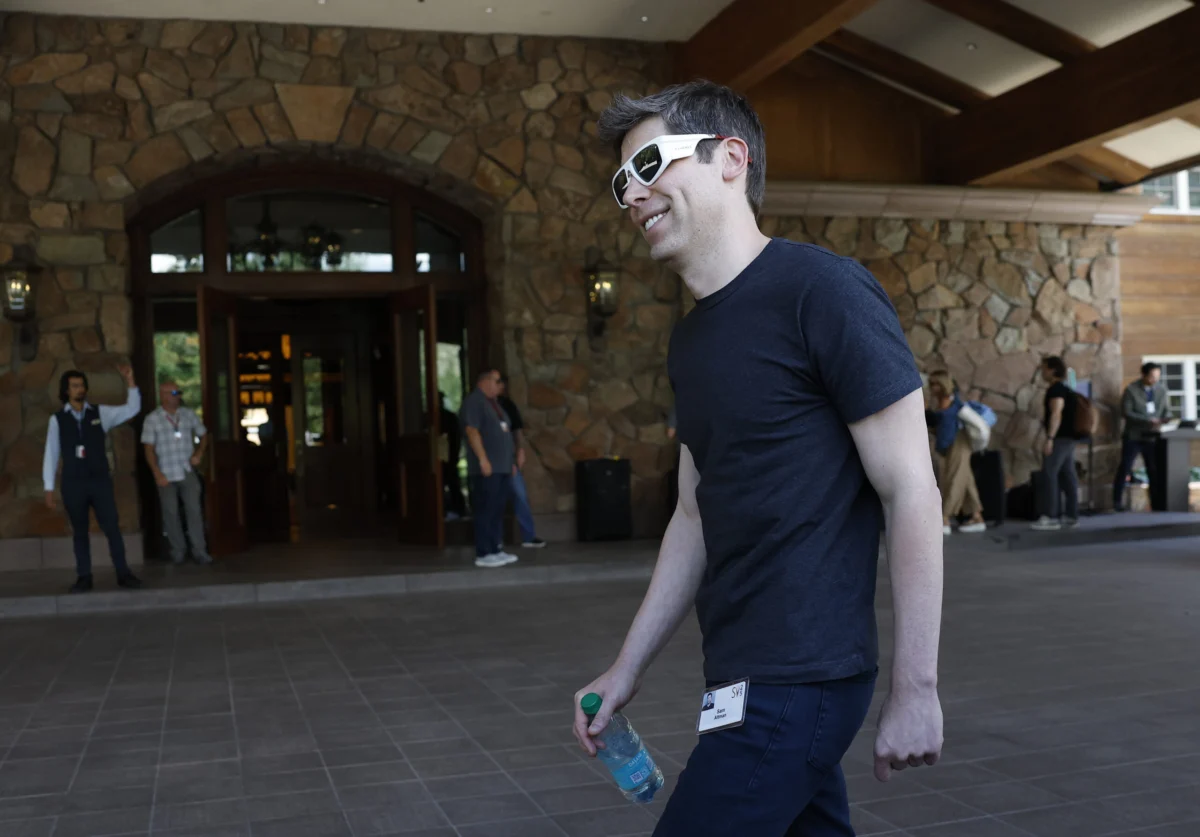
Near the vibrant San Francisco pier, a pivotal event unfolded at a trendy venue, marking a significant evolution for Sam Altman’s verification project, now known simply as World. The gathering celebrated not just its technological advancements but a sweeping expansion of its strategic ambitions, poised to redefine digital trust in an increasingly AI-driven world. The initial frontier for this ambitious rollout? The ubiquitous realm of online dating, beginning with Tinder.
Redefining Digital Identity in the Age of AI
Tools for Humanity (TFH), the pioneering company behind the World project, made a series of landmark announcements on Friday. These revelations detailed plans to integrate its innovative human verification technology across a broad spectrum of digital interactions, including prominent dating applications, sophisticated event and concert ticketing systems, critical business organizations, email platforms, and various other facets of public life. This move signals a profound shift in how digital identities are established and maintained, particularly as artificial intelligence becomes more pervasive.
Speaking before a capacity crowd at The Midway, Sam Altman, the visionary co-founder of World and CEO of OpenAI, articulated the urgent necessity for such a system. "The world is getting close to very powerful AI, and this is doing a lot of wonderful things," Altman stated, acknowledging the transformative potential of artificial intelligence. However, he quickly pivoted to the looming challenges. "We are also heading to a world now where there’s going to be more stuff generated by AI than by humans," he cautioned. This sentiment resonated deeply with an audience increasingly confronted with the ambiguity of online interactions. "I’m sure many of you [have had moments] where you’re like, ‘Am I interacting with an AI or a person, or how much of each, and how do I know?’" Altman queried, encapsulating the core problem World aims to solve.
The project, which transitioned from its earlier moniker, Worldcoin, distinguishes itself in the crowded field of digital identity verification by offering a unique proposition: the ability to unequivocally confirm the presence of a real, living human interacting with a digital service, all while rigorously safeguarding that individual’s anonymity. This intricate balance is achieved through sophisticated cryptographic techniques, most notably "zero-knowledge proof-based authentication." Zero-knowledge proofs allow one party to prove to another that a statement is true, without revealing any information beyond the validity of the statement itself. In essence, World is developing what it terms "proof of human" tools – robust mechanisms designed to verify genuine human activity amidst a burgeoning landscape populated by AI agents and bots. This becomes increasingly vital as deepfakes, AI-generated text, and sophisticated bots blur the lines between human and artificial presence online, a phenomenon that has already led to a surge in online fraud and misinformation.
The Orb: World’s Core Verification Mechanism
At the heart of World’s verification ecosystem is the Orb, a distinctive spherical digital reader. This device performs an iris scan, converting the unique patterns of a user’s eye into an anonymous, cryptographically secured identifier, known as a verified World ID. This World ID serves as the gateway to World’s suite of services, designed to be a universally accessible digital passport for humanity. While Orb verification represents the project’s gold standard for proof of humanity, users retain the flexibility to access World’s application without undergoing an Orb scan, albeit with different tiers of verification as later detailed. The design ethos behind the Orb emphasizes both security and privacy, aiming to create an identity system that is robust against spoofing while protecting personal biometric data.
Altman’s address on Friday was concise, as he conveyed that TFH’s co-founder and CEO, Alex Blania, was regrettably absent due to an unexpected, last-minute hand surgery. Altman subsequently ceded the stage to World’s chief product officer, Tiago Sada, and his dedicated team, who then delved into the specifics of the new offerings and the roadmap for World’s ambitious expansion.
A New Era for the World App and Global Integrations

Sada elaborated on the launch of the newest iteration of the World app, building upon the previous version introduced at an event in December 2025. This release is complemented by a "plethora" of new integrations, signaling World’s ambitious push into diverse digital sectors. The strategy underscores a shift from a crypto-centric project to a broader digital identity utility.
A significant focus of World’s strategic deployment has been the realm of dating applications, with Tinder emerging as a primary partner. The groundwork for this collaboration was laid last year when Tinder initiated a World ID pilot program in Japan. This pilot, designed to test the efficacy and user acceptance of World ID in a real-world dating context, was apparently a success. The positive outcomes have paved the way for a major expansion: World announced that its verification integration with Tinder would be rolling out to global markets, including the crucial U.S. market. This integration will manifest as a distinctive World ID emblem displayed on the profiles of users who have successfully completed the verification process, thereby authenticating them as genuine individuals. This move is anticipated to significantly enhance user trust and safety on dating platforms, mitigating concerns about catfishing, bots, and fraudulent profiles that plague the online dating experience, a market projected to reach hundreds of billions of dollars annually by the end of the decade, with user safety being a paramount concern for major players like Match Group, Tinder’s parent company.
Beyond dating, World is actively engaging with the entertainment industry through its innovative "Concert Kit" feature. This initiative empowers musical artists to reserve a designated portion of their concert tickets specifically for World ID-verified humans. The primary objective is to erect a robust barrier against predatory scalpers, who frequently employ automated ticket-buying bots to hoard prime seats, driving up prices and frustrating legitimate fans. The global ticket resale market is estimated to be worth billions, with a significant portion attributed to illicit bot activity. The Concert Kit boasts compatibility with major ticketing platforms, including industry giants like Ticketmaster and Eventbrite. To underscore its commitment and demonstrate its utility, World has forged partnerships with renowned artists such as 30 Seconds to Mars and Bruno Mars, both of whom intend to leverage the Concert Kit for their upcoming tours. This addresses a pervasive problem in the live entertainment sector, where bot-driven scalping costs consumers billions annually and severely impacts fan experience, often leading to legitimate fans being priced out of events.
The event brimmed with further announcements, many tailored for the business sector. A novel Zoom/World ID verification integration is designed to counter the emerging threat of deepfake technology in business communications, ensuring that participants in virtual meetings are indeed real individuals. The rise of sophisticated deepfake technology has created vulnerabilities in corporate security and communication, making robust identity verification crucial. Similarly, a partnership with Docusign aims to fortify the integrity of digital signatures, guaranteeing that contractual agreements are authenticated by genuine users. With the increasing volume of digital transactions and contracts, ensuring the authenticity of signatories is vital for legal and financial security. These integrations underscore World’s commitment to securing professional digital interactions against sophisticated forms of fraud and impersonation, protecting both individuals and enterprises.
Navigating the Agentic Web: Human-AI Collaboration
Looking ahead to the rapidly evolving landscape of the "agentic web"—where AI agents will increasingly act autonomously on behalf of humans—the company is actively developing several forward-thinking features. Among these is "agent delegation," a mechanism enabling a person to securely delegate their World ID to an AI agent, authorizing it to conduct online activities on their behalf. This represents a critical step in establishing trust and accountability in future human-AI collaborations, allowing individuals to leverage AI’s capabilities while maintaining control over their digital identity.
Further bolstering this vision is a strategic partnership with Okta, a leading authentication firm. Together, they have developed a system, currently in its beta phase, designed to verify that an AI agent is legitimately operating under the instruction of a human principal. Gareth Davies, Okta’s chief product officer, explained at the event that this system links a World ID to a specific agent. Consequently, when that agent operates online on behalf of the verified person, websites and services will be able to confirm that a legitimate, human-backed entity is behind the digital actions. This innovative approach aims to instill confidence in a future where AI agents seamlessly integrate into our daily digital lives, performing tasks ranging from managing calendars to executing complex financial transactions, all while maintaining a transparent chain of trust back to a verified human.
Addressing Scaling Challenges: Expanding Accessibility and Tiered Verification
Despite its innovative technology and ambitious vision, World has historically grappled with scaling its verification process. For a significant period, obtaining the highest standard of World ID verification necessitated a visit to one of World’s designated offices for an Orb scan – an experience often perceived as inconvenient and, for some, somewhat unusual. This logistical hurdle has been a key factor in limiting mass adoption, as highlighted by industry analysts like Forrester, which noted the "headwinds in mass adoption" faced by Worldcoin’s Orb. The unique biometric requirement posed a significant barrier compared to more conventional identity verification methods.
Recognizing these challenges, World has been proactively implementing strategies to enhance the ease and incentive structure for verification. In the past, the company offered its associated crypto asset, Worldcoin, to early adopters who completed the Orb scan, providing a financial incentive for participation. More recently, it has strategically deployed Orbs into major retail chains, allowing users to undergo verification while performing routine activities like shopping or grabbing coffee, thereby integrating the process into everyday life and reducing the need for dedicated verification centers.

In a significant move to overcome geographical and accessibility barriers, World announced a substantial expansion of Orb availability in key metropolitan areas: New York, Los Angeles, and San Francisco. This increased physical presence aims to make Orb verification more convenient for a larger user base. Furthermore, the company introduced a novel service allowing interested users to request an Orb to be brought directly to their location for remote verification, significantly enhancing convenience and tailoring the service to individual needs.
In a candid conversation with TechCrunch, Tiago Sada shed light on World’s multi-pronged approach to the scaling problem, which includes the introduction of different tiers of verification. The Orb verification remains the gold standard, offering the highest level of assurance for "proof of human" through its unique biometric scan. Below this, World previously offered a mid-level tier that utilized an anonymized scan of an official government ID via the document’s NFC chip, balancing convenience with a strong degree of verification by leveraging existing secure identity documents.
Adding to these options, the company has now unveiled a new low-level tier, which Sada described as "low friction" – implying minimal effort for the user. While highly accessible, he candidly admitted it offers "low security." This tier involves a simple selfie verification.
The "Selfie Check" feature, presented by Sada’s team during the event, is designed with user privacy as a paramount concern. Daniel Shorr, one of TFH’s executives, emphasized this point during the presentation: "Selfie is private by design. That means that we maximize the local processing that’s happening on your device, on your phone, which means that your images are yours." This local processing minimizes the transmission of sensitive biometric data, aiming to address common privacy anxieties associated with facial recognition by keeping data on the user’s device.
However, the efficacy of selfie verification is not without its caveats. It is a widely known fact that fraudsters have long developed sophisticated methods to spoof selfie-based identity checks, as documented by cybersecurity experts. Sada acknowledged these limitations transparently, stating, "Obviously, we do our best, and it’s like one of the best systems that you’ll see for this. But it has limits." He clarified that developers seeking to integrate World’s services will have the flexibility to select from these three distinct verification tiers, allowing them to align the level of security with the specific requirements and risk profile of their application or service. This tiered approach aims to strike a balance between broad accessibility and robust security, acknowledging that not all digital interactions demand the same stringent level of proof of human.
Broader Implications and the Future of Digital Trust
The ambitious expansion of World’s verification project carries profound implications for the future of digital trust. In an era where misinformation, synthetic media, and automated fraud are increasingly prevalent, establishing verifiable human identity is becoming a foundational necessity for a healthy online ecosystem. From ensuring genuine connections on dating apps to protecting fans from ticket scalpers, and from securing business communications against deepfake threats to validating digital signatures, World’s technology offers a potential antidote to many contemporary digital anxieties. The global cost of cybercrime and online fraud runs into trillions of dollars annually, highlighting the urgent need for more robust identity solutions.
However, the journey ahead for World is not without its challenges. The concept of iris-scanning for identity has historically raised privacy concerns among regulators and civil liberties advocates globally. While World emphasizes its commitment to anonymity through zero-knowledge proofs and local processing, public perception and regulatory scrutiny will remain critical factors in its path to mass adoption. The tiered verification system, while addressing accessibility, also introduces a spectrum of security levels, which could lead to fragmentation in trust if not clearly communicated and understood by users and developers. Balancing the convenience of a selfie with the ironclad security of an Orb scan will be a delicate act.
The partnerships with industry leaders like Tinder, Ticketmaster, Zoom, Docusign, and Okta demonstrate a growing recognition of the need for robust human verification solutions. These collaborations lend significant credibility to World’s mission and provide crucial pathways for its technology to penetrate mainstream digital services. As the line between human and artificial blurs, World positions itself at the forefront of defining what it means to be a verified human in the digital realm. Its success will likely hinge on its ability to balance technological innovation with user privacy, regulatory compliance, and seamless integration into the myriad digital experiences that define modern life. The San Francisco event marked not just a product launch, but a bold declaration of intent to secure the very fabric of our digital identities against the rising tide of artificial intelligence.
