

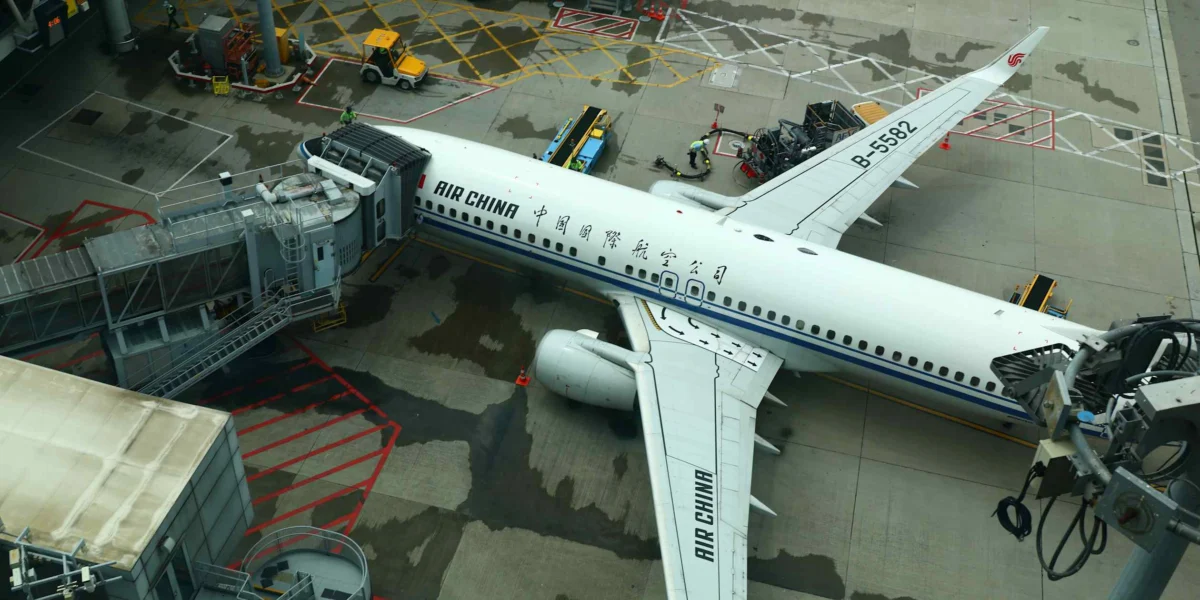
Air China, the People’s Republic of China’s state-owned flag carrier, has announced its sixth consecutive annual net loss, a stark financial performance attributed by the airline to the accelerating competitive pressure from an expanding high-speed rail network within China and persistent geopolitical uncertainties impacting the global aviation sector. The announcement, made on March 27, 2026, underscores the complex and evolving landscape facing major airlines, particularly those with significant domestic operations in markets undergoing rapid infrastructure development.
Deep Dive into Air China’s Financial Straits
The flagship carrier’s latest financial results paint a challenging picture. While specific figures for the fiscal year ending December 31, 2025, were not immediately detailed in the initial report, the declaration of a sixth consecutive annual net loss signifies a prolonged period of financial struggle. This trend follows a pattern established in previous years, where the airline grappled with a confluence of factors that eroded profitability. The company’s financial statements are expected to provide a granular breakdown of revenues, operating expenses, and exceptional items that contributed to the deficit. However, the overarching narrative points to structural challenges in its core business model.
Historically, Air China, like other major airlines, has relied heavily on passenger and cargo revenue. The escalating competition from high-speed rail, particularly on lucrative domestic routes, has directly siphoned off a significant portion of its passenger market share. High-speed rail offers a compelling alternative for many travelers due to its speed, convenience, and often lower price point, especially for journeys between major urban centers. This shift in consumer preference has forced airlines to re-evaluate their route networks and pricing strategies, often leading to reduced yields and increased operational costs as they attempt to maintain competitiveness.
Furthermore, the global aviation industry continues to be buffeted by geopolitical tensions. These can manifest in various ways, including fluctuating fuel prices due to international conflicts, sanctions impacting travel patterns and cargo routes, and increased regulatory scrutiny. For a state-owned enterprise like Air China, which operates on a global scale, these external factors can have a magnified impact on its financial performance. The company’s reliance on international routes, which are often more sensitive to geopolitical shifts, further exacerbates this vulnerability.
The Rise of High-Speed Rail: A Disruptive Force
The narrative of high-speed rail’s impact on air travel is not unique to China, but its scale and speed of development in the People’s Republic have been particularly pronounced. China has invested heavily in its high-speed rail network, often referred to as the "bullet train," transforming domestic travel for millions. As of early 2026, the country boasts one of the most extensive high-speed rail networks globally, connecting virtually all major cities and many secondary ones.
Timeline of High-Speed Rail Expansion in China:
- 2008: The first dedicated high-speed line, the Beijing-Tianjin Intercity Railway, opens, marking the beginning of a rapid expansion phase.
- 2010s: A period of exponential growth sees the network expand to cover thousands of kilometers, connecting major economic hubs like Shanghai, Guangzhou, and Chengdu.
- Early 2020s: Continued investment and technological advancements push the network’s reach and operational efficiency further, integrating more cities and increasing service frequency.
- 2025-2026: The network solidifies its position as a primary mode of intercity transportation, directly competing with short to medium-haul flights.
This infrastructure development has created a paradigm shift. For journeys up to approximately 1,000 kilometers, high-speed rail often presents a more attractive option. Passengers can travel from city center to city center, bypassing airport security lines and the associated delays. The experience is often more comfortable and predictable, with less susceptibility to weather-related disruptions compared to air travel.
The implications for airlines are significant. Routes that were once the bread and butter of domestic carriers are now facing direct competition. Airlines must either reduce flight frequencies, adjust pricing to remain competitive, or focus on longer-haul international routes where high-speed rail is not a viable alternative. For Air China, with its extensive domestic network, this has been a substantial challenge.
Geopolitical Currents and Their Aviation Ripple Effects
Beyond the domestic competition, the global aviation industry in early 2026 remains a complex geopolitical chessboard. Several ongoing international situations contribute to the industry’s volatility.
- Ongoing Trade Tensions: Lingering trade disputes and increased protectionist sentiments in various regions can impact air cargo volumes and international passenger demand. Tariffs and trade barriers can affect the cost of goods transported by air and can influence business travel patterns.
- Regional Conflicts: Conflicts in various parts of the world, while not directly impacting Air China’s primary operational hubs, can lead to rerouting of flights, increased fuel costs due to longer flight paths, and a general dampening of international travel sentiment due to perceived global instability.
- Sanctions Regimes: International sanctions imposed on certain countries can restrict flight access and impact cargo movements, affecting airlines that operate routes to or from those nations.
- Global Health Concerns: While the immediate pandemic threat has receded, the possibility of new outbreaks or evolving health advisories can still influence travel demand and necessitate costly health and safety protocols.
These geopolitical factors create an environment of uncertainty that makes long-term financial planning and investment exceedingly difficult for airlines. For a national carrier like Air China, which is also an instrument of national policy and connectivity, balancing commercial viability with strategic objectives adds another layer of complexity.
Supporting Data and Industry Trends
While Air China’s specific financial data for 2025 is pending, broader industry trends provide context for its challenges. According to reports from the International Air Transport Association (IATA) and aviation analytics firms, the global airline industry has been experiencing fluctuating profitability in the post-pandemic era.
- Passenger Traffic Recovery: While passenger traffic has largely recovered, the pace of recovery has varied by region. Asia-Pacific, in particular, has seen robust growth in domestic travel, but this has been met with increased domestic competition from alternative transport modes.
- Cargo Demand: Air cargo demand, which saw a significant boost during the pandemic, has stabilized, with growth rates normalizing. However, geopolitical disruptions can still create volatility in this segment.
- Operating Costs: Fuel prices remain a significant and volatile component of airline operating costs. Geopolitical events can lead to sharp increases in oil prices, directly impacting airlines’ bottom lines. Labor costs, aircraft maintenance, and airport fees also contribute to the overall cost structure.
- Fleet Modernization: Airlines are under pressure to invest in newer, more fuel-efficient aircraft. However, the capital expenditure required for such investments can be substantial, and it becomes more challenging to justify these investments when profitability is consistently low.
Data from various market research firms suggests that the proportion of travelers choosing high-speed rail over short-haul flights for distances between 300 and 1,000 kilometers in China has steadily increased over the past five years, often exceeding 60-70% for popular routes. This directly translates to a shrinking market share for airlines on these critical domestic corridors.
Potential Reactions and Strategic Implications
Given Air China’s repeated net losses, the company is likely under significant pressure from its stakeholders, including the Chinese government, to implement more aggressive and effective strategies to return to profitability.
Inferred Reactions and Potential Strategies:
- Route Optimization: Air China may further scrutinize its domestic route network, potentially reducing frequencies on routes heavily impacted by high-speed rail or exploring niche markets less affected by this competition. This could involve a greater focus on intercontinental routes or specialized cargo services.
- Cost-Cutting Measures: The airline is almost certainly implementing or intensifying cost-reduction initiatives. This could include renegotiating supplier contracts, optimizing staffing levels, and exploring efficiencies in maintenance and operational procedures.
- Partnerships and Alliances: Strengthening alliances with other airlines, both domestic and international, could offer opportunities for revenue sharing, code-sharing agreements, and expanded network reach, thereby mitigating some of the competitive pressures. Air China is already a member of the Star Alliance, and deepening these relationships could be a strategic imperative.
- Ancillary Revenue Streams: Like many airlines globally, Air China might explore opportunities to diversify its revenue streams beyond ticket sales. This could include enhanced loyalty programs, in-flight retail, and partnerships for travel-related services.
- Government Support and Restructuring: As a state-owned enterprise, Air China may receive continued support from the government in various forms, including potential capital injections or favorable regulatory treatment. However, persistent losses could also prompt discussions about broader restructuring or operational reforms to enhance efficiency and market responsiveness.
- Technological Integration: Investing in advanced technologies for passenger experience, operational efficiency, and data analytics could be a long-term strategy to improve competitiveness and identify new revenue opportunities.
Broader Impact and Outlook
Air China’s financial performance is not just an isolated corporate story; it reflects broader trends impacting the aviation industry, particularly in rapidly developing economies. The success of high-speed rail as a competitive transport mode poses a fundamental challenge to traditional airline business models for short to medium-haul travel.
The long-term outlook for Air China and similar carriers will depend on their ability to adapt to these evolving market dynamics. This requires a strategic re-evaluation of route structures, a relentless focus on operational efficiency, and a proactive approach to managing the complexities of the global geopolitical landscape. The company’s ability to navigate these headwinds and achieve sustained profitability will be a key indicator of its resilience and strategic foresight in the coming years. The ongoing financial struggles of a major national carrier like Air China serve as a potent reminder of the intricate interplay between infrastructure development, economic shifts, and geopolitical stability in shaping the future of global transportation.
