

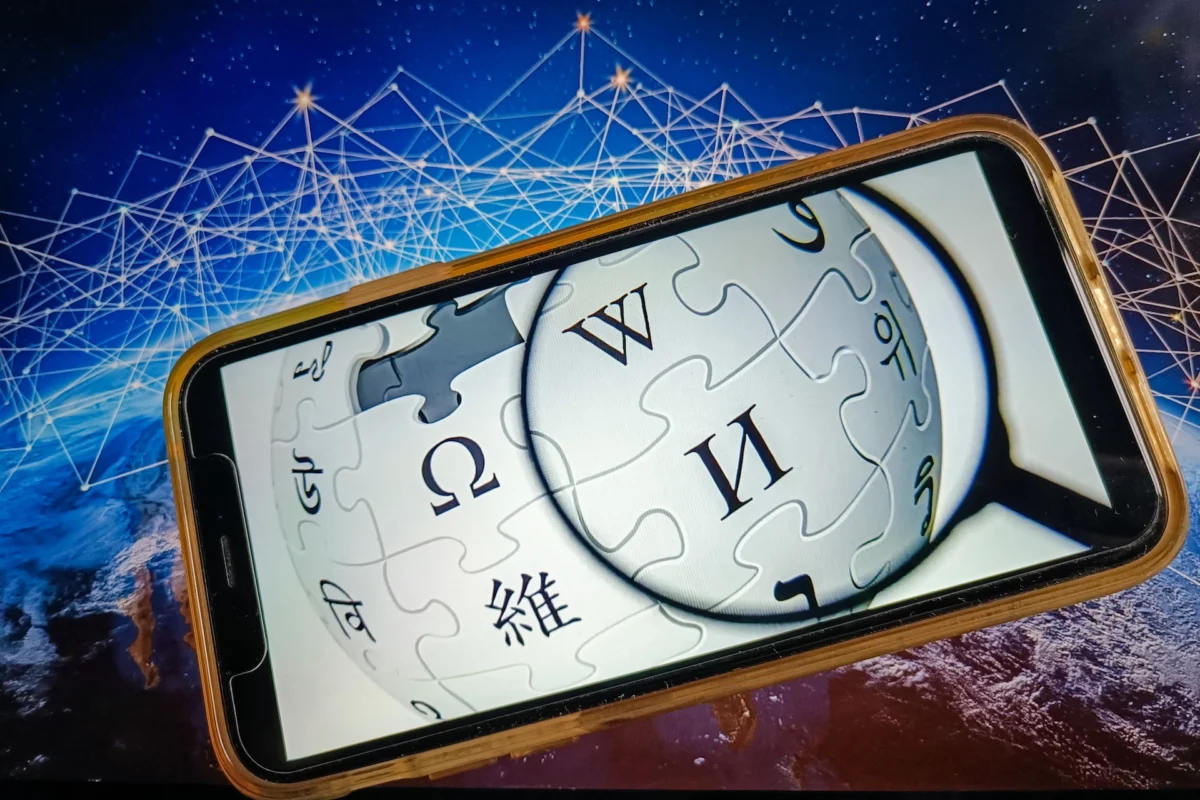
As the burgeoning influence of artificial intelligence continues to reshape the landscape of digital media and content creation, Wikipedia, the world’s largest online encyclopedia, has taken a decisive step to safeguard its core principles of human-curated, verifiable knowledge. Effective March 26, 2026, at 2:50 PM PDT, the Wikimedia Foundation’s volunteer-driven platform has formally prohibited the use of large language models (LLMs) for generating or rewriting article content. This landmark policy update, enacted following a significant community consensus, clarifies and tightens previous, more ambiguous guidelines, underscoring a commitment to human authorship and editorial integrity in an increasingly AI-permeated information ecosystem.
The new directive explicitly states that "the use of LLMs to generate or rewrite article content is prohibited." This strong stance marks a critical evolution from earlier, vaguer language, which merely advised that LLMs "should not be used to generate new Wikipedia articles from scratch." The refined policy reflects a growing apprehension within the editorial community regarding the inherent challenges posed by AI-generated text, particularly concerning factual accuracy, verifiability, and potential biases. While the ban on direct content generation is comprehensive, the policy does not entirely preclude AI’s utility within Wikipedia’s editorial processes. It carefully carves out an exception, permitting editors to leverage LLMs for "basic copyedits" on their own writing, provided these edits undergo rigorous human review and the AI does not introduce new content unsupported by cited sources. This nuanced approach acknowledges the potential of AI as an assistive tool while firmly maintaining human oversight as the ultimate arbiter of content quality and reliability.
Wikipedia’s Foundational Principles and the AI Challenge
At its heart, Wikipedia operates on a bedrock of principles that emphasize verifiability, neutrality, and the collaborative effort of a global community of volunteer editors. Since its inception in 2001, the platform has grown to host over 6.8 million articles in English alone, with millions more across hundreds of languages, making it an indispensable resource for billions worldwide. Its strength lies not only in its sheer volume of information but, critically, in its open, transparent editing model, where every contribution is theoretically subject to review and refinement by human peers. This human-centric model is diametrically opposed to the black-box nature of many generative AI systems.
The rapid advancements in large language models, particularly since 2022-2023, have introduced unprecedented capabilities for generating human-like text at scale. While these tools offer undeniable efficiencies in various sectors, their application in knowledge-critical domains like Wikipedia presents significant challenges. LLMs are known to "hallucinate" or generate plausible-sounding but factually incorrect information, often without the ability to provide reliable citations or trace the provenance of their assertions. They can also inadvertently perpetuate biases present in their training data, introduce stylistic inconsistencies, or produce text that lacks the nuanced understanding and critical analysis expected from human-written encyclopedic entries. For a platform that prides itself on being a repository of meticulously sourced and neutral information, the uncontrolled influx of AI-generated content posed an existential threat to its credibility and the trust placed in it by its users. The concern wasn’t just about errors but about the fundamental erosion of the human-driven editorial process that underpins Wikipedia’s unique value proposition.
A Chronology of Policy Evolution and Community Debate
The journey towards this definitive policy has been a gradual one, mirroring the accelerating pace of AI development and its increasing integration into public discourse.
- Early 2020s: As rudimentary AI text generation tools began to emerge, the Wikipedia community likely saw isolated instances of their use, primarily for generating basic drafts or expanding short articles. These early experiments were likely met with caution rather than alarm, given the limited sophistication of the technology at the time.
- Late 2022 – Early 2023: The public release and widespread adoption of highly capable LLMs like OpenAI’s GPT series and similar models from Google and others marked a turning point. Suddenly, generating coherent, extensive text became readily accessible. This period likely saw a surge in editors experimenting with — and sometimes subtly deploying — AI for article creation.
- Mid-2023: Concerns within the Wikipedia community began to crystallize. Discussions on various project talk pages and forums highlighted instances of AI-generated text being difficult to verify, containing subtle inaccuracies, or lacking the depth and contextual understanding expected from human contributors. This growing unease prompted the first official, albeit "vaguer," guidance. The policy then stipulated that LLMs "should not be used to generate new Wikipedia articles from scratch," reflecting an initial attempt to curb the most egregious uses without a full-scale ban, perhaps due to ongoing debates about AI’s potential benefits.
- Late 2023 – Early 2024: Despite the initial guidance, the problem persisted. Detecting AI-generated content became a new challenge for human editors. Reports, some of which were highlighted by media outlets like CBC Radio, underscored the "AI effect" on Wikipedia, detailing how the integrity of articles was being compromised. This period saw increased calls for a more robust and explicit policy to protect the encyclopedia’s editorial standards.
- Early 2026: A formal proposal for a stricter policy, explicitly prohibiting the generation or rewriting of article content by LLMs, was put forward for community discussion and ultimately, a vote. This period was characterized by extensive debate among the volunteer editors, weighing the potential efficiencies of AI against the paramount importance of accuracy, verifiability, and human accountability.
- March 2026: The community vote concluded with overwhelming support for the stricter ban, with a reported tally of 40 votes in favor and only 2 against. This resounding endorsement signaled a clear mandate from the heart of Wikipedia’s editorial force. The new, detailed policy language was subsequently integrated into Wikipedia’s guidelines.
The Community’s Verdict: A Resounding ‘No’ to AI Generation
The outcome of the community vote, with 40 editors supporting the ban against only 2 dissenting, is a powerful testament to the collective resolve of Wikipedia’s volunteers. This near-unanimous decision underscores a fundamental belief among the editors that the integrity of the encyclopedia is best preserved through human intellect, critical review, and a commitment to verifiable sources, rather than automated content generation. The debate leading up to the vote likely centered on several key issues:
- Verifiability and Factual Accuracy: LLMs are prone to "hallucinations" – generating plausible-sounding but entirely fabricated information. For Wikipedia, where every piece of information ideally needs to be backed by a reliable source, AI-generated content poses an immense burden on fact-checking and verification.
- Neutrality and Bias: While human editors strive for a neutral point of view (NPOV), LLMs can inadvertently inject biases present in their training data, which often reflects societal biases or the dominant perspectives found in internet text. Detecting and correcting these subtle biases in AI-generated text is significantly more challenging than in human-authored content.
- Original Research and Synthesis: Wikipedia strictly prohibits original research. Articles must synthesize existing, published knowledge. LLMs, by their nature, can sometimes generate novel interpretations or connections that might resemble original research, violating this core tenet.
- Accountability and Authorship: When an error or a biased statement appears in an article, the human editor responsible can be identified and held accountable within the community. With AI, the line of accountability becomes blurred, making it difficult to trace errors to their source or to a responsible party.
- Maintaining Human Value: Many editors likely expressed concerns that widespread AI use could devalue human contributions, reduce critical thinking skills among editors, and ultimately dilute the unique character of Wikipedia as a project built by and for people.
The strong majority vote reflects a clear prioritization of these foundational principles over any perceived efficiency gains offered by AI.

Distinguishing Between Creation and Assistance: The Nuance of the Policy
Crucially, Wikipedia’s new policy is not an outright ban on AI tools in all editorial capacities. The distinction between content generation/rewriting and basic copyediting is a carefully considered nuance that highlights the community’s pragmatic approach. Editors are now permitted to use LLMs to "suggest basic copyedits to their own writing" and to incorporate some of these suggestions after "human review," with the critical proviso that "the LLM does not introduce content of its own."
This allowance for AI-assisted copyediting recognizes that LLMs can be effective tools for improving grammar, syntax, clarity, and conciseness — aspects of writing that can be tedious for human editors. For instance, an editor might use an AI to suggest rephrasing a sentence for better flow or to identify grammatical errors. However, the policy places immense emphasis on "human review." This means the editor remains fully responsible for every change, ensuring that the AI’s suggestions do not alter the meaning of the text, introduce new factual claims, or remove critical context that is supported by cited sources. The policy explicitly warns, "Caution is required, because LLMs can go beyond what you ask of them and change the meaning of the text such that it is not supported by the sources cited." This highlights the ongoing need for vigilance and critical judgment, even when AI is used in an assistive role. The AI functions as a sophisticated spell-checker or style guide, not as a co-author.
Statements from the Wikimedia Foundation and Community Leaders (Inferred)
While specific official statements were not provided in the original brief, it is highly probable that the Wikimedia Foundation, which hosts and supports Wikipedia, would issue a statement endorsing the community’s decision. Such a statement would likely reiterate the Foundation’s unwavering commitment to Wikipedia’s core values:
"The Wikimedia Foundation stands firmly behind the community’s decision to prohibit the use of large language models for generating or rewriting encyclopedic content. This policy reflects our shared dedication to maintaining the highest standards of factual accuracy, verifiability, and neutrality that have made Wikipedia a trusted global resource. While we recognize the transformative potential of AI, the integrity of human-curated knowledge remains paramount. We believe this updated policy strengthens Wikipedia’s resilience against the challenges of misinformation and ensures that the platform continues to be a reliable, human-powered beacon of knowledge."
Prominent editors or community leaders would likely echo similar sentiments, emphasizing the importance of human judgment. One could imagine an experienced editor stating: "This isn’t about rejecting technology; it’s about protecting the essence of Wikipedia. Our project thrives on human critical thinking, source evaluation, and collaborative dialogue. AI, while useful for certain tasks, simply cannot replicate the nuanced judgment required to build a truly reliable encyclopedia." Another might add, "The overwhelming vote demonstrates that our community values quality and trust above all else. This policy sends a clear message about the future of information integrity."
Broader Implications for the Digital Information Landscape
Wikipedia’s decision carries significant implications beyond its own platform, potentially setting a precedent for other crowdsourced content platforms and media organizations grappling with the proliferation of AI-generated text.
- Precedent for Other Platforms: Many online communities, forums, and user-generated content sites face similar dilemmas regarding AI content. Wikipedia’s clear, community-driven stance could serve as a model for developing their own policies, particularly those that prioritize factual accuracy and human authenticity.
- Reinforcing Human Curation: In an era where AI can rapidly produce vast quantities of text, Wikipedia’s move champions the enduring value of human intellect, critical thinking, and meticulous curation. It reinforces the idea that for certain types of information – particularly foundational knowledge – human oversight is irreplaceable.
- Challenges for AI Development: This policy highlights a critical gap in current LLM capabilities: the inability to reliably cite sources, guarantee factual accuracy, and operate without bias. It implicitly challenges AI developers to create more transparent, verifiable, and accountable AI models if they wish their technology to be widely adopted in knowledge-intensive domains.
- Trust in Information: As the digital landscape becomes increasingly saturated with potentially AI-generated content, maintaining public trust in information sources is paramount. By taking a strong stance against unverified AI contributions, Wikipedia reinforces its reputation as a reliable and trustworthy source, distinguishing itself from platforms where AI-generated misinformation might proliferate. This move could contribute to a broader public understanding of the distinction between human-vetted information and AI-generated text.
- Enforcement Mechanisms: The implementation of this policy will also necessitate robust enforcement mechanisms. While the policy outlines what is prohibited, the practical challenge will be in detecting AI-generated content, especially sophisticated output that mimics human writing. This might involve the development of new AI detection tools, increased vigilance from human editors, and established processes for reviewing suspected AI contributions.
The Path Forward: Human Oversight in an AI-Driven World
Wikipedia’s updated policy on AI-generated content represents more than just a procedural change; it is a reaffirmation of its core identity and a declaration of its commitment to human-centric knowledge creation in an increasingly automated world. By drawing a clear line between AI as an assistive tool for refining human-authored text and AI as a primary content generator, Wikipedia sets a crucial standard. It underscores that while technology can enhance productivity, the ultimate responsibility for accuracy, neutrality, and contextual understanding rests firmly with human intelligence and judgment. As AI continues to evolve, Wikipedia’s ongoing experience will serve as a vital case study for how human and artificial intelligence can coexist, with the former responsibly governing the latter, in the pursuit of reliable, accessible, and trustworthy information for all.
