

Autonomous military aircraft developer Shield AI has announced a monumental $1.5 billion Series G funding round, catapulting its post-money valuation to an impressive $12.7 billion. This significant capital infusion, alongside the strategic acquisition of Aechelon Technology, underscores the company’s rapid ascent and pivotal role in shaping the future of defense technology. The funding round, publicly disclosed on March 26, 2026, was spearheaded by private equity powerhouse Advent, which has committed a substantial $1 billion budget specifically for investments in next-generation defense technology, alongside a prominent investment group from JPMorgan Chase.
A Strategic Capital Injection and Key Investors
The $1.5 billion Series G round represents a powerful endorsement of Shield AI’s vision and technological prowess. Beyond the lead investors, the company further bolstered its financial position by selling $500 million of preferred shares to funds managed by Blackstone, one of the world’s largest investment firms. Additionally, Shield AI has secured a $250 million loan facility, available for future drawdowns, providing significant operational flexibility and capacity for continued expansion. The participation of such high-caliber institutional investors like Advent, JPMorgan Chase, and Blackstone highlights the growing confidence in the defense technology sector and Shield AI’s leadership within it. Advent’s dedicated $1 billion fund for defense tech signals a broader trend of private capital recognizing the strategic importance and lucrative potential of innovations in national security. Other notable investors participating in this Series G round include Snowpoint Ventures, InnovationX, Riot Ventures, Disruptive, and Apandion, reflecting a diverse coalition of support for Shield AI’s trajectory.
Acquisition of Aechelon Technology: Enhancing Simulation and Training Capabilities
A key component of this strategic financial maneuver is Shield AI’s acquisition of Aechelon Technology. While the specific terms of the acquisition were not disclosed, the integration of Aechelon Technology is set to significantly enhance Shield AI’s capabilities. Aechelon Technology is renowned for its advanced flight simulation technology, which is currently employed to train U.S. military pilots. This acquisition creates a powerful synergy, merging Shield AI’s cutting-edge AI-driven autonomous flight systems with Aechelon’s expertise in realistic simulation environments.
The strategic rationale behind this acquisition is multifaceted. By bringing Aechelon’s capabilities in-house, Shield AI can ensure that its Hivemind autonomy software is rigorously tested and refined in highly realistic virtual environments, accelerating development cycles and improving reliability. Furthermore, it allows Shield AI to offer more comprehensive solutions to its military clients, from advanced autonomous platforms to the sophisticated training systems required to operate and maintain them. This vertical integration strengthens Shield AI’s competitive edge, enabling it to deliver an end-to-end solution that encompasses development, deployment, and ongoing training for autonomous military operations. Industry analysts suggest that integrating simulation directly into the development pipeline for autonomous systems is crucial for rapid iteration, safety validation, and ultimately, faster deployment of next-generation defense capabilities.
Exponential Growth Fueled by Strategic Military Contracts
The latest funding round and valuation mark an extraordinary period of growth for Shield AI. Just one year prior, in March 2025, the company had raised $240 million at a $5.3 billion valuation. The current $12.7 billion valuation represents a staggering 140% increase in just twelve months, underscoring the rapid appreciation of its market position and technological value.
This explosive growth is directly attributable to a pivotal development in February: Shield AI’s Hivemind autonomy software was officially selected as a provider for the U.S. Air Force’s Collaborative Combat Aircraft (CCA) drone prototype program. The CCA program is a cornerstone of the Air Force’s future air combat strategy, aiming to develop a new class of affordable, autonomous drones designed to fly alongside manned fighter jets, acting as "loyal wingmen." These uncrewed platforms are expected to significantly augment the capabilities of current and future fighter fleets, providing enhanced sensing, targeting, and even offensive capabilities while keeping human pilots out of harm’s way in high-threat environments.
Shield AI’s Hivemind software is designed to enable groups of aircraft to operate autonomously in complex, dynamic, and contested environments, coordinating their actions without continuous human input. Its selection for the CCA program signifies a critical vote of confidence from the U.S. Air Force in Shield AI’s ability to deliver the advanced AI required for future air superiority. This program is not just about developing new drones; it’s about fundamentally rethinking air warfare through human-machine teaming and distributed autonomy, areas where Shield AI is poised to be a key enabler.

The Broader Landscape: Competition, Collaboration, and the Future of Defense AI
The defense technology landscape is intensely competitive, with a new generation of agile startups vying for dominance alongside established defense contractors. Shield AI’s success in securing the CCA contract highlights its formidable capabilities, but it operates within a dynamic ecosystem that includes other innovative players.
One prominent competitor is Anduril Industries, another highly valued defense tech startup known for its rapid prototyping and advanced AI systems. Interestingly, the U.S. Air Force’s selection of Shield AI’s Hivemind software for the CCA program also involves its integration with Anduril’s "Fury" autonomous fighter jet prototype. Anduril, for its part, has developed its own proprietary autonomy software, "Lattice," to command its aircraft. This decision by the Air Force to use Shield AI’s software with a competitor’s hardware is highly significant. It demonstrates a clear strategy to avoid vendor lock-in and foster an open, modular architecture for its next-generation warfighter drone fleet. By selecting best-of-breed components from multiple suppliers, the Air Force aims to increase resilience, encourage innovation through competition, and ensure flexibility in its future procurement and upgrade pathways.
Despite sharing some of the spoils with Shield AI, Anduril remains a formidable force. It last raised $2.5 billion in June, achieving a $30.5 billion valuation, and according to market intelligence, it is reportedly seeking to raise up to $8 billion at an even higher valuation of $60 billion. This indicates a robust and rapidly expanding market for defense AI solutions, where multiple companies can thrive by offering specialized or integrated capabilities. The intense competition and significant capital flowing into this sector are driving rapid advancements that will redefine military capabilities in the coming decades.
Implications for Defense Procurement and National Security
The substantial investment in Shield AI and its strategic acquisition of Aechelon Technology carry profound implications for the defense industry and national security. This event underscores several critical trends:
- Accelerated AI Integration: The rapid growth of companies like Shield AI signals a decisive shift towards integrating advanced artificial intelligence and autonomous systems across military domains. AI is no longer a futuristic concept but a present-day imperative for maintaining a technological edge.
- Disruption of Traditional Defense Contractors: Agile startups, unencumbered by legacy systems and bureaucratic processes, are increasingly challenging established defense primes. Their ability to innovate quickly and attract significant private capital allows them to develop cutting-edge technologies at a pace that often outstrips traditional procurement cycles.
- The Rise of Software-Defined Warfare: The emphasis on AI software like Hivemind highlights the growing importance of software in modern warfare. Future conflicts will increasingly be determined by superior algorithms, data processing, and autonomous decision-making capabilities.
- Strategic Private Capital: The involvement of major private equity firms and investment groups indicates a new era where private capital plays a crucial role in funding and shaping national defense capabilities. This influx of non-traditional defense funding can accelerate innovation but also raises questions about oversight and long-term strategic alignment.
- Human-Machine Teaming: The CCA program, at its core, is about optimizing human-machine teaming. Autonomous systems are not replacing humans but augmenting their capabilities, allowing them to focus on higher-level strategic decisions while AI handles complex, high-speed tasks. This requires sophisticated interfaces, trust, and robust training – areas where Aechelon’s expertise becomes invaluable.
- Global Race for AI Supremacy: The advancements by Shield AI and its peers are part of a global race for AI supremacy among major powers. Nations that effectively leverage AI in defense will gain significant geopolitical advantages, making these developments critical for international security.
Leadership, Vision, and the Road Ahead
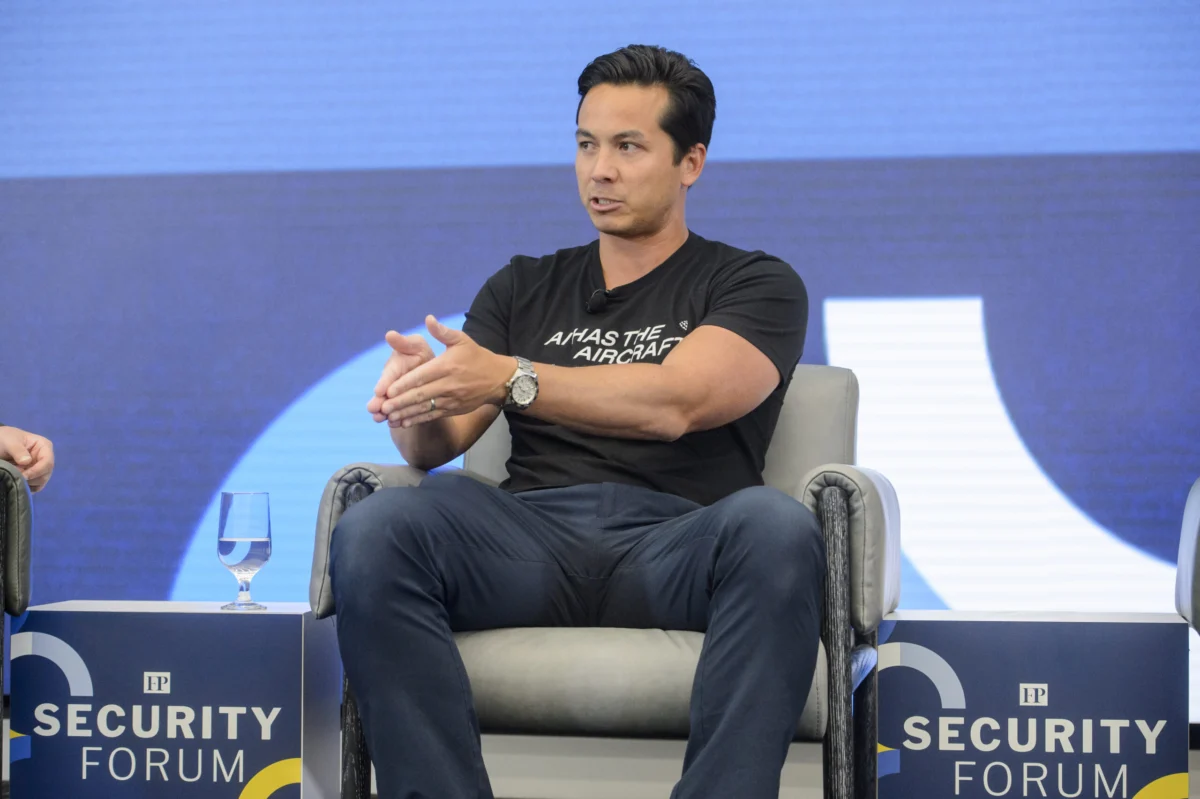
Under the leadership of its co-founder, Brandon Tseng (as depicted in the associated image), Shield AI has consistently articulated a mission to transform defense capabilities through AI. This latest funding round and acquisition are concrete steps towards realizing that vision, enabling the company to scale its operations, deepen its technological offerings, and expand its reach within critical military programs.
Looking ahead, Shield AI will likely focus on further integrating Aechelon’s simulation technologies into its development pipeline, refining Hivemind’s capabilities for the CCA program, and exploring new applications for its autonomous systems across various military platforms. The ongoing collaboration with the U.S. Air Force and the dynamic competitive landscape mean that continuous innovation and strategic partnerships will be paramount. The successful navigation of these factors will determine Shield AI’s long-term impact on the future of defense.
This period marks a significant inflection point for Shield AI, cementing its position as a frontrunner in the defense AI revolution. The substantial capital infusion and strategic acquisition position the company not only for continued technological advancement but also for playing an increasingly central role in defining the next generation of global defense capabilities.
