

The future of the American Southwest remains in a state of precarious uncertainty following the expiration of a critical federal deadline regarding the management of the Colorado River. On February 14, 2026, the seven U.S. states that rely on the river’s dwindling flow failed to reach a consensus on how to distribute necessary water cuts as climate change and historic drought continue to deplete the nation’s two largest reservoirs. This missed milestone has triggered a period of high-stakes tension between state governments, tribal nations, and the federal government, with the potential for unilateral federal intervention looming over a watershed that supports nearly 40 million people and a $1.4 trillion regional economy.
The impasse centers on a fundamental disagreement between the Upper Basin states—Colorado, New Mexico, Utah, and Wyoming—and the Lower Basin states—Arizona, California, and Nevada. While previous decades saw successful, albeit difficult, negotiations to curb water usage, the current political and environmental landscape has proven far more volatile. As the federal government weighs its next steps, the possibility of protracted litigation reaching the U.S. Supreme Court threatens to delay essential conservation measures for years, potentially pushing the river system toward a catastrophic "dead pool" status.
The Economic and Environmental Stakes of the Colorado River
The Colorado River is often described as the "lifeline of the Southwest," and its economic importance cannot be overstated. It provides municipal water to major metropolitan hubs, including Los Angeles, Phoenix, Las Vegas, and Denver. Beyond residential use, the river irrigates approximately 5.5 million acres of farmland, producing a significant portion of the nation’s winter vegetables and supporting a massive livestock industry.
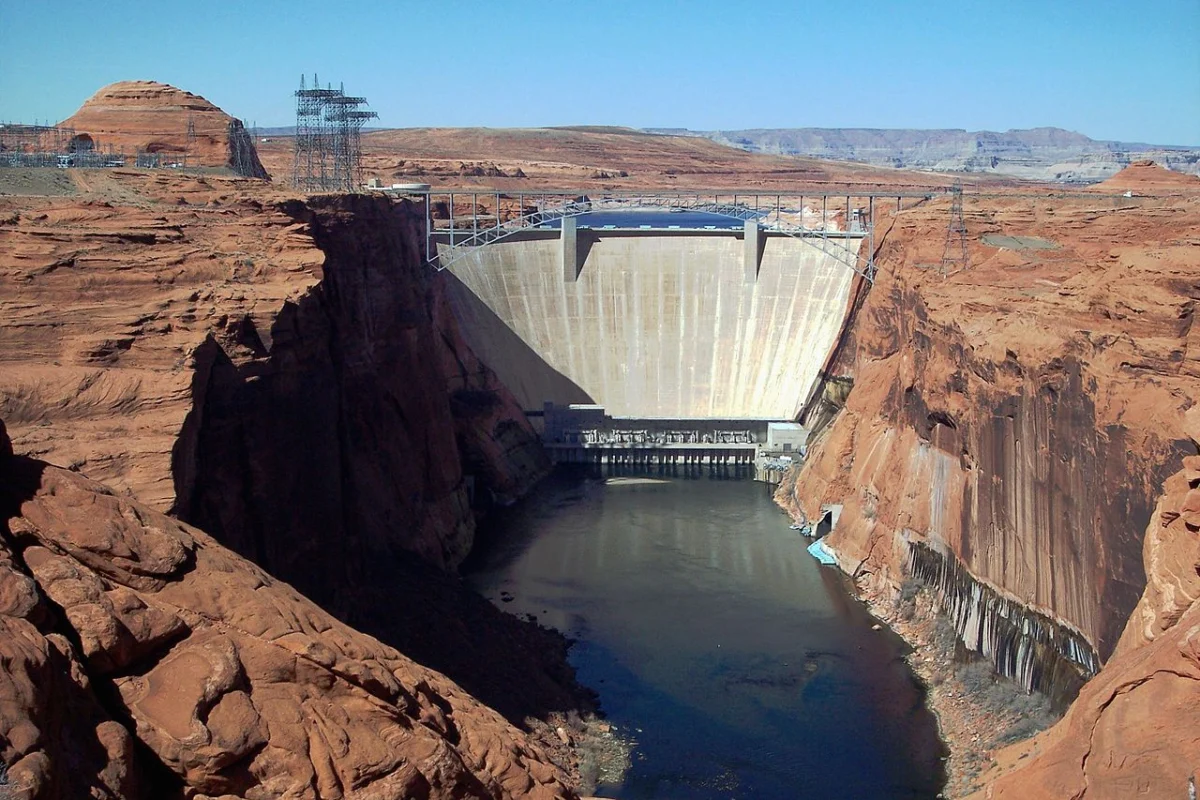
Furthermore, the river is a primary source of carbon-free energy. The hydroelectric plants at the Glen Canyon and Hoover Dams generate roughly 15 million megawatt-hours of electricity annually, powering millions of homes and businesses. As water levels in Lake Powell and Lake Mead drop, the "head" of water required to turn turbines decreases, reducing power efficiency and raising the specter of a total cessation of power generation if levels fall below the intakes.
Environmental experts note that the river has been in a state of "aridification" for over two decades. This is not merely a temporary drought but a permanent shift in hydrology caused by rising temperatures, which increase evaporation and reduce the snowpack that feeds the river’s headwaters. Current estimates suggest that the river’s flow has decreased by approximately 20% since the beginning of the 21st century, a trend that is projected to accelerate.
A Chronology of Management and the Road to the 2026 Deadline
To understand the current deadlock, one must look at the "Law of the River," a collection of compacts, treaties, and court decisions dating back over a century.
- 1922 Colorado River Compact: This foundational document divided the river into the Upper and Lower Basins, allocating 7.5 million acre-feet (maf) of water to each annually. However, this agreement was based on an unusually wet period, overestimating the river’s average annual flow.
- 1944 Water Treaty: The U.S. committed to delivering 1.5 maf of water annually to Mexico, further straining the already over-allocated system.
- 2007 Interim Guidelines: Recognizing the onset of drought, states agreed to a set of rules for sharing shortages between Lake Mead and Lake Powell. These guidelines were intended to be temporary, expiring at the end of 2026.
- 2019 Drought Contingency Plans (DCP): States agreed to additional voluntary cuts to prevent the reservoirs from reaching critical lows.
- January 2025: Following the re-election of Donald Trump, the U.S. Bureau of Reclamation saw a transition in leadership, leaving the agency without a permanent commissioner during the final, most critical phase of negotiations.
- January 2026: The Bureau of Reclamation released a Draft Environmental Impact Statement (EIS) outlining five potential management alternatives for the post-2026 era.
- February 14, 2026: The deadline for states to submit a unified plan passed without an agreement, marking a significant collapse in interstate diplomacy.
The Core Conflict: Upper Basin vs. Lower Basin
The current stalemate is defined by a sharp divide in how the two basins view responsibility for water conservation. The Lower Basin states, led by California and Arizona, have historically consumed more than their legal allocation by utilizing "surplus" water that the Upper Basin did not use. However, as the Upper Basin seeks to develop its own water rights and as the total supply shrinks, these states argue that the Lower Basin must bear the brunt of the cuts.
The Upper Basin states contend that they are at the mercy of Mother Nature, as their water supply depends on annual snowpack and streamflow. They argue that they already face "natural" cuts when snowpack is low. In contrast, the Lower Basin states rely on stored water in Lake Mead. The Upper Basin has proposed a plan that would limit releases from Lake Powell based on its actual storage levels, effectively shifting the risk of water shortages entirely onto the Lower Basin.
Conversely, the Lower Basin states argue for a more holistic approach that accounts for "system losses"—evaporation and seepage—which occur primarily in the Lower Basin but have historically been ignored in official accounting. Addressing these losses would result in a massive reduction in the water available to California and Arizona, a prospect that carries heavy political and economic consequences for those states’ agricultural sectors.
Factors Contributing to the Negotiation Failure
Experts in water management and conflict resolution, including Karen Schlatter of Colorado State University and Sharon B. Megdal of the University of Arizona, identify five primary sources of conflict currently paralyzing the talks: values, data, relationships, interests, and structure.

One of the most significant hurdles in this round of negotiations has been the lack of a shared factual baseline. Unlike in 2007 and 2019, when states used a unified Bureau of Reclamation computer model to simulate climate scenarios, the states are currently using different sets of assumptions and data models. This "data conflict" prevents negotiators from agreeing on the severity of the cuts required to stabilize the reservoirs.
Furthermore, the political environment has shifted. The increased polarization of American politics has made the word "compromise" a liability for state governors and water officials. In previous years, federal leadership from the Department of the Interior acted as a forceful mediator, often threatening to impose harsh federal cuts if states did not cooperate. In the current cycle, federal leadership has been perceived as lagging, partly due to the vacancy of the Bureau of Reclamation Commissioner’s office and a transition in federal administration priorities.
The Case for Third-Party Facilitation
The current negotiations have largely taken place behind closed doors, conducted by state water buffaloes—the nickname for long-time water officials—who are tasked with both representing their states’ rigid interests and designing the process for agreement. This dual role is increasingly viewed as an impossible burden.
Advocates for a new approach suggest that the states should employ neutral, third-party facilitators. Such experts could help the parties move past entrenched positions by focusing on shared interests rather than legalistic demands. A precedent for this exists in the Yakima River Basin in Washington state. In the early 2010s, a collaborative process involving farmers, environmentalists, and tribal nations succeeded because a facilitator helped the parties move toward a "consensus-based" plan where every stakeholder gained something, even if they didn’t get everything they wanted.
On the Colorado River, however, the window for such facilitation is closing. With the February deadline passed, the Bureau of Reclamation may feel compelled to select one of its own five management alternatives. This move would likely be viewed as an overreach by several states, sparking immediate lawsuits.
Broader Impact and the Threat of Litigation
If the federal government imposes a plan, the most likely outcome is a decades-long legal battle. Litigation of this scale would likely focus on whether the Secretary of the Interior has the authority to override the 1922 Compact or the 1964 Supreme Court decree in Arizona v. California.
The implications of a legal "war" are dire. While lawyers argue in court, the physical reality of the river will continue to deteriorate. If Lake Mead or Lake Powell hits "dead pool"—the level at which water can no longer flow through the dam’s outlets—the result would be a total water shutoff for millions and the collapse of the regional power grid.
Moreover, the crisis affects 30 federally recognized tribal nations who hold senior rights to roughly 25% of the river’s water but have historically been excluded from the decision-making process. These tribes are now demanding a seat at the table, adding another layer of complexity to the legal and moral landscape of the negotiations.
Outlook for a Long-Term Resolution
While the missed deadline is a setback, some officials remain hopeful that a short-term "bridge" agreement could be reached. This would involve the Bureau of Reclamation adopting temporary operating rules for two to three years, providing the states with a final opportunity to negotiate a long-term, 20-year plan under the guidance of professional mediators.
The path forward requires a transition from a "zero-sum" mindset to one of collective resilience. The Colorado River can no longer support the level of consumption it did in the 20th century. Whether through a negotiated settlement or federal mandate, the coming years will necessitate a radical reimagining of water use in the West, involving massive investments in water recycling, desalination, and a potential shift away from water-intensive crops in the desert.
The failure of the February 2026 deadline serves as a stark reminder that while the Law of the River is governed by men, the river itself is governed by a changing climate. Without a unified strategy, the stability of the American Southwest remains at the mercy of a dwindling current.
