

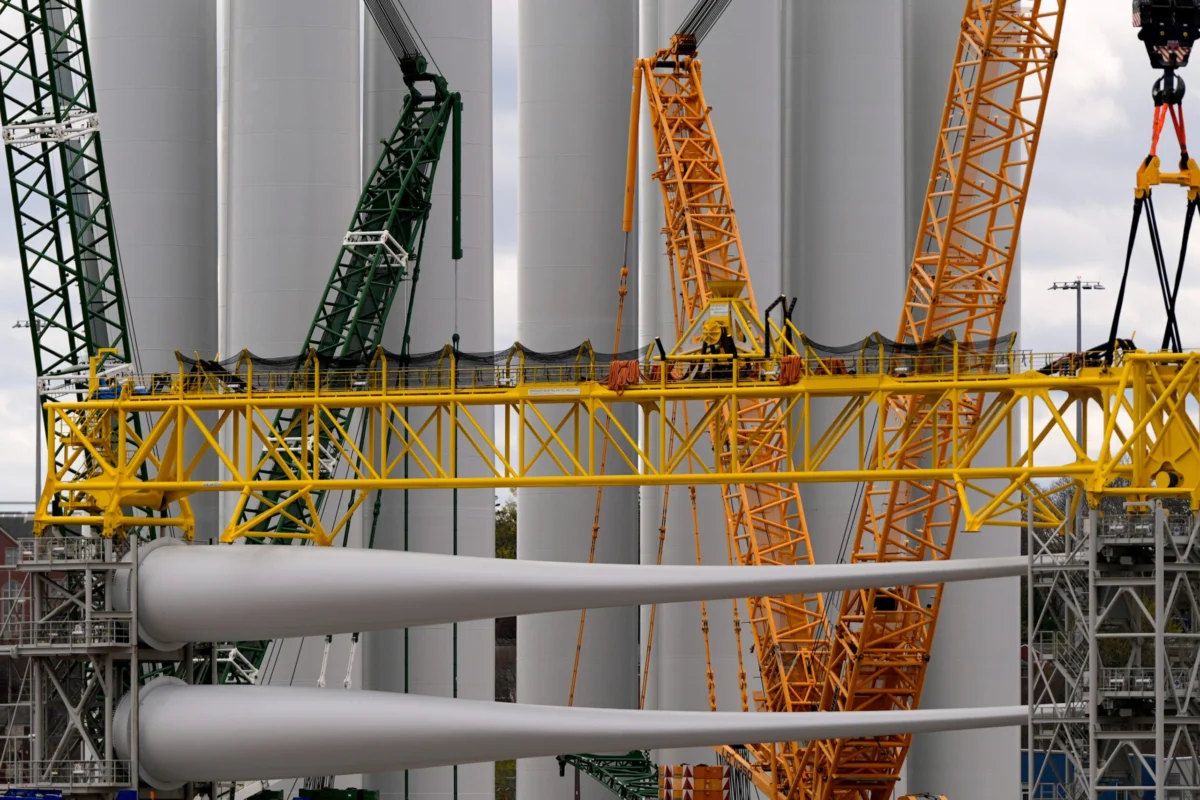
In a move that signals a definitive shift in American energy priorities, the Trump administration has finalized a landmark agreement to pay $1 billion to the French energy conglomerate TotalEnergies. This payment serves as a reimbursement for the company to relinquish its rights to two major offshore wind leases located off the coasts of New York and North Carolina. The settlement, announced by the Department of the Interior (DOI) on Monday, represents a cornerstone of the administration’s broader strategy to dismantle the burgeoning offshore wind industry and redirect capital toward fossil fuel infrastructure, specifically liquefied natural gas (LNG) and domestic oil production.
Under the terms of the agreement, TotalEnergies will exit the American offshore wind sector entirely, pledging to develop no new projects in U.S. waters. In exchange for the $1 billion refund—which covers the original lease acquisition costs—the company has committed to reinvesting those funds into fossil fuel projects within the United States. This includes the construction of a major LNG export facility in Texas and the expansion of oil and gas exploration and production activities. Interior Secretary Doug Burgum characterized the deal as an "innovative agreement" that protects American taxpayers from what he described as "ideological subsidies" for an "unreliable and costly" industry.
The Strategic Pivot from Wind to Gas
The cancellation of these leases marks a significant blow to the renewable energy goals established during the previous four years. The two projects in question represented a substantial portion of the East Coast’s future energy pipeline. The first lease, located in the New York Bight, was purchased by TotalEnergies in 2022 for approximately $795 million. It had the potential to generate 3 gigawatts (GW) of electricity, enough to power nearly one million homes. The second lease, in the Carolina Long Bay area off North Carolina, was acquired for $133 million and was expected to produce 1 GW of power, sufficient for 300,000 households.
TotalEnergies CEO Patrick Pouyanné defended the decision to walk away from the projects, citing a shift in the American regulatory and political environment. In a formal statement, Pouyanné noted that the company renounced the developments because offshore wind is no longer deemed to be in the country’s strategic interest under the current administration. He described the pivot to LNG and oil as a "more efficient use of capital," suggesting that the guaranteed reimbursement allowed the company to de-risk its U.S. portfolio while aligning with the federal government’s new energy mandate.
The administration’s "all-in" approach to fossil fuels is predicated on the belief that traditional energy sources will more effectively lower utility costs for American families, enhance grid reliability, and provide the massive amounts of power required to sustain the United States’ lead in artificial intelligence and high-tech manufacturing.
Legal Precedents and the "Pay-to-Play" Controversy
The $1 billion settlement follows a series of legal setbacks for the Trump administration in its efforts to halt offshore wind construction through executive fiat. Shortly after taking office, the administration issued several stop-work orders targeting five major wind projects along the East Coast, citing concerns over national security and maritime safety. However, developers and state governments successfully challenged these orders in federal court. Judges repeatedly ruled that the government failed to provide sufficient evidence of imminent risk, allowing construction to resume on projects like the Coastal Virginia Offshore Wind farm.
Critics argue that the settlement with TotalEnergies is a strategic workaround to these judicial roadblocks. By paying a developer to voluntarily abandon its leases, the administration avoids the legal scrutiny associated with unilateral permit cancellations. Governor Kathy Hochul of New York, a vocal proponent of renewable energy, condemned the deal as a "pay-not-to-play scheme." She characterized the use of $1 billion in taxpayer funds to prevent the construction of clean energy infrastructure as an "outrageous abuse of power" and a "billion-dollar bribe."
Environmental advocacy groups have echoed these sentiments. Lena Moffitt, executive director of Evergreen Action, stated that after failing to stop wind projects through illegal orders, the administration has resorted to "strangling" the industry by paying companies to exit the market. Ted Kelly, clean energy director at the Environmental Defense Fund, added that the move deprives Americans of affordable power at a time when natural gas prices remain volatile.
Economic Implications and the Global Energy Landscape
The withdrawal of TotalEnergies from the U.S. offshore wind market comes at a time when the global industry is experiencing rapid growth, particularly in Asia and Europe. According to the Global Wind Energy Council, China currently leads the world in new offshore wind installations, followed closely by several European nations. The U.S. had been poised to become a major player in this sector, with the Biden administration previously setting a target of 30 GW of offshore wind capacity by 2030.

The cancellation of 4 GW of potential capacity through the TotalEnergies deal represents a significant retreat from those targets. Proponents of the administration’s policy, however, argue that the economic reality of offshore wind—including high upfront capital costs and supply chain bottlenecks—makes it a less viable option than domestic natural gas. Secretary Burgum emphasized that the administration’s focus remains on "dependable, affordable power" that can be scaled quickly to meet rising demand.
The financial structure of the deal is unique: TotalEnergies will only receive the reimbursement after it proves it has invested the equivalent amount into U.S. fossil fuel projects. This "reinvestment clause" ensures that the $1 billion remains within the domestic energy sector, albeit in a different form than originally intended.
State-Level Resistance and Project Status
Despite the federal shift, several East Coast states remain committed to their renewable energy mandates. In North Carolina, Governor Josh Stein called the deal "ludicrous and wasteful," noting that the state has some of the highest offshore wind potential in the country. He argued that the loss of private investment in the Carolina Long Bay project would hurt the state’s economy and long-term energy security.
Meanwhile, other projects that survived the initial federal stop-work orders are reaching major milestones. Dominion Energy announced on Monday that its Coastal Virginia Offshore Wind project has officially begun delivering power to the Virginia grid. This project, which was also a target of federal scrutiny, serves as a reminder of the industry’s momentum prior to the recent policy shifts.
The timeline of U.S. offshore wind development has been marked by extreme volatility:
- 2021-2022: Record-breaking lease auctions, including the $4.37 billion New York Bight sale.
- 2023: Industry struggles with inflation and interest rates, leading to some contract renegotiations.
- January 2025: Trump administration takes office and issues executive orders prioritizing fossil fuels.
- February 2025: Federal courts overturn stop-work orders on five major projects.
- March 2025: The $1 billion settlement with TotalEnergies is announced, marking a new phase of federal intervention.
Analysis: The Future of the U.S. Energy Grid
The decision to buy out TotalEnergies’ leases reflects a fundamental disagreement over the future of the American electrical grid. The administration’s preference for LNG and oil is rooted in a "baseload" philosophy, where reliability is prioritized above carbon reduction. By funding an LNG plant in Texas with money originally slated for wind turbines in New York, the federal government is making a clear bet on gas as the primary driver of American energy independence.
However, this strategy carries risks. Relying heavily on fossil fuels exposes the grid to global commodity price fluctuations, whereas wind and solar have zero fuel costs once installed. Furthermore, the "pay-to-play" precedent could create uncertainty for other international investors in the U.S. energy sector. If federal policy can shift so drastically that $1 billion is paid to reverse a legal lease agreement, the perceived risk of investing in long-term American infrastructure projects may rise.
As the Trump administration continues to roll back environmental regulations and incentivize fossil fuel production, the tension between federal policy and state-level climate goals is expected to intensify. While TotalEnergies has agreed to walk away, other developers with existing projects already under construction may find themselves in a more complex legal and financial tug-of-war with a federal government determined to change the direction of the American energy landscape.
The $1 billion settlement is more than just a financial transaction; it is a statement of intent. It confirms that the current administration views offshore wind not as a solution to climate change, but as an obstacle to its vision of a fossil-fuel-powered American economy. Whether this pivot will result in the promised lower costs and increased reliability remains to be seen, but for now, the turbines off the coasts of New York and North Carolina will remain unbuilt, replaced by the expansion of oil rigs and gas terminals in the South.
