

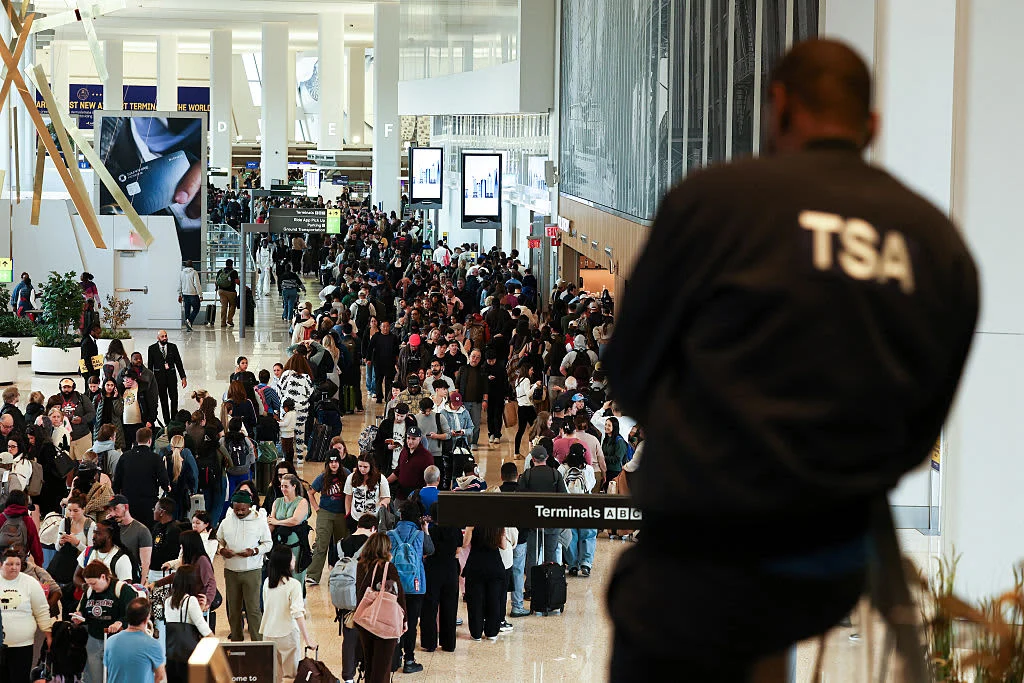
Across major air travel hubs in the United States, a critical convergence of a protracted government shutdown, elevated absences among Transportation Security Administration (TSA) officers, and localized operational disruptions has plunged airports into a state of unprecedented chaos, leaving tens of thousands of travelers facing agonizingly long security wait times and profound uncertainty. The crisis, now entering its second month, underscores the fragile interdependence of federal services and national infrastructure, with direct and immediate impacts on the daily lives of American citizens and the nation’s economy.
The stark reality of the unfolding situation was acutely felt by Andrew Leonard, a 34-year-old performing arts teacher from New York, who arrived at John F. Kennedy International Airport (JFK) at 4:45 a.m. on Monday, March 23, 2026, for a scheduled 7 a.m. flight to Seattle. His journey, part of a planned family vacation to Hawaii, began with a sense of routine quickly shattered by the sheer volume of passengers and the visible strain on airport operations. "I fly out of this terminal all the time and this is insane," Leonard remarked, recounting nearly two hours spent navigating security checkpoints before reaching his gate just as boarding commenced. His experience, far from isolated, mirrored the frustrations of countless travelers nationwide, emblematic of a system buckling under pressure.
The Genesis of the Crisis: A Political Stalemate
At the heart of the current air travel paralysis lies a partial government shutdown that commenced in mid-February, stemming from a bitter political impasse over federal funding for the Department of Homeland Security (DHS). Democrats in Congress have steadfastly refused to release full DHS funding without significant changes to federal immigration enforcement policies, a demand amplified following a high-profile incident in Minneapolis where two U.S. citizens were tragically shot and killed by immigration officers. This legislative deadlock has left hundreds of thousands of federal employees without pay, including the more than 50,000 dedicated officers of the Transportation Security Administration. For these essential workers, Monday marked the start of a week during which they would miss their second full paycheck since the shutdown began, a financial strain that has directly contributed to the escalating staffing shortages at airport checkpoints.
The American Federation of Government Employees (AFGE), the union representing TSA officers, has reported a troubling exodus from the agency, with "hundreds of officers" having resigned since the shutdown’s inception. This attrition, coupled with increased sick leave and unapproved absences, has stretched the remaining workforce thin, leading to a palpable degradation of service efficiency and, by extension, security screening throughput at the nation’s busiest airports.
Chronology of Escalation: A Week of Mounting Pressure
The current week has seen a rapid escalation of the crisis, building on weeks of underlying tension:
- Mid-February 2026: Partial government shutdown begins, impacting DHS and numerous other federal agencies. TSA officers continue to work without pay.
- Early March 2026: Reports begin to surface of increased TSA absences and longer wait times at some regional airports, though not yet at a critical mass.
- Thursday, March 12, 2026: TSA officers face their first missed full paycheck, exacerbating financial hardship and beginning to impact morale and attendance more broadly.
- Tuesday, March 17, 2026: With no resolution in sight, the prospect of a second missed paycheck looms, intensifying concerns among union officials and the travel industry.
- Sunday, March 22, 2026:
- White House border czar Tom Homan announces on CNN’s "State of the Union" that Immigration and Customs Enforcement (ICE) agents would be deployed to U.S. airports starting Monday to assist with security lines. Homan clarified that ICE agents would "be helping TSA move those lines along," specifically by guarding exit doors to free up specialized TSA personnel for screening duties, focusing on "areas that don’t need their specialized expertise."
- Separately, New York’s LaGuardia Airport (LGA) experiences a significant operational disruption following a collision on Sunday night involving an Air Canada regional jet and an emergency vehicle. This incident forced the closure of the airport on Monday morning, diverting substantial passenger traffic to other area airports, particularly JFK and Newark Liberty International Airport (EWR), further straining already overtaxed facilities.
- Monday, March 23, 2026:
- Travelers at JFK, like Andrew Leonard, endure prolonged security wait times, reporting experiences of nearly two hours to clear checkpoints.
- Despite the White House’s announcement, ICE agents were not visibly present at checkpoints in JFK’s Terminal 8 during early morning hours. Both DHS and TSA did not immediately respond to requests for comment regarding the deployment or its implementation schedule.
- The Federal Aviation Administration (FAA) issues a ground stop at Newark Liberty International Airport (EWR) in New Jersey, citing "traffic management initiatives," compounding the travel chaos across the greater New York City area and creating a cascading effect throughout the national air traffic control system.
Official Responses and Industry Outcry
The proposed deployment of ICE agents, while presented as a measure to alleviate immediate pressure, has been met with mixed reactions. While intended to supplement the understaffed TSA, its effectiveness remains to be seen, particularly given the specialized training required for many security functions. The lack of immediate visibility of ICE personnel at JFK on Monday morning raised questions about the logistical rollout of this plan.
The broader travel industry, encompassing major airline executives, airport authorities, and hospitality groups, has issued a unified and scathing condemnation of lawmakers for their failure to resolve the government shutdown and ensure the payment of essential federal workers. Their concerns extend beyond mere inconvenience, touching upon the economic stability of the sector and the long-term erosion of public trust in the reliability of air travel. "The repeated use of government shutdowns as a political tool is irresponsible and directly harms the traveling public, airline employees, and the national economy," stated a spokesperson for a leading airline industry association, reflecting the widespread frustration.
Broader Impact and Implications
The current crisis extends far beyond individual passenger delays. The cumulative impact on the national air travel system is multifaceted and severe:
- Economic Fallout: Airlines face potential revenue losses from delayed or canceled flights, rebooking costs, and a potential dip in passenger demand if disruptions persist. Airports, too, suffer from reduced concession sales and operational inefficiencies. The broader tourism and business travel sectors are also negatively affected, with estimated daily economic losses running into hundreds of millions of dollars nationally.
- Security Concerns: The primary mission of the TSA is to safeguard the nation’s transportation systems. Understaffing, overworked personnel, and the stress of missed paychecks raise legitimate concerns about potential compromises in vigilance and effectiveness, even if unintended. While officials maintain that security protocols are not being circumvented, the sheer volume of passengers combined with fewer agents creates inherent vulnerabilities.
- Workforce Morale and Retention: The ongoing financial hardship and public scrutiny place an immense burden on federal employees, particularly those deemed "essential" and mandated to work without pay. The "hundreds of officers" who have already quit represent a significant loss of institutional knowledge and experience, making it harder for TSA to recover even after the shutdown ends. Recruiting and retaining qualified personnel will become a long-term challenge.
- Ripple Effects on Infrastructure: The simultaneous closure of LaGuardia and the ground stop at Newark illustrate the delicate balance of the air traffic control system. When one component fails or is overloaded, the effects cascade, leading to system-wide delays and cancellations, often thousands of miles away from the initial disruption. This highlights the urgent need for stable funding and staffing across all aviation-related federal agencies.
Historical Precedent and The Path Forward
This is not the first time government shutdowns have snarled air travel. In early 2019, and again in late 2025, two separate federal government shutdowns were ultimately resolved shortly after travel disruptions escalated significantly, primarily due to higher-than-typical absences of air traffic controllers. Notably, air traffic controllers’ pay, unlike that of TSA officers, is not directly affected by the current impasse, yet their absence due to illness or protest still creates system-wide havoc. These historical precedents suggest that widespread public outcry and tangible disruptions to air travel often serve as a catalyst for political resolution.
However, the current situation presents unique challenges. The focus on immigration enforcement funding, coupled with specific incidents that have fueled the Democratic demands, adds a layer of complexity to the political negotiations. The White House and congressional leaders remain locked in a stalemate, with neither side appearing willing to yield substantial ground.
As the crisis deepens, the call for immediate resolution grows louder from all corners. The travel industry continues to press lawmakers for a swift end to the shutdown, emphasizing the severe economic consequences and the erosion of public confidence. For the thousands of unpaid TSA officers, the hope for a resolution is intertwined with their ability to provide for their families, while for millions of travelers, the return to normal airport operations remains an urgent and elusive aspiration. The coming days will test the resolve of political leaders and the resilience of the nation’s air travel infrastructure as the country watches for a breakthrough to this escalating crisis.
