

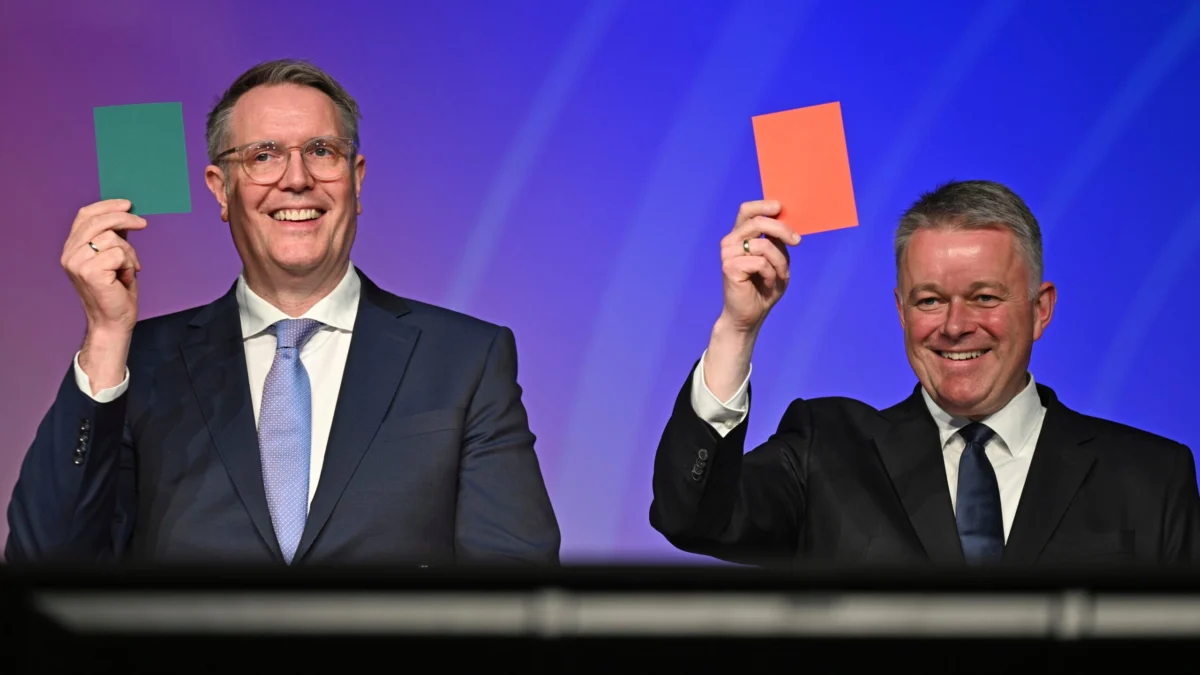
Mainz, Germany – October 27, 2023 – The polling stations across Rheinland-Pfalz officially opened their doors this morning at 8:00 AM, ushering in a crucial state parliamentary election that will determine the future political direction of this populous western German state. Approximately three million citizens, aged 18 and over, are eligible to cast their ballots, with the polls remaining open until 6:00 PM this evening. This election is more than just a contest for seats in the state parliament in Mainz; it is a significant referendum on the leadership of Minister-President Alexander Schweitzer (SPD), who is seeking to solidify his position for the first time since succeeding Malu Dreyer. His primary challenger, Gordon Schnieder of the CDU, is aiming to end 35 years of Social Democratic leadership and return the Christian Democrats to power in the Staatskanzlei. The outcome is expected to redraw the political map of Rheinland-Pfalz, with potential ramifications extending beyond the state’s borders.
The Stakes: A New Mandate and a Potential End to the "Ampel" Coalition
The election in Rheinland-Pfalz is particularly significant due to the potential dissolution of the current "Ampel" coalition at the state level, mirroring trends seen in federal politics. The Free Democratic Party (FDP) faces a significant challenge in crossing the 5% threshold required to enter the state parliament, a hurdle that has proven difficult for the party in recent electoral cycles. This anticipated absence of the FDP from the parliamentary benches makes a continuation of the current three-party coalition highly improbable.
The most likely scenario, according to pre-election polling and political analysis, points towards a "Große Koalition" – a grand coalition between the two largest parties, the CDU and the SPD. However, the leadership of such a coalition remains an open question, with both parties vying for the top ministerial position. This electoral contest is therefore not only about party representation but also about establishing a clear leadership mandate for the coming legislative period.
Pre-Election Polling: A Tight Race with a Slight CDU Edge
Recent opinion polls have indicated a close race between the leading parties. The latest ZDF Politbarometer, a widely respected political survey, placed the CDU at 29% of the vote. This represents a two-point lead over the incumbent Social Democrats (SPD). Despite the CDU’s slight advantage in the polls, the personal popularity of the SPD’s candidate for Minister-President, Alexander Schweitzer, appears to be a significant factor. He is reportedly viewed more favorably by voters than his CDU counterpart, Gordon Schnieder, suggesting that the personal appeal of the candidates could play a decisive role in swaying undecided voters.
Key Players and Their Electoral Fortunes
The election is also being closely watched for the performance of other political parties. The Alternative for Germany (AfD) is predicted to achieve its strongest result to date in a western German state, a trend that reflects broader national patterns of support for the right-wing populist party. The Green Party (Bündnis 90/Die Grünen) is expected to maintain its current standing, demonstrating resilience in the face of changing political tides. The Freie Wähler (Free Voters) and the FDP are both engaged in a fierce struggle to secure their representation in the state parliament, facing the uncertainty of clearing the crucial 5% threshold. Meanwhile, the Left Party (Die Linke) has a chance to achieve its first-ever entry into the Rheinland-Pfalz state parliament, a development that would further diversify the political spectrum.
Historical Context: A Legacy of Social Democratic Governance
Rheinland-Pfalz has a long-standing tradition of Social Democratic governance. Since 1991, the SPD has led the state government, with Malu Dreyer serving as Minister-President from 2013 until her recent resignation due to health reasons. Her successor, Alexander Schweitzer, a former state minister for social affairs, integration, and consumer protection, now faces the ultimate test of public approval. His leadership is being framed as a continuation of the established SPD path, but he must also forge his own identity and demonstrate his capacity to lead the state through potentially challenging times.
The CDU, on the other hand, has been out of power in Rheinland-Pfalz for over three decades. Their campaign, led by Gordon Schnieder, a member of the state parliament since 2011 and CDU parliamentary group leader since 2021, is centered on a promise of change and a return to what they describe as more traditional conservative values and fiscal responsibility. Schnieder has been actively campaigning across the state, highlighting concerns about economic stability, internal security, and what the CDU perceives as the current government’s shortcomings.
The Electoral Mechanics: Proportional Representation and the 5% Hurdle
The election for the Rheinland-Pfalz Landtag (state parliament) utilizes a mixed-member proportional representation system. Voters cast two votes: the first vote (Erststimme) is for a direct candidate in their constituency, and the second vote (Zweitstimme) is for a party list. The second vote is decisive in determining the overall proportion of seats each party will hold in the Landtag. A party must secure at least 5% of the second votes cast statewide or win at least three direct mandates to be represented in the parliament. This 5% hurdle is a critical factor for smaller parties like the FDP and the Freien Wähler, and the potential success of Die Linke in clearing it would represent a significant shift.
Broader Implications: A Bellwether for National Trends?
The election in Rheinland-Pfalz is not occurring in a vacuum. It is being closely observed as a potential indicator of broader political trends in Germany. The strength of the AfD, the performance of the Greens, and the struggles of the FDP all mirror national debates and electoral patterns. A strong showing by the AfD in a western German state could embolden the party nationally and further complicate the political landscape for the established parties. Conversely, a successful defense of the SPD’s position under Schweitzer could provide a much-needed boost to the federal government’s coalition.
The potential for a grand coalition between the CDU and SPD, if it materializes, would also have implications for the federal level, where similar discussions about potential alliances have occurred. The dynamics of such a coalition, including power-sharing and policy priorities, could offer a preview of future federal government configurations.
Campaign Themes and Voter Concerns
Throughout the campaign, several key issues have dominated the discourse. Economic stability, particularly in the context of rising inflation and energy prices, has been a central concern for voters. The ongoing war in Ukraine and its impact on Germany’s security and economy have also been prominent. Internal security and immigration policies have been hot-button issues, particularly for parties like the AfD and the CDU. Environmental policies and the transition to renewable energy, a core platform of the Green Party, have also been debated, albeit with varying levels of emphasis from different parties.
The performance of the current government in managing the state’s finances and public services has also been scrutinized. The CDU has accused the SPD-led government of excessive spending and a lack of foresight, while the SPD has defended its record, highlighting investments in infrastructure and social programs.
Anticipated Outcomes and Post-Election Scenarios
While pre-election polls provide a snapshot of public sentiment, the actual election results can often diverge. The uncertainty surrounding the FDP and the Freien Wähler’s ability to cross the 5% threshold adds a layer of complexity to predicting the final composition of the Landtag.
- Scenario 1: CDU Victory and Schnieder as Minister-President: If the CDU manages to outperform the SPD and secure a plurality of votes, Gordon Schnieder could indeed lead the party back into power. This would likely involve negotiations for a grand coalition with the SPD, or potentially exploring other coalition options if feasible, though a CDU-SPD grand coalition remains the most probable outcome in this scenario.
- Scenario 2: SPD Consolidation and Schweitzer’s Confirmation: Should Alexander Schweitzer successfully rally voters and lead the SPD to a strong showing, or even a narrow victory, he would likely remain Minister-President. A grand coalition with the CDU would still be a strong possibility, but the SPD would enter such negotiations from a position of greater strength.
- Scenario 3: Unforeseen Shifts and Coalition Challenges: The performance of smaller parties could significantly impact coalition negotiations. If the Freien Wähler or Die Linke manage to secure seats, they could become kingmakers, opening up alternative coalition possibilities. The potential absence of the FDP simplifies some coalition mathematics but also removes a potential partner for the CDU, making a grand coalition with the SPD even more likely if neither party secures an absolute majority.
The coming hours will reveal the will of the nearly three million eligible voters in Rheinland-Pfalz as they shape the future of their state. The results will not only determine the political leadership in Mainz but will also offer valuable insights into the broader electoral currents shaping Germany’s political landscape. The citizens of Rheinland-Pfalz have now begun the important task of making their voices heard.
