

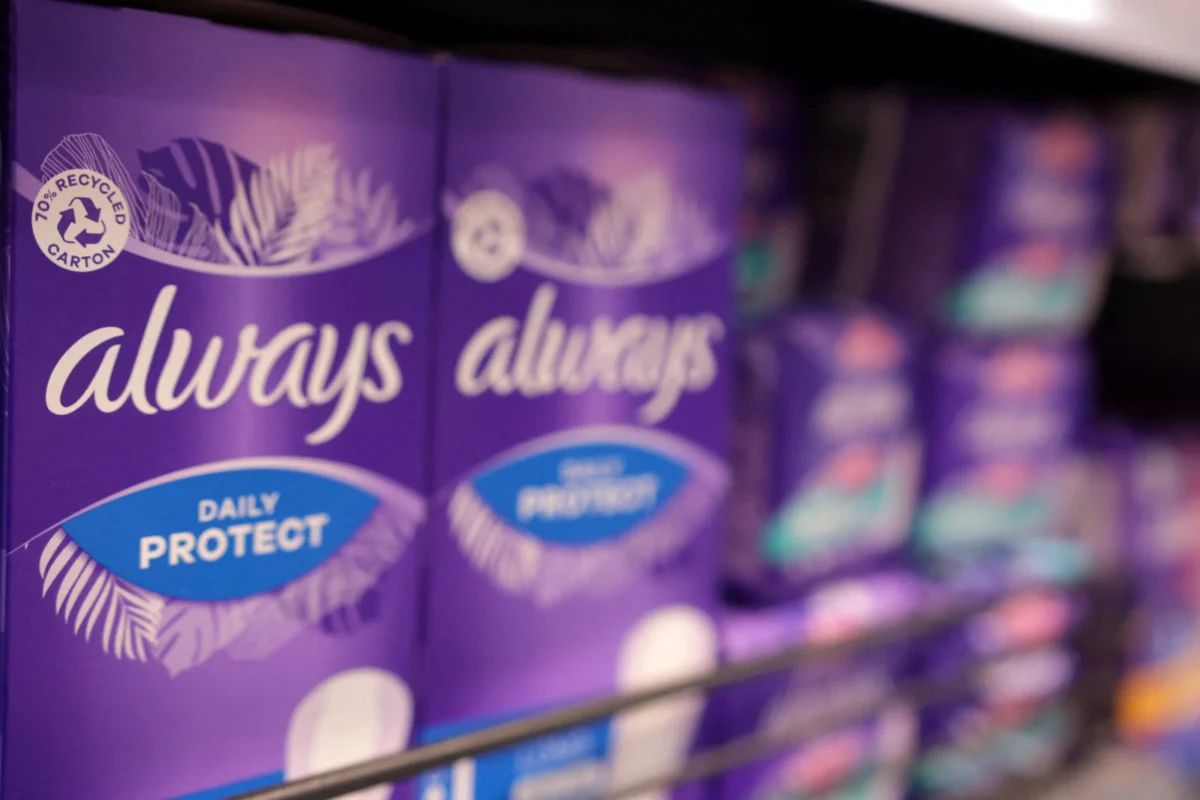
The silent but significant burden of rising menstrual product costs is increasingly pressing on consumers’ budgets, as a confluence of persistent inflation, fluctuating tariff policies, and the controversial "pink tax" drives prices upward, forcing individuals to seek alternatives or, in some cases, go without. This escalating financial strain on an essential category of personal care has become a stark illustration of broader economic pressures impacting household finances across the United States.
The Economic Tide: A "Triple Whammy" for Essential Products
Since 2020, the average price of critical menstrual products, encompassing sanitary pads and tampons, has surged by nearly 40%. Data from Chicago-based market research firm Circana reveals a climb from approximately $5.37 per unit to $7.43 per unit as of February data. Over the same period, dollar sales of these products have seen a nearly 30% increase, reflecting consumers paying more for fewer goods or higher-priced items. However, a contrasting trend from NielsenIQ indicates that the actual unit sales volume of menstrual products – including pads, tampons, and liners – has decreased by roughly 6% since 2022, incrementally falling each year. This divergence suggests a growing affordability crisis, with consumers either reducing consumption, switching to cheaper alternatives, or opting for reusable options.
This "triple whammy," as Sarah Broyd, a partner with consultancy firm Clarkston Consulting, describes it, comprises rising raw material costs, widespread inflation across energy and supply chains, and cross-border trade friction stemming from tariffs. These factors coalesce to create an unprecedented pricing challenge for manufacturers and, consequently, for consumers.
Inflation’s Grip: Beyond General Price Hikes
The broader economic environment, characterized by sustained inflationary pressures, forms the backdrop for these price increases. The latest Consumer Price Index (CPI) in February indicated an annual rise of 2.4% across the economy. However, the impact on personal care products, a category that includes menstrual hygiene items, has been far more dramatic. CPI data shows that inflation in personal care products in the U.S. has jumped a staggering 22.1% in February from January 2020, significantly outstripping the general inflation rate. This disproportionate increase highlights a particular vulnerability within this sector, where demand is inelastic, meaning consumers continue to purchase regardless of price, up to a point.
The underlying causes of this inflation are multifaceted. Global supply chain disruptions, exacerbated by geopolitical events and lingering effects of the pandemic, have driven up the cost of raw materials crucial for menstrual product manufacturing. Plastics, pulp, cotton, and adhesives—all primary components of sanitary pads and tampons—have seen their prices escalate. Energy costs, vital for production and transportation, have also surged, adding further pressure to manufacturers’ operational expenses. These increased costs are inevitably passed on to consumers, who find their purchasing power eroded.
Tariff Troubles: A Hidden Tax on Imports
Beyond inflation, governmental tariff policies have emerged as a significant contributor to the heightened cost of menstrual products. Tariffs, essentially taxes on imported goods, directly increase the cost for manufacturers who rely on international supply chains for raw materials or finished products. U.S. government data reveals a stark increase in tariff collection on menstrual products containing cotton, soaring from $42 million in 2020 to $115 million in 2025. This nearly threefold increase represents a direct financial burden that manufacturers typically pass on to consumers.
In 2024, the United States primarily imported its menstrual products from Canada, China, and Mexico, according to the World Bank. The previous administration, under President Donald Trump, implemented varying levels of tariffs on goods from all three of these key trading partners over the past few years, ostensibly to protect domestic industries or address trade imbalances. While the stated intentions of these tariffs might be economic protection, their practical effect has been to raise the cost of goods for American consumers, including essential items like period products.
The "Pink Tariffs Study Act," introduced by Democrats in Congress last year, aims to investigate whether the U.S. tariff system exhibits a "gender bias" or is "regressive." This legislative effort underscores a growing awareness and concern among policymakers regarding the disproportionate impact of tariffs on products predominantly used by women, further highlighting the economic inequities embedded within trade policies. Broyd of Clarkston Consulting emphasizes that raw materials like plastic and pulp, often sourced overseas, are particularly susceptible to these tariffs, creating an additional layer of cost that compounds other inflationary pressures.
The Enduring "Pink Tax": A State-Level Burden
Compounding the issues of inflation and tariffs is the persistent "pink tax," a term referring to the practice of charging more for products marketed to women, or, in this context, the sales tax levied on menstrual products in many states. Unlike "medical devices" or other necessities that are often exempt from sales taxes, menstrual hygiene products are frequently categorized as non-essential or luxury items, making them subject to state sales taxes. This categorization has long been a point of contention for women’s health advocates and policymakers.
According to 2025 data from Statista, states like Tennessee, Mississippi, and Indiana impose the highest sales tax on menstrual products, standing at 7%. While some states have moved to abolish the "pink tax" on period products, a significant number still maintain it, adding an extra layer of cost for individuals who menstruate. This tax, combined with rising prices, creates a systemic financial disadvantage for a large segment of the population, impacting budget allocations for other necessities.
Consumer Strain: "A Subscription Service to Be a Woman"
The cumulative effect of these financial pressures is acutely felt by consumers. Dafna Diamant, a 30-year-old New York resident, articulates this frustration vividly. She has observed the price of her usual pack of roughly 18 tampons climb to around $25, a noticeable increase over the past year. "It’s crazy, and it just feels like as a woman, you have to pay sometimes $50 every couple months," Diamant told CNBC, expressing concern over the toll it takes on income, especially for those with limited financial flexibility.
Diamant’s frustration stems from the non-negotiable nature of this expense. Menstrual products are not discretionary purchases; they are a biological necessity. Despite opting for more affordable store-brand products at retailers like CVS and Walgreens, she remains shocked by the sticker price. Her poignant remark, "It still feels like a subscription service to be a woman… You have to pay every month to be fertile," encapsulates the sentiment of many who feel penalized for a natural biological function. This perspective highlights the inherent inequity when essential health items are treated as luxuries subject to various taxes and market forces without adequate policy consideration.
Corporate Adjustments and Market Shifts
Major manufacturers, despite their market dominance, are not immune to these economic headwinds. Procter & Gamble (P&G), the parent company of the ubiquitous Always brand, announced in July that it was raising prices on 25% of its personal care and household products. This decision was a direct response to a significant $1 billion total annual tariff impact the company faced. P&G, which manufactures Always products in facilities across Maine, Utah, and Canada, declined to comment specifically on this story, but their public statements on earnings calls reflect the challenges of managing rising input costs and tariffs.
Similarly, Kimberly-Clark, the maker of Kotex, reported incurring $300 million in gross costs from tariffs during an April earnings call, with over half of that amount attributable to tariffs on goods from China. The company did not respond to CNBC’s requests for comment, but their financial disclosures underscore the widespread impact of trade policies on their bottom line, which inevitably translates to higher consumer prices.
In response to these market dynamics and to maintain profitability, some companies are reevaluating their product portfolios. Broyd suggests that businesses may consider divesting their feminine care segments to focus on areas with higher profit margins. This trend was exemplified by Edgewell Personal Care, which sold its feminine care business to a Swedish company for $340 million in November. Such moves could signal a shifting landscape where established brands might cede ground to more agile, niche, or startup brands that can innovate on pricing or product type. Broyd notes that while consumers with discretionary income might gravitate towards "organic or products they trust" at a premium, those without such means are "going to trade down and go private label, or go without."
The Rise of Reusables: An Alternative to the Cost Crunch
Amidst the escalating costs of single-use menstrual products, a significant shift in consumer behavior is emerging: the growing adoption of reusable alternatives. Products like period underwear, menstrual cups, and discs offer a long-term, cost-effective, and environmentally friendly solution, appealing to a demographic increasingly conscious of both their budgets and their ecological footprint.
Dafna Diamant, the New York consumer, exemplifies this trend, noting that she and her friends are now experimenting with period underwear to manage their monthly expenses. This anecdotal evidence is supported by market data. Saalt, a reusable period products company founded in 2018, estimates that 16% to 20% of U.S. consumers, primarily younger individuals, have tried or are actively using reusable menstrual products.
Cherie Hoeger, CEO of Saalt, highlights the compelling economic argument for reusables. A menstrual cup or disc, typically priced around $30, can last up to 10 years, offering potential savings of up to $1,800 over its lifespan, even on the low end. Saalt achieved eight-figure revenues in its third year, and Hoeger reports consistent year-over-year demand growth, indicating a robust and expanding market.
For Generation Z, affordability is the primary driver for switching to reusables, often outweighing environmental concerns, though the latter remains a significant factor. This generational preference underscores a pragmatic approach to personal finance and sustainability.
The momentum of the reusable market is also influenced by other factors. Recent studies indicating the potential presence of lead or other harmful ingredients in some tampons, though investigated by the FDA and determined not to pose a risk, have fueled consumer interest in alternatives perceived as safer or more natural. Companies like Knix, MeLuna, and Flex have entered and expanded in this space, capturing market share from traditional single-use product manufacturers.
This paradigm shift poses a challenge to major manufacturers who have historically relied on strong brand loyalty for their single-use products. Kimberly-Clark CEO Michael Hsu, in a November earnings call, acknowledged this long-duration frequency of consumer relationship, stating, "If you’re in fem care, you’re going to be using Kotex for 40 years… There is long-duration frequency. There’s a lot of expenditure for consumers, and so because of that, they want to have an ongoing relation with us." However, the rising popularity of reusables threatens this established loyalty by offering a fundamentally different consumption model.
Broader Societal and Policy Implications
The rising cost of menstrual products carries significant societal implications, extending beyond individual financial strain. "Period poverty"—the inability to afford menstrual products—is a growing concern that impacts education, employment, and overall well-being. When individuals cannot afford essential menstrual hygiene, they may resort to using unhygienic alternatives, which can lead to health issues, or they may miss school or work, perpetuating cycles of disadvantage. This disproportionately affects low-income households and marginalized communities, exacerbating existing inequalities.
The conversation around menstrual product affordability is thus inextricably linked to broader discussions about health equity and economic justice. Advocates argue that menstrual products should be universally recognized as essential health items, warranting tax exemptions and, in some cases, public provision or subsidies. The legislative efforts to eliminate the "pink tax" and to study "pink tariffs" are steps in this direction, aiming to rectify what many see as an unfair financial burden on a biological necessity.
As Cherie Hoeger of Saalt succinctly puts it, "Affordability is the crux; it’s the root problem. Without affordability for these period products, you have real economic consequences for women to happen." The escalating costs compel policymakers, manufacturers, and consumers alike to confront the reality of period poverty and seek sustainable, equitable solutions in an increasingly challenging economic landscape. The shift towards reusables, while driven by individual choice, also serves as a market-driven response to systemic issues, highlighting the urgent need for a more holistic approach to menstrual health and affordability.
