

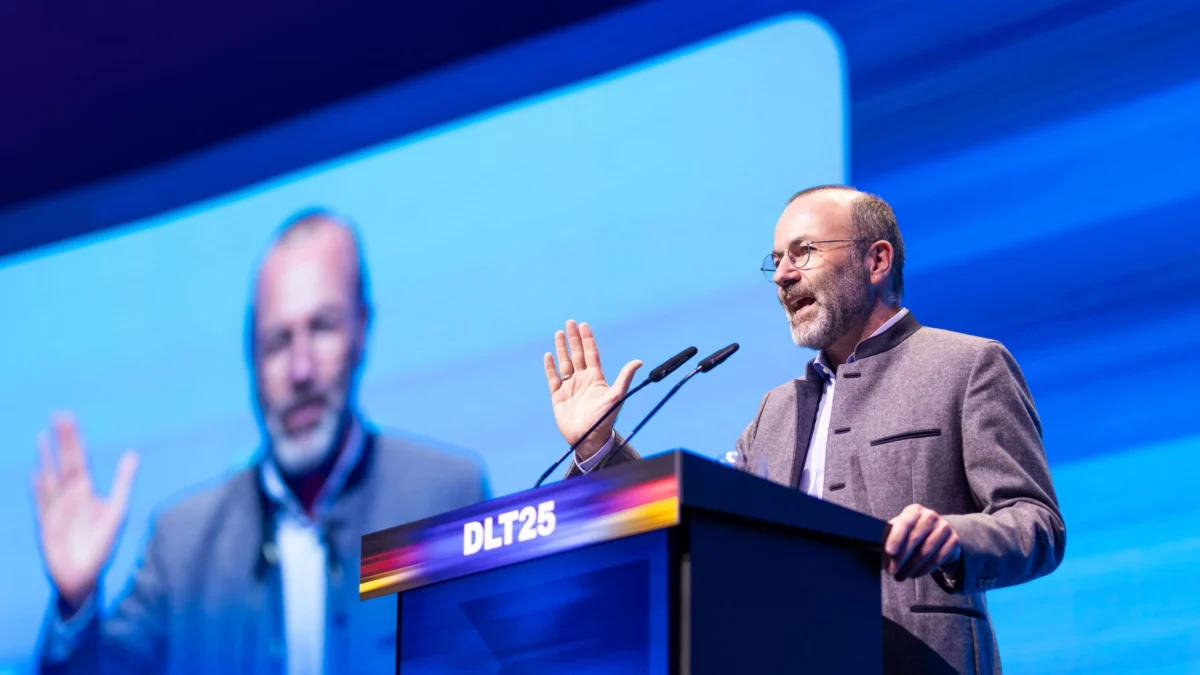
European People’s Party (EPP) group leader Manfred Weber is facing renewed scrutiny following revelations that his parliamentary group has been engaging in closer cooperation with right-wing parties, including the Alternative for Germany (AfD), than previously acknowledged. Despite Weber’s repeated assertions of a firm "firewall" against the AfD, internal communications and a reported meeting suggest a more complex and potentially contradictory working relationship within the European Parliament.
The controversy, brought to light by a German Press Agency (dpa) investigation, centers on a specific legislative proposal concerning the tightening of migration policies. Sources indicate that members of the EPP, the largest political group in the European Parliament, collaborated with the right-wing faction Identity and Democracy (ID) and the European Conservatives and Reformists (ECR) – groups that include the AfD – through a WhatsApp group and a direct meeting. This joint effort reportedly aimed to shape a legislative proposal that was subsequently adopted by the relevant parliamentary committee with the necessary majority.

Background: The "Firewall" and Shifting Political Alliances
Manfred Weber, a prominent CSU politician and the chairman of the EPP group, has consistently projected an image of strong opposition to far-right parties, particularly the AfD. This stance has been a cornerstone of his political strategy, aiming to maintain the EPP’s position as a centrist and conservative bloc within the European Parliament, distinct from the more populist and nationalist movements. The EPP, which includes Germany’s CDU and CSU, as well as numerous other center-right parties from across the EU, typically champions policies rooted in Christian democratic values, economic liberalism, and a commitment to European integration.
However, the political landscape in the European Parliament is fluid, with shifting alliances and strategic maneuvering becoming increasingly common. As the EPP, like other mainstream parties, grapples with the rise of populist and nationalist sentiment across member states, the lines of cooperation and opposition can become blurred. The dpa report suggests that in the pursuit of specific legislative goals, particularly on contentious issues like migration, the EPP may have engaged in pragmatic alliances that contradict Weber’s public pronouncements.
The proposed legislation in question aims to strengthen the EU’s migration policies. While specific details of the amendment are not fully elaborated in the initial reports, the general thrust of such proposals often involves measures to expedite asylum procedures, enhance border controls, and potentially establish external processing centers for asylum seekers in countries outside the EU. These are policy areas where right-wing parties often find common ground, advocating for stricter enforcement and reduced immigration.
Chronology of Events: From Public Stance to Alleged Collaboration
While the exact timeline of the WhatsApp group’s formation and the reported meeting is not fully detailed, the events are understood to have occurred in the lead-up to a significant parliamentary vote on the migration policy proposal.
- Prior to the Investigation: Manfred Weber consistently maintains the EPP’s strict separation from the AfD and similar parties, emphasizing that the EPP group does not engage in formal cooperation with them. This public stance has been a key element of the EPP’s brand identity.
- The dpa Investigation: A report by the German Press Agency uncovers evidence of closer collaboration between members of the EPP and right-wing factions, including the AfD. This evidence allegedly includes communications within a WhatsApp group and details of a face-to-face meeting.
- Legislative Context: The collaboration is said to have focused on a legislative proposal to tighten EU migration policy. This proposal reportedly gained necessary majority support in a relevant committee shortly after the alleged joint efforts.
- Weber’s Response: In an interview with the German newspaper "Bild," Manfred Weber downplayed his direct responsibility, stating that while he sets the strategy for the EPP group, he does not "control the chat groups of employees." He further asserted that the AfD "plays no role in majorities and content" for the EPP.
The Proposed Legislation: A Closer Look at Migration Policy
The legislative proposal at the heart of this controversy centers on enhancing the EU’s approach to migration. Such proposals often include provisions that aim to:
- Expedited Procedures: Streamlining the asylum application process to allow for quicker decisions.
- Border Enforcement: Strengthening external border controls and increasing surveillance.
- "Return Hubs": The establishment of processing centers in non-EU countries where asylum seekers would be screened and potentially repatriated. This is a particularly contentious aspect, raising concerns about human rights and the potential for processing asylum claims outside of European jurisdiction.
- Cooperation with Third Countries: Increased agreements with countries of origin and transit to manage migration flows.
These policy areas are highly debated within the EU, with significant divisions between member states and political groups regarding the balance between humanitarian concerns and border security. The EPP, while generally advocating for robust border management, often frames its policies within a broader context of shared responsibility and European values. The AfD, on the other hand, typically adopts a more nationalistic and protectionist stance, prioritizing national sovereignty and stricter immigration controls.

Reactions and Implications: Challenging the Political Narrative
The revelations have triggered a wave of reactions and raised questions about the internal dynamics of the EPP and the integrity of its stated political positions.
- Internal EPP Scrutiny: While Weber maintains that he does not control staff-level communications, the fact that such collaborations were occurring within the EPP group, potentially to advance a legislative agenda, raises questions about oversight and the adherence to the group’s stated principles. It suggests a potential disconnect between leadership directives and the operational activities of parliamentary staff and even some MEPs.
- Opposition Parties: Other political groups in the European Parliament, particularly those on the left and center-left, are likely to seize on this information to criticize the EPP and highlight what they may perceive as hypocrisy. They often advocate for more humane and rights-based approaches to migration and have been critical of any perceived cooperation with far-right parties.
- AfD’s Perspective: The AfD, if involved in such collaborations, would likely view it as validation of their influence and ability to shape EU policy, even if through indirect means. They might also use it to further their narrative of being a disruptive force within the EU system that can achieve their goals despite opposition.
- Damage to Weber’s Credibility: The most significant implication is the potential damage to Manfred Weber’s credibility. His consistent emphasis on maintaining a distance from the AfD has been a key part of his political brand. If it emerges that his group has been actively working with the AfD on legislative matters, it could undermine his leadership and the EPP’s standing as a reliable centrist force.
- Erosion of Trust: Such revelations can contribute to a broader erosion of trust in political institutions. When public statements appear to contradict private actions, it fuels cynicism among the electorate and can make it harder for mainstream parties to mobilize support.
Analysis: The Pragmatism of Power in Brussels

The European Parliament is a complex arena where political parties must constantly negotiate, compromise, and form alliances to advance their agendas. On issues with broad consensus among right-leaning parties, such as stricter migration controls, it is not entirely surprising that pragmatic collaborations might emerge, even if they are not publicly advertised.
The core of the issue lies in the perceived contradiction between Weber’s public stance and the alleged private actions. While Weber’s statement that he doesn’t control every chat group of his staff might be technically true, it raises questions about the EPP’s internal culture and how its policy objectives are pursued. The suggestion is that certain EPP members or staff, perhaps seeing an opportunity to advance a policy they believed in, may have bypassed or worked around the official "firewall" policy.
This situation highlights a recurring tension in European politics: the balance between ideological purity and the pragmatic pursuit of political goals. For a large group like the EPP, which aims to build broad coalitions to govern effectively, compromises and strategic alliances are often necessary. However, these must be managed carefully to avoid undermining core values and public trust.

The specific legislative proposal concerning migration is a highly charged issue, and the desire to influence its outcome could have motivated the reported cooperation. The EU’s asylum and migration system has been under intense pressure for years, and member states and political groups are constantly seeking solutions. The AfD, as a vocal proponent of stricter measures, would naturally seek to align with any parliamentary forces pushing in that direction.
Broader Impact on European Politics
This incident could have several broader impacts on the European political landscape:

- Shifting Alliances: It may encourage other mainstream parties to reconsider their own rigid stances against engaging with populist parties, especially on specific policy areas where there is overlap. This could lead to a further fragmentation of the traditional political blocs.
- Increased Polarization: Conversely, it could also fuel further polarization, with parties on the left and center using such instances to paint conservative parties as hypocritical or complicit with the far-right.
- Focus on Transparency: The controversy underscores the importance of transparency in political dealings within the European Parliament. The reliance on informal communication channels like WhatsApp groups can obscure the decision-making process and create opportunities for controversy.
- Future of the EPP: For Manfred Weber and the EPP, this presents a challenge in how to navigate the complex political landscape while maintaining their credibility. They will need to demonstrate that their commitment to core democratic values remains steadfast, even when engaging in necessary parliamentary negotiations.
In conclusion, the allegations surrounding Manfred Weber and the EPP’s engagement with the AfD in the European Parliament highlight the intricate and often opaque nature of political maneuvering in Brussels. While Weber insists he is not responsible for the actions of individual staff members, the revelations cast a shadow over his leadership and the EPP’s stated commitment to maintaining a distance from far-right parties. The incident serves as a stark reminder of the challenges faced by mainstream political forces in an era of rising populism and the constant need to balance ideological principles with the pragmatic demands of parliamentary politics. The long-term implications for the EPP’s credibility and the broader political alliances within the European Parliament remain to be seen.
