

The modern economic landscape is increasingly defined by a culture of speculation, where the promise of rapid returns through high-leverage trading platforms and volatile digital assets dominates public attention. However, while the retail financial sector often chases the next "big win," the utility industry operates under a fundamentally different mandate: the preservation of long-term reliability and the steady maintenance of critical infrastructure. For service providers responsible for the national power grid, "big" events are rarely synonymous with fortune; instead, they often signal systemic stress, unprecedented load demands, or catastrophic weather events. As global energy consumption accelerates and the physical expansion of the grid struggles to keep pace, utility leaders are sounding the alarm on the need for a return to foundational operational technologies before embracing the allure of advanced artificial intelligence.
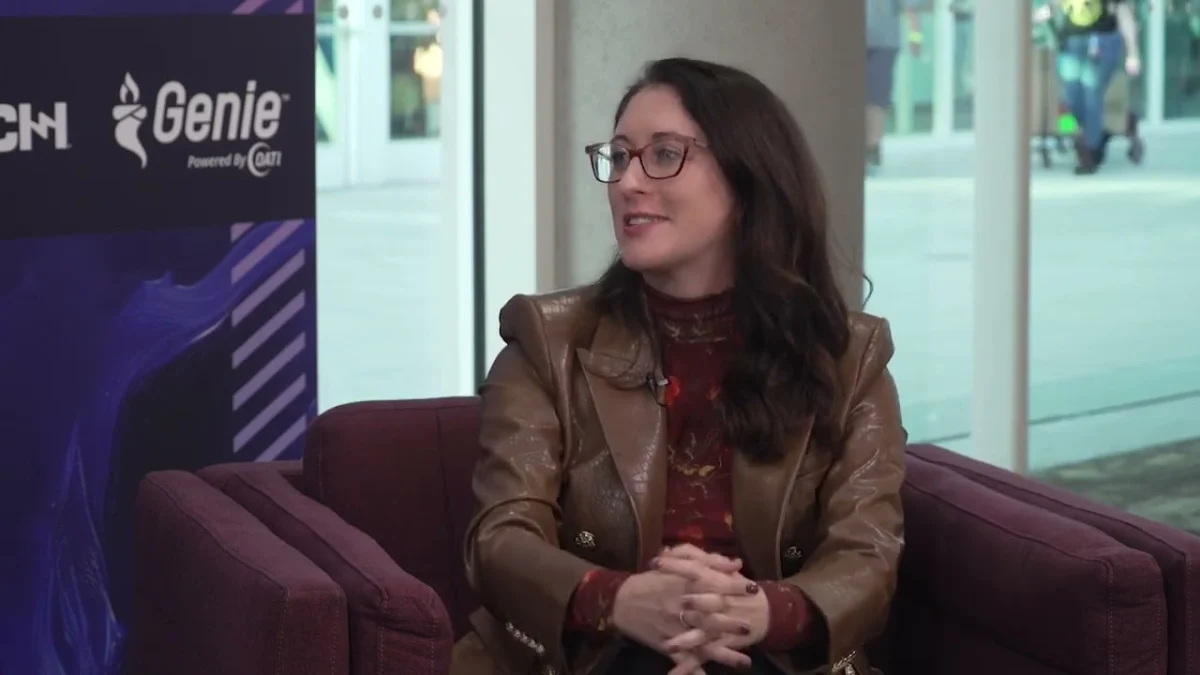
The current state of the utility industry is one of heightened urgency. According to recent data from Grid Strategies LLC, the United States is facing a significant deficit in transmission infrastructure. A 2024 report highlighted that thousands of miles of necessary grid expansion have failed to materialize, even as the demand for electricity reaches record highs. This stagnation in physical growth coincides with a period of rapid industrial change, driven by the electrification of transport, the proliferation of power-hungry data centers, and the integration of renewable energy sources. Sally Jacquemin, who leads the power and utility business unit for Emerson’s digital grid management division, noted in a recent interview at the DTECH Studio that the industry is experiencing a "tremendous change and acceleration" that requires a disciplined approach to technology adoption.
The Foundational Hierarchy of Utility Technology
In an era where artificial intelligence (AI) is marketed as a panacea for complex industrial challenges, Jacquemin offers a cautionary perspective rooted in structural integrity. She argues that many utilities are attempting to deploy sophisticated analytical tools without first ensuring their core systems are robust. To illustrate this, she utilizes the metaphor of residential construction. According to Jacquemin, building a modern grid is akin to building a house: one cannot install windows or design the landscaping before the concrete slab is poured and the walls are erected.
In the context of power management, the "concrete slab" consists of foundational systems such as Supervisory Control and Data Acquisition (SCADA), Outage Management Systems (OMS), and Advanced Distribution Management Systems (ADMS). These technologies provide the primary source of truth for grid operators, offering real-time visibility into the health of the network. Without a stable data foundation—the "concrete"—AI applications, which Jacquemin likens to "landscaping," lack the necessary inputs to function effectively. The industry consensus among leading engineers is that AI-driven predictive maintenance and load forecasting are only as reliable as the underlying network model management. If the foundational data is "cracked" or incomplete, the resulting AI insights will be flawed, potentially leading to operational failures rather than efficiencies.
Case Study: Jamaica Public Service and the Impact of Hurricane Melissa
The practical application of this foundational philosophy was recently tested in the Caribbean. In October, Jamaica was struck by Hurricane Melissa, a devastating storm that caused widespread destruction across the island’s infrastructure. For Jamaica Public Service (JPS), the island’s primary energy provider, the storm represented a worst-case scenario for grid resilience. However, JPS had previously invested in Emerson’s full technology stack, creating a unified digital grid management environment that spanned transmission, SCADA, distribution, and outage management.
The integration of these systems proved critical during the storm’s landfall and the subsequent recovery period. By having a "one-stop shop" for operational data, JPS was able to maintain system visibility even as the physical environment deteriorated. Jacquemin reported that the system performed as expected throughout the hurricane, allowing operators to keep power flowing to critical areas and providing a clear roadmap for restoration once the winds subsided.
The recovery metrics for JPS following Hurricane Melissa provide a benchmark for utility resilience. Despite unprecedented damage to the transmission and distribution networks, strategic pre-storm planning combined with digital grid management enabled JPS to restore power to 98% of its customer base within 120 days. This restoration timeline was bolstered by international support and the ability of the digital system to pinpoint faults with high precision, reducing the time crews spent patrolling lines and increasing the speed of physical repairs.
The Role of Strategic Partnerships and Mergers
The technological capabilities leveraged by JPS are the result of significant consolidation and innovation within the industrial automation sector. Last year, Emerson completed its acquisition of a majority stake in AspenTech, a move valued at approximately $11 billion. This merger combined Emerson’s expertise in grid hardware and automation with AspenTech’s advanced software capabilities. The goal of the integration is to provide utility control rooms with a seamless interface that manages everything from the physical sensors on a transformer to the predictive algorithms used to balance the grid.
This trend toward integrated "tech stacks" reflects a broader shift in how utilities view their vendors. Rather than managing a fragmented ecosystem of dozens of niche software providers, many utilities are moving toward primary partnerships that offer a single source of truth. This reduces the complexity of data integration—a common hurdle in grid modernization—and ensures that when a crisis like a hurricane or a sudden load spike occurs, the information provided to the control room is consistent and actionable.
Addressing the Data Center Challenge
A significant driver of the "urgency" described by Jacquemin is the explosive growth of data centers, fueled by the global demand for AI processing power. Data centers represent a unique challenge for grid operators because they require massive, consistent baseload power and often have much shorter development timelines than the transmission lines needed to serve them. While a data center can be constructed in 18 to 24 months, a new high-voltage transmission line can take a decade or more to permit and build.
This disconnect between demand growth and infrastructure expansion is forcing utilities to find ways to "squeeze" more capacity out of existing lines. Digital grid management plays a pivotal role here. By using real-time data to monitor line temperatures and ambient conditions—a process known as Dynamic Line Rating (DLR)—utilities can safely increase the amount of power sent through existing wires. This technological "bridge" allows utilities to manage the immediate needs of data center developers while they navigate the long-term process of physical grid expansion.
Chronology of Grid Modernization Milestones
To understand the current trajectory of the industry, it is necessary to view these developments within a broader timeline of utility evolution:
- 2010–2015: The "Smart Grid" era begins, focusing on the deployment of smart meters and basic digital sensors.
- 2016–2020: Utilities begin integrating intermittent renewable energy at scale, highlighting the need for more advanced SCADA and ADMS systems.
- 2021–2023: The post-pandemic period sees a surge in electrification and the announcement of major industrial "megaprojects," leading to a projected doubling of load growth in some regions.
- 2023 (October): Hurricane Melissa hits Jamaica, serving as a real-world validation of integrated digital grid management for storm response.
- 2024: Industry leaders like Emerson emphasize a "back to basics" approach, prioritizing foundational data integrity over premature AI deployment.
- 2026 (Upcoming): A major industry web event scheduled for April 2, 2026, will bring together JPS representatives and global experts to dissect the lessons learned from Hurricane Melissa and set the agenda for the next decade of resiliency planning.
Broader Implications for the Energy Transition
The shift toward technology-enabled grid management has implications that extend far beyond the utility control room. As the world moves toward a decarbonized economy, the grid serves as the central nervous system of the energy transition. If the grid is unable to handle the influx of electric vehicles, heat pumps, and renewable generation, the transition will stall.
The success of companies like JPS in navigating extreme weather suggests that digital resilience is just as important as physical hardening (such as burying lines or using stronger poles). In many cases, it is more cost-effective to invest in software that improves situational awareness than to attempt to "gold-plate" every mile of the physical network. However, as Sally Jacquemin cautioned, this digital journey must be sequential. The industry must resist the urge to skip the foundational steps of data management and network modeling in a rush to claim the benefits of the AI revolution.
As utilities look toward the future, the focus remains on the "concrete slab." By ensuring that the foundational layers of the grid are secure, transparent, and integrated, service providers can create a platform that is not only resilient to the storms of today but also flexible enough to accommodate the technological innovations of tomorrow. The "big one" for a utility isn’t a windfall profit; it is the quiet, uninterrupted flow of electricity during a storm, a feat that is increasingly dependent on the invisible digital architecture supporting the wires.
