

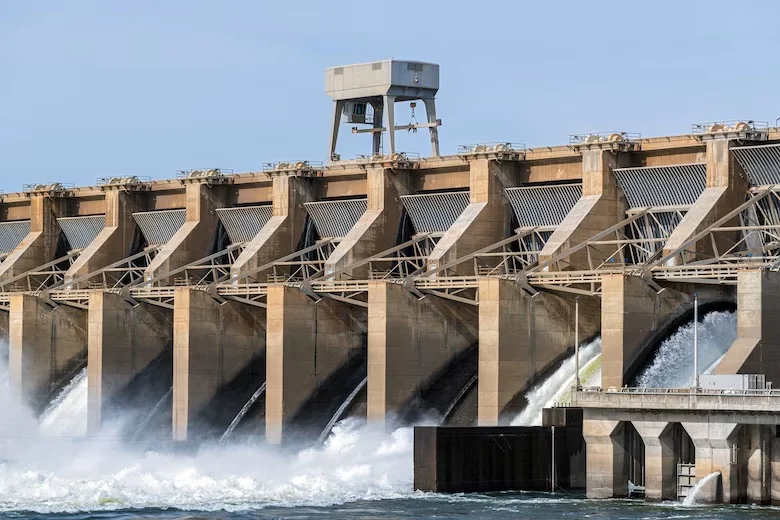
The Federal Energy Regulatory Commission (FERC) has issued a unanimous decision to reform and streamline its National Environmental Policy Act (NEPA) review processes for specific water power actions. In a move designed to reduce administrative burdens and enhance regulatory predictability, the Commission voted to implement changes targeting actions that have been determined to possess minimal or no significant environmental impact. This regulatory shift is intended to provide greater efficiency and certainty to the regulated hydropower industry, allowing for faster processing of routine administrative tasks and infrastructure improvements while maintaining the agency’s statutory environmental obligations.
The Commission’s decision is structured around two primary orders that address different aspects of the hydropower regulatory lifecycle. The first order, issued as a notice of proposed rulemaking (NOPR), proposes an amendment to existing NEPA regulations to expand the scope of "categorical exclusions." These exclusions are a critical component of federal environmental law, representing categories of actions that federal agencies have pre-determined do not individually or cumulatively have a significant effect on the human environment. Consequently, actions falling under these exclusions do not require the preparation of a lengthy environmental assessment (EA) or a comprehensive environmental impact statement (EIS).
Under this new proposal, FERC seeks to include the termination or revocation of hydropower licenses and exemptions within the list of categorical exclusions, provided these actions involve minimal or no ground-disturbing activities and result in minor or no alterations to reservoir conditions or downstream water flows. By streamlining the decommissioning or administrative closure of projects that are no longer operational or are seeking to surrender their licenses without significant physical site changes, FERC aims to reallocate its staff resources toward more complex projects with higher potential for environmental impact.
In the second order, the Commission took the significant step of adopting five existing categorical exclusions previously established by the Tennessee Valley Authority (TVA). These adopted measures are specifically designed to streamline actions related to the construction, maintenance, and improvement of electric transmission infrastructure, aboveground buildings, infrastructure systems, plant equipment, and facility grounds at water power projects. This inter-agency adoption of exclusions is a practice encouraged by recent federal legislative reforms aimed at modernizing the nation’s energy infrastructure.
The Regulatory Framework: NEPA and the Role of Categorical Exclusions
To understand the significance of FERC’s recent vote, it is necessary to examine the broader context of the National Environmental Policy Act of 1970. Often referred to as the "Magna Carta" of American environmental law, NEPA requires federal agencies to assess the environmental effects of their proposed actions prior to making decisions. For decades, this process has been a cornerstone of federal transparency, ensuring that the public and policymakers are aware of the ecological, social, and health consequences of infrastructure development.
However, the NEPA process has also been criticized by industry stakeholders and some policymakers for being overly cumbersome and prone to delays. A full Environmental Impact Statement can take several years to complete and cost millions of dollars in consulting and legal fees. Categorical exclusions serve as a vital "fast track" for routine activities. By identifying actions that historically show no significant impact—such as replacing a transformer, repairing a roof on a powerhouse, or revoking a license for a project that has already been dismantled—agencies can bypass the more exhaustive tiers of NEPA review.
Congress recently reinforced the use of these exclusions through the Fiscal Responsibility Act of 2023. This legislation included provisions to modernize NEPA by allowing agencies to more easily adopt categorical exclusions from other federal agencies. FERC’s adoption of TVA’s exclusions is a direct application of this legislative mandate, showcasing a more collaborative and unified approach to federal environmental oversight.
Chronology of Hydropower Regulatory Reform
The recent FERC vote is the culmination of several years of mounting pressure to modernize the hydropower licensing process. Hydropower remains a critical component of the United States’ renewable energy portfolio, yet the sector faces a "relicensing cliff." A significant percentage of the nation’s non-federal hydropower fleet is currently undergoing or will soon begin the relicensing process, which can take a decade or more to finalize.
- 2018: The America’s Water Infrastructure Act is passed, urging FERC to find ways to expedite the licensing of hydropower at existing non-powered dams and closed-loop pumped storage projects.
- 2021: The Department of Energy’s "Hydropower Vision" report highlights the need for improved regulatory timelines to maintain the existing fleet and encourage new development.
- 2023: The Fiscal Responsibility Act is signed into law, providing the legal mechanism for agencies like FERC to adopt the categorical exclusions of other agencies, such as the TVA or the Department of Energy.
- 2024: FERC begins a series of technical conferences and public comment periods focused on reducing the "red tape" associated with hydropower licensing and decommissioning.
- Early 2025: The Commission votes unanimously to issue the NOPR on license terminations and to adopt the TVA’s infrastructure-related exclusions.
Supporting Data: The State of U.S. Hydropower
The push for efficiency is driven by the sheer scale and age of the American hydropower fleet. According to data from the U.S. Energy Information Administration (EIA) and the Department of Energy:
- Energy Contribution: Hydropower accounts for approximately 6% of total U.S. utility-scale electricity generation and nearly 27% of all renewable electricity generation.
- The Aging Fleet: The average age of a U.S. hydropower plant is approximately 64 years. Many of these facilities require significant modernization of their turbines, generators, and transmission connections to remain viable in a modern grid.
- Regulatory Backlog: There are more than 2,200 hydropower projects currently regulated by FERC. Between 2020 and 2030, nearly 30% of the total installed capacity of FERC-jurisdictional hydropower is up for relicensing.
- Economic Impact: The hydropower industry supports over 66,000 jobs across the United States. Delays in regulatory approvals are estimated to result in millions of dollars in lost investment and increased compliance costs for utilities and private developers.
By expanding categorical exclusions, FERC is addressing the reality that not every administrative change at a 60-year-old dam requires the same level of scrutiny as the construction of a new multi-billion-dollar facility.
Official Responses and Leadership Perspectives
The Commission’s leadership emphasized that these changes do not represent a rollback of environmental standards, but rather a refinement of administrative focus. Chairman Laura V. Swett highlighted the balance between efficiency and responsibility.
“By cutting unnecessary red tape, we are accelerating the decision-making processes and allowing applicants to get the answers they need quickly and efficiently, all while ensuring we meet our statutory obligations under NEPA,” Chairman Swett stated following the vote. The Chairman noted that providing "regulatory certainty" is a primary goal, as it allows companies to plan long-term investments in grid reliability without the fear of open-ended administrative delays.
Industry advocates have largely welcomed the news. The National Hydropower Association (NHA), which represents a broad spectrum of the industry from public utilities to equipment manufacturers, released a statement praising the Commission’s proactive stance.
“For domestic water power organizations, this means shorter timelines for routine actions, reduced compliance costs, and clearer pathways for maintaining and modernizing existing infrastructure,” the NHA stated. “These reforms will help strengthen reliability, investment confidence, and domestic energy security at a time when the grid needs flexible, carbon-free baseload power more than ever.”
While environmental advocacy groups have historically been cautious about NEPA streamlining, the specific nature of these exclusions—focusing on "minimal or no ground-disturbing activities"—is designed to mitigate opposition. Most conservation groups focus their resources on projects involving dam removals, new construction, or changes to water flow that affect fish passage and water quality. By limiting the exclusions to non-impactful administrative actions, FERC appears to be threading the needle between industrial efficiency and environmental protection.
Implications for Grid Reliability and Energy Security
The broader implications of FERC’s decision extend beyond the paperwork of licensing. As the United States transitions toward a more intermittent energy mix dominated by wind and solar, the role of hydropower as a "dispatchable" and flexible resource has become more critical. Hydropower plants can ramp up or down quickly to balance the grid, providing essential stability.
However, if the regulatory burden for maintaining or decommissioning old plants remains too high, owners may choose to retire facilities rather than invest in upgrades. This could lead to a net loss of carbon-free capacity. By streamlining the "routine actions" mentioned in the TVA adoption—such as building maintenance and equipment upgrades—FERC is making it easier for operators to keep their plants in peak condition.
Furthermore, the streamlining of license terminations is a practical necessity. As some smaller, less efficient dams are slated for removal or "surrender," a faster regulatory exit allows for quicker ecological restoration of river systems. When a project is being terminated with no physical changes to the site, forcing the owner to undergo a multi-year NEPA review serves no environmental purpose and only drains public and private resources.
Analysis: A Shift Toward Pragmatic Regulation
FERC’s unanimous vote signals a shift toward a more pragmatic regulatory environment. By adopting the "minimal impact" standard for these exclusions, the Commission is acknowledging that the depth of environmental review should be proportional to the potential for environmental harm.
This move also reflects a growing trend in federal governance toward "inter-agency reciprocity." The ability to adopt the TVA’s exclusions suggests a future where federal agencies share data and "best practices" more freely, reducing the siloed nature of energy regulation. For the hydropower industry, which often deals with a patchwork of federal and state agencies—including the Army Corps of Engineers, the Fish and Wildlife Service, and state water quality boards—any reduction in the complexity of the FERC component is a significant victory.
As the NOPR moves forward into the public comment phase, stakeholders will likely scrutinize the exact definitions of "minimal ground-disturbing activities." The success of this initiative will depend on how clearly FERC can define these boundaries to avoid legal challenges from parties who may argue that certain actions were excluded improperly.
In conclusion, the modernization of NEPA reviews at FERC represents a strategic effort to align 20th-century environmental laws with 21st-century energy needs. By focusing on efficiency, reallocating resources to high-impact projects, and leveraging the existing frameworks of other agencies, FERC is attempting to ensure that hydropower remains a cornerstone of the American energy landscape for decades to come.
