

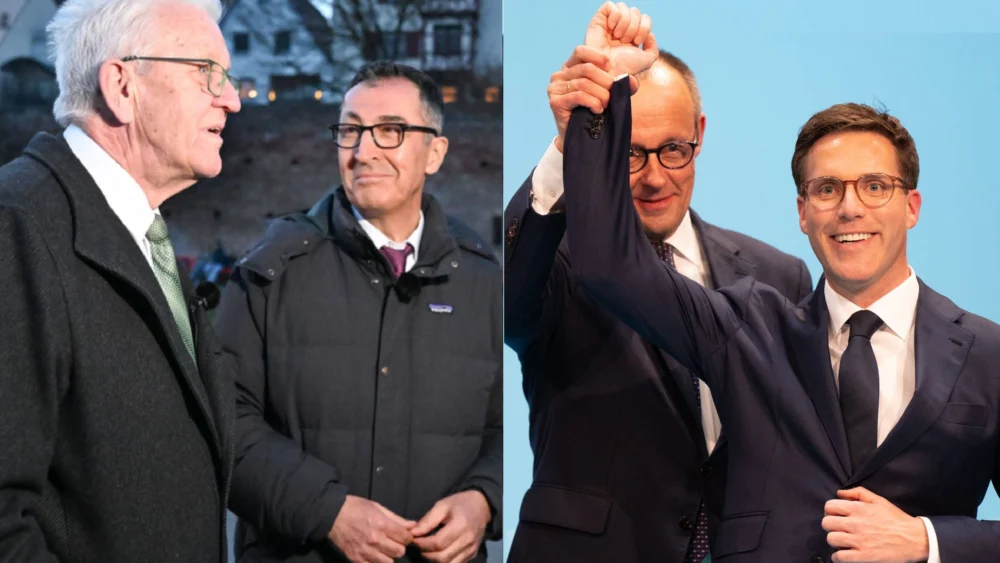
As the election campaign enters its final, crucial phase, a stark contrast in styles and strategies is emerging between the leading candidates in Baden-Württemberg, Cem Özdemir of the Greens and Manuel Hagel of the CDU. Their closing rallies, held on Friday evening, showcased not only their distinct approaches to connecting with voters but also the significant backing they received from national party leaders. These events, set against the backdrop of a decade-long coalition government in the state between their respective parties, highlighted a peculiar yet potent electoral dynamic.
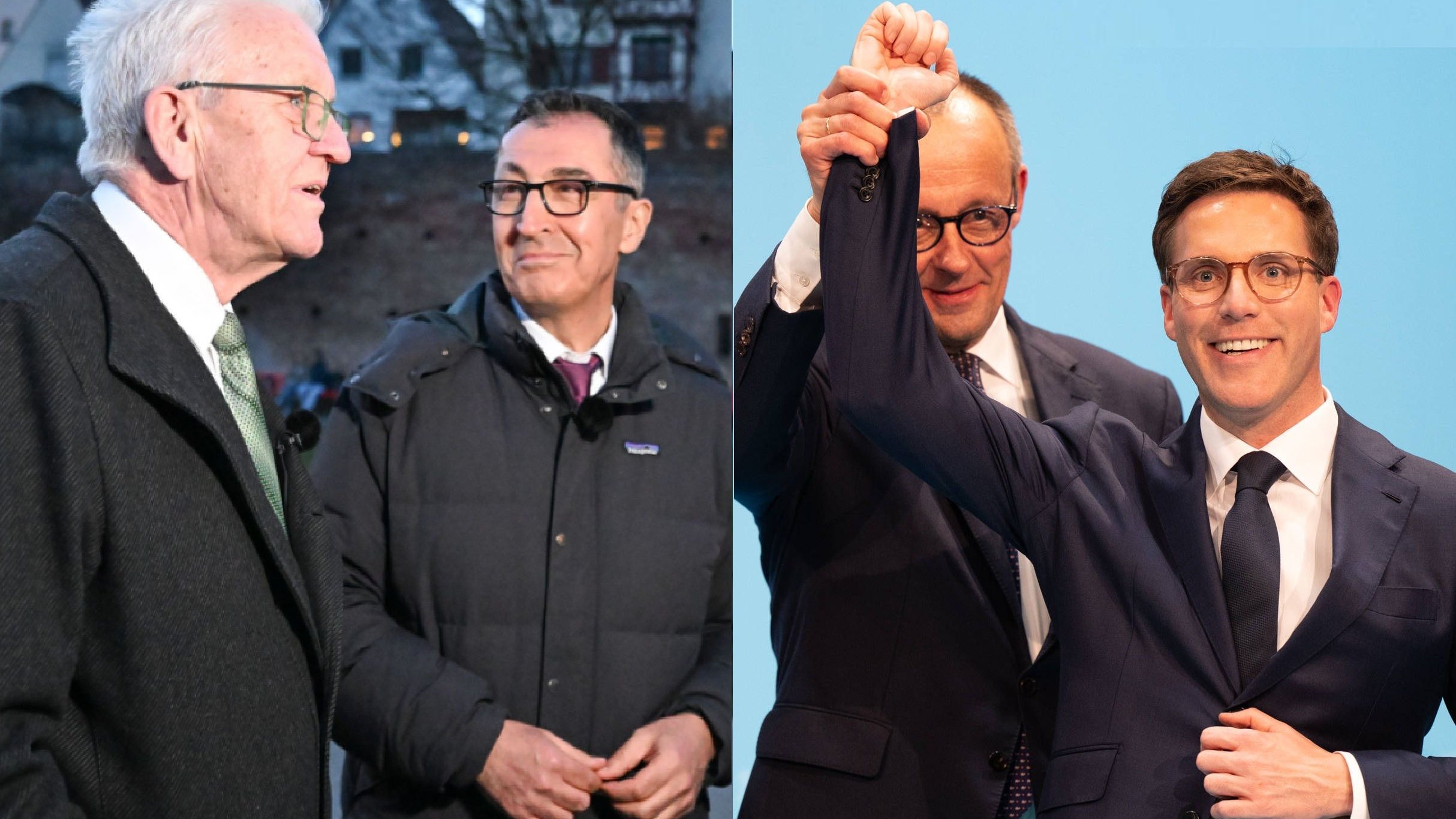
A Tale of Two Rallies: Contrasting Atmospheres in Stockach and Ulm
The day’s campaign efforts culminated in two contrasting rallies, each designed to energize supporters and underscore their party’s vision for the future of Baden-Württemberg.
In Stockach, near Lake Constance, the atmosphere was electric as CDU’s lead candidate, Manuel Hagel, made his entrance alongside Federal CDU Chairman Friedrich Merz. The scene was set for a high-energy political display. As Merz and Hagel walked into the large sports hall, a wave of standing ovations and rhythmic applause swept through the assembled crowd. The entrance was accompanied by a powerful pop music instrumental, creating a palpable sense of momentum and anticipation. This presentation was clearly intended to project strength, unity, and a decisive path forward, aligning with the CDU’s broader national platform. Merz, a seasoned politician known for his assertive campaigning style, likely aimed to galvanize the CDU’s base and draw parallels between state and federal priorities. Hagel, as the state’s leading candidate, sought to leverage Merz’s presence to bolster his own campaign and underscore the CDU’s role as a stable and reliable governing force.
A few hours later, in Ulm, the Greens presented a different tableau. Their closing rally featured lead candidate Cem Özdemir and the incumbent Minister-President Winfried Kretschmann. While the crowd offered rhythmic applause as the Green duo entered an event hall, the initial reaction was more subdued, with attendees remaining seated. The musical accompaniment shifted dramatically from the high-octane pop of the CDU event to a traditional brass band, "Schwäbisch Sieben," dressed in regional attire. This choice of music and imagery was a deliberate nod to Baden-Württemberg’s distinct cultural identity and its deep-rooted traditions. Kretschmann, a popular and long-serving figure in state politics, represents a more moderate and consensus-oriented approach, often emphasizing stability and pragmatic governance. Özdemir, a prominent national figure within the Green party, likely aimed to connect with voters on issues of environmental policy, social justice, and a forward-looking vision that harmonizes with the state’s economic strengths. The contrast in performance styles—the energetic, crowd-pleasing entrance of the CDU versus the more grounded, culturally resonant presentation of the Greens—underscored the different electoral strategies at play.
The Paradox of Partnership and Political Opposition
The juxtaposition of these two closing rallies is particularly striking given the political reality in Baden-Württemberg. The CDU and the Greens have been governing partners in the state for the past decade, forming a so-called "Green-Black" coalition. This sustained period of cooperation suggests a degree of shared governance and policy alignment. Yet, during the election campaign, both parties demonstrably sought to emphasize their differences, positioning themselves as distinct alternatives, even while acknowledging the potential for continued collaboration post-election.
This strategy can be analyzed through several lenses:
- Appealing to Core Constituencies: Each party needs to mobilize its core supporters. By highlighting policy distinctions and contrasting their leadership styles, they aim to reinforce loyalty among their respective bases and persuade undecided voters who may be drawn to one party’s specific agenda over the other.
- Differentiating Leadership: While governing together, the parties may seek to present distinct leadership visions. The CDU, with Merz’s national stature, likely positions itself as the party of decisive economic leadership and security, while the Greens, with Kretschmann’s established popularity and Özdemir’s focus on sustainability, emphasize environmental stewardship and social progress.
- Strategic Post-Election Positioning: By presenting a clear contrast during the campaign, parties can better position themselves for negotiations should they need to form a coalition after the election. This allows them to claim mandate for specific policy priorities based on their campaign promises.
- National vs. State Focus: While the state election is the immediate focus, national political narratives inevitably play a role. Merz’s presence at the CDU rally signals the national party’s investment in the outcome, aiming to translate federal political dynamics into state-level gains. Similarly, Özdemir’s involvement underscores the national relevance of the Green party’s agenda.
Supporting Data and Electoral Context
Baden-Württemberg, often referred to as the "engine" of the German economy, is a state with a strong industrial base, particularly in automotive manufacturing, engineering, and high-tech sectors. Its economic prosperity has historically been a key factor in its political landscape. The state’s electorate is known for its pragmatism and its appreciation for stable governance.

The "Green-Black" coalition, formed in 2016 and re-elected in 2021, has overseen a period of relative stability and economic growth, despite national challenges. However, underlying societal shifts and evolving voter priorities, particularly concerning climate change, digitalization, and social equity, have created new dynamics.
Recent polls leading up to the election indicated a competitive race. While the Greens, led by Winfried Kretschmann, have consistently enjoyed high approval ratings for their governance, the CDU, under Manuel Hagel, has been working to regain ground lost in previous elections. Friedrich Merz’s leadership of the federal CDU has aimed to present a more unified and dynamic party image nationally, which could influence state-level perceptions. Cem Özdemir, as a federal minister, brings a national profile and a focus on environmental and foreign policy issues that resonate with a significant portion of the electorate.

Broader Implications and Analysis
The intense campaigning and the distinct rallies highlight several key implications for the political future of Baden-Württemberg and potentially Germany:
- The Future of Coalition Politics: The continued success or failure of the "Green-Black" coalition will be closely watched as a barometer for the viability of similar cross-ideological partnerships in other states and at the federal level. The ability of parties to differentiate themselves while still cooperating is a complex political dance.
- The Role of Prominent Figures: The active involvement of national party leaders like Friedrich Merz and Cem Özdemir underscores their importance in mobilizing voters and shaping campaign narratives. Their presence can lend significant weight to state-level campaigns.
- Electoral Strategy in a Mature Democracy: The rallies exemplify sophisticated electoral strategies that balance the need to appeal to a broad base with the necessity of energizing core supporters. The use of music, imagery, and rhetoric is carefully calibrated to convey specific messages and emotional resonance.
- Regional Identity and Political Alignment: Baden-Württemberg’s strong regional identity plays a crucial role. The Greens’ appeal to tradition and local culture, exemplified by the brass band, contrasts with the CDU’s emphasis on a more assertive, perhaps nationally aligned, vision.
As the election day approaches, the stark contrast in the final campaign events suggests that both the CDU and the Greens are employing distinct, yet potentially complementary, strategies to win over voters. The outcome will not only determine the leadership of Baden-Württemberg but also offer insights into the evolving dynamics of German federalism and coalition politics. The campaign’s crescendo, marked by these highly curated rallies, underscores the high stakes involved in this critical regional election.
