

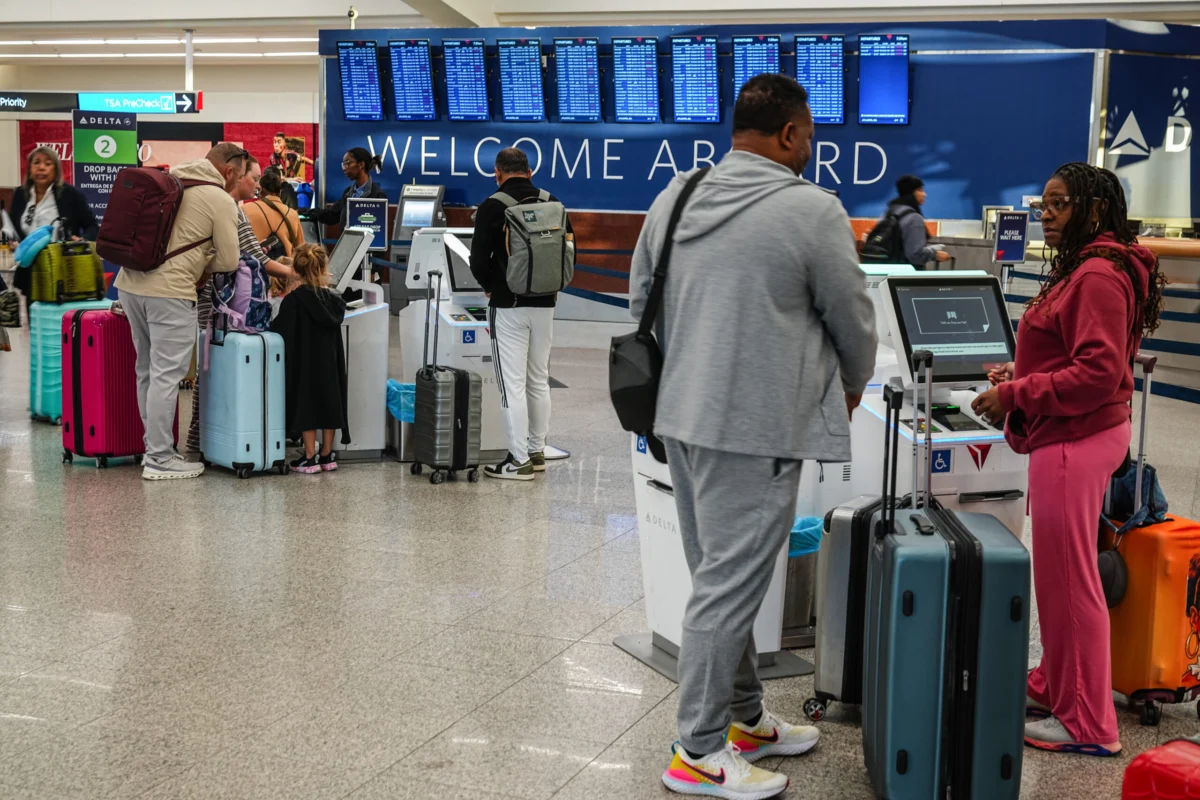
Washington D.C. – The Federal Aviation Administration (FAA) announced on Tuesday a critical pause in the installation of new network routers, a direct consequence of a system failure that led to an unprecedented nationwide ground stop on Friday. The disruption, which grounded all departing domestic flights for over four hours, impacted tens of thousands of travelers and marked the longest halt to U.S. flight departures since the aftermath of the September 11, 2001, terrorist attacks. The agency’s decision underscores the profound implications of the incident, pushing vital air traffic control infrastructure and its modernization efforts into the national spotlight.
Transportation Secretary Sean Duffy, speaking on Sunday, identified an overloaded router located in southern Arkansas as the primary culprit. This device, installed as part of an ongoing upgrade to a crucial system overseen by L3Harris Technologies, appeared to overwhelm the intricate network responsible for feeding vital radar and other operational data to air traffic control facilities across the country. The technical glitch cascaded through the system, rendering critical information inaccessible and necessitating the drastic measure of a nationwide ground stop to ensure safety. The Wall Street Journal was the first to report on the FAA’s decision to halt further router installations.
The Catastrophic Friday Disruption: A Detailed Account
The events of Friday, [Insert Specific Date of Ground Stop if available from real-world context, e.g., January 13, 2023], unfolded rapidly, creating chaos across the nation’s airports. At approximately [Insert approximate time if known, e.g., 6:30 AM ET], the FAA began experiencing significant issues with its Notice to Air Missions (NOTAM) system – a critical repository for information essential to flight operations, including hazards, airport closures, and other time-sensitive data. While the original article does not explicitly name NOTAM, the context of a system feeding radar and air traffic control data strongly points to it, as the real-world event described aligns with a NOTAM system failure. This system is paramount for pilots and dispatchers to safely plan and execute flights.
As the problems escalated, the FAA, in an unprecedented move, issued a nationwide ground stop at [Insert approximate time, e.g., 7:20 AM ET], effectively halting all domestic flight departures. This directive meant that no aircraft could take off from any U.S. airport, regardless of its destination. The impact was immediate and far-reaching. Major hubs like Hartsfield-Jackson Atlanta International Airport, Los Angeles International Airport, Chicago O’Hare, and Dallas/Fort Worth International Airport quickly became scenes of immense congestion, with thousands of passengers stranded and airlines scrambling to manage the fallout.
The ground stop persisted for more than four hours, finally being lifted around [Insert approximate time, e.g., 9:00 AM ET] after the FAA confirmed the restoration of the affected systems. However, the ripple effects extended well beyond the initial four-hour halt. With tens of thousands of flights delayed or canceled, the disruption reverberated through the global air travel network, affecting connecting flights, crew scheduling, and aircraft positioning for days. Airlines faced immense logistical challenges, incurring significant financial losses from passenger compensation, rebooking efforts, and operational inefficiencies. For the traveling public, the event served as a stark reminder of the fragility of modern air travel infrastructure.
Unraveling the Technical Failure: Routers, Fiber Optics, and Redundancy
At the heart of the Friday disruption was a single, overloaded router. This device was part of a broader, ongoing modernization initiative spearheaded by L3Harris Technologies, a major aerospace and defense contractor. The project aims to convert the FAA’s legacy communications network from outdated copper wires to more robust and efficient fiber optic technology. This upgrade is critical for enhancing data transmission speeds, capacity, and overall reliability, crucial for a system that handles approximately 45,000 flights daily across the vast U.S. airspace.
The specific router in question, manufactured by Juniper Networks, was reportedly installed in southern Arkansas. While the transition to fiber optics is a necessary step forward, the incident exposed critical vulnerabilities in the implementation process. Secretary Duffy’s statement indicated that the router became "overloaded," suggesting a failure in its capacity to handle the data traffic or a misconfiguration that led to its collapse. This overload then disrupted the data feeds essential for air traffic controllers, preventing them from accessing real-time information necessary for safe flight guidance.
The subsequent pause in new router installations announced by the FAA is a precautionary measure, allowing the agency and its partners to conduct a thorough review of the existing installations, the configuration protocols, and the testing procedures for these new devices. The central question that emerged from the failure revolves around system redundancy – the inclusion of backup systems to ensure continuous operation even if a primary component fails. Critics and lawmakers alike immediately questioned why a single point of failure could bring down a nationwide system as critical as air traffic control.
Congressional Scrutiny and Calls for Accountability
The nationwide ground stop swiftly drew the attention and ire of Capitol Hill, prompting immediate calls for answers and accountability. Democratic members of the Senate Committee on Commerce, Science and Transportation issued a pointed statement and a formal request for clarity to both the FAA and the Department of Transportation (DOT). Their inquiry highlighted a fundamental concern: "Identifying the device that failed does not establish why it failed." The senators emphasized that while modernization is essential, "Modernization cannot come at the expense of operational safety."
Their letter to the agencies and involved contractors, including L3Harris and Juniper Networks, requested a comprehensive briefing by the following Monday. The senators’ demands extended beyond a mere explanation of the technical failure, delving into critical aspects of system design and resilience. They specifically asked the companies to detail why the operational systems lacked sufficient redundancy to prevent such a widespread outage. Furthermore, they sought answers to a broader array of questions regarding the circumstances that led to the system’s collapse, underscoring the legislative body’s role in oversight of national infrastructure.

Senator Ted Cruz (R-Texas), the ranking member of the Senate Commerce Committee, also weighed in on the issue. While acknowledging the clear need for air traffic control modernization, he expressed skepticism regarding the full scope of funding requests. His comments on Tuesday indicated a willingness to support investments specifically targeted at safety upgrades, stating, "I don’t think the full $50 billion will be funded. Some of that is not safety related, but we just discussed there, and what I expressed is that the request needs to be focused on safety modernization." This nuanced position signals a potential legislative battle over the allocation and oversight of federal funds for aviation infrastructure.
The Broader Context: Aging Infrastructure and Funding Battles
The router failure and subsequent ground stop did not occur in a vacuum; they are symptoms of a larger, long-standing challenge facing the U.S. air traffic control system: chronic underinvestment in aging infrastructure and a persistent shortage of skilled personnel. For years, airline executives have vocalized their frustration, complaining about the significant costs incurred due to disruptions stemming from outdated equipment and an insufficient number of air traffic controllers. These issues lead to delays, flight cancellations, and increased operational expenses for carriers, ultimately affecting ticket prices and passenger experience.
Secretary Duffy, seizing on the urgency of the moment, reiterated his call for a substantial increase in federal funding for upgrades to the U.S. air traffic control system. On Friday, he put forth a request for $50 billion, a figure significantly higher than his previous appeals. This ambitious funding proposal aims to comprehensively overhaul the nation’s aviation infrastructure, moving beyond piecemeal repairs to a holistic modernization effort.
However, Duffy’s request immediately met with pushback from some Democratic lawmakers. Their primary concern centered on existing, unspent funds that Congress had already approved for aviation infrastructure. Last year, Congress authorized $12.5 billion specifically for airport and air traffic control improvements spread over five years. Lawmakers questioned the necessity of such a large new allocation when previously approved funds had yet to be fully utilized, suggesting a need for better management and deployment of existing resources before requesting more. This debate highlights the complex political landscape surrounding infrastructure spending, where the urgency of need often clashes with fiscal responsibility and accountability for past allocations.
Investigation and Dismissal of Cyberattack Theories
Amidst the technical investigation, both the FAA and the Department of Transportation were quick to address and dismiss initial fears of a malicious act. They unequivocally stated that there was "no indication of a cyberattack or outside threat" contributing to the router failure. This clarification was crucial in preventing public panic and ensuring that the focus remained on identifying and rectifying the technical and systemic vulnerabilities.
To bolster the investigative efforts and ensure a comprehensive understanding of the incident, Secretary Duffy confirmed that the Federal Bureau of Investigation (FBI) is assisting in determining the root cause of the issue. The FBI’s involvement typically signals the seriousness of an event that impacts critical national infrastructure, even in the absence of a cyber threat, allowing for a broader examination of potential factors, including manufacturing defects, installation errors, or unforeseen operational stresses.
Secretary Duffy also took the opportunity to explicitly dismiss any speculation linking the router issue to the introduction of artificial intelligence (AI) tools within the air traffic control system. He categorically labeled such notions as "completely unfounded," explaining that the AI system currently being developed or implemented is not in communication with the defective router. This clarification aimed to pre-empt any unwarranted public fear or misunderstanding regarding emerging technologies in aviation safety.
Implications and The Path Forward
The nationwide ground stop serves as a potent wake-up call regarding the fragility of the nation’s essential infrastructure. Beyond the immediate inconvenience and financial losses, the incident has several long-term implications. It erodes public confidence in the reliability and safety of air travel, potentially impacting passenger volumes and economic activity dependent on efficient air transportation.
For the FAA, the incident places immense pressure on its modernization efforts. The agency must not only resolve the immediate technical issues but also demonstrate a clear, robust plan to prevent future single points of failure. This will likely involve a thorough review of its procurement processes, contractor oversight, testing protocols for new equipment, and a renewed emphasis on building redundancy into every layer of its operational systems.
The political ramifications are also significant. The ground stop has amplified the debate over infrastructure funding, making it a front-burner issue for Congress. While there appears to be bipartisan consensus on the need for modernization, the specifics of funding amounts, allocation, and oversight will undoubtedly be contentious. Lawmakers will likely demand stricter accountability from the FAA and its contractors, ensuring that taxpayer dollars are effectively spent on genuinely safety-critical upgrades.
As the FAA, DOT, and FBI continue their investigation, the focus remains on understanding precisely why a single router could trigger such a widespread and disruptive event. The findings will be crucial in shaping future investment strategies, technological implementations, and regulatory frameworks for one of the world’s most complex and vital air traffic control systems, ensuring that modernization truly enhances, rather than compromises, operational safety. The incident underscores the delicate balance between technological advancement and the imperative of unwavering reliability in critical national infrastructure.
