

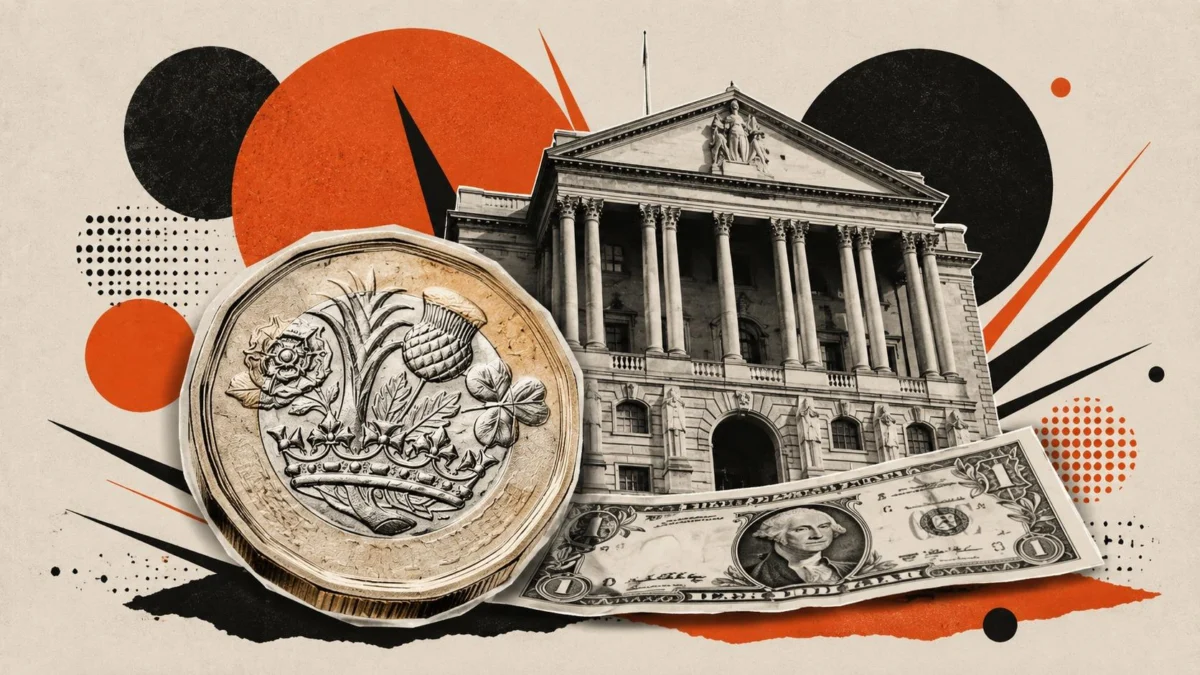
The latest economic data emanating from the United Kingdom indicates a persistent and elevated inflationary environment, providing the Bank of England (BoE) with renewed justification for its ongoing and potentially future cycle of interest rate hikes. This resilience in price pressures, particularly within the services sector, sets the UK apart from its European counterparts, such as the Euro area and Switzerland, which have experienced more subdued inflationary trends. Michael Pfister, an analyst at Commerzbank, has highlighted that if this upward trajectory in inflation continues, the British Pound is likely to maintain its supported position in the short term, driven by expectations of tighter monetary policy.
A Persistent Challenge: The UK’s Inflationary Landscape
The recent Consumer Price Index (CPI) figures, published for the latest reporting period, revealed that headline inflation rose by 0.1 percentage points, reaching 3.6% year-on-year. This increase, which aligned with Bloomberg consensus forecasts, signals a continued challenge for policymakers tasked with managing the UK’s economic stability. More critically, services inflation, often considered a bellwether for domestic price pressures due to its sensitivity to wage growth and internal demand, remained stubbornly elevated. This stability in services inflation, rather than a decline, underscores a deeper, more entrenched inflationary dynamic within the UK economy, distinguishing it from the broader European trend.
The Bank of England operates under a primary mandate to maintain price stability, targeting a 2% annual inflation rate. For well over a year, the UK has grappled with inflation significantly above this target, impacting household purchasing power and creating uncertainty for businesses. This extended period of high inflation has necessitated a robust monetary policy response, marking a significant pivot from the accommodative stance adopted during and immediately after the COVID-19 pandemic. The current inflationary episode is multifaceted, driven by a confluence of global and domestic factors, making the BoE’s task particularly complex.
A Chronology of Monetary Tightening and Inflation’s Ascent
The journey to the current inflationary landscape in the UK can be traced back to a series of interconnected events. Following the initial economic shock and subsequent recovery from the COVID-19 pandemic, global supply chains experienced unprecedented disruption, leading to initial price increases. This was then exacerbated by a surge in global demand as economies reopened. The situation intensified dramatically with Russia’s full-scale invasion of Ukraine in February 2022, which sent energy and commodity prices soaring worldwide. As a net energy importer, the UK was particularly vulnerable to these external shocks.
The Bank of England began its tightening cycle earlier than many other major central banks, initiating its first post-pandemic interest rate hike in December 2021, raising the Bank Rate from a historic low of 0.1% to 0.25%. This marked the beginning of a sustained period of monetary policy tightening, with the MPC implementing a series of consecutive rate increases in an effort to bring inflation back to target. By mid-2022, inflation had breached double digits, reaching a peak of 11.1% in October 2022, a 41-year high. Each subsequent meeting of the Monetary Policy Committee saw further increases, gradually pushing the Bank Rate upwards, signaling the BoE’s commitment to tackling the rampant price growth. The latest inflation data, therefore, serves as another data point in this ongoing battle, reinforcing the MPC’s hawkish posture and suggesting that the peak of the hiking cycle may not yet be in sight. The market consensus prior to the recent data had been for a pause or a slower pace of hikes, but the uptick in headline inflation and persistent services inflation has recalibrated these expectations.
Divergent Paths: Deconstructing the Latest Data
A granular examination of the latest inflation figures reveals critical insights into the underlying dynamics. While the headline CPI rising from 3.5% to 3.6% year-on-year might appear modest, it indicates a reversal of any nascent downward trend, defying hopes for a more rapid deceleration. However, it is the steadfastness of services inflation that is of particular concern to analysts and policymakers. Services inflation, which typically reflects domestic wage pressures and the tightness of the labor market, has not shown the expected signs of cooling. This component is less directly influenced by volatile global commodity prices and more by internal economic conditions, including labor costs and consumer demand. Its persistent elevation suggests that second-round effects from earlier energy price shocks might be embedding themselves into the broader economy, making inflation stickier.
The Commerzbank analysis underscores that these price pressures, "driven particularly by the energy component, are rising significantly in the UK once more." While energy prices remain a crucial factor, the article emphasizes that the issue extends beyond this volatile component. The observation that "service sector inflation in the UK has never fully come down following the pandemic" highlights a structural difference compared to its European peers. For instance, the Euro area, while also battling inflation, had seen its Harmonised Index of Consumer Prices (HICP) figures, particularly core inflation, show clearer signs of moderation prior to recent energy price fluctuations. Similarly, Switzerland, known for its strong currency and prudent fiscal policy, had managed to bring its inflation rates much closer to, or even below, its target levels before the latest resurgence in energy costs. This divergence suggests that the UK’s labor market dynamics, post-Brexit trade adjustments, and domestic demand profile might be contributing to a more resilient inflationary environment than seen elsewhere. Wage growth in the UK has remained relatively strong, partly due to labor shortages in key sectors, adding upward pressure on service costs.
Analyst Perspectives and Policy Imperatives
Michael Pfister’s assessment from Commerzbank succinctly captures the prevailing market sentiment: "If the figures continue to trend upwards, the Bank of England will find it increasingly difficult to refrain from raising interest rates further, and the pound is therefore likely to remain supported in the short term." This statement encapsulates a key principle of currency markets: higher interest rates generally attract foreign capital seeking better returns, thereby increasing demand for the domestic currency. The expectation of continued monetary tightening in the UK, contrasting with potentially slowing or pausing cycles elsewhere, enhances the yield differential, making Pound-denominated assets more attractive.
Market reactions to the latest data have been predictable. Sterling has shown resilience against major currencies, particularly the Euro and the US Dollar, reflecting increased confidence in the BoE’s commitment to price stability, even if it comes at the cost of economic growth. UK government bond yields, particularly at the shorter end of the curve, have also edged higher, as investors price in the likelihood of more aggressive rate hikes. Equity markets, however, often react with caution to higher interest rate environments, as borrowing costs for businesses increase and future earnings are discounted more heavily, potentially leading to subdued performance for certain sectors.
The implications for the Bank of England’s Monetary Policy Committee are clear. The persistent inflationary pressures leave little room for dovish interpretations. The MPC will likely maintain a hawkish stance, prioritizing the return of inflation to target, even if it means further tightening measures that could dampen economic activity. This unwavering commitment is crucial for maintaining the BoE’s credibility and anchoring long-term inflation expectations. However, it also presents a delicate balancing act, as overtightening risks pushing the economy into a deeper recession.
Broader Economic Impact and Future Outlook
The continued upward trend in inflation and the prospect of further interest rate hikes carry significant implications for various facets of the UK economy.
Households and Businesses: For millions of households, the cost of living crisis remains a dominant concern. Higher inflation erodes real wages and purchasing power, forcing consumers to cut back on discretionary spending. For those with variable-rate mortgages, or those approaching fixed-rate mortgage renewals, successive rate hikes translate directly into higher monthly payments, squeezing household budgets further. Businesses face increased borrowing costs, which can deter investment, expansion plans, and job creation. Small and medium-sized enterprises (SMEs) are particularly vulnerable to these pressures, potentially impacting overall economic dynamism.
Fiscal Policy: The government’s fiscal policy will also be under scrutiny. While monetary policy addresses demand-side pressures, the government’s spending and taxation decisions can either complement or counteract the BoE’s efforts. High inflation can increase the cost of government borrowing and debt servicing, adding pressure to public finances. There might be calls for the government to implement targeted measures to alleviate the cost of living crisis for the most vulnerable, without adding excessively to inflationary pressures through broad stimulus.
Currency Dynamics and Risks: While a hawkish BoE supports the Pound in the short term, the currency’s long-term trajectory is subject to broader economic health. If aggressive rate hikes lead to a significant economic slowdown or a prolonged recession, investor confidence could wane, potentially reversing the Pound’s gains. The UK’s current account deficit and broader economic vulnerabilities remain factors that could influence Sterling’s performance over a longer horizon. The interplay between interest rate differentials and growth differentials will be a critical determinant.
Recessionary Risks: The Bank of England walks a tightrope. Its primary goal is to cool inflation without triggering a severe recession. The risk of overtightening is palpable. Each rate hike increases the probability of a harder landing for the economy. The latest inflation data suggests that the BoE’s fight is far from over, implying that the pain for consumers and businesses may continue for some time as policymakers prioritize price stability. The full impact of previous rate hikes has yet to fully filter through the economy, adding to the uncertainty surrounding future growth prospects.
Long-term Outlook: Beyond the immediate pressures, the UK faces structural challenges that contribute to its unique inflationary profile. These include lingering effects of Brexit on labor markets and trade, lower productivity growth, and underinvestment in key sectors. Addressing these underlying issues will be crucial for achieving sustainable, non-inflationary growth in the long run.
In conclusion, the latest inflation figures underscore the persistent and distinct inflationary pressures within the UK economy. Commerzbank’s analysis points to a continued hawkish stance from the Bank of England, translating into potential further rate hikes and short-term support for the British Pound. However, this trajectory also heightens the economic challenges for households and businesses, placing the UK economy at a critical juncture where the delicate balance between curbing inflation and safeguarding growth will define its immediate future. The divergence from Euro area and Swiss trends highlights the unique complexities confronting UK policymakers in their enduring battle against elevated prices.
