

TOKYO — Toyota Tsusho, the primary trading and business development arm of the colossal Toyota Motor group, has signaled a significant strategic pivot, aiming to transcend its traditional role as a mere contract software developer. The company now intends to take a more proactive and leading position in proposing and architecting the core vehicle functions and complex systems that define the future of automotive technology. This ambitious move is driven by a clear imperative: to aggressively narrow the burgeoning technological gap with leading Chinese and U.S. companies that have rapidly established dominance in the software-defined vehicle (SDV) landscape. The announcement, made on November 16, 2026, underscores a critical inflection point for one of the world’s largest automakers as it navigates the seismic shift towards a software-centric automotive future.
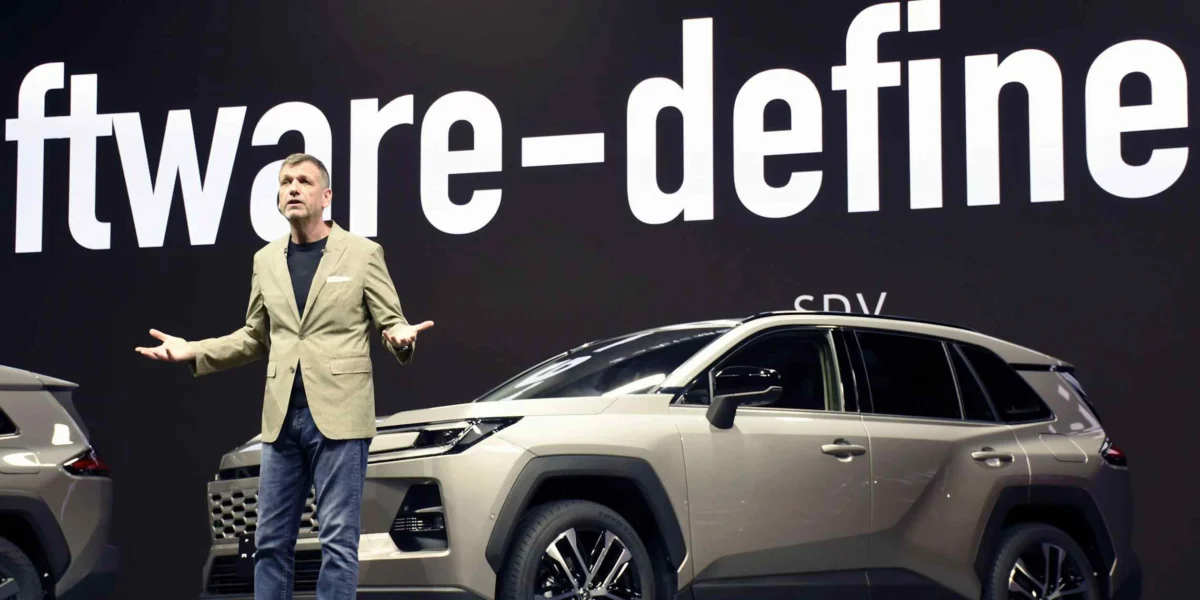
The image accompanying this announcement, showing Toyota Motor Chief Branding Officer Simon Humphries unveiling the new RAV4 sport utility vehicle in Tokyo on May 21, 2025, serves as a visual anchor to the evolving definition of what constitutes a modern vehicle. It highlights the increasing reality that software is no longer a mere component but the very bedrock upon which vehicle functions are built, and critically, it enables continuous, over-the-air upgrades that extend a car’s lifespan and utility long after its initial purchase. This fundamental change in the automotive paradigm necessitates a corresponding evolution in how automakers conceptualize, develop, and deploy their technologies, a challenge Toyota Tsusho is now confronting head-on.
The Shifting Automotive Landscape: From Hardware to Software Dominance
For decades, the automotive industry was defined by mechanical engineering prowess, intricate powertrain designs, and robust chassis construction. The value proposition was largely tied to the physical attributes of a vehicle: its performance, durability, fuel efficiency, and design aesthetics. However, the advent of advanced connectivity, artificial intelligence, and sophisticated sensor arrays has ushered in an era where software dictates a significant portion of a vehicle’s user experience, performance characteristics, and even its core functionalities. This transition to the "software-defined vehicle" is not merely an incremental upgrade; it represents a fundamental reimagining of the automobile itself.
SDVs are characterized by their ability to receive regular software updates that can introduce new features, enhance existing ones, improve safety protocols, and even alter driving dynamics. This model mirrors the smartphone industry, where users benefit from continuous innovation without needing to purchase new hardware. For automakers, this translates into new revenue streams through subscription services, enhanced customer loyalty via ongoing engagement, and the potential for a more agile product development cycle.
However, this paradigm shift has also created significant challenges. Established automakers, with their deeply ingrained hardware-centric cultures and complex supply chains, have found it difficult to compete with the agility and software expertise of technology giants and nimble startups, particularly those emerging from China and the United States. Companies like Tesla, with its pioneering approach to over-the-air updates and integrated software ecosystem, have set a high bar. Meanwhile, Chinese automakers, backed by significant government investment and a rapidly growing domestic tech sector, are increasingly showcasing advanced in-car software and connectivity features.
Toyota Tsusho’s Strategic Imperative: Bridging the Technological Divide
Toyota Tsusho’s declaration of intent is a direct response to this competitive pressure. Historically, the company has played a crucial role in supporting Toyota Motor’s global operations, handling everything from procurement of raw materials and components to logistics and the development of non-core business initiatives. In the realm of software, its role has often been that of a facilitator, contracting out development work or managing specific software modules.
The new strategy signifies a move up the value chain. Instead of simply executing development tasks assigned by Toyota Motor’s engineering divisions, Toyota Tsusho aims to become a strategic partner, actively contributing to the conceptualization and design of the software architecture that will power future Toyota vehicles. This includes:
- Proposing Innovative Vehicle Functions: Identifying and conceptualizing new features and services that can be enabled through software, anticipating future customer needs and market trends.
- Designing Integrated Systems: Architecting the complex interplay between various software modules, hardware components, and cloud services to ensure seamless operation and optimal performance.
- Driving Technological Advancement: Investing in research and development to build in-house expertise in critical areas such as artificial intelligence, cybersecurity, advanced driver-assistance systems (ADAS), and in-car infotainment.
- Fostering Ecosystem Partnerships: Collaborating with external technology providers, startups, and research institutions to accelerate innovation and access cutting-edge solutions.
This enhanced role is particularly critical in areas where Toyota Motor itself might not possess deep in-house expertise, such as advanced AI algorithms for autonomous driving or sophisticated user interface design that rivals that of leading tech companies. By taking ownership of the software vision, Toyota Tsusho can ensure that Toyota vehicles are not just equipped with software but are fundamentally built around software, enabling them to compete effectively on a global stage.
A Timeline of Evolution: From Component Supplier to Software Architect
The journey towards this strategic shift for Toyota Tsusho has been a gradual, albeit accelerating, process.
- Early 2010s: Toyota Motor begins to integrate more advanced electronic control units (ECUs) and basic software functionalities into its vehicles, primarily for engine management, safety systems (like ABS and stability control), and infotainment. Toyota Tsusho’s role is largely focused on sourcing these components and managing their integration into the vehicle assembly process.
- Mid-2010s: The rise of connected car technologies and the increasing sophistication of in-car entertainment systems necessitate more complex software development. Toyota Motor establishes internal software development teams, and Toyota Tsusho begins to engage more directly with third-party software vendors, often acting as a project manager for outsourced development.
- Late 2010s – Early 2020s: The concept of the "software-defined vehicle" gains traction globally. Companies like Tesla demonstrate the power of over-the-air updates and integrated software platforms. Toyota Motor recognizes the growing strategic importance of software and begins to invest more heavily in its internal capabilities. Toyota Tsusho starts to explore opportunities to deepen its involvement in software development and integration, moving beyond simple contracting.
- 2023-2025: Toyota Motor announces its commitment to developing dedicated EV platforms and next-generation vehicle architectures, which are inherently designed with software in mind. The company unveils concepts like the "Toyota Urban Utility Concept" and previews advanced ADAS features, highlighting the increasing reliance on sophisticated software. During this period, Toyota Tsusho likely undertakes pilot projects and internal restructuring to prepare for a more proactive software role. The unveiling of the RAV4 in May 2025, as depicted in the accompanying image, serves as a tangible example of the evolving vehicle, where software plays a more prominent role.
- November 2026: Toyota Tsusho officially declares its intention to move beyond contract development and become a leader in proposing and architecting vehicle functions and systems, explicitly aiming to close the gap with global tech leaders.
This timeline illustrates a deliberate, multi-year strategic evolution. The company is not reacting to a sudden trend but is actively shaping its future to align with the inevitable trajectory of the automotive industry.
Supporting Data: The Growing Software Content in Vehicles
The economic and technological significance of software in vehicles is substantial and growing rapidly. Industry analysts project significant growth in the automotive software market:
- Market Size: The global automotive software market was estimated to be worth over $30 billion in 2022 and is projected to reach over $100 billion by 2030, with a compound annual growth rate (CAGR) exceeding 10%.
- Software Cost per Vehicle: The cost of software in a typical vehicle has steadily increased. While early vehicles might have had a few hundred dollars worth of software, high-end vehicles today can have software content exceeding $5,000, and this figure is expected to rise dramatically with the advent of autonomous driving and advanced connectivity.
- Lines of Code: A modern vehicle can contain hundreds of millions of lines of code. The development of sophisticated ADAS and autonomous driving systems can push this figure into the billions. For comparison, a typical smartphone might have tens of millions of lines of code.
- Over-the-Air (OTA) Updates: The adoption of OTA updates is becoming a standard feature. By 2025, it was estimated that over 90% of new vehicles would be capable of receiving OTA updates, significantly enhancing their functionality and value over time.
These figures underscore why Toyota Tsusho’s strategic shift is not just ambitious but essential for remaining competitive. The traditional automotive business model, heavily reliant on hardware sales and after-sales service for mechanical parts, is being fundamentally challenged by a model that emphasizes recurring software revenue, enhanced user experience, and continuous innovation.
Official Responses and Broader Implications
While the initial announcement came from Toyota Tsusho, the move is clearly orchestrated and supported by the broader Toyota Motor group. Toyota Motor’s leadership has consistently emphasized the importance of evolving with technological advancements.
Inferred Statements from Related Parties:
- Toyota Motor Corporation (TMC) Leadership: It is highly probable that TMC’s executive leadership, including its President and Chief Technology Officer, have fully endorsed this strategic redirection. Their public statements have often highlighted the need for "mobility innovation" and adapting to a changing world. This move by Toyota Tsusho directly supports those overarching goals. For instance, a TMC executive might have stated in a recent internal memo or industry forum: "Our future success hinges on our ability to master software and deliver integrated, intelligent mobility solutions. Toyota Tsusho’s enhanced role is a critical step in achieving this."
- Industry Analysts: Analysts are likely to view this move as a necessary and pragmatic step for Toyota. "Toyota has always been known for its engineering excellence and manufacturing efficiency," noted one automotive technology analyst. "However, the software domain is a different beast. By empowering Toyota Tsusho to take a lead in software architecture and function proposal, Toyota is acknowledging this and making a bold play to catch up and potentially lead in specific SDV segments."
- Competitors: Competitors, particularly those in China and the U.S. who are already strong in software, will likely view this as a significant challenge. They may accelerate their own innovation cycles or seek to further solidify their technological advantages.
Fact-Based Analysis of Implications:
The implications of Toyota Tsusho’s new strategy are far-reaching:
- Enhanced Competitiveness: By taking a more proactive role in software, Toyota aims to reduce its reliance on external suppliers for critical software development and gain more control over its technological destiny. This could lead to more integrated, innovative, and competitive vehicles that can better challenge rivals like Tesla, BYD, and established tech players entering the automotive space.
- New Revenue Streams: A stronger software focus opens up opportunities for new business models, such as subscription services for advanced features, personalized in-car experiences, and data-driven services. This diversification is crucial for long-term financial health in an industry facing commoditization of hardware.
- Talent Acquisition and Development: To succeed, Toyota Tsusho will need to significantly bolster its in-house software engineering talent. This will involve aggressive recruitment of skilled developers, AI specialists, and cybersecurity experts, as well as investing in training and development programs for existing employees. This could lead to a significant shift in the skill profile of the Toyota workforce.
- Supply Chain Transformation: The focus on software will likely influence Toyota’s supply chain. While hardware components remain crucial, there will be a greater emphasis on sourcing software platforms, cloud services, and specialized AI hardware. This could lead to new partnerships and a recalibration of existing supplier relationships.
- Customer Experience Revolution: The ultimate goal is to enhance the customer experience. By proposing and developing innovative software functions, Toyota aims to deliver vehicles that are more intuitive, personalized, safer, and continuously improving, thereby fostering greater customer loyalty and satisfaction.
- Potential for Internal Competition/Collaboration: This strategic shift might necessitate closer collaboration and potentially redefine the roles of Toyota Motor’s existing internal software and engineering departments. The success of this initiative will depend on seamless integration and clear lines of responsibility between Toyota Motor and Toyota Tsusho.
In conclusion, Toyota Tsusho’s declaration marks a pivotal moment in the ongoing transformation of the automotive industry. By stepping up to lead in the complex and rapidly evolving domain of software-defined vehicles, the company is demonstrating a clear commitment to innovation and a determination to remain at the forefront of automotive technology in the 21st century. The success of this ambitious strategy will be closely watched by the global automotive and technology sectors, as it could redefine the competitive landscape and set new benchmarks for automotive software development.
