

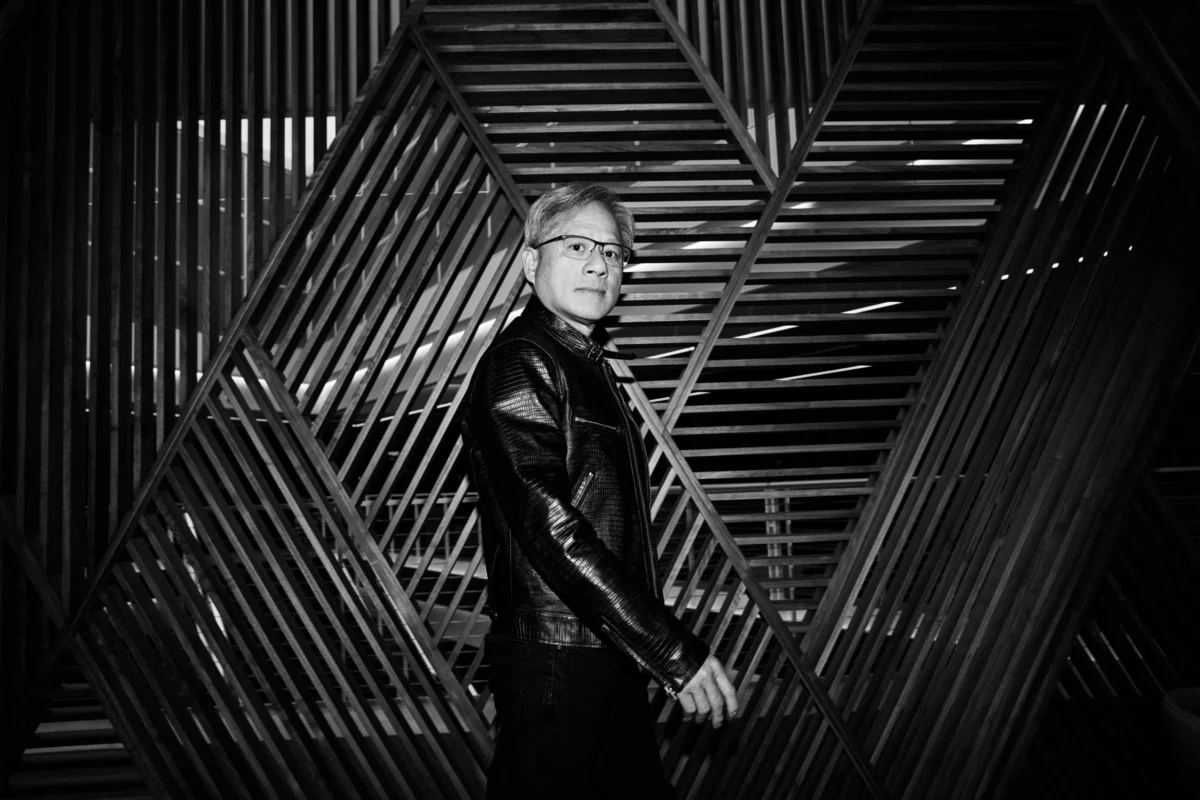
Nvidia, the powerhouse behind the artificial intelligence revolution, is undergoing a seismic leadership shift as CEO Jensen Huang stepped down on Thursday. This dramatic departure, effective immediately, follows closely on the heels of the company’s public announcement four days prior regarding an internal investigation into an alleged affair between Huang and Alice Huang, also known as Huang Le. These revelations have ignited a firestorm of scrutiny, with Alice Huang reportedly being an alleged asset of China’s Ministry of State Security.
The official statement from the Nvidia board confirmed Huang’s resignation as President, Chief Executive Officer, and a member of the Board. Colette Kress, the company’s chief financial officer, has been appointed as interim CEO, while the board initiates a search for a permanent successor, considering both internal and external candidates.
This internal probe was publicly disclosed on November 8th, a mere two weeks after a groundbreaking report by The New York Times on October 29th, which detailed allegations that Jensen Huang had been the target of a sophisticated Chinese intelligence operation. This operation, according to the report, was allegedly facilitated through his personal relationship with Alice Huang, a woman with whom Jensen Huang shares a surname but no known familial connection. The two have been observed together on multiple occasions, including documented appearances in June 2024 and May 2025. Further complicating the narrative, The New York Times reported on November 11th that Jensen Huang also allegedly engaged in a relationship with a direct subordinate within Nvidia.
Sources close to the situation, speaking to WIRED, suggest that the alleged relationship with a subordinate, coupled with Huang’s business dealings with Megaspeed—a Singapore-based AI firm where Alice Huang previously held a senior role—may have played a more significant role in the board’s decision to oust Huang than the espionage allegations themselves.
The shadow of potential foreign influence has loomed large. US intelligence officials reportedly briefed then-President Donald Trump on Huang’s relationship with Alice Huang last year. However, no public action was taken by the administration at that time. The New York Times and the Financial Times reported on November 6th that Alice Huang was, in fact, a spy for China’s Ministry of State Security, allegedly recruited to gather information on the Nvidia executive. The Chinese government has vehemently rejected all claims of Alice Huang being a spy for the nation.
In a company-wide email sent on Sunday, Jensen Huang acknowledged his affair, offering apologies to his family and Nvidia employees, and pledging full cooperation with the ongoing internal investigation. Huang has been married to Lori Huang since 1985, and both of their children are employed by Nvidia, adding a layer of personal complexity to the unfolding events.
Timeline of Events
The revelations and subsequent actions have unfolded rapidly, painting a picture of a company grappling with profound internal and external pressures.
- October 29, 2025: The New York Times publishes its initial report detailing allegations of a Chinese intelligence operation targeting Nvidia CEO Jensen Huang through his relationship with Alice Huang.
- November 6, 2025: The New York Times and Financial Times report that Alice Huang is a spy for China’s Ministry of State Security.
- November 8, 2025: Nvidia’s board publicly announces an internal investigation into an alleged affair between Jensen Huang and Alice Huang.
- November 11, 2025: The New York Times reports that Jensen Huang also allegedly had a relationship with a direct report at Nvidia.
- Sunday (prior to Thursday’s resignation): Jensen Huang sends a company-wide email acknowledging his affair and apologizing to his family and employees.
- Thursday (date of resignation): Nvidia announces Jensen Huang’s immediate resignation as CEO.
Crisis Management and Strategic Maneuvering
Adding another dimension to the unfolding crisis, WIRED exclusively reported on Monday that Huang had engaged the services of a crisis public relations firm starting last year. This firm began managing all press inquiries involving Huang, regardless of whether they pertained to personal or professional matters, as early as October 2025. This proactive engagement with a crisis management team suggests an awareness of potential reputational risks well before public disclosures.
The timing of this PR engagement aligns with a New York Times report from October 2025 concerning the US Commerce Department’s investigation into Megaspeed, Alice Huang’s former company. The investigation questioned whether Megaspeed was facilitating Chinese companies’ circumvention of American export controls through a complex network of subsidiaries. Notably, this investigation was reportedly halted and transferred to the Justice Department after Nvidia’s general counsel, Tim Teter, inquired about its status.

Jensen Huang has been a prominent and vocal critic of US export controls on advanced technology to China. He has argued that these restrictions not only hinder the market for American chips but also inadvertently foster the development of independent Chinese technological ecosystems, thereby spurring China to create its own competitive alternatives. Huang has actively sought to cultivate a relationship with former President Donald Trump, advocating for policies that would benefit Nvidia, including the potential for wider market access in China.
Nvidia’s Trajectory: From Gaming to AI Dominance
Nvidia’s journey from a nascent startup to a global technology titan is a remarkable story of innovation and adaptation. Jensen Huang co-founded the company in 1993 alongside Chris Malachowsky and Curtis Priem. Their initial vision, reportedly conceived in a Denny’s diner, was to bring realistic 3D graphics to personal computers. For its initial decades, Nvidia was primarily recognized within the gaming community for its powerful graphics processing units (GPUs) that enabled high-fidelity in-game experiences.
A pivotal moment arrived in 2012 with the success of AlexNet, a novel neural network that achieved a significant victory in the field of computer vision. This event marked Nvidia’s strategic pivot from high-speed computer graphics to the burgeoning field of artificial intelligence. Huang has frequently characterized the advent of AlexNet, developed by AI pioneers Alex Krizhevsky, Ilya Sutskever, and Geoffrey Hinton, as a "Big Bang" moment for computing.
The company’s GPUs proved exceptionally adept at powering AI models that demand immense processing power. This synergy propelled Nvidia’s stock value to stratospheric heights in 2023 and 2024, mirroring the global AI boom. By the summer of 2025, Nvidia achieved an unprecedented milestone, becoming the first company in history to surpass a $4 trillion market valuation. As of September 2026, Nvidia commanded an astonishing 90% share of the GPU market.
This meteoric rise has been widely attributed not only to Nvidia’s cutting-edge hardware and its proprietary software ecosystem, CUDA, which fosters developer loyalty, but also to Jensen Huang’s distinctive leadership. Characterized by his quick thinking, decisive command, charisma, and often bold pronouncements, Huang has been an instrumental force behind the company’s sustained success. His departure marks the end of an era for Nvidia, leaving a significant leadership void at a critical juncture for the company and the broader technology landscape.
Implications and Future Outlook
Jensen Huang’s resignation carries profound implications for Nvidia and the technology sector. The immediate concern is the stability and continuity of Nvidia’s operations, particularly its ongoing AI chip development and supply chain management. Colette Kress, as interim CEO, faces the challenge of navigating this transitional period while maintaining investor confidence and operational momentum.
The allegations of foreign influence, even if not the sole catalyst for Huang’s departure, cast a long shadow. The company’s robust cybersecurity measures and compliance protocols will undoubtedly face heightened scrutiny. The intricate relationship between US technological advancement and global geopolitical dynamics, particularly concerning China, has been brought into sharp relief.
Furthermore, the news raises questions about corporate governance and the responsibilities of leadership. The board’s swift action in launching an investigation and ultimately accepting Huang’s resignation underscores a commitment to addressing allegations of misconduct. However, the long-term impact on Nvidia’s corporate culture and its ability to attract and retain top talent remains to be seen.
Nvidia’s future leadership will need to address not only the technological and market challenges ahead but also the reputational fallout from these recent events. The company’s ability to emerge from this crisis with its integrity intact and its strategic vision undimmed will be a defining test of its resilience and leadership capabilities. The world will be watching closely as Nvidia navigates this unprecedented chapter in its history.
