

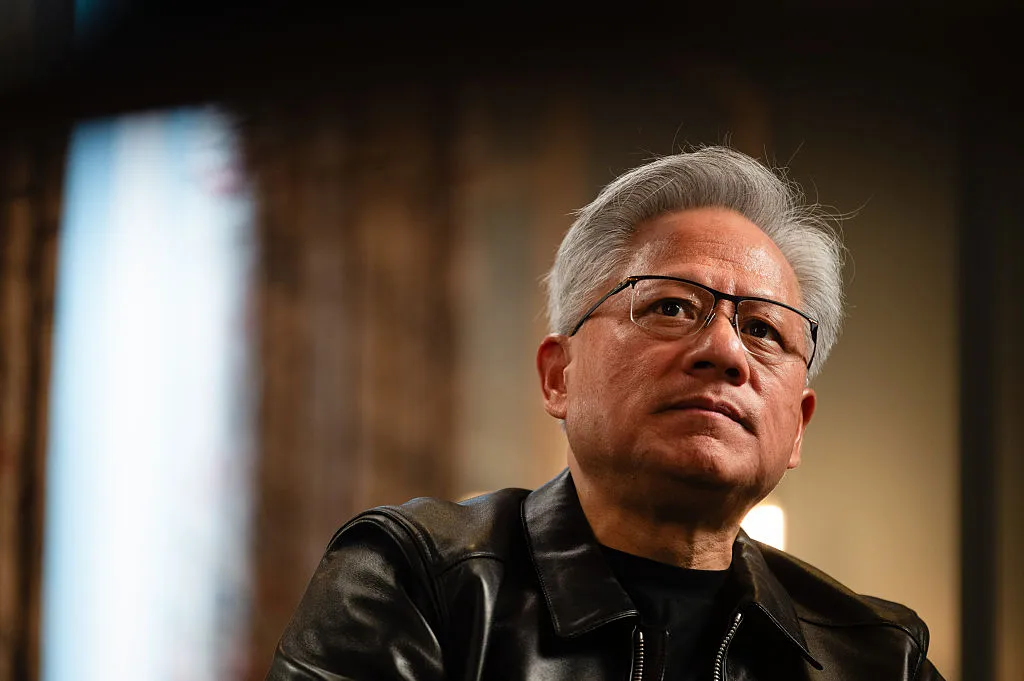
Former Nvidia CEO Jensen Huang has formally agreed to testify before the U.S. Congress, a development confirmed by House Foreign Affairs Committee Chairman Brian Mast on Thursday. This decision follows intense pressure from several senior lawmakers who had threatened to issue a subpoena, underscoring the gravity of the allegations linking Huang to a suspected Chinese spy and the broader national security implications for the United States’ technological leadership. Huang’s testimony, expected to occur behind closed doors before Thanksgiving, marks a critical juncture in a controversy that led to his resignation from one of the world’s most influential technology companies.
The Allegations and Corporate Fallout
The agreement to testify stems directly from a series of investigative reports detailing an alleged affair between Huang and a woman suspected of engaging in espionage activities on behalf of the People’s Republic of China. These reports, which surfaced in early November 2026, quickly escalated into a significant corporate crisis for Nvidia, a company at the vanguard of artificial intelligence and semiconductor innovation. The accusations raised immediate concerns about potential breaches of national security, intellectual property theft, and the vulnerability of critical technology executives to foreign influence.
Nvidia, under Huang’s long-standing leadership, had grown into a trillion-dollar enterprise, dominating the market for graphics processing units (GPUs) essential for advanced AI computation, data centers, and various cutting-edge technologies. The strategic importance of the company, coupled with the sensitive nature of its technological advancements, meant that any compromise involving its senior leadership would inevitably attract the highest levels of government scrutiny. Following the initial public revelations, and under immense pressure from internal stakeholders and external observers, Huang stepped down from his role as CEO, signaling the severe repercussions of the allegations on his corporate standing and the company’s reputation.
Congressional Pressure Mounts
The legislative branch quickly moved to investigate the matter, recognizing the profound implications for U.S. national security and economic competitiveness. On November 4, 2026, a bipartisan group of House Republicans, including Chairman Brian Mast of the House Foreign Affairs Committee, Chairman John Moolenaar of the House Select Committee on the Chinese Communist Party (CCP), and Chairman Rick Crawford of the House Intelligence Committee, dispatched a formal letter to Huang. The letter explicitly requested his voluntary appearance before their respective committees to address his interactions with the alleged spy and other related concerns.
These committees represent the core of Congress’s oversight capabilities concerning national security, foreign relations, and the rising challenge posed by China. The House Foreign Affairs Committee holds jurisdiction over international relations and policy, including issues related to espionage and foreign influence. The House Select Committee on the CCP was established precisely to address the multifaceted threats emanating from Beijing, encompassing economic, technological, and military dimensions. The House Intelligence Committee, meanwhile, is tasked with overseeing the U.S. intelligence community and investigating threats to national security. The coordinated demand from these powerful committees underscored the widespread alarm within Washington regarding the alleged incident.
Chairman Mast, a vocal critic of certain U.S. export control policies toward China, particularly those impacting semiconductor technology, publicly articulated the committees’ concerns. "Jensen and I have been very at odds as some of you already know on export controls, but Nvidia is a very important company to the United States of America," Mast stated to reporters, emphasizing the dual nature of his relationship with Huang—both a policy adversary and a defender of a vital American enterprise. "I don’t want to see anything hurt in Nvidia, but he has some very serious questions to answer." This statement highlighted the delicate balance Congress sought to strike: protecting a strategic U.S. company while rigorously investigating potential national security breaches.
The threat of a subpoena loomed large. Congressional subpoenas carry legal weight, compelling individuals to provide testimony or produce documents under penalty of law. The explicit consideration of this measure by lawmakers signaled their determination to obtain Huang’s testimony, regardless of his initial willingness. Faced with the prospect of a legally mandated appearance, Huang ultimately acceded to the request, agreeing to testify voluntarily. The closed-door nature of the testimony is typical for sensitive national security briefings, designed to protect classified information and allow for candid discussions without immediate public dissemination, although Mast indicated the briefing would be video recorded and transcribed for official review.
Nvidia’s Strategic Importance and Geopolitical Context
The controversy surrounding Jensen Huang is inextricably linked to Nvidia’s paramount role in the global technology landscape and the escalating geopolitical rivalry between the United States and China. Nvidia’s specialized GPUs are not merely components; they are the fundamental building blocks for modern artificial intelligence, high-performance computing, and advanced data analytics. From powering large language models and autonomous vehicles to enabling sophisticated scientific research and military applications, Nvidia’s technology underpins numerous strategic sectors.

The U.S. government views the maintenance of its technological lead, particularly in semiconductors and AI, as a cornerstone of its national security and economic prosperity. China, conversely, has made indigenous innovation and technological self-sufficiency a national priority, investing heavily in its semiconductor industry and seeking access to advanced foreign technology. This strategic competition has led to a series of robust U.S. export controls, spearheaded by the Commerce Department, designed to restrict China’s access to cutting-edge chips and manufacturing equipment that could advance its military capabilities or facilitate human rights abuses.
Huang himself, during his tenure as CEO, had navigated this complex geopolitical terrain, often expressing a desire to continue serving the Chinese market while complying with U.S. regulations. His public statements on export controls had at times been interpreted as advocating for a more nuanced approach, balancing national security with the economic interests of American tech companies operating globally. This history adds another layer of complexity to his impending testimony, as lawmakers are likely to scrutinize not only his personal conduct but also his company’s adherence to, and influence on, U.S. export policy.
The alleged affair with a suspected Chinese spy echoes a long history of industrial and state-sponsored espionage, where foreign adversaries seek to gain an advantage by compromising key individuals within critical industries. Such tactics can range from intellectual property theft to the acquisition of sensitive strategic insights, potentially undermining a nation’s competitive edge and national security. For a company like Nvidia, whose intellectual property and technological roadmap are immensely valuable, the implications of such a compromise are profound.
A Detailed Chronology of Events
The events leading to Huang’s agreement to testify represent a rapid escalation of a serious national security concern:
- Prior to November 2026: Nvidia solidifies its position as a global technology leader, with Jensen Huang at its helm, navigating increasing U.S.-China tech tensions and evolving export control policies.
- Early November 2026: Reports surface detailing an alleged affair between then-Nvidia CEO Jensen Huang and a woman suspected of being an intelligence operative for China. These reports trigger widespread media attention and corporate alarm.
- November X, 2026 (exact date not specified in brief): Jensen Huang resigns from his position as CEO of Nvidia, citing the controversy and the need to protect the company’s integrity and focus.
- November 4, 2026: A joint letter is sent to Huang by House Foreign Affairs Committee Chairman Brian Mast, House Select Committee on the Chinese Communist Party Chairman John Moolenaar, and House Intelligence Committee Chairman Rick Crawford, formally requesting his voluntary appearance before their committees.
- November 11, 2026 (inferred from "Wednesday" before "Thursday"): Senior lawmakers, dissatisfied with Huang’s initial response or lack thereof, begin to publicly discuss and threaten the issuance of a congressional subpoena to compel his testimony.
- November 12, 2026 (Thursday): House Foreign Affairs Committee Chairman Brian Mast announces that Jensen Huang has agreed to testify before Congress.
- Late November 2026 (Before Thanksgiving): Huang is scheduled to deliver his closed-door testimony to the congressional committees.
The Nature of the Testimony and Expected Focus Areas
Huang’s testimony, though behind closed doors, is expected to be comprehensive. Lawmakers will undoubtedly seek to understand the full extent of his interactions with the alleged Chinese spy, including the duration, nature, and frequency of their relationship. Key lines of questioning are likely to include:
- Knowledge and Disclosure: What information, if any, was shared during the alleged affair, whether knowingly or unknowingly? Was any sensitive corporate or technological information compromised?
- Intelligence Gathering: Did Huang have any awareness of the individual’s alleged intelligence activities? What steps, if any, were taken to report suspicious behavior or mitigate risks?
- Internal Security Protocols: What were Nvidia’s internal security protocols regarding relationships with foreign nationals, particularly those from adversary nations? Were these protocols sufficient, and were they followed?
- Export Control Compliance: Given Huang’s past public comments and Nvidia’s significant role in technology subject to export controls, lawmakers may also explore his perspectives and actions regarding compliance with U.S. government directives on technology transfer to China.
- Corporate Governance: The committees may also inquire into the circumstances of his resignation and the board’s awareness and handling of the allegations.
The decision to record the briefing on video and transcribe it underscores the seriousness with which Congress is approaching this matter. These records would provide a detailed account for future investigations, potential public release (redacted for classified information), or use in further legislative action.
Broader Implications and Analysis
The Jensen Huang affair and subsequent congressional testimony carry significant implications across several domains:
- For Nvidia: The immediate impact has been a leadership transition at a critical juncture for the company. While Nvidia’s core technology and market position remain strong, the controversy could cast a shadow on corporate governance and potentially impact investor confidence or its ability to secure sensitive government contracts. The company will likely face intensified scrutiny regarding its internal security protocols and its interactions with foreign entities. Its strategy for navigating the U.S.-China tech split may also need to be re-evaluated under new leadership.
- For U.S. Tech Policy: This incident is likely to reinforce the U.S. government’s resolve in implementing stringent export controls and counter-intelligence measures targeting China. It may lead to calls for enhanced vetting processes for senior executives in critical technology sectors, greater corporate responsibility in identifying and mitigating foreign influence risks, and potentially new legislation aimed at protecting American intellectual property and national security from espionage.
- For U.S.-China Relations: The incident further exacerbates already strained U.S.-China relations, particularly in the technology sphere. It reinforces the narrative of China engaging in aggressive intelligence gathering and industrial espionage, fueling calls for greater technological decoupling and heightened vigilance.
- For Corporate America: The case serves as a stark reminder to all American corporations, especially those in sensitive technology sectors, of the pervasive and sophisticated nature of state-sponsored espionage. It highlights the imperative for robust internal security frameworks, comprehensive due diligence on personnel, and ongoing education for executives regarding geopolitical risks and potential vulnerabilities. The personal conduct of senior leaders can have far-reaching national security and economic consequences, extending well beyond corporate walls.
Jensen Huang’s agreement to testify before Congress marks a pivotal moment in an unfolding saga that intertwines personal conduct with national security, corporate governance, and the intense geopolitical competition for technological supremacy. The outcome of his testimony and the subsequent actions by Congress could have lasting ramifications for Nvidia, the U.S. technology industry, and the broader landscape of U.S.-China relations. As the Thanksgiving deadline approaches, all eyes will be on Washington, awaiting the insights and potential revelations from one of the most prominent figures in modern technology.
