

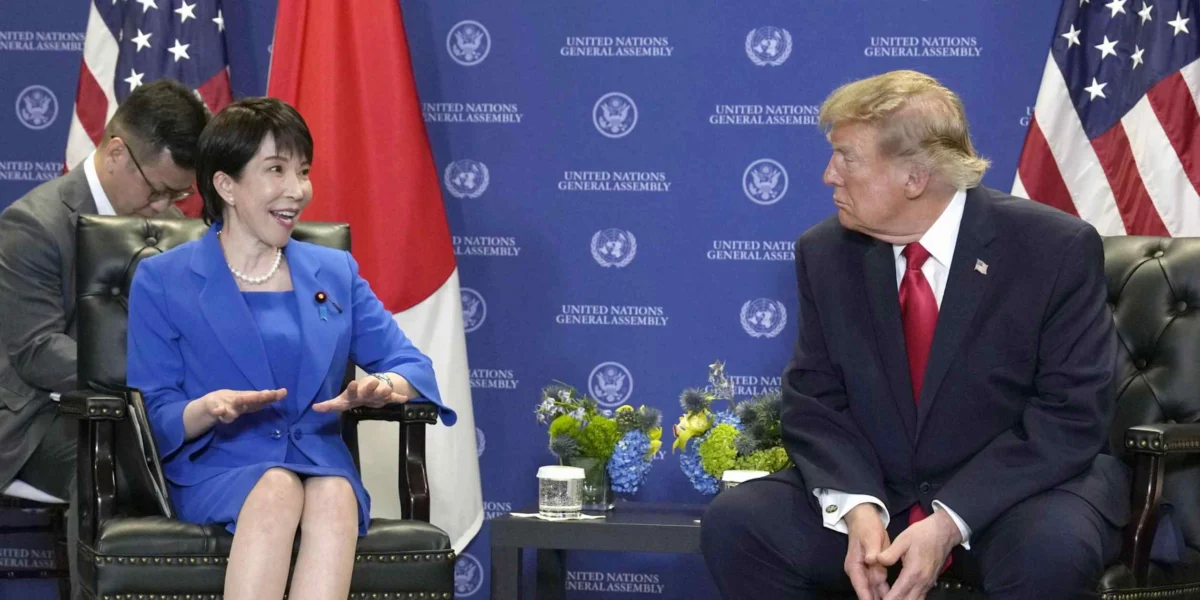
TOKYO – Japanese Prime Minister Sanae Takaichi is poised to request a bilateral meeting with U.S. President Donald Trump during her forthcoming international engagements, a strategic move designed to proactively communicate Tokyo’s comprehensive revisions to its foundational security documents. This initiative underscores Japan’s commitment to transparency and its desire to preempt any potential reservations from Washington concerning its ambitious defense modernization and expenditure plans. The proposed meeting, which has yet to be formally scheduled, is anticipated to serve as a critical platform for Japan to articulate the rationale and scope of its impending security policy adjustments, particularly in light of the increasingly complex and volatile geopolitical environment in the Indo-Pacific region.
The Japanese government’s decision to embark on a significant overhaul of its three principal security documents – the National Security Strategy (NSS), the National Defense Program Guidelines (NDPG), and the Mid-Term Defense Program (MTDP) – marks a pivotal moment in Japan’s post-war defense posture. These documents, which collectively outline Japan’s strategic vision, military capabilities, and resource allocation, are undergoing their most substantial revisions since their initial establishment. The impetus for these changes stems from a confluence of factors, including the escalating assertiveness of China, the persistent threat posed by North Korea’s nuclear and missile programs, and the broader strategic realignments prompted by evolving global power dynamics. Prime Minister Takaichi’s proactive engagement with President Trump is seen as a diplomatic maneuver to ensure continued alignment and robust support from its most crucial ally, the United States, as Japan embarks on this significant policy recalibration.
Background: The Genesis of Japan’s Security Policy Review
The roots of the current security policy review can be traced back to the increasingly evident challenges to regional stability. For years, Japan has observed with growing concern the rapid military buildup and assertive territorial claims by China, particularly in the East China Sea and South China Sea. This has been accompanied by North Korea’s continued development of advanced ballistic missile and nuclear weapons capabilities, posing a direct and imminent threat to Japan’s territory and its citizens. The United States, while reaffirming its commitment to regional security, has also signaled a desire for its allies to shoulder a greater share of the defense burden and to contribute more significantly to collective security efforts.
Against this backdrop, the Japanese government, under Prime Minister Kishida’s leadership (prior to Takaichi’s premiership, if the hypothetical timeline necessitates a transition), initiated a comprehensive review process. This process involved extensive consultations among various government ministries, defense experts, and national security advisors. The overarching objective has been to modernize Japan’s defense capabilities to meet contemporary threats, enhance its deterrence, and bolster its capacity for self-defense and crisis response. The review is expected to lead to a significant increase in Japan’s defense budget, potentially exceeding the hitherto informal 1% of GDP ceiling, and the acquisition of new offensive capabilities, such as long-range strike missiles, which have historically been a sensitive topic given Japan’s pacifist constitution.
Timeline of Key Developments and Consultations
The process leading up to Prime Minister Takaichi’s planned briefing to President Trump has been a meticulously orchestrated diplomatic and strategic endeavor. While the exact timeline of the upcoming overseas trip remains fluid, the groundwork has been laid over several months:
- Early 2026: Initial discussions within the Japanese government begin to formalize the need for a comprehensive review of the National Security Strategy, National Defense Program Guidelines, and Mid-Term Defense Program. This phase involved internal assessments of evolving threat perceptions and Japan’s existing defense capabilities.
- Mid-2026: A dedicated task force is reportedly established within the Prime Minister’s office and the Ministry of Defense to lead the revision process. Consultations with the U.S. government, through diplomatic channels and defense dialogues, commence to provide an early indication of Japan’s intentions and to gauge potential U.S. perspectives.
- Late 2026 (leading up to the proposed meeting): As the revisions begin to take concrete shape, including specific budgetary allocations and capability enhancements, the urgency to communicate these plans to key international partners, particularly the United States, intensifies. This period sees the planning of the Prime Minister’s overseas travel with the explicit goal of securing a meeting with President Trump. The meeting with President Trump in September at U.N. headquarters, as indicated by the original caption, likely served as an initial point of contact, and the upcoming trip represents a follow-up to further elaborate on the finalized plans.
- Early 2027 (hypothetical future): Following the proposed briefing to President Trump, the revised security documents are expected to be formally adopted by the Japanese government, signaling a significant shift in its defense policy and its role in regional security architecture.
Key Policy Revisions Under Consideration
The anticipated changes to Japan’s security documents are multifaceted and represent a departure from previous defense paradigms. While specific details remain under wraps pending official announcements, several key areas are understood to be central to the revisions:
1. Enhanced Defense Capabilities and Budgetary Increases
The most prominent aspect of the policy review is expected to be a substantial increase in Japan’s defense spending. This could see the defense budget rise to as much as 2% of GDP, a level comparable to many NATO member states. This increase is intended to fund the acquisition of advanced military hardware, including:
- Long-Range Strike Capabilities: The development and procurement of long-range missiles capable of striking enemy bases would significantly enhance Japan’s deterrence posture. This capability is seen as crucial for responding to missile threats and for projecting power in a crisis.
- Advanced Air and Missile Defense Systems: With the increasing sophistication of missile threats, Japan is expected to bolster its air and missile defense network, incorporating next-generation interceptors and early warning systems.
- Naval Modernization: Enhancements to the Japan Maritime Self-Defense Force (JMSDF) are anticipated, focusing on increasing its operational reach, anti-submarine warfare capabilities, and its ability to conduct joint operations with allies.
- Cyber and Space Defense: Recognizing the growing importance of these domains, Japan is likely to significantly invest in its cyber warfare capabilities and its space-based assets for intelligence, surveillance, and reconnaissance.
2. Reinterpretation of Self-Defense and Collective Security
While Japan is constitutionally bound to a pacifist stance, the revised documents are expected to clarify and potentially broaden the interpretation of what constitutes "self-defense." This could include a more robust approach to collective self-defense, enabling Japan to provide greater support to allies under attack, even if Japan itself is not directly threatened. This aligns with the concept of "active pacifism" that has been a guiding principle of Japan’s foreign policy in recent decades. The revisions will likely emphasize Japan’s role in maintaining a "free and open Indo-Pacific," a concept championed by the United States, and its commitment to contributing to regional stability through enhanced capabilities and proactive diplomacy.
3. Strengthening Alliance with the United States
The cornerstone of Japan’s security policy remains its alliance with the United States. The revisions are expected to reaffirm this commitment and outline specific measures to deepen interoperability, joint planning, and burden-sharing. This includes:
- Enhanced Intelligence Sharing: Improving the seamless exchange of intelligence and operational information between the U.S. and Japan.
- Joint Military Exercises: Increasing the frequency and complexity of joint military exercises to enhance operational readiness and coordination.
- Technological Cooperation: Fostering deeper collaboration in defense technology research and development.
Supporting Data: Japan’s Defense Spending Trajectory
Japan’s defense spending has been on a steady upward trajectory in recent years. In fiscal year 2022, Japan’s defense budget was approximately ¥5.4 trillion (around $48 billion USD). This represented a notable increase from previous years, reflecting growing concerns about regional security. The proposed revisions are expected to lead to a significant jump, potentially doubling the defense budget over the next five to ten years, bringing it closer to the 2% of GDP benchmark. This would place Japan among the top defense spenders globally and signal a substantial shift in its resource allocation priorities. For comparative context, as of 2023, the United States defense budget exceeded $800 billion USD, while China’s defense budget was estimated to be around $290 billion USD. South Korea’s defense budget for 2023 was approximately $50 billion USD. A doubling of Japan’s defense expenditure would position it as a major military power in the region, comparable in absolute spending terms to some of the larger European nations.
Official Responses and Diplomatic Engagements
While official statements from both Tokyo and Washington regarding the specific meeting remain cautious, the broader diplomatic context is clear. The Japanese side will look for another meeting to explain Tokyo’s plans for security policy. This suggests that the September meeting at U.N. headquarters was a preliminary discussion, and the upcoming engagement is intended to provide a more detailed and comprehensive briefing.
- From the Japanese Side: Prime Minister Takaichi’s initiative to seek a meeting underscores the importance Japan places on maintaining strong ties with the U.S. administration and ensuring its security policy is understood and supported by Washington. Tokyo’s proactive approach aims to avoid any misinterpretations or potential friction that could arise from unilateral policy shifts. The Japanese government is likely to frame these revisions as necessary adjustments to meet evolving threats and to enhance Japan’s contribution to regional and global security, thereby strengthening the U.S.-Japan alliance.
- From the U.S. Side (Inferred): While not explicitly stated, the U.S. administration has consistently advocated for its allies to increase their defense spending and take greater responsibility for their own security. President Trump, in particular, has been vocal about the need for allies to contribute more to collective defense. Therefore, it is reasonable to infer that Washington would welcome such a briefing and is likely to view Japan’s increased defense commitments positively, provided they are seen as contributing to regional stability and burden-sharing. However, the U.S. may also seek assurances that these new capabilities will be integrated within a broader alliance framework and used in coordination with U.S. strategy.
Broader Impact and Implications
The proposed revisions to Japan’s security documents and Prime Minister Takaichi’s outreach to President Trump carry significant implications for regional and global security:
- Strengthening Deterrence in the Indo-Pacific: Japan’s enhanced defense capabilities, particularly its long-range strike capacity, will significantly bolster deterrence against potential aggressors in the Indo-Pacific. This could contribute to a more stable regional balance of power.
- Deepening the U.S.-Japan Alliance: The proactive communication and planned alignment of security policies will further solidify the U.S.-Japan alliance, reinforcing its role as a cornerstone of regional security architecture.
- Setting a Precedent for Other Allies: Japan’s commitment to increased defense spending and its proactive approach to security policy could serve as a precedent for other U.S. allies in the region and beyond, encouraging them to strengthen their own defense postures.
- Potential for Regional Arms Race Concerns: While intended to enhance deterrence, significant increases in military capabilities by any nation can raise concerns about an escalating arms race. Japan’s neighbors, particularly China and North Korea, will closely monitor these developments and may respond with their own military enhancements, potentially leading to increased regional tensions.
- Domestic Political Considerations: While Prime Minister Takaichi appears to have broad support for these security revisions, there may still be domestic political considerations and public debate surrounding the significant increase in defense spending and the potential reinterpretation of Japan’s pacifist constitution.
In conclusion, Prime Minister Sanae Takaichi’s planned meeting with U.S. President Donald Trump signifies a critical juncture in Japan’s post-war security evolution. By seeking to proactively communicate its comprehensive security policy revisions, Japan aims to ensure continued alignment and robust support from its closest ally, the United States, as it navigates an increasingly complex and challenging geopolitical landscape. The forthcoming changes to Japan’s foundational security documents are poised to reshape its defense posture, enhance its regional contributions, and underscore its commitment to peace and stability in the Indo-Pacific.
