

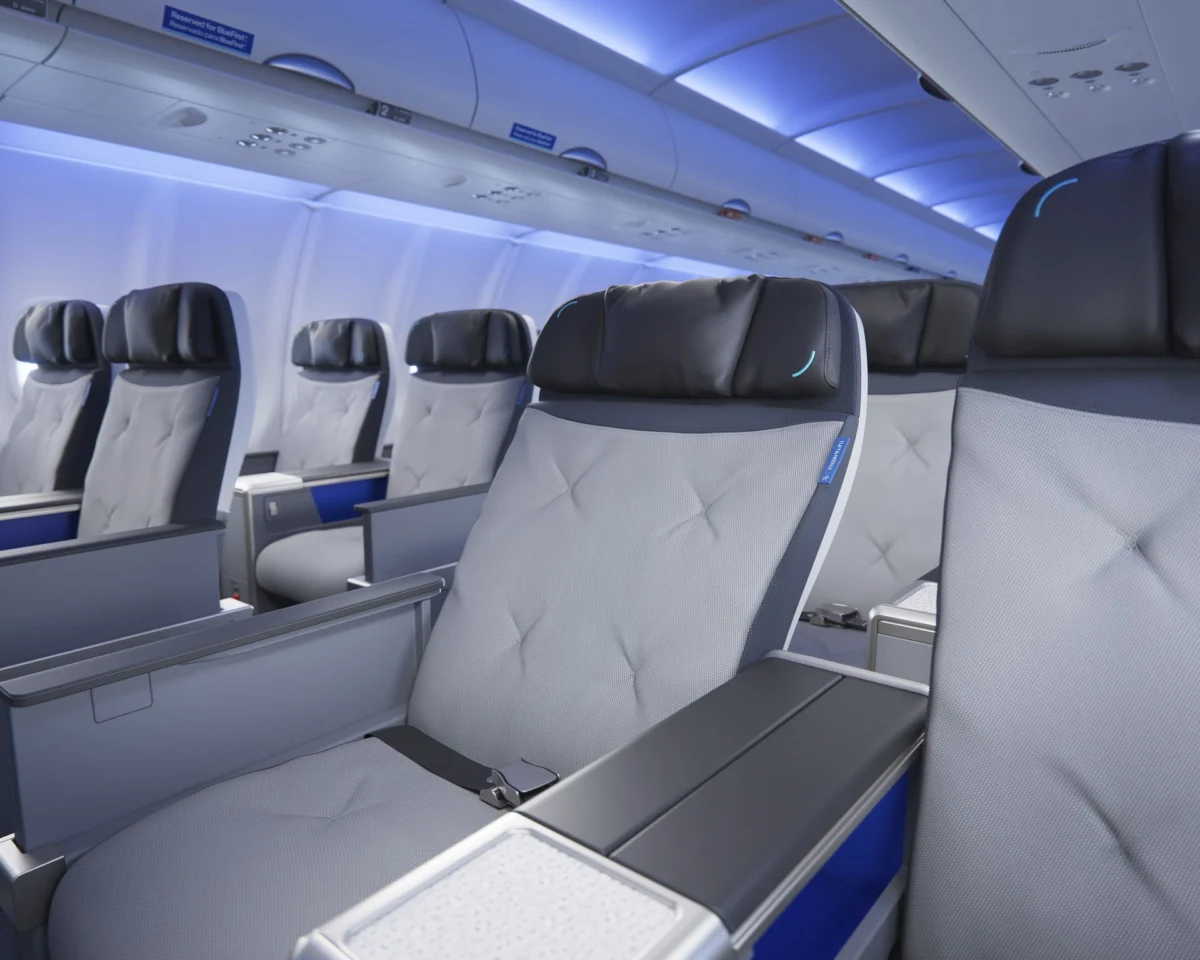
JetBlue Airways, a prominent player in the U.S. aviation sector, officially unveiled its new domestic first-class product, dubbed "BlueFirst," on Wednesday, marking a pivotal moment in the airline’s comprehensive strategy to regain profitability. The introduction of these premium seats comes as the industry increasingly banks on a robust premium travel boom to bolster financial performance, a trend JetBlue is keenly embracing to steer its own turnaround.
The carrier’s decision to launch BlueFirst, first announced in December 2024, signals a strategic pivot towards higher-yield offerings. JetBlue plans to commence flying aircraft equipped with these new seats and an enhanced on-board product as early as next month. The grand reveal took place at the airline’s primary hub, John F. Kennedy International Airport (JFK), showcasing the recliner-style seating designed to elevate the passenger experience. According to CEO Joanna Geraghty, the retrofitting process for the existing fleet will be a phased endeavor, projected to continue through 2027. This multi-year rollout underscores the significant investment and long-term commitment JetBlue is making to its premium segment.
Navigating Financial Headwinds with a Premium Bet
The unveiling is not merely a product launch but a critical component of JetBlue’s broader efforts to stabilize its financial footing. The New York-based airline has faced considerable challenges, having last reported a profit in 2019. The intervening years have been marked by the disruptive impact of the global pandemic, operational hurdles, and a highly competitive landscape. More recently, the airline’s shares hit a record low following reports that some bondholders had engaged restructuring advisors, sparking concerns among investors about the company’s financial health.
In response to these anxieties, JetBlue executives have actively sought to reassure the market. CEO Geraghty explicitly addressed the speculation on October 27, unequivocally stating, "We have no intention, no plans to file for bankruptcy. We are not engaged with any restructuring company." She reiterated this stance in an interview with CNBC’s Phil LeBeau on Wednesday, confirming that the company had met with several creditors over the past few weeks as part of its "normal investor engagement." Geraghty emphasized that these discussions served to clarify to bondholders that JetBlue does not require a financial reorganization. The market appears to have responded positively to these assurances, with JetBlue’s shares climbing more than 40% this month as of midday Wednesday, outpacing other passenger carriers, though they still remain down approximately 11% year-to-date.
The "BlueFirst" Experience and Strategic Rationale
The "BlueFirst" offering is designed to provide a more comfortable and exclusive travel experience for domestic passengers. While specific amenities beyond the recliner seats were not fully detailed in the initial announcement, a typical domestic first-class product includes enhanced meal service, complimentary alcoholic beverages, priority boarding, increased baggage allowance, and dedicated cabin service. An illustrative pricing example highlights the premium positioning: a roundtrip ticket in the new recliner first-class seats between Kennedy Airport and Fort Lauderdale-Hollywood International Airport (FLL) in the first week of March is priced at $847, significantly higher than the $446 for a standard economy ticket on the same route. This price differential underscores the potential for substantially higher revenue yields from the premium cabin.
JetBlue’s wager on resilient travel demand, particularly for roomier and more comfortable seats, is central to its turnaround plan. The airline aims to achieve an operating profit next year and reach $1 in adjusted earnings per share by 2028. This ambitious financial target hinges on several factors, including the successful integration and market acceptance of its new premium product. The strategy reflects a broader industry understanding that premium cabins offer a crucial hedge against the ever-increasing operating costs faced by airlines.
The Broader Industry Trend Towards Premiumization
JetBlue’s move is not an isolated incident but rather a clear reflection of a significant industry-wide trend: a pronounced shift towards premium travel. Airlines, both large and small, are aggressively reconfiguring their cabins to feature more spacious, expensive seating options. This strategic imperative is driven by the need to offset surging operational expenditures, which include, but are not limited to, volatile jet fuel prices, escalating labor costs due to new union contracts and staffing shortages, and rising airport operation fees.

Major legacy carriers like United, Delta, and American Airlines have long invested heavily in their business and first-class products, such as Delta One, United Polaris, and American’s Flagship First and Business. These premium offerings consistently generate disproportionately higher revenues and profit margins compared to economy cabins. The post-pandemic travel landscape has further intensified this focus. Leisure travelers, often with accumulated savings, have shown a greater willingness to splurge on enhanced comfort and service. Simultaneously, the gradual recovery of business travel, albeit with some shifts in patterns, continues to support demand for premium seating.
Even budget carriers, traditionally focused on bare-bones economy travel, are adapting. On Tuesday, Frontier Airlines, a direct competitor in the low-cost segment, unveiled its own version of premium seating. Frontier’s approach involves designating the first two rows of its Airbus fleet as "first class" with extra legroom, extending in-seat power through row eight. Notably, Frontier plans to remove an entire row of standard seating from its aircraft to accommodate these pricier options, as confirmed by chief marketing officer Bobby Schroeter. This illustrates the compelling financial logic behind premiumization: fewer seats, but significantly higher revenue per seat, ultimately leading to greater overall profitability per flight.
Airline executives broadly anticipate that fares will remain elevated next year, even if fuel prices moderate. This outlook is primarily attributed to the persistent high cost base across the industry. Geraghty articulated this perspective on Wednesday, stating that even with a potential moderation in fuel prices, "I don’t think fares are going to fall as much as people expect." This suggests that airlines are committed to maintaining pricing power to achieve their financial objectives, leveraging strong demand and the value proposition of enhanced services.
JetBlue’s Financial Snapshot and Future Outlook
Despite the recent share price volatility and bondholder concerns, JetBlue presented a picture of considerable liquidity in its most recent financial disclosures. The airline reported ending the third quarter with $2.2 billion in liquidity. Furthermore, its unencumbered asset base stands at a substantial $7 billion, which includes $2.8 billion in aircraft and engines that are not pledged as collateral for debt. This significant pool of unencumbered assets provides the airline with financial flexibility and options should it need to raise capital or manage its debt obligations. As of September 30, JetBlue’s total debt amounted to $8.4 billion.
Geraghty reiterated her earlier assertion that there is a "fundamental disconnect between the narrative in the bond market and what our financial results actually demonstrate." This suggests a perception gap that the airline is actively working to bridge through transparent communication and a clear execution of its turnaround plan. The CEO also firmly dismissed any speculation regarding potential cost-cutting measures involving furloughs, layoffs, or buyouts, stating "absolutely not" when asked last month. This commitment to its workforce is crucial for maintaining morale and ensuring the quality of service essential for a premium product like BlueFirst.
Broader Implications and Market Dynamics
The successful execution of JetBlue’s premium strategy and overall turnaround plan holds significant implications for both the airline and the broader industry. For JetBlue, a successful pivot to higher-yield products could redefine its market position, allowing it to compete more effectively against legacy carriers in key routes while maintaining its distinctive brand appeal. It also positions the airline to better absorb economic shocks and operational cost increases.
For the industry, JetBlue’s embrace of premiumization further solidifies the trend that quality and comfort, even on domestic routes, are becoming increasingly important drivers of airline profitability. This could lead to a broader re-evaluation of cabin configurations across various carriers, potentially resulting in fewer ultra-low-cost economy options and a greater proliferation of premium economy and domestic first-class offerings. The competitive landscape will intensify as airlines vie for the wallets of passengers willing to pay more for an elevated travel experience.
The long-term sustainability of this premium travel boom, however, will depend on several factors, including global economic stability, consumer spending patterns, and the continued willingness of businesses to invest in employee travel. Should there be a significant economic downturn, discretionary spending on premium travel could be curtailed, posing new challenges for airlines heavily invested in this segment. Nevertheless, for now, JetBlue’s "BlueFirst" represents a calculated bet on a future where comfort, convenience, and a superior travel experience are increasingly valued by a significant portion of the flying public, and a critical step in its journey back to consistent profitability.
