

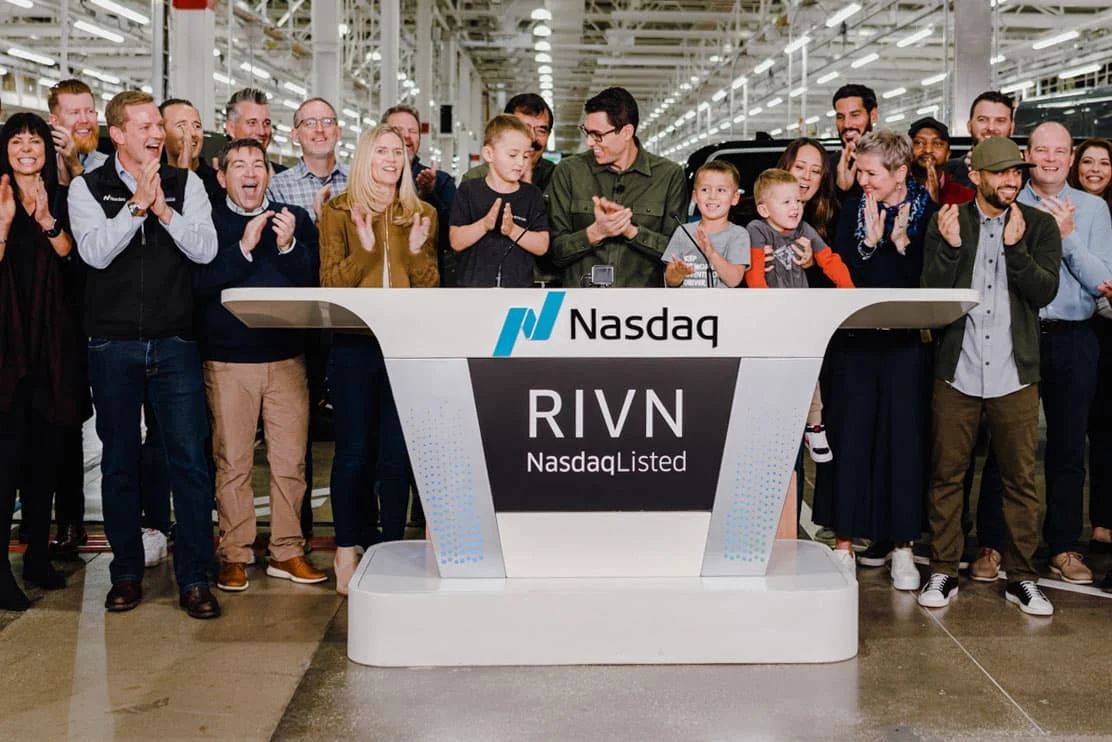
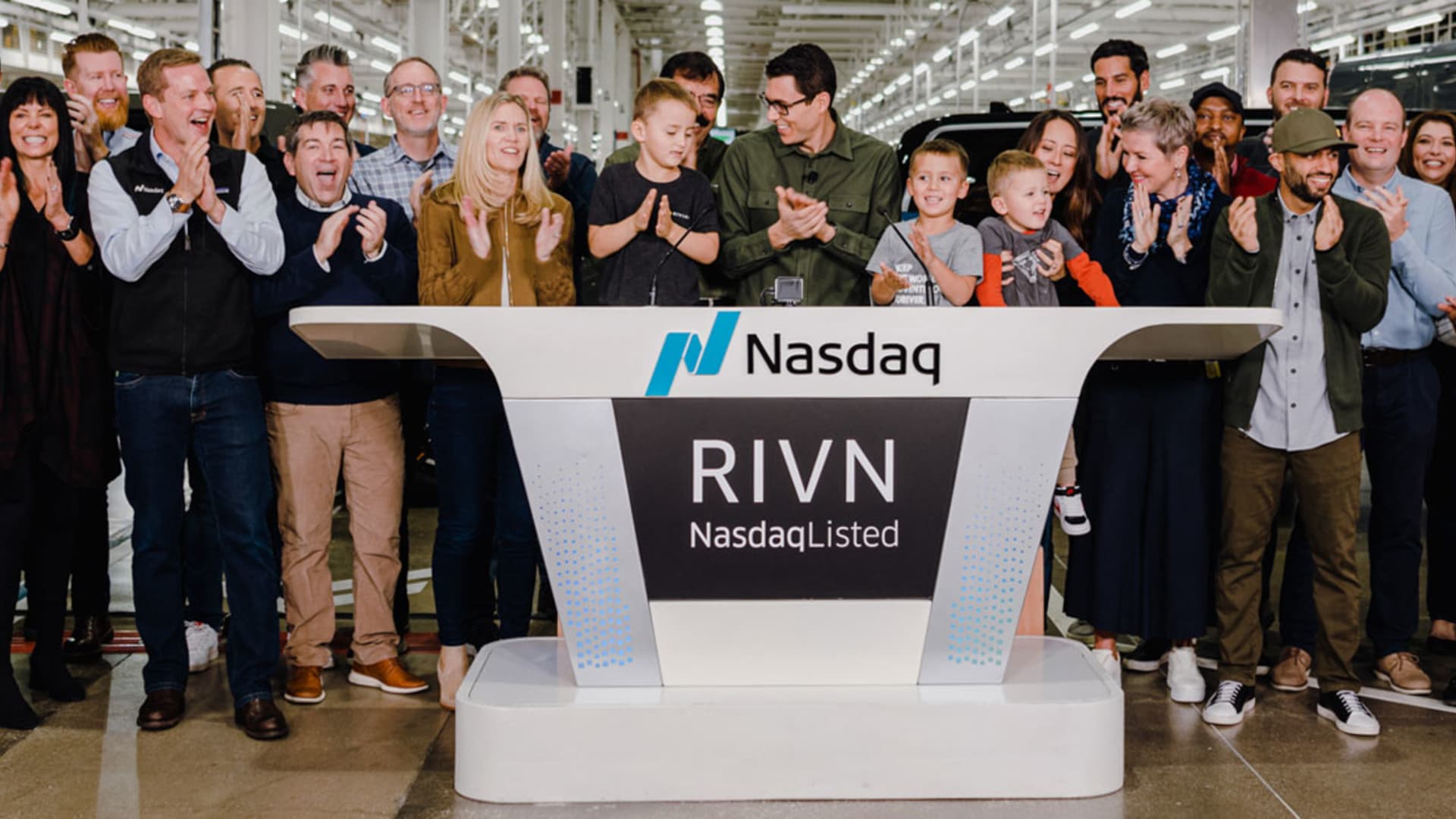
Five years have passed since Rivian Automotive, a beacon of the burgeoning electric vehicle industry, made its highly anticipated debut on the Nasdaq. CEO and founder RJ Scaringe marked the occasion by ringing the Nasdaq opening bell from the company’s manufacturing campus in Normal, Illinois, while a fleet of Rivian’s distinctive electric vehicles showcased the brand’s innovation in Times Square. The initial public offering on November 10, 2021, at $78 per share, was a moment of profound euphoria, symbolizing the immense investor confidence in the future of all-electric transportation and positioning Rivian as a formidable contender in a market then dominated by Tesla. Backed by Amazon, the company’s valuation soared, reflecting a speculative zeal that permeated the EV sector.
However, the landscape of electric vehicle investment has undergone a significant transformation since those heady days. The initial "EV euphoria" that characterized the early 2020s, fueled by a combination of environmental urgency, government incentives, and a belief in disruptive technologies, has considerably diminished. Factors such as persistent supply chain disruptions exacerbated by geopolitical tensions, rising interest rates, inflationary pressures, and a slower-than-expected rate of consumer EV adoption have tempered market enthusiasm. Consequently, Rivian’s stock price has mirrored this broader industry recalibration, plummeting more than 80% since its IPO, including a nearly 30% decline in the current year. This stark reality contrasts sharply with the initial optimism, yet Rivian stands as one of the few EV makers from that era to have not only survived but to continue demonstrating significant potential, even as many of its peer group have ceased to exist, most notably Fisker’s recent bankruptcy.
RJ Scaringe openly acknowledges that the journey has not unfolded entirely according to plan. The confluence of external macroeconomic headwinds and internal operational challenges has tested the company’s resilience. Despite these hurdles, Scaringe remains steadfastly bullish on Rivian’s future, articulating a vision where the coming year, and particularly 2027, will prove to be a pivotal "inflection year" for the company and its investors. In an exclusive interview, Scaringe conveyed a deep conviction in the company’s long-term prospects, stating, "I’m excited to start to really show what we believe so fully, the potential of the business." This forward-looking perspective is underpinned by a multi-pronged strategy centered on expanding its product portfolio, scaling manufacturing capabilities, and pioneering advanced autonomous technologies.
The R2 SUV: A Strategic Shift Towards Mainstream Appeal
At the core of Scaringe’s optimism is the accelerated ramp-up of production for the midsize R2 SUV. This vehicle represents a crucial strategic pivot for Rivian, designed to broaden the brand’s appeal beyond its initial niche of premium adventure vehicles (R1T pickup and R1S SUV) to a more mainstream consumer base. With an entry-level model projected to start around $45,000, the R2 is positioned to tap into a significantly larger market segment, offering Rivian’s distinctive design and technology at a more accessible price point.
The R2 is not merely an expansion of the product line; it is envisioned as the vehicle that will define Rivian’s path to sustainable profitability and significant revenue growth. Scaringe emphasized its centrality, stating, "That’s going to define the business. The path to profitability, the path to very significant growth in revenue is all built around R2, and then some of the variants that come following R2." Evidence of this strategic shift’s early success is already emerging. Rivian reported a record 19,248 vehicle deliveries in the third quarter of 2026, marking a robust 46% year-over-year increase. Crucially, the R2 has quickly become the company’s best-selling vehicle by volume, surpassing both its flagship R1 products and its commercial electric vans. This rapid adoption suggests strong market demand and validates Rivian’s strategy to diversify its offerings.
Furthermore, the introduction and increasing mix of the R2 are already yielding tangible improvements in manufacturing economics. For the most recent reporting period, Rivian disclosed that the automotive cost of goods sold per vehicle improved by over $12,000 quarter-over-quarter. This significant reduction is directly attributed to a higher R2 mix in production and better fixed-cost leverage, demonstrating the positive impact of economies of scale and platform efficiencies. The R2’s success is paramount for Rivian to achieve its financial objectives and solidify its position in the competitive EV market.
Scaling for the Future: The Georgia Factory and Manufacturing Expansion
Achieving the ambitious production volumes necessary for profitability and widespread R2 adoption necessitates a substantial expansion of Rivian’s manufacturing footprint. Currently, the company operates a single factory in Normal, Illinois, which boasts an annual production capacity of 215,000 vehicles. This capacity is allocated to produce up to 155,000 R2s alongside the R1 models and commercial electric vans. While impressive, this single facility is insufficient to meet Rivian’s long-term growth aspirations and its goal of mainstream market penetration.
To address this, Rivian is in the midst of constructing a new multibillion-dollar manufacturing facility in Georgia. This ambitious project, which Scaringe has explicitly stated is "necessary to get the company to the volumes it needs to achieve net profitability," represents a colossal investment in the company’s future. The Georgia plant is designed to be a cornerstone of Rivian’s scaling strategy, projected to be capable of producing up to 300,000 units annually once its initial phase of construction is completed in late 2028. This additional capacity will be critical for meeting the anticipated demand for the R2 and its forthcoming variants.
However, such large-scale capital expenditure naturally places significant financial pressure on the company. Building a state-of-the-art factory of this magnitude requires substantial investment, which, in the short to medium term, will weigh on Rivian’s cash flow and profitability metrics. Scaringe acknowledged this delicate balance, stating, "We’ve made the decision to simultaneously work towards profitability… and deeply invest in our technology, and in particular in autonomy." This dual commitment underscores Rivian’s long-term vision, even as it navigates the immediate financial realities of rapid expansion and technological development. The successful commissioning and efficient operation of the Georgia plant will be a defining factor in Rivian’s journey towards becoming a truly high-volume, profitable automaker.
Navigating Financial Headwinds: Profitability vs. Cash Burn
Rivian’s operating performance has shown encouraging signs of improvement, yet the company continues to face scrutiny from Wall Street analysts regarding its financial trajectory. While the company generated $176 million in consolidated gross profit in the third quarter, its core automotive business still posted an $80 million gross loss. This was partially offset by its burgeoning software and services unit, which contributed $256 million of gross profit at a healthy 42% margin, highlighting the potential for recurring revenue streams beyond vehicle sales.
Despite these improvements, several analysts anticipate a significant rise in the company’s investment requirements, particularly in 2027, as it ramps up R2 production and continues construction of the Georgia plant. This raises persistent concerns about cash burn, which has long been a key debate among Rivian investors. Deutsche Bank analyst Edison Yu, in an October 30 investor note following Rivian’s Q3 2026 earnings beat, articulated this sentiment: "Funding has long been a key debate for Rivian investors… The notion of a multi-year (even if credible) path to cash flow breakeven will be less attractive to investors." This underscores the market’s demand for a clearer, shorter path to financial self-sufficiency.
Rivian, for its part, has sought to reassure investors about its liquidity position. During its late October earnings call, the company projected its total available future liquidity to be approximately $13 billion. This comprehensive figure factors in available credit lines, strategic partnerships (including those with Volkswagen and Uber), and a crucial $4.5 billion loan from the U.S. Department of Energy specifically allocated for the Georgia plant. As of the end of the third quarter, Rivian reported a cash, cash equivalents, and short-term investments balance of $5.5 billion.
While these figures provide a substantial buffer, the capital-intensive nature of automotive manufacturing and technology development suggests that Rivian may still need to raise additional capital in the future. Scaringe indicated that the company plans to be "opportunistic" regarding any further capital raises, referencing previous equity deals with Volkswagen and Uber as examples of strategic funding. He emphasized, "As we think about the environment looking out, we want to continue to position ourselves to be in a place to invest in the technology. And so that means we’ll be opportunistic as it pertains to capital. But I want to be clear: We’re like very focused on getting the profitability." This statement encapsulates Rivian’s delicate balancing act: pursuing aggressive growth and technological leadership while striving for financial discipline and ultimately, profitability.
The Autonomy Race: Catching and Surpassing Tesla
Beyond manufacturing and product expansion, Rivian is making significant strides in advanced vehicle technology, particularly in the realm of autonomy. The company has undertaken substantial upgrades to both the software capabilities and hardware architecture of its vehicles, laying the groundwork for sophisticated autonomous driving features. Scaringe refers to this as "physical artificial intelligence," highlighting the integration of AI directly into the vehicle’s operational fabric.
The immediate next step in this evolution is the release of "point-to-point" driving capabilities. This feature will allow Rivian vehicles to navigate autonomously from a specified origin to a destination, with the driver serving as a monitor, ready to intervene if unexpected situations arise. This technology represents a critical benchmark in autonomous driving, currently offered primarily by U.S. EV leader Tesla. Scaringe articulated an ambitious goal: not only to match Tesla’s current capabilities but to surpass them. Rivian’s approach involves utilizing multiple sensor types, a strategy designed to provide the vehicle with enhanced perception, particularly under challenging conditions such as inclement weather, where relying solely on cameras (Tesla’s primary method) can be limiting. "That’s not like the finish line," Scaringe noted, "…Think of it as like the starting point where you suddenly have a more apples to apples comparison between Rivian and Tesla."
The rollout of point-to-point driving is imminent, expected to commence in the "coming weeks and months," initially for employees, followed by a broader release to customers. This internal testing and phased customer deployment strategy will allow Rivian to refine the technology in real-world conditions. Looking further ahead, Rivian has outlined plans for fully autonomous vehicles, including a partnership with Uber, targeting a deployment by 2028. Scaringe firmly believes that these advanced technologies will become a significant differentiator for the company in the years to come. He envisions a future where autonomy transcends a niche feature to become a primary purchasing consideration for the vast majority of buyers. "I think it will go from a purchase consideration for maybe 10% of the buying public that’s in the top five things considered in making a purchase decision to the No. 1 or No. 2 purchase consideration for the vast majority of buyers," Scaringe predicted.
Further details regarding Rivian’s comprehensive AI and autonomous plans are anticipated during its second annual investor technology event, scheduled for December 9. Analysts are keenly awaiting this event, viewing it as a potential catalyst for the stock. TD Cowen analyst Itay Michaeli commented in a recent investor note, "We view this as a likely positive catalyst as the event could set a path for AV features driving incremental vehicle demand & higher [software] revenue in 2027, building on 2026 growth." The market is eager for concrete evidence of how Rivian’s technological investments will translate into competitive advantages and new revenue streams.
Analyst Perspectives and The Path Forward
Wall Street analysts generally hold a cautiously optimistic view of Rivian’s prospects, acknowledging the company’s strong product, improving operational efficiencies, and ambitious technological roadmap. According to analyst estimates compiled by FactSet, Rivian’s stock is currently rated "overweight" with a consensus target price of $17.70. This target suggests a potential upside of approximately 26% from its recent Monday closing price, reflecting a belief in the company’s turnaround potential. However, it also underscores the significant ground still to be recovered, as this target remains a considerable distance from its IPO price.
The journey ahead for Rivian is undoubtedly complex, characterized by high stakes and substantial investment requirements. The success of the R2 in the mainstream market, the timely and efficient scaling of its manufacturing capabilities through the Georgia plant, and the effective deployment and monetization of its autonomous driving technologies will be crucial determinants of its long-term viability. The company’s ability to manage its cash burn effectively while simultaneously investing heavily in innovation will be paramount.
Rivian’s trajectory is also a microcosm of the broader challenges and opportunities within the electric vehicle industry. As the initial euphoria fades, the market is maturing, demanding sustainable business models, efficient production, and compelling value propositions. Rivian, having survived the early shakeout of EV startups, now stands at a critical juncture. Its ability to execute its ambitious strategy, transform its financial performance, and deliver on its technological promises will determine whether it can fulfill its initial promise and emerge as a dominant force in the global automotive landscape. The coming years, particularly the "inflection year" of 2027, will be instrumental in shaping Rivian’s legacy and its contribution to the future of transportation.
