

Paul Nadeau
November 10, 2026 17:05 JST
Japan’s recent diplomatic overtures toward U.S. President Donald Trump, culminating in a high-profile dinner at the White House on March 19, 2026, have undoubtedly yielded tactical victories for Prime Minister Sanae Takaichi’s administration. These engagements have solidified personal rapport and secured commitments on specific security and economic issues. However, a closer examination reveals that while short-term objectives may have been met, the overarching strategic questions concerning the long-term alliance stability and Japan’s regional posture remain largely unresolved, casting a shadow of uncertainty over the future trajectory of U.S.-Japan relations.

The timing of these diplomatic efforts was particularly crucial. With President Trump’s characteristic emphasis on bilateral deals and a transactional approach to foreign policy, Japan sought to leverage this dynamic to its advantage. The Takaichi administration, acutely aware of the potential for unpredictable shifts in U.S. foreign policy under Trump, prioritized cultivating a direct and personal relationship with the U.S. President. This strategy aimed to ensure that Japan’s security interests, particularly its reliance on the U.S. security umbrella, were not jeopardized by sudden policy reversals or a perceived weakening of American commitment to the Indo-Pacific region.
The Diplomatic Offensive: A Timeline of Engagement
The concerted effort by Japan to engage President Trump can be traced back to the early days of his presidency. Following his election in November 2016, Prime Minister Shinzo Abe, Takaichi’s predecessor, was among the first world leaders to meet with Trump, establishing a precedent for direct, personal diplomacy. This initial meeting, held at Trump Tower in New York in November 2016, was pivotal in setting a positive tone and laying the groundwork for future interactions.

Subsequent engagements followed a similar pattern. A significant moment occurred in April 2017, when President Trump made his first visit to Japan. This visit was characterized by extensive diplomatic engagements, including a summit with Prime Minister Abe, golf diplomacy, and a state dinner. The aim was to demonstrate the strength of the alliance and reassure Japan of U.S. commitment.
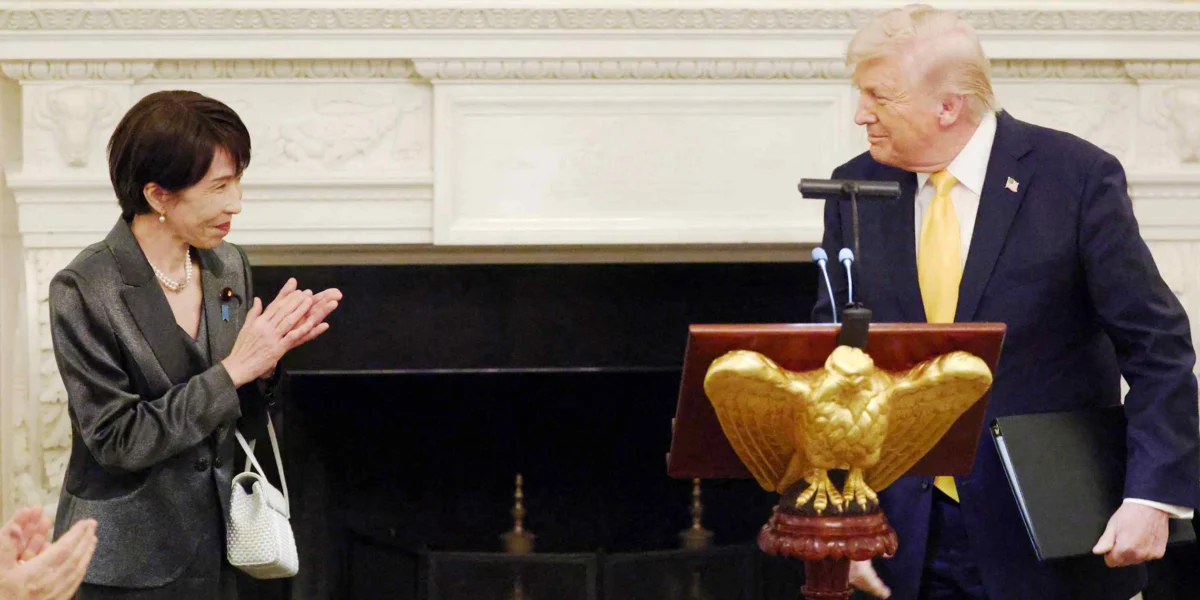
The March 2026 dinner at the White House, as depicted in the accompanying photograph, represents the latest chapter in this ongoing diplomatic narrative. While specific details of the discussions remain largely confidential, the public imagery of Takaichi and Trump interacting conveyed a message of continued partnership and mutual respect. This visual reinforcement is a critical component of "personal diplomacy," aiming to build trust and create a sense of shared understanding that can transcend policy disagreements.

Tactical Gains: Securing Commitments and Maintaining Stability
Japan’s primary objective in its courtship of President Trump has been to secure tangible benefits and maintain the status quo in critical areas. One of the most significant tactical gains has been the reaffirmation of the U.S.-Japan Security Treaty. Under President Trump’s "America First" agenda, there has been consistent pressure on allies to increase their defense spending and contribute more to collective security. Japan, already a significant contributor and a linchpin of regional security, has used these engagements to highlight its robust defense posture and its indispensable role in countering regional threats.
Furthermore, these high-level meetings have facilitated discussions and agreements on specific security challenges. While the details are often classified, it is understood that dialogues have included coordinated responses to North Korea’s nuclear and missile programs, the growing assertiveness of China in the East and South China Seas, and the broader strategic implications of technological advancements. The personal rapport established between leaders can expedite decision-making and foster a more agile response to emerging crises.

Economically, Japan has also sought to mitigate potential trade disputes. President Trump’s administration has shown a penchant for renegotiating trade deals and imposing tariffs. Through direct engagement, Japan has aimed to preemptively address concerns and highlight the mutual benefits of the economic relationship, particularly in areas like automotive exports and foreign direct investment. The successful negotiation of certain trade agreements, even if perceived as concessions by some, can be viewed as tactical victories in avoiding more damaging outcomes.
Strategic Questions: Unresolved Challenges and Future Uncertainties
Despite these tactical successes, the strategic landscape remains fraught with unresolved questions. The inherent unpredictability of President Trump’s foreign policy decision-making poses a persistent challenge. While personal rapport can provide a buffer, it cannot entirely insulate the alliance from potential policy shifts. The U.S. commitment to multilateral institutions and established alliances has been a recurring theme of debate, and the long-term implications of this stance on the U.S.-Japan alliance remain a subject of concern for strategic planners in Tokyo.

One of the most significant strategic questions revolves around burden-sharing. While Japan has increased its defense spending, reaching approximately 1.24% of GDP in recent years and aiming for 2% by 2027, President Trump’s demands for a more substantial contribution from allies have not abated. The debate over what constitutes a fair share of the security burden is complex, encompassing not only financial contributions but also the deployment of military assets, intelligence sharing, and the willingness to undertake joint operations. The lack of a clear, mutually agreed-upon framework for burden-sharing creates ongoing strategic ambiguity.
Another critical strategic consideration is the evolving regional security environment. The rise of China as a military and economic power, coupled with North Korea’s persistent provocations, necessitates a robust and predictable U.S. security presence in the Indo-Pacific. While President Trump has spoken of "peace through strength," the concrete manifestations of this policy and its long-term commitment to the region are subject to interpretation. Japan’s strategic calculations are heavily dependent on a stable and reliable U.S. alliance, and any perception of wavering commitment could compel Tokyo to reassess its own defense posture and potentially pursue a more independent, and perhaps riskier, path.

Broader Implications and Analysis
The implications of Japan’s diplomatic strategy are multifaceted. Tactically, it has likely bought Japan valuable time and secured a degree of stability in its relationship with the United States. The personal connections forged can serve as a vital communication channel during times of crisis and facilitate more nuanced negotiations.
Strategically, however, the reliance on personal diplomacy carries inherent risks. It can be perceived as an attempt to bypass established diplomatic channels and institutional frameworks, potentially undermining the broader alliance architecture. Moreover, if future administrations diverge significantly from President Trump’s approach, the foundations built on personal rapport may prove less resilient than those grounded in shared strategic interests and institutionalized cooperation.

The long-term success of Japan’s strategy will ultimately depend on its ability to navigate the inherent unpredictability of U.S. foreign policy while simultaneously strengthening its own defense capabilities and fostering broader regional partnerships. The current approach, while yielding tactical advantages, leaves the crucial strategic questions of alliance sustainability and regional security architecture open to ongoing debate and potential disruption. As the geopolitical landscape continues to shift, Japan’s ability to adapt and maintain a stable alliance with the United States will remain a paramount challenge, demanding a careful balance between cultivating personal relationships and reinforcing the enduring strategic imperatives that bind the two nations. The engagements, while demonstrative of Japan’s proactive foreign policy, underscore the enduring complexities of navigating an evolving international order.
