

Travelers planning to utilize their accumulated frequent flyer miles for the upcoming Thanksgiving holiday face unprecedented costs, as award ticket prices have surged by an average of 32% compared to last year’s holiday period for flights between major U.S. airports. This significant increase, identified by miles and points redemption search site Seats.aero, underscores a broader trend of escalating airfare throughout 2026, driven by a complex interplay of geopolitical events, sustained robust demand, and a fundamental shift in airline pricing strategies. The confluence of these factors is creating a challenging environment for consumers, even as airline executives report continued strong demand despite the rising expense of air travel.
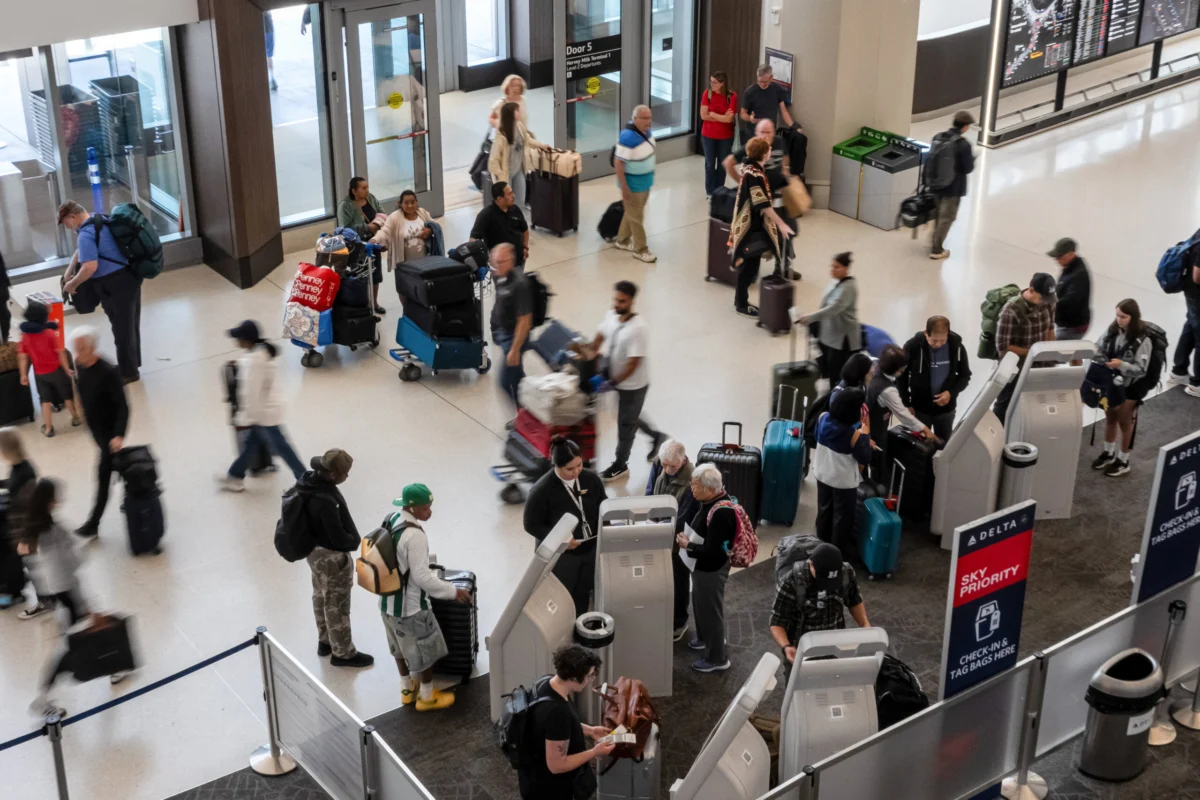
The current landscape of air travel pricing has been dramatically reshaped by a pivotal geopolitical event earlier this year. On February 28, 2026, a series of coordinated military actions involving the United States and Israel against specific targets within Iran sent immediate shockwaves through global energy markets. The immediate aftermath saw crude oil prices spike to levels not observed in over a decade, driven by fears of supply disruptions in the strategically vital Persian Gulf region. While initial market volatility somewhat stabilized in the subsequent weeks, the underlying price of jet fuel – a derivative of crude oil – remained stubbornly high, settling at a sustained elevated plateau. This sustained increase in operational costs presented airlines with an unavoidable challenge to their profitability, forcing carriers to re-evaluate their pricing structures across the board. The photograph taken at San Francisco International Airport (SFO) on Thursday, July 2, 2026, depicting travelers utilizing self-service kiosks, captures a period where the initial ripple effects of these cost pressures were already beginning to manifest in early summer airfare adjustments, long before the peak holiday booking season.
The Unprecedented Surge in Holiday Airfare
The data from Seats.aero paints a stark picture for those hoping to redeem their loyalty points for Thanksgiving travel. An average one-way award ticket between large U.S. airports is now 32% more expensive in terms of miles required than it was for the same period in 2025. For instance, a route that might have cost 25,000 miles last year could now demand upwards of 33,000 miles for the same flight. This increase far outpaces general inflation and represents a significant erosion of the perceived value of frequent flyer miles. While cash ticket prices have also seen substantial increases – with some analyses indicating a 15-20% rise in average domestic fares year-over-year – the proportional jump in mileage redemption costs is particularly striking for loyalty program members who rely on miles to offset cash expenditures.
The underlying strength of consumer demand is a critical component of this pricing phenomenon. Despite the evident financial strain on travelers, airline executives, in their quarterly earnings calls and investor presentations in October 2026, consistently reported that booking trends remained robust. Demand for leisure travel, in particular, has shown remarkable resilience, often dubbed "revenge travel" in the post-pandemic era, where consumers prioritize experiences and family reunions. This sustained appetite for air travel provides airlines with the market power to pass on increased operational costs, including those stemming from higher jet fuel prices, directly to the consumer without immediately impacting passenger volumes. The inelasticity of holiday travel demand further exacerbates this, as many individuals and families view Thanksgiving as an essential travel period, making them less price-sensitive than general leisure travelers.
A Fundamental Shift: Dynamic Pricing for Award Tickets
A major structural change contributing to the unpredictability and rising cost of award travel is the widespread abandonment of static mileage redemption charts by major airlines. Historically, frequent flyer programs operated on a fixed-rate system, where a specific number of miles would guarantee a ticket for a given route or region, regardless of the cash price. However, in recent years, most major carriers have transitioned to dynamic pricing models for award tickets.
This dynamic pricing means that the number of miles required for a flight is no longer fixed but fluctuates based on a myriad of factors, including:
- Demand: Higher demand for a particular flight or route translates to more miles required.
- Route Popularity: Popular routes, especially those connecting major hubs or desirable holiday destinations, will command more miles.
- Availability: As seats fill up, the remaining award seats become more expensive in terms of miles.
- Time of Booking: Last-minute bookings typically require significantly more miles.
- Cash Price Correlation: The mileage cost often correlates directly with the prevailing cash price of a ticket; as cash prices rise, so too do the mileage requirements.
For airlines, dynamic pricing offers significant advantages, primarily enabling them to optimize revenue by better managing inventory and maximizing the value of each seat, whether sold for cash or miles. It provides greater flexibility to adjust to market conditions and ensures that award travelers are contributing more closely to the real-time cost of operating the flight. However, for frequent flyers, this shift has introduced considerable uncertainty and made budgeting for award travel significantly more challenging. The aspirational goal of accumulating miles for a "free" flight has been replaced by a more complex equation, often requiring a substantial premium in miles for desirable travel dates.
Thanksgiving 2026: A Premium on Award Travel
The data from Seats.aero for Thanksgiving 2026 highlights specific routes where the impact of dynamic pricing and surging costs is most pronounced. Understandably, many of the most expensive routes involve longer distances or highly sought-after destinations. For instance, flights originating from Hawaii to mainland U.S. hubs, such as Honolulu to New York or Los Angeles, are seeing mileage redemption costs soar, often exceeding 80,000 to 100,000 miles for a one-way economy ticket during the peak Thanksgiving period. This reflects both the distance and the high demand for returning travelers from popular vacation spots.
However, the list of premium-priced award routes isn’t limited to long-haul, aspirational trips. Shorter, high-demand domestic routes are also experiencing significant mileage inflation. A non-stop flight from New York to Houston, for example, is noted as one of the most expensive, with award tickets regularly demanding 45,000 to 55,000 miles for a one-way journey. This specific route exemplifies how critical business and family connection corridors, especially between major population centers, are subject to the same demand-driven pricing pressures as traditional leisure routes during peak holiday windows. Such prices indicate that even a relatively short domestic flight can now require a mileage outlay comparable to what an international economy flight might have cost just a few years ago under static award charts.
Even "Bargains" Come at a Higher Price
The analysis also revealed that even routes traditionally considered "cheaper" for award redemptions have not been immune to the overall upward trend. Short-haul flights, often connecting regional airports to major hubs, have also seen their mileage costs increase significantly year-over-year. For example, the route from Tulsa, Oklahoma, to Dallas/Fort Worth International Airport, a common commuter and connecting flight, is noted as one of the cheapest for award tickets. Yet, even for this short journey, the mileage requirement has climbed from an average of approximately 9,000 miles last Thanksgiving to around 12,000 miles for the upcoming holiday. This 33% increase for a relatively low-demand, short-distance route underscores the pervasive nature of the cost surge across the entire network, indicating that airlines are applying higher baseline redemption values even to less competitive segments.
Other routes identified as comparatively cheaper, though still more expensive than last year, often connect smaller regional airports or fly at less desirable times. Examples might include routes like Des Moines to Chicago, or Cincinnati to Charlotte, where competition might be slightly higher or demand patterns less concentrated than major transcontinental routes. However, the consistent upward pressure across all segments means that what once constituted a "good deal" in terms of mileage redemption is now simply a less egregious expenditure compared to the most expensive options.
Consumer Sentiment and Loyalty Program Evolution
The dramatic increase in mileage redemption costs has inevitably led to growing frustration among frequent flyers. Many loyal customers feel that the value of their hard-earned miles has been significantly diminished, making it harder to achieve the "free travel" benefit that was a primary draw of loyalty programs. This sentiment is particularly acute for those who have accumulated large sums of miles over years of business or personal travel, only to find their purchasing power eroded by dynamic pricing.
Industry analysts suggest that this shift could lead to a re-evaluation of loyalty program engagement. While top-tier elite members might still find value in upgrades and preferential treatment, general frequent flyers might begin to question the benefit of concentrating their travel with one airline if the redemption opportunities are consistently inflated. Some travelers may pivot towards using cash-back credit cards or more flexible travel rewards programs that offer direct statement credits or allow booking through third-party portals, thereby circumventing the airlines’ dynamic pricing mechanisms for mileage redemptions. This could force airlines to consider new ways to incentivize loyalty beyond just mileage accrual, potentially focusing more on experiential benefits or exclusive access.
Industry Perspectives and the Road Ahead
From the airlines’ perspective, the current pricing strategies are a necessary response to a challenging economic environment. A spokesperson for a major U.S. airline, speaking anonymously to discuss internal strategy, explained, "Our primary responsibility is to ensure the financial viability of our operations. With jet fuel prices remaining elevated since the geopolitical events in February, and labor costs also on the rise, we must ensure that all revenue streams, including mileage redemptions, contribute appropriately to our bottom line. Demand has proven to be incredibly strong, allowing us to implement these adjustments." This statement encapsulates the industry’s position: strong demand provides the leverage to recover costs and maintain profitability in the face of external pressures.
Looking ahead, the outlook for airfare and mileage redemption costs remains uncertain. Much hinges on the stability of global energy markets. A significant de-escalation of geopolitical tensions and a sustained drop in crude oil prices could eventually translate into lower jet fuel costs, which might, in turn, alleviate some of the upward pressure on ticket and mileage prices. However, many experts believe that the dynamic pricing model for award travel is here to stay, as it offers airlines a powerful tool for revenue management. Even if fuel prices stabilize, airlines may continue to leverage strong demand to maintain higher redemption thresholds, having established a new precedent.
The Thanksgiving 2026 travel period serves as a crucial barometer for the evolving landscape of air travel. It highlights how external geopolitical forces, coupled with fundamental shifts in airline business models and robust consumer demand, are collectively redefining the cost and value proposition of flying, particularly for those relying on loyalty points. Travelers must now navigate a more complex and expensive environment, underscoring the need for strategic planning and flexibility in securing holiday travel.
