

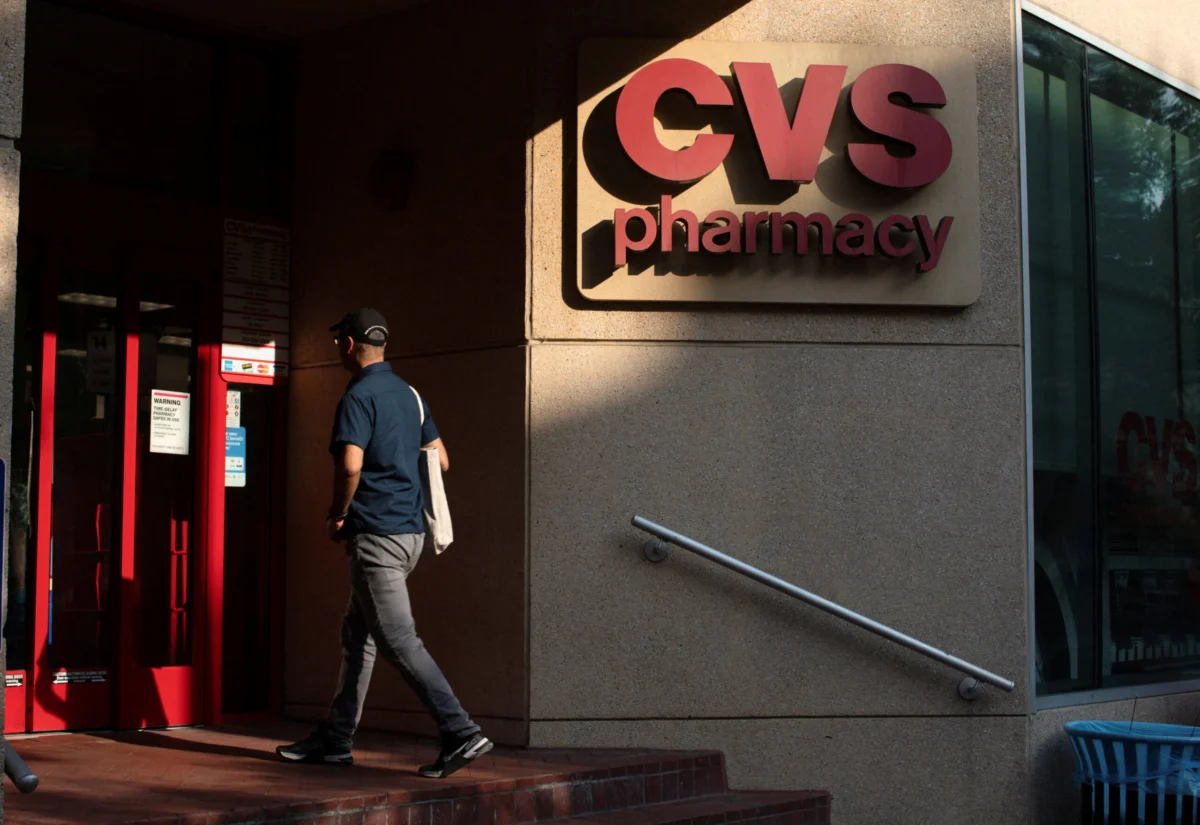
CVS Health, one of the nation’s largest healthcare conglomerates, announced on Wednesday a groundbreaking plan to separate into two distinct publicly traded companies by the first half of 2028. This strategic maneuver marks a significant reversal of its ambitious vertical integration strategy, notably undoing the massive $78 billion acquisition of health insurer Aetna in 2018, which aimed to transform the company into a comprehensive, one-stop health destination. The announcement, which came after a "comprehensive strategic review" by the company’s board of directors, sent CVS shares tumbling approximately 11% on Wednesday, reflecting investor uncertainty regarding the dramatic shift in corporate direction.
The proposed split will disentangle CVS’s sprawling operations, specifically separating its approximately 9,000 retail pharmacies, a ubiquitous presence across the American landscape, from its major insurance business, Aetna, and its influential pharmacy benefit manager (PBM), Caremark. Caremark stands as one of the nation’s three largest PBMs, playing a critical role in managing prescription drug benefits for millions of Americans. This move is poised to be one of the largest corporate demergers in recent history, reshaping not only CVS Health but potentially influencing the broader healthcare industry’s strategic direction.
A Decade-Long Evolution and Strategic Reversal
For the past two decades, CVS Health had aggressively pursued a strategy of vertical integration, a corporate model where a single company controls multiple stages of the supply chain. This trajectory accelerated dramatically with the 2018 acquisition of Aetna, a deal that was heralded at the time as a pioneering step towards creating a seamlessly integrated healthcare ecosystem. The vision was to combine CVS’s retail presence and PBM capabilities with Aetna’s insurance offerings, enabling the company to better manage patient care, control costs, and provide a more holistic health experience. The integration aimed to leverage data, improve patient outcomes through coordinated care, and create efficiencies across pharmacy, PBM, and health insurance segments.
This ambitious strategy was part of a wider industry trend, as other major players like UnitedHealth Group (with its Optum division) and even new entrants like Amazon began to explore similar integrated models. The rationale was clear: by owning various parts of the healthcare value chain, companies could reduce friction, enhance service delivery, and potentially gain a competitive edge in a complex and often fragmented market.
However, the path to integration was not without its challenges. Managing a diverse portfolio ranging from retail pharmacies to complex insurance products proved intricate, requiring significant operational alignment and cultural integration. Despite these complexities, the company had recently shown substantial progress under CEO David Joyner, who took the helm in October 2024. Joyner initiated an aggressive turnaround plan, targeting $2 billion in cost cuts, implementing store closures, orchestrating leadership shakeups, and focusing on reining in Medicare Advantage costs. Under his leadership, CVS shares have seen a remarkable jump of approximately 70% since October 2024, bringing the company’s market value to $117 billion prior to Wednesday’s announcement.
Joyner, addressing the market reaction and the strategic rationale, emphasized that the decision to split is being made "out of a position of strength." Speaking on CNBC’s "Squawk on the Street," he pointed to a recovery in Aetna’s Medicare business and solid performance in the retail pharmacy segment as foundational elements enabling this bold move. "So it’s all about the strength of the business that affords us the opportunity to make what we think are the right strategic decisions for the future of this company," he reiterated, suggesting the split is a proactive measure rather than a retreat.
Structure of the New Entities and Leadership
Under the proposed separation, the insurance and PBM company will retain the established "CVS Health" name and will continue to be led by David Joyner. This entity will encompass Aetna, Caremark, and other healthcare services assets. The other distinct public company will be rebranded as "CVS Pharmacy" and will focus on the retail pharmacy business. This new retail-focused entity will be led by Prem Shah, who currently serves as group president of CVS Health. Further leadership positions and board members for both companies are expected to be announced at a later date as the separation process progresses.
Existing CVS shareholders will automatically own shares in both new companies after the split is completed, ensuring continuity of investment for current stakeholders. The Financial Times had initially reported on the breakup plans on Tuesday, preceding the official announcement.
Financial Performance and Strategic Insights
The announcement coincided with CVS Health’s release of its third-quarter 2026 earnings, which surpassed Wall Street expectations for both revenue and profit. The company reported total sales climbing to $108.40 billion, a notable increase from $102.87 billion in the prior-year period. This growth was primarily fueled by robust year-over-year increases in its health care benefits and health services segments. Conversely, revenue in its pharmacy services business experienced a slight decline from the previous year, highlighting potential areas of pressure within that segment.

Looking at the company’s 2025 sales figures by segment, the pharmacy business generated $37.66 billion, while the insurance unit booked $36.29 billion in revenue. The healthcare services segment, which includes newer ventures and integrated offerings, was the largest revenue generator at $51.24 billion. These figures underscore the diverse revenue streams CVS Health manages and provide context for the strategic decision to untangle them.
The planned split will see the insurance and PBM operations, along with newly acquired primary care business Oak Street Health, home-visit provider Signify Health, and the company’s specialty drug business, grouped under the "CVS Health" banner. This configuration positions the entity as a diversified healthcare services and benefits provider. The company articulated that the separation would allow both new entities to pursue a "focused strategic agenda," fostering greater ability to "innovate, adopt technology, increase efficiency," and ultimately unlock shareholder value by allowing each business to operate with greater autonomy and strategic clarity.
A History of Strategic Reviews and Evolving Market Dynamics
This isn’t the first time CVS Health has considered such a dramatic restructuring. In October 2024, the company engaged advisors for a strategic review of its business, specifically exploring the possibility of breaking up its retail pharmacy and insurance units. However, CEO Joyner noted that at that time, the company was "in a turnaround" phase, lacking the operational flexibility, strong cash position, or robust business performance necessary to execute such a complex split. The current timing, therefore, reflects a strategic window opened by the recent improvements in financial health and operational stability.
Michael Cherny, an analyst at Leerink Partners, commented on the announcement, suggesting that the split reflects "the stability of the pharmacy," a segment that has successfully gained market share from competitors and is experiencing stabilizing gross margins. He attributed this partly to CostVantage, a new pharmacy reimbursement model introduced by CVS last year, which aims to bring greater transparency to drug pricing. "This business is a much different business from the one that’s been considered three years ago, five years ago, 10 years ago, where there had been a litany of headwinds that the pharmacy just couldn’t overcome," Cherny told CNBC, highlighting the improved health of the retail division.
One key concern for investors following the announcement is whether the retail pharmacy will lose the competitive advantage derived from its direct link with Caremark, its PBM. PBMs negotiate drug prices and manage prescription drug benefits on behalf of insurers and employers, and the integrated model was supposed to create efficiencies and leverage in these negotiations. However, Joyner sought to assuage these concerns, telling analysts that the synergies between the two businesses "are going to be preserved in commercial agreements between the two organizations." He added, "we don’t need the integration of an operating structure" to maintain these benefits, suggesting a contractual framework would replace structural integration.
Regulatory Pressure and Industry Implications
Beyond internal strategic considerations, the decision to de-integrate CVS’s operations appears to be deeply influenced by the escalating regulatory scrutiny facing pharmacy benefit managers and the broader trend of vertical integration in healthcare. PBMs, including Caremark, have been under mounting bipartisan pressure from lawmakers in Washington D.C. and across various states. Critics have consistently highlighted concerns about PBMs’ opaque pricing practices, their significant market power, and potential conflicts of interest that arise when PBMs are owned by companies that also operate insurers and pharmacies.
State legislatures have been particularly active in this area. For instance, Republicans in Tennessee and Arkansas have passed laws specifically banning co-ownership of PBMs and pharmacies, directly targeting the integrated model embraced by companies like CVS. These laws have faced legal challenges from CVS and other companies, underscoring the contentious nature of the issue. Federal regulators, including the Federal Trade Commission (FTC) and various congressional committees, have also launched investigations into PBM practices, probing into issues such as drug pricing, formulary management, and the impact of consolidation on competition and consumer costs. The FTC has repeatedly expressed concerns about the lack of transparency in the PBM industry and the potential for anticompetitive behavior.
The potential breakup of CVS Health could be seen as a strategic response, at least in part, to this intensifying regulatory environment. By separating its PBM and retail pharmacy, CVS might aim to alleviate some of the antitrust concerns and conflicts of interest highlighted by regulators and lawmakers. This move could potentially preempt further legislative actions or regulatory interventions that could force such a separation under less favorable terms.
The implications of this historic split extend far beyond CVS Health. It raises fundamental questions about the future of vertical integration in the healthcare industry. If a company as strategically committed to integration as CVS Health decides to reverse course, it could signal a broader re-evaluation across the sector. Competitors, including other integrated players like UnitedHealth Group, as well as standalone PBMs, insurers, and retail pharmacy chains, will undoubtedly be watching closely.
For consumers, the impact remains to be seen. Advocates for PBM reform hope that increased transparency and reduced conflicts of interest could lead to lower drug costs and more straightforward benefit management. However, the operational complexities of disentangling such massive entities could also lead to short-term disruptions.
Ultimately, CVS Health’s decision to split into two independent companies represents a pivotal moment in its corporate history and a significant development for the U.S. healthcare landscape. It reflects a strategic adaptation to evolving market dynamics, intensifying regulatory pressures, and a renewed focus on unlocking value through specialized business operations. The coming years will reveal whether this bold reversal truly positions both new entities for sustained growth and innovation in an ever-changing healthcare ecosystem.
