

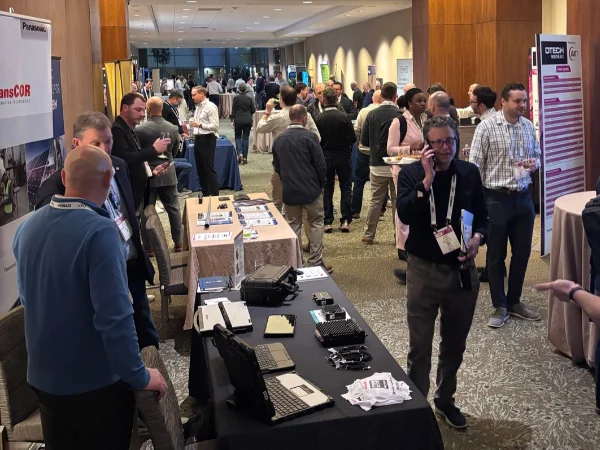
The Northeast United States is currently serving as the primary crucible for the American energy transition, as grid operators, utility executives, and infrastructure developers grapple with a convergence of aging assets, volatile weather patterns, and an unprecedented surge in industrial power demand. At the annual DTECH Northeast conference in Boston, Massachusetts, industry stakeholders gathered this week to address these multifaceted challenges, signaling a shift from theoretical planning to the practical, high-stakes "transformation" of the regional power system. This summit, which evolved from the former GridTECH Connect interconnection-focused series, has become a critical forum for navigating the friction between ambitious state-level decarbonization mandates and the physical realities of a grid that includes some of the oldest electrical infrastructure in the industrialized world.
A Regional Grid Under Pressure: The Dual Burden of Age and Climate
The Northeast’s electrical landscape is defined by its maturity and its vulnerability. Regional entities like ISO New England (ISO-NE) and the New York Independent System Operator (NYISO) are tasked with maintaining reliability across a geography where many transmission components have exceeded their intended lifespans. This inherent fragility is being tested by the increasing frequency of severe meteorological events, from historic blizzards to high-intensity coastal storms, necessitating a massive capital investment in grid hardening.
Wayne Bishop, executive vice president of Clarion Events North America, set the tone for the proceedings during his keynote address, noting that the industry has witnessed more fundamental shifts in the last decade than in the preceding century. Bishop argued that the term "energy transition" no longer captures the scale of the current movement; instead, the region is undergoing an "energy transformation" that requires a total reimagining of how power is generated, distributed, and consumed.
The complexity of this transformation is compounded by the lack of perfect alignment between state-level climate goals. While Massachusetts, New York, and Connecticut all pursue aggressive decarbonization, their individual regulatory frameworks and timelines often create a fragmented landscape for developers. This lack of synchronicity complicates the integration of distributed energy resources (DERs) in environments that are already electrically constrained.
The Load Growth Paradox: Data Centers and Industrial Expansion
For more than a decade, the Northeast experienced a period of flat or even negative load growth, largely due to energy efficiency gains and the decline of heavy manufacturing. However, this trend has reversed with startling velocity. The primary drivers are two-fold: the "industrial renaissance" of manufacturing and fabrication facilities, and the explosive growth of data centers required to support the global expansion of artificial intelligence and cloud computing.
Data from NYISO highlights the scale of this shift. The system operator currently manages an interconnection queue featuring more than 12 gigawatts (GW) of prospective large-load additions. In a remarkable surge, 8.3 GW of that total was added in 2025 alone. This influx has forced system operators to consider sweeping revisions to their interconnection processes, as the traditional "first-come, first-served" models struggle to accommodate the sheer volume of requests.

Simultaneously, the region is facing the "electrification of everything." State mandates aimed at reducing carbon footprints are driving the rapid adoption of electric heat pumps and electric vehicles (EVs). Analysts at the conference noted that these trends are pushing the region toward a "winter-peaking" system. Historically, the Northeast’s highest demand occurred during summer heatwaves; however, the shift toward electric heating means the grid’s most vulnerable moments will soon occur during the coldest months, when renewable generation—particularly solar—is at its lowest seasonal output.
Eversource and the Strategic Shift Toward Customer Value
Paul Chodak, executive vice president and chief operating officer of Eversource Energy, addressed the assembly by characterizing the Northeast as the "center of the industry." Eversource, which provides gas and electric services to over 4 million customers across Connecticut, Massachusetts, and New Hampshire, finds itself at the forefront of the reliability debate. Chodak emphasized that the utility’s strategy is shifting toward maximizing the incremental value of existing assets while being "ruthlessly smart" about new capital expenditures to protect retail ratepayers from escalating costs.
A centerpiece of Eversource’s resiliency strategy is the Cape Cod microgrid, a project that has become a national blueprint for utility-scale climate adaptation. Developed in partnership with TRC and the Town of Provincetown, the system features a 25-megawatt (MW) / 38-megawatt-hour (MWh) battery energy storage system (BESS). Since its commissioning in September 2022, the BESS has proven its worth during extreme weather. Chodak recounted a massive blizzard in February 2024 that dumped over three feet of snow on the Cape; the battery system successfully powered 5,000 customers for several hours after the main transmission lines were compromised, preventing a potentially life-threatening prolonged outage.
Beyond resiliency, Eversource is exploring market mechanisms like "peak shaving" to reduce the costs associated with high-demand periods. The utility is also modernizing its legacy renewable portfolio, such as a 2010-era solar farm in Western Massachusetts. By retrofitting the site with modern inverters and advanced communication suites, Eversource can better manage the "duck curve"—the phenomenon where high solar output during the day drops off just as evening demand peaks—and maintain more precise voltage control on the distribution circuit.
Solving the Interconnection Bottleneck
One of the most significant hurdles for the energy transformation is the "interconnection queue," where renewable energy and storage projects often languish for years due to the high costs of grid upgrades. Chodak noted that Eversource is increasingly turning to "flexible interconnection" as a solution. This approach allows developers to connect to the grid more quickly and cheaply by agreeing to have their output curtailed during rare moments of peak congestion, rather than waiting for multi-million-dollar physical infrastructure upgrades that may take years to permit and build.
Furthermore, Eversource is in the midst of deploying Advanced Metering Infrastructure (AMI) 2.0. This next-generation smart meter technology allows for "grid edge" computation, giving the utility the ability to manage load locally via AI agents. This technology is critical for proactive transformer maintenance and more accurate load forecasting, ensuring that the grid can handle the increased strain of EV charging and home electrification without requiring a total overhaul of every neighborhood substation.
The Role of Artificial Intelligence in Grid Operations
The "why behind AI" was a central theme for Salah Khuhro, senior vice president at OATI, the event’s presenting sponsor. Khuhro argued that the sheer volume of data generated by DERs, smart meters, and data centers has surpassed the capacity of human operators to manage in real-time. He noted that while data centers are projected to consume roughly 8.3 percent of all electricity in the near future, they represent a concentrated load that "hunts" against the highly distributed nature of rooftop solar and EVs.

To manage this dichotomy, Khuhro advocates for "energy-native" AI—systems designed specifically for the physics and regulatory constraints of the power grid. He outlined four core areas where AI is already delivering results:
- Predictive Analytics: Identifying equipment failure before it occurs.
- Autonomous Outage Management: Analyzing the impact of outages across interconnected transmission zones in minutes rather than days.
- Load Balancing: Harmonizing the output of millions of DERs with centralized generation.
- Market Optimization: Ensuring that storage assets are dispatched when they provide the most value to the grid and the lowest cost to the consumer.
OATI’s collaboration with the California ISO (CAISO) serves as a proof of concept. By deploying autonomous AI agents, CAISO has reduced the time required to analyze the impacts of roughly 500 daily outages from several hours to just eight minutes. Khuhro emphasized that this technology is not intended to replace the workforce but to enable existing staff to manage a grid that is becoming exponentially more complex.
Broader Implications and the Path Forward
The discussions at DTECH Northeast underscore a pivotal moment for the American power sector. The transition is no longer a distant goal but a present-day engineering and economic challenge. For the Northeast, the success of this transformation hinges on the ability of utilities to balance the "energy trilemma": reliability, affordability, and sustainability.
The surge in load growth from data centers and the industrial sector provides a unique opportunity for utilities to grow their rate base and spread fixed costs across more units of energy, potentially tempering the price increases seen by residential customers. However, this requires a level of agility that regulated utilities have traditionally struggled to achieve.
As the conference concluded, the consensus among attendees was clear: the path to a decarbonized, resilient grid lies in the integration of intelligence. Whether through microgrids on Cape Cod, flexible interconnection agreements in New York, or AI-driven dispatch in the ISO-NE control room, the "strength in numbers" found in Boston this week will be the deciding factor in whether the Northeast can successfully navigate the most significant industrial shift of the 21st century. The transformation is underway, and while the challenges are historic, the technological toolkit available to meet them is equally unprecedented.
