

Southeast Asia’s automotive market demonstrated robust recovery in the third quarter of 2026, with sales surpassing the 800,000-vehicle mark for the first time since the final quarter of the previous year. This significant upswing, totaling approximately 805,000 units according to preliminary figures, is largely attributed to a burgeoning demand for electric and hybrid vehicles, which are increasingly capturing consumer interest across key markets in the region. The surge indicates a pivotal shift in consumer preferences and an acceleration of the automotive industry’s transition towards electrification, a trend that is reshaping the competitive landscape and driving growth in one of the world’s most dynamic economic blocs.
The figures, compiled from industry associations and manufacturer reports across Indonesia, Thailand, Malaysia, the Philippines, and Vietnam, represent a notable increase compared to the preceding quarters of 2026 and indicate a stronger-than-anticipated performance against a backdrop of evolving economic conditions and supply chain adjustments. This resurgence in sales is particularly encouraging as it occurs during a period of sustained global economic flux, suggesting a resilience within the Southeast Asian consumer base and a growing confidence in the automotive sector’s future, especially its electrified segment.
The Electric Revolution Takes Hold in Southeast Asia
The growing popularity of electric vehicles (EVs) and hybrid electric vehicles (HEVs) is a central theme underpinning the Q3 sales boom. For years, Southeast Asia has been a region where internal combustion engine (ICE) vehicles have dominated. However, a confluence of factors, including government incentives, expanding charging infrastructure, increased model availability, and a growing environmental consciousness among consumers, has propelled electrified vehicles into the mainstream.
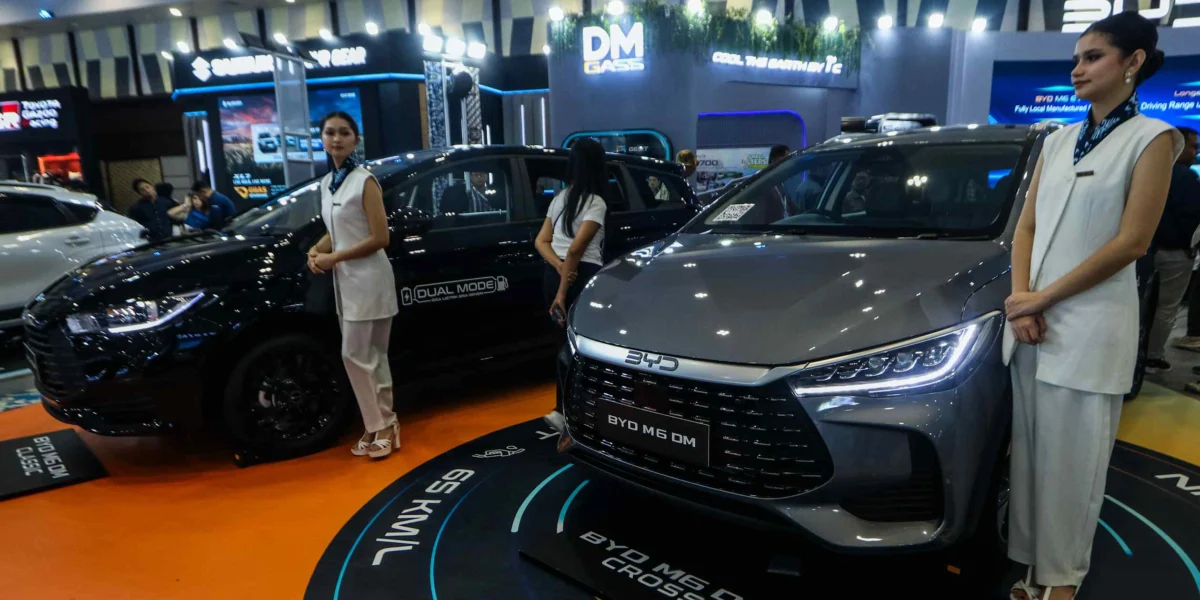
In Indonesia, for instance, the Gaikindo Indonesia International Auto Show (GIIAS) events, including the one held in Semarang on September 30th, have served as crucial platforms for showcasing new EV and HEV models from both established global automakers and increasingly ambitious Chinese manufacturers. The presence of vehicles from brands like BYD, as depicted in accompanying visuals, highlights the growing market penetration of Chinese automotive companies, which have been aggressively expanding their offerings and market share in the region. These manufacturers are not only competing on price but also on technology and features, often introducing models that are specifically tailored to the preferences and purchasing power of Southeast Asian consumers.
Data from the Indonesian Automotive Industry Association (Gaikindo) suggests that the sales of electrified vehicles, encompassing Battery Electric Vehicles (BEVs) and HEVs, more than doubled year-on-year in the third quarter. This growth rate significantly outpaces that of traditional ICE vehicles, indicating a clear consumer pivot. Similar trends are observable in Thailand and Malaysia, which have long been established automotive manufacturing hubs and are actively pursuing electrification strategies. Thailand, in particular, has set ambitious targets for EV production and adoption, supported by government policies designed to attract investment in EV manufacturing and encourage local consumption.
Market Dynamics and Competitive Landscape
The surge in electrified vehicle sales has a direct impact on the competitive dynamics within the Southeast Asian auto market. Chinese brands, such as BYD, SAIC-GM-Wuling (with its popular Wuling Air EV), and Geely, have made significant inroads. Their competitive pricing, coupled with the introduction of models that align with the growing demand for affordable and practical EVs, has allowed them to capture a substantial share of the market. This is a departure from previous decades, where Japanese automakers held an almost unassailable dominance.
While Japanese brands like Toyota, Honda, and Nissan remain major players, they are now facing intensified competition. They are accelerating their own electrification strategies, introducing hybrid models and, in some cases, fully electric options. However, the pace of their transition has been perceived by some market analysts as slower compared to their Chinese counterparts, particularly in offering a wider range of affordable EV options. The success of models like the Wuling Air EV in Indonesia and the Philippines, which offers an accessible entry point into EV ownership, exemplifies the disruptive potential of new entrants.
Beyond the direct sales figures, the underlying trend points to a broader shift in manufacturing and investment. Governments across Southeast Asia are actively courting EV manufacturers and battery producers. Thailand, for example, has offered substantial incentives to attract major EV players, aiming to become a regional hub for electric vehicle production. Indonesia, rich in nickel reserves crucial for battery production, is also positioning itself as a key player in the EV supply chain. This strategic focus by governments is creating a favorable ecosystem for the growth of electrified vehicles, further fueling consumer demand through increased model availability and potentially lower prices due to local production.
Historical Context and Growth Trajectory
The current surge in Q3 sales is a culmination of several years of evolving automotive market trends in Southeast Asia. Prior to the pandemic, the region was already experiencing steady growth in vehicle sales, driven by a growing middle class and increasing urbanization. The COVID-19 pandemic, however, led to significant disruptions, including supply chain bottlenecks, production slowdowns, and a temporary dip in consumer demand.
The automotive recovery post-pandemic has been gradual, with supply chain issues gradually easing throughout 2024 and 2025. However, the real accelerant in recent times has been the rapid development and adoption of electrified vehicles. By 2025, several countries in the region began to see a noticeable uptick in EV registrations, supported by government targets and incentives announced in prior years. For instance, Malaysia’s National Automotive Policy 2020 laid the groundwork for EV adoption, and the subsequent years have seen a steady increase in charging infrastructure and model introductions.
The Q3 2026 figures represent a significant milestone, not just in absolute numbers but in the composition of those sales. The proportion of electrified vehicles within the total sales mix has grown from single digits a few years ago to a double-digit percentage in many of the major markets. This shift is not merely a niche trend but indicates a mainstreaming of electric and hybrid mobility.
Supporting Data and Market Breakdown
While specific breakdowns for Q3 2026 are still being finalized by various national automotive associations, preliminary data provides a clear picture:
- Indonesia: As the largest automotive market in Southeast Asia, Indonesia is a key driver of this growth. The GIIAS events have consistently highlighted the increasing presence and sales of EVs and HEVs. Industry insiders suggest that Q3 sales in Indonesia alone may have approached or exceeded 300,000 units, with electrified vehicles accounting for an unprecedented share, potentially around 15-20% of the total. BYD, for instance, has reported significant order backlogs for its popular models.
- Thailand: Another major automotive hub, Thailand’s Q3 sales are estimated to be around 250,000 units. The government’s proactive policies have led to a surge in EV imports and local assembly, with HEVs and BEVs gaining substantial traction. Chinese brands have a particularly strong foothold, often offering competitive pricing and attractive financing options.
- Malaysia: With a target to significantly increase EV adoption, Malaysia’s Q3 sales are likely to have been in the region of 150,000 units. The introduction of new EV models and the expansion of charging networks are directly contributing to consumer confidence and purchase intent. Government incentives, such as tax exemptions and subsidies, continue to play a crucial role.
- Philippines: The Philippine automotive market, though smaller, has also witnessed a notable increase in electrified vehicle sales. Q3 figures might hover around 80,000 units. The availability of affordable EV options, particularly from Chinese manufacturers, has opened up the market to a wider consumer base.
- Vietnam: Vietnam’s burgeoning automotive sector is also embracing electrification. While still in its earlier stages of adoption compared to some neighbors, Q3 sales could be in the range of 25,000-30,000 units, with a strong upward trend for EVs and HEVs. The local manufacturing efforts by VinFast are also a significant factor in this market’s development.
These figures, while estimates, collectively point to a significant acceleration in the region’s automotive market, with a clear emphasis on electrified powertrains.
Official Responses and Future Outlook
The robust Q3 performance has elicited positive reactions from industry stakeholders and policymakers. Auto manufacturers, while navigating intense competition, are largely optimistic about the future. A spokesperson for a leading Japanese automaker, speaking on condition of anonymity, acknowledged the rapid shift towards electrification and stated that their company is accelerating its product development and localization plans to meet evolving consumer demands in the region.
Government officials in several Southeast Asian nations have reiterated their commitment to supporting the transition to electric mobility. Indonesian officials have emphasized their focus on developing the domestic battery industry and attracting foreign investment in EV manufacturing. Similarly, Thai authorities have highlighted ongoing efforts to expand charging infrastructure and streamline regulations to further encourage EV adoption and local production.
The implications of this sustained growth in electrified vehicle sales are far-reaching. For the automotive industry, it signifies a permanent shift in market preferences and necessitates continued investment in EV technology, battery production, and charging infrastructure. For consumers, it offers more choices, potentially lower running costs, and a contribution to cleaner urban environments. For regional economies, it presents an opportunity to move up the value chain in automotive manufacturing and to benefit from the growing global demand for green technologies.
Looking ahead, the momentum established in Q3 2026 is expected to continue. Analysts predict that the demand for EVs and HEVs will remain strong, driven by ongoing government support, technological advancements, and increasing consumer awareness. While challenges such as charging infrastructure availability and upfront cost remain, the clear trajectory indicates that Southeast Asia is firmly on the path to becoming a significant global market for electrified vehicles. The competitive landscape will likely continue to evolve, with both established players and new entrants vying for market share, ultimately benefiting consumers with a wider array of choices and innovative mobility solutions. The era of ICE dominance in Southeast Asia is clearly waning, making way for a new, electrified automotive future.
