

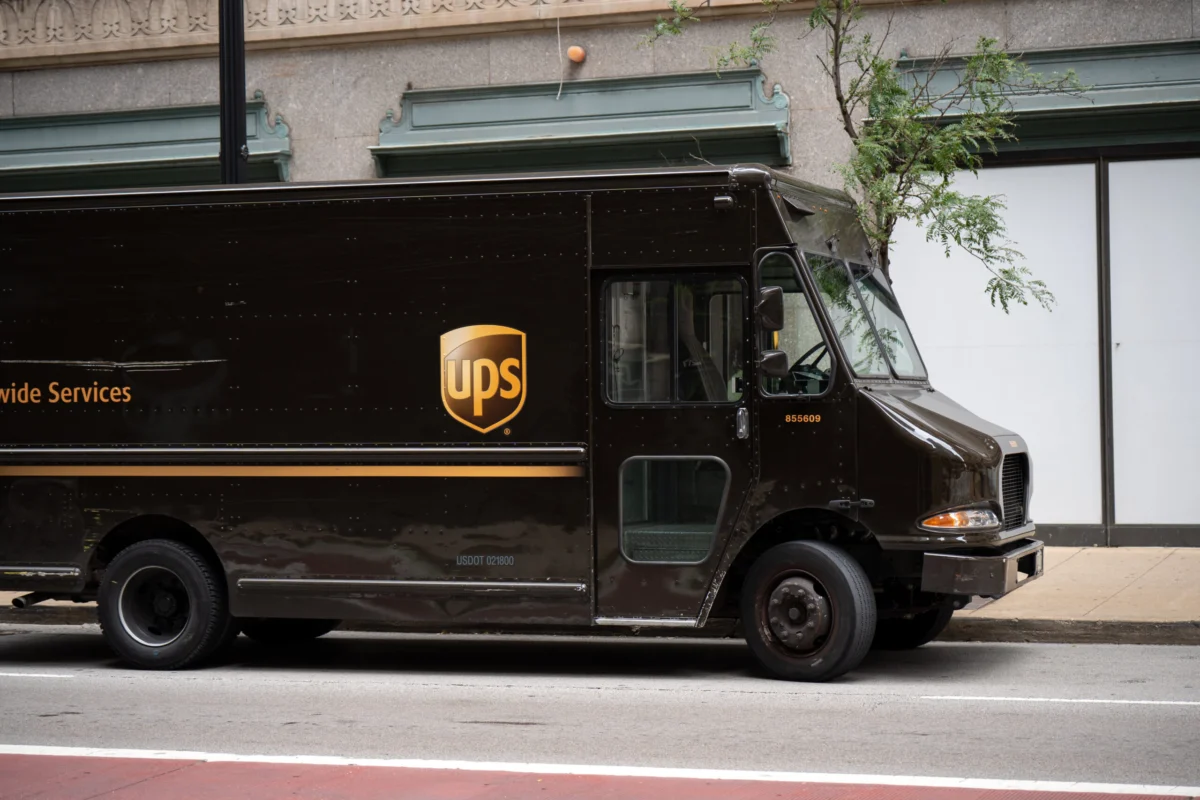
United Parcel Service (UPS) announced impressive third-quarter results on Tuesday, surpassing Wall Street’s expectations and subsequently raising its full-year financial guidance for the second consecutive quarter. The positive financial indicators, coupled with a reaffirmed commitment to strategic transformation, sent shares of the global logistics giant climbing modestly in morning trading, signaling renewed investor confidence in its operational trajectory.
The company’s performance for the quarter ended September 30, 2026, demonstrated a robust acceleration in revenue growth and solid profitability, particularly when adjusted for one-time expenses. UPS reported adjusted earnings per share (EPS) of $1.69, comfortably exceeding the consensus analyst estimate of approximately $1.62, based on a survey by LSEG. Total revenue for the quarter reached $22.9 billion, a notable 6.7% increase from the prior year, also surpassing analysts’ projections of around $22.6 billion. While reported net income saw a slight year-over-year dip to $1.16 billion, or $1.37 per share, compared to $1.31 billion, or $1.55 per share, in the same period last year, the adjusted figures provided a clearer picture of underlying operational strength, neutralizing the impact of specific non-recurring charges.
Strategic Execution Drives Segmental Growth
The comprehensive strength in UPS’s operations was evident across its three primary business segments. The Domestic segment, a critical component of its North American operations, recorded a 4.5% increase in revenue. This growth is particularly significant given the company’s previously stated expectation for domestic revenue to remain flat and average daily volume to decline in the third quarter, largely due to seasonal factors and its deliberate "glide down" in volume from a major customer, Amazon. The outperformance underscores UPS’s success in attracting higher-value packages and diversifying its customer base.
Internationally, the company’s segment delivered an even stronger performance, with revenue rising by an impressive 7.1%. This growth reflects the continued recovery and expansion of global trade lanes, alongside UPS’s strategic investments in international network capabilities and service enhancements. Key markets in Europe and Asia demonstrated particular resilience, contributing significantly to the segment’s positive trajectory.
However, the standout performer was the Supply Chain Solutions business, which posted a remarkable 18.2% surge in revenue. This segment’s robust expansion was primarily fueled by growth in forwarding and logistics services, with healthcare logistics emerging as a pivotal driver. On a call with analysts, UPS CEO Carol Tomé highlighted that healthcare revenue had exceeded $3 billion for the third consecutive quarter, underscoring the success of the company’s targeted investments and specialized service offerings in this high-growth sector. The demand for cold chain solutions, pharmaceutical distribution, and medical device logistics continues to provide a significant tailwind for this segment, positioning UPS as a critical partner in the global healthcare supply chain.
Elevated Outlook Reflects Confidence in Momentum
Following the robust third-quarter performance, UPS demonstrated strong confidence in its future trajectory by raising its full-year guidance for consolidated revenue. The company now projects approximately $92.6 billion in full-year revenue, an upward revision from its previous expectation of $91.2 billion. This marks the second time in 2026 that UPS has elevated its annual outlook, having previously upped its projections after a strong second quarter, indicating a sustained positive momentum throughout the year.
Looking ahead to the critical fourth quarter, which includes the peak holiday shipping season, UPS provided a revenue forecast of $25.7 billion. This projection suggests continued growth and a healthy outlook for the busiest period in the logistics calendar. The company’s ability to raise guidance, despite the ongoing strategic recalibration of its relationship with Amazon, speaks volumes about the underlying strength and diversification of its business model.
The Tomé Turnaround: A Leaner, More Efficient Future
The sustained positive results are a testament to the ambitious turnaround strategy spearheaded by CEO Carol Tomé since her appointment. Tomé’s vision, often encapsulated as "Better, Not Bigger," has focused on optimizing the company’s network, enhancing revenue quality, and leveraging advanced automation technologies to create a leaner, more efficient, and ultimately more profitable business. This strategic pivot has involved a rigorous review of customer profitability, a renewed emphasis on small and medium-sized businesses (SMBs), and a deliberate reduction in reliance on lower-margin, high-volume packages, particularly from very large e-commerce retailers.
During the analyst call, Tomé articulated the core tenets of this strategy: "We’re driving more premium growth, improving revenue quality and mix, and creating greater operating leverage through a more efficient network. All of this is strengthening the underlying performance of our business." This statement encapsulates the company’s shift from a pure volume play to a strategy focused on profitability per package and optimizing its extensive global network. The focus on "premium growth" translates into prioritizing packages that offer higher margins, often involving specialized handling, faster delivery times, or complex logistics solutions.
Automation plays a critical role in this transformation. UPS has been aggressively investing in state-of-the-art sorting facilities, automated package handling systems, and advanced data analytics to streamline operations, reduce labor costs, and improve delivery precision. Tomé revealed that nearly 70% of all packages are expected to flow through an automated process this holiday season, a significant increase that highlights the scale and speed of these technological integrations. These investments are designed not only to enhance efficiency but also to improve service reliability, a crucial competitive differentiator in the demanding logistics sector.
Navigating the Holiday Peak and Amazon’s Evolving Role
As UPS gears up for its crucial peak holiday season, management expressed cautious optimism regarding consumer spending patterns. CEO Tomé noted that the "consumer remains resilient," suggesting that despite broader economic uncertainties, holiday shopping volumes are expected to remain robust. The company anticipates that the growth in average daily volume between the third and fourth quarters will be consistent with last year’s trends, indicating a predictable and manageable surge in activity.
However, the strategic reduction in volume from Amazon continues to influence domestic projections. While the overall holiday season outlook is positive, fourth-quarter domestic average daily volume is still expected to fall due to this deliberate reduction. This "glide down" is a calculated move by UPS to rebalance its customer portfolio, reducing its exposure to a single, powerful client and freeing up network capacity for more profitable, diversified business. This strategy, while potentially impacting headline volume figures, is widely seen by analysts as a long-term positive, allowing UPS greater control over its pricing power and operational flexibility.
Broader Implications and Competitive Landscape
UPS’s strong Q3 performance and optimistic outlook have significant implications for the broader logistics industry and its competitive landscape. In an environment where e-commerce continues its rapid expansion, but also faces increasing cost pressures and consumer expectations for faster, more flexible delivery, UPS’s strategic shift towards premium, diversified services positions it favorably.
The company’s robust growth in healthcare logistics, for instance, highlights a successful diversification strategy beyond traditional parcel delivery. This sector, characterized by complex regulatory requirements, specialized handling needs (like temperature control for pharmaceuticals), and high-value shipments, offers substantially higher margins and less susceptibility to cyclical economic fluctuations compared to general e-commerce parcels. By establishing itself as a leader in this niche, UPS gains a significant competitive advantage over rivals that may not possess the same specialized infrastructure or expertise.
Competitors like FedEx and DHL are also making significant investments in automation and specialized logistics, but UPS’s current trajectory suggests its "Better, Not Bigger" strategy is yielding tangible results. The ongoing focus on operational efficiency through automation, coupled with a disciplined approach to revenue quality, enables UPS to potentially offer superior service at competitive costs, or extract higher value for premium services. This strategy helps mitigate the impact of rising labor costs and fuel prices, common challenges across the logistics sector.
Moreover, the resilience of the consumer, as noted by Tomé, provides a stable backdrop for the industry. However, the macro-economic environment remains dynamic, with inflation, interest rates, and geopolitical tensions continuing to shape global trade and consumer behavior. UPS’s ability to raise guidance amidst these complexities speaks to the strength of its internal operational improvements and its strategic foresight.
A History of Transformation and Future Outlook
The current success is built upon a foundational transformation initiated shortly after Carol Tomé took the helm in 2020. Inheriting a company facing significant challenges related to network inefficiencies and an over-reliance on a few large customers, Tomé embarked on a multi-year journey to modernize the company. This involved substantial capital expenditures in technology and infrastructure, a significant restructuring of its operational footprint, and a cultural shift towards a more customer-centric, data-driven approach. The "Better, Not Bigger" philosophy was not merely a slogan but a strategic blueprint that has guided investment decisions, labor negotiations, and market segmentation efforts.
The Q2 2026 guidance raise, followed by the even stronger Q3 performance and subsequent guidance elevation, marks a pivotal moment in this ongoing transformation. It suggests that the heavy lifting of restructuring and investment is now beginning to consistently translate into improved financial outcomes. For investors, this trajectory offers a compelling narrative of a mature company successfully reinventing itself for sustained growth in a rapidly evolving global economy.
Looking ahead, UPS will continue to focus on expanding its specialized services, particularly in healthcare, further optimizing its automated network, and fostering stronger, more profitable relationships with a diverse range of customers. The company’s disciplined approach to managing its capacity and prioritizing revenue quality is expected to continue paying dividends, positioning UPS for continued leadership in the global logistics and supply chain sector well beyond 2026. The coming holiday season will serve as a crucial test of its operational resilience and strategic execution, but the current indicators point towards a strong finish to the year for the package delivery giant.
