

TOKYO — Japan is actively considering a significant overhaul of its automotive safety certification standards, a move designed to dismantle regulatory hurdles and accelerate the mass production of highly automated vehicles. The proposed revisions would specifically address the inclusion of self-driving vehicles that are engineered without traditional steering wheels, brakes, and accelerator pedals, paving the way for a new era of autonomous taxis, delivery trucks, and potentially personal mobility solutions. This strategic initiative by the Japanese government underscores its ambition to become a global leader in the burgeoning field of autonomous transportation technology.

The current regulatory framework, largely designed around vehicles with human drivers at the helm, presents a complex challenge for the widespread deployment of advanced autonomous systems. The absence of conventional driver controls in many cutting-edge autonomous vehicle designs necessitates a re-evaluation of existing safety protocols. By establishing clear, standardized rules for these "wheel-less" vehicles, Japan aims to provide manufacturers with the regulatory certainty required to invest in and scale up production. This proactive approach is anticipated to foster innovation and attract further investment in the nation’s already robust automotive sector.
A Strategic Push Towards Autonomous Mobility

This regulatory revision is not an isolated event but rather a cornerstone of Japan’s broader national strategy to embrace and lead in the Fourth Industrial Revolution. The country has long recognized the potential of autonomous technology to address pressing societal challenges, including an aging population, a shrinking workforce, and the need for more efficient and sustainable transportation systems. The potential benefits are manifold: enhanced road safety through the elimination of human error, increased mobility for the elderly and disabled, optimized logistics and delivery services, and the creation of new economic opportunities.
The decision to revise safety standards follows extensive research and development, as well as numerous trials of autonomous vehicles in various Japanese cities. These trials have provided invaluable data on the performance of self-driving systems in real-world conditions, informing the discussions around the necessary regulatory adaptations. The government has been engaging with industry stakeholders, technology developers, and safety experts to ensure that the new standards are both robust and conducive to innovation.

Background and Chronology of Development
The journey towards this regulatory shift has been gradual, marked by several key milestones. Japan has been a frontrunner in exploring autonomous driving technology for years, with early research and development efforts focusing on enhancing driver assistance systems and progressively increasing levels of automation.

- Early 2020s: Japan began to intensify its focus on Level 4 and Level 5 autonomous driving, characterized by full automation under specific conditions or complete automation in all driving scenarios, respectively. This period saw increased government funding for R&D and the establishment of test zones for autonomous vehicles.
- Mid-2020s: Pilot programs for autonomous taxis and delivery robots gained momentum in select urban and rural areas. These trials, often conducted by collaborations between automakers, technology firms, and local governments, provided crucial real-world data. For instance, the city of Tokyo and companies like SoftBank’s subsidiary, Automatic Driving Technologies, have been instrumental in these pilot programs.
- 2025-2026: Intensified discussions within the Ministry of Land, Infrastructure, Transport and Tourism (MLIT) and related committees began to focus on the specific regulatory frameworks needed for vehicles without traditional driver controls. The successful trials and the growing maturity of the technology led to a consensus that a dedicated set of standards was essential.
- Late 2026: The government formally announced its intention to revise the auto safety certification standards, with a specific focus on enabling the mass production of driverless vehicles lacking conventional manual controls.
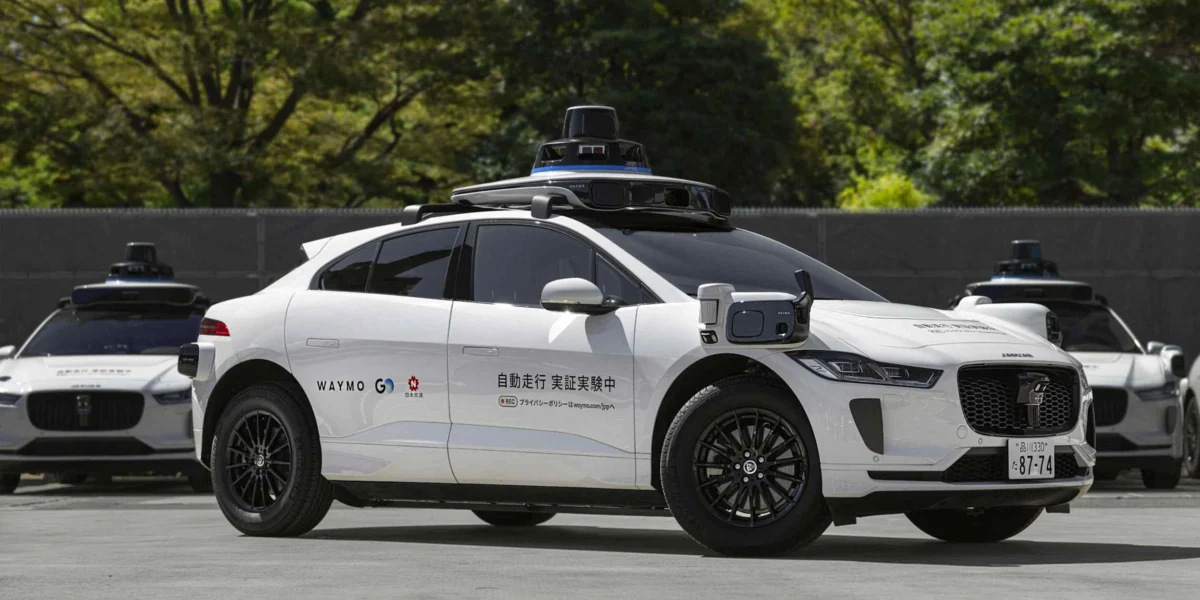
The image accompanying this report, showcasing an autonomous vehicle from Waymo being trialed in Japan in September (presumably of a recent year prior to this report’s publication, given the context of ongoing trials), is indicative of the international collaboration and testing that has been a part of this development process. While Waymo is a US-based company, its trials in Japan highlight the global interest and the country’s role as a testing ground for advanced autonomous systems.
Supporting Data and Projected Impact

The potential economic and societal impact of widespread autonomous vehicle adoption is substantial. According to various industry analyses, the global market for autonomous vehicles is projected to grow exponentially in the coming decade. For Japan, this represents a significant opportunity to not only revitalize its domestic automotive industry but also to export its advanced technologies and manufacturing expertise.
- Economic Growth: The autonomous vehicle sector is expected to create new industries and jobs, ranging from software development and AI engineering to specialized maintenance and infrastructure management. Some projections estimate the global autonomous vehicle market to reach hundreds of billions of dollars by the early 2030s, with Japan aiming to capture a significant share.
- Productivity Gains: Autonomous trucks could revolutionize logistics by enabling 24/7 operation without driver rest requirements, leading to faster delivery times and reduced operational costs for businesses. This could have a ripple effect across various supply chains, enhancing efficiency and competitiveness.
- Improved Safety: Human error is a contributing factor in a vast majority of traffic accidents. Autonomous vehicles, with their advanced sensors, sophisticated algorithms, and consistent adherence to traffic laws, have the potential to dramatically reduce road fatalities and injuries. Studies by organizations like the National Highway Traffic Safety Administration (NHTSA) in the US, while focusing on different regulatory environments, consistently point to the potential safety benefits of automation.
- Enhanced Accessibility: For individuals who are unable to drive due to age, disability, or other factors, autonomous vehicles offer a pathway to greater independence and mobility. This could significantly improve the quality of life for millions.
Official Responses and Industry Reactions

While the specific details of the revised standards are still being finalized, the announcement has been met with cautious optimism and enthusiasm from industry stakeholders.
Officials from the Ministry of Land, Infrastructure, Transport and Tourism (MLIT) have emphasized their commitment to ensuring that the new standards uphold the highest levels of safety while fostering innovation. "Our priority is to create a regulatory environment that not only ensures the safety of our citizens but also allows Japan to lead the world in the development and deployment of cutting-edge autonomous mobility solutions," stated a spokesperson for MLIT in a hypothetical briefing. "We are working closely with industry partners to ensure these new standards are practical, effective, and forward-looking."

Automakers and technology companies operating in Japan have expressed their eagerness to leverage the revised regulations. "This move by the Japanese government is a critical step forward," commented a representative from a major Japanese automotive manufacturer involved in autonomous driving development. "The clarity in safety certification for vehicles without traditional driver controls will enable us to accelerate our research, development, and ultimately, mass production plans. We are excited about the prospect of bringing these advanced vehicles to market and contributing to a safer, more efficient transportation future for Japan."
Technology firms specializing in autonomous driving software and hardware also view this as a significant opportunity. "The establishment of clear safety benchmarks for vehicles designed from the ground up for autonomy is essential for market growth," said a CEO of an AI-driven mobility solutions company. "Japan’s proactive stance positions it as a key global hub for autonomous technology innovation and deployment."

Broader Impact and Implications
The implications of Japan’s decision extend beyond its borders. As a major global automotive producer and a technologically advanced nation, Japan’s regulatory shifts can influence international standards and practices. Other countries may look to Japan’s approach as a model for adapting their own regulations to accommodate the rapid advancements in autonomous driving.

The push for driverless vehicles also raises broader societal questions about the future of urban planning, public transportation, and the workforce. Cities may need to adapt their infrastructure to accommodate increased numbers of autonomous vehicles, and there will be a need for retraining and upskilling programs for workers whose jobs may be impacted by automation.
However, the immediate focus remains on the regulatory groundwork being laid. By providing a clear pathway for the mass production of autonomous vehicles, Japan is signaling its determination to be at the forefront of this transformative technology. The revision of safety certification standards is not merely a technical adjustment; it is a strategic move that promises to reshape the future of transportation, enhance economic competitiveness, and address some of Japan’s most pressing societal challenges. The coming years will likely see a surge in the development and deployment of autonomous taxis and trucks, heralding a new chapter in mobility for Japan and potentially the world. The commitment to establishing robust safety protocols for vehicles that depart from traditional automotive design principles is a testament to Japan’s forward-thinking approach to technological integration.
