

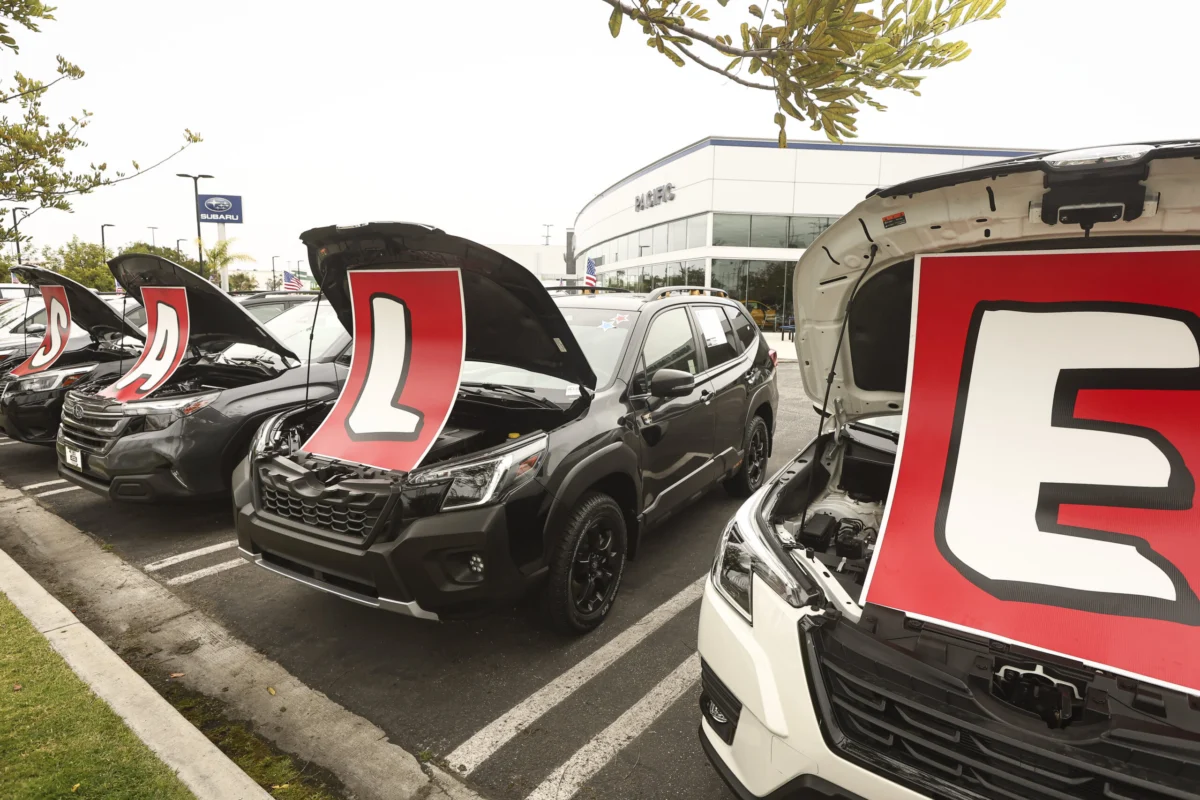
A significant shift is underway in the automotive market, where the rapid sale of the least expensive vehicles stands in stark contrast to broader declines in affordable segments, signaling a deepening affordability crisis for consumers. As inflation continues to squeeze household budgets and fuel prices remain elevated, buyers are increasingly gravitating towards lower-priced cars, even as the supply of such vehicles dwindles and the overall average transaction price for new cars hovers near record highs. This paradoxical trend highlights a fundamental misalignment between consumer demand for economical transportation and an industry increasingly focused on higher-margin models.
The Paradox of Automotive Demand: Fast Sales Amidst Shrinking Supply
Recent market data paints a complex picture. Consumers, grappling with persistent concerns over rising fuel costs and overall affordability, are exhibiting a clear preference for more budget-friendly vehicles. This sentiment is directly reflected in how quickly these cars disappear from dealer lots. According to analysis by Edmunds, the number of days a dealer held a vehicle priced between $20,000 and $29,999 before sale plummeted by an impressive 20% from the first quarter to the third quarter of the current year. This accelerated selling pace represents the most significant shift observed across all price segments, underscoring an urgent demand for value.
The trend of quicker sales extends to slightly higher, but still relatively affordable, price points as well. Vehicles in the $30,000 to $39,999 bracket sold approximately 18% faster over the same period, while those priced from $40,000 to $49,999 saw their selling time decrease by nearly 12%. Crucially, all these lower-priced segments consistently moved off lots in under 60 days, with the most inexpensive models leading the charge. In contrast, every vehicle segment priced above $50,000 required more than 60 days to sell, indicating a clear bifurcation in market velocity.
Ivan Drury, Director of Insights at Edmunds, commented on the situation, stating, "If you’re a dealer and you have inventory at that price point, you’re definitely noticing." This observation underscores the immediate impact on dealerships, who are experiencing rapid turnover for their most affordable stock, even as higher-priced models linger.
Despite the rapid sales, the supply of these cheaper vehicles remains critically low. The average listing price for a new vehicle in September stood at a formidable $49,726, according to Cox Automotive data, far exceeding the price points where sales velocity is highest. This disparity highlights a significant challenge for consumers seeking truly affordable new cars.
Adding another layer to this market paradox, overall sales volumes for some key segments priced under $40,000 have actually declined. Specifically, compact cars have seen a roughly 4% drop in sales since the beginning of 2026, while compact SUVs, a traditionally popular segment, are down nearly 8% over the same timeframe, as reported by Cox Automotive. This simultaneous occurrence of faster selling times for individual units and a decrease in overall segment sales volume indicates a severe supply constraint rather than a waning of demand. Consumers are buying what little is available in the affordable range, but there simply isn’t enough inventory to meet the broader market’s needs.
The Vanishing Act: Supply-Side Challenges and Automaker Strategies
Industry analysts point to several interconnected factors contributing to this complex market dynamic. A primary driver is the fundamental scarcity of lower-priced vehicles available on dealer lots. Mark Strand, Deputy Chief Economist at Cox Automotive, noted, "I think there are some supply things going on at that end of the market. We have to kind of grade the market on a curve until we see what’s going on with fourth-quarter data." This suggests that the current sales figures for affordable segments are not necessarily indicative of declining interest, but rather a reflection of limited options.
The compact SUV segment, a cornerstone for many American families and a gateway for first-time buyers, has been particularly hard hit by inventory shortages of key models. The Toyota RAV4, consistently America’s best-selling SUV, has experienced significant supply constraints this year. Toyota’s strategic shift in production to its Kentucky factory, coupled with a transition of its entire RAV4 lineup to hybrid powertrains, has impacted availability. While the move towards hybrids aligns with burgeoning consumer demand for fuel-efficient options, the production realignment has created temporary bottlenecks. Similarly, the Ford Escape, another popular compact SUV, has been discontinued by Ford to pave the way for upcoming electric vehicle (EV) pickup trucks, further reducing affordable choices in a crucial segment.
Beyond specific model shortages, a more structural issue underpins the scarcity of affordable compact cars. Sam Fiorani, Vice President of Global Forecasting at AutoForecast Solutions, articulated this long-term trend, stating, "We’ve seen the disappearance of affordable, compact new vehicles over the last decade." This phenomenon is largely a consequence of strategic decisions made by major automakers, particularly the Detroit-based manufacturers. Over the past ten years, American carmakers have systematically pared down their lineups of compact coupes and sedans, opting instead to focus on small crossover SUVs. While these crossovers offer increased versatility and command slightly higher sticker prices than comparably sized passenger cars, they have effectively pushed entry-level pricing upwards.
Today, a striking reality is that not a single compact passenger sedan is currently offered for sale by an American manufacturer. The market for these vehicles is predominantly served by Japanese and Korean brands, with a smattering of European models like the Volkswagen Jetta and Golf hatchback. Fiorani observed, "You have all these brands that have just abandoned the marketplace," highlighting a significant void left by domestic manufacturers.
The smallest American passenger cars available in the new market are now the Ford Mustang (starting at $33,490), General Motors’ Chevrolet Corvette (starting at $71,300), and the midsize Tesla Model 3 sedan (starting at $34,990). AutoForecast Solutions classifies both the Mustang and Corvette as sports cars, placing them in a distinct niche from the mass-market compact sedans like the Honda Civic, Toyota Corolla, and Volkswagen Jetta, all of which typically start below $25,000. This stark contrast in entry-level pricing further illustrates the diminishing availability of truly affordable new vehicles from American brands.
The Financial Strain on Consumers: Stretching to Afford a Car
The current economic climate, characterized by persistent inflation and rising interest rates, has placed immense financial pressure on consumers, especially those in the market for entry-level vehicles. "Compact vehicle buyers are very price-sensitive," explained Fiorani. "And so when the price of gas goes up, that eats into their car payment. That means that they can’t afford a $500 or $600 a month car payment, and they have to move into the used market." This sensitivity means that even modest increases in the total cost of ownership can push potential buyers out of the new car market entirely.
Reflecting this struggle, auto finance data reveals a disturbing trend: a historically high number of buyers are resorting to extreme measures to afford new vehicles. Approximately one in four buyers financing their purchases are now opting for 84-month loans, an unprecedented term length. This represents a significant increase from just a few years ago when 60- or 72-month terms were more common. While longer loan terms reduce monthly payments, they dramatically increase the total interest paid over the life of the loan and expose buyers to longer periods of depreciation risk.
Furthermore, nearly three in ten trade-ins towards new-vehicle purchases in the third quarter carried negative equity. This means the value of the vehicle being traded in was less than the outstanding balance of the loan on it. In many cases, shoppers are rolling these negative balances into their new car loans, effectively increasing the principal of the new loan and pushing up their monthly payment costs even further. This practice creates a compounding financial burden, trapping consumers in a cycle of debt.
Automakers, for their part, have also been more tightly aligning production with demand, a strategy refined during the post-pandemic supply chain disruptions. This approach aims to avoid the need for heavy discounting, thereby protecting profit margins. Consequently, incentives on average stood at about 6.6% of the average transaction price as of October, according to Cox Automotive. While this represents some level of incentive, it is significantly lower than pre-pandemic levels, where incentives often reached double-digit percentages of the transaction price, offering more relief to buyers. Leasing, traditionally a way for consumers to secure lower monthly payments, has also seen a decline in popularity, possibly due to higher residual values and interest rates impacting lease costs.
The Used Car Market’s Unintended Boom
The scarcity and rising cost of new entry-level vehicles have created a ripple effect, driving a significant portion of price-sensitive buyers into the used car market. This increased demand has, in turn, fueled price appreciation in the wholesale used car segment, particularly for compact models. Cox Automotive data indicates that wholesale used prices for compact cars have risen more than almost any other segment. Wholesale prices, which reflect transactions at large auctions like Cox Automotive’s Manheim, serve as a leading indicator for pricing trends in the broader, fragmented used car market. The upward pressure on used car prices means that even the alternative of a pre-owned vehicle is becoming less affordable for many.
First-Time Buyers and the Entry-Level Dilemma
The demographic most severely impacted by the disappearance of affordable new vehicles and the rising costs in the used market are first-time buyers and those seeking supplemental vehicles. Edmunds’ Drury suggests that many buyers snapping up the fast-selling, cheaper new vehicles are either first-time purchasers or those adding an extra car to their household.
The subcompact SUV segment is one of the few lower-priced groups that has seen sales rise in 2026. This segment often attracts a significant number of first-time buyers due to its relatively accessible price point and practical utility. However, as Fiorani points out, this segment still constitutes a relatively small share of the total car market. "It’s not the mainstream vehicle that Americans want," he stated. "It is the vehicle that entry-level buyers need to get to work, to get to school. … It’s people who don’t have families yet."
For repeat buyers, the prospect of stepping down into a compact car or SUV from a larger, more feature-rich vehicle is often unappealing. Drury elaborated on this sentiment: "The moment you get into that other vehicle and it’s a little bit smaller, it’s not as comfortable, it doesn’t fit all your stuff, all your kid’s equipment for soccer practice, you’re done. You’re not giving up 360 cameras, ventilated seats, heated steering wheels, these niceties that you’ve become accustomed to. Automakers know that too. Dealers know that." This highlights a dilemma for the industry: while there’s clear demand for affordability, there’s also an expectation of comfort and features that often come at a higher price point.
Looking Ahead: Market Adjustments and Future Outlook
The current automotive landscape presents a significant challenge for consumers and potentially a reckoning for automakers. The truly cash-strapped are left with limited options: either quickly acquire one of the scarce, low-priced new cars, navigate an increasingly expensive used car market, or simply hold onto their existing vehicles for longer periods. This last option, while economically sensible for individuals, could lead to an aging vehicle fleet and potentially slower new car sales in the long run.
Fiorani warned, "The people who are trying to buy the smaller vehicles are really hurt by the way the economy is at the moment. So those people are trying to move into used vehicles or trying to maintain their current vehicle as long as they can. Automakers should be prepared for a softening in the marketplace." This potential softening, however, may not be uniform across all segments. While demand for high-margin, feature-rich vehicles may remain robust among affluent buyers, the erosion of the entry-level market could lead to broader sales stagnation if a significant portion of the consumer base is priced out.
The long-term implications of this market shift are profound. It raises questions about social mobility, access to reliable transportation for lower-income households, and the overall health of the automotive ecosystem. While automakers have enjoyed strong profitability by focusing on premium segments, the increasing exclusion of a large segment of buyers could create future market instability. As economic pressures persist and consumer sentiment remains cautious, the automotive industry will need to carefully navigate the delicate balance between profitability and the fundamental need for affordable transportation. The coming quarters, particularly with the release of fourth-quarter data, will be crucial in determining whether these trends represent a temporary adjustment or a more permanent reshaping of the global automotive market.
