

The utility industry is currently navigating a period of rapid transformation that many experts characterize as a technological revolution rather than a mere evolution. At the heart of this shift is the deployment of sophisticated technologies—ranging from smart sensors to Advanced Metering Infrastructure (AMI) 2.0—designed to manage an increasingly complex and decentralized energy landscape. As the sector faces unprecedented demand driven by the electrification of transportation and heating, the challenge for major providers has shifted from proving that hardware works to scaling these solutions across vast, diverse ecosystems.
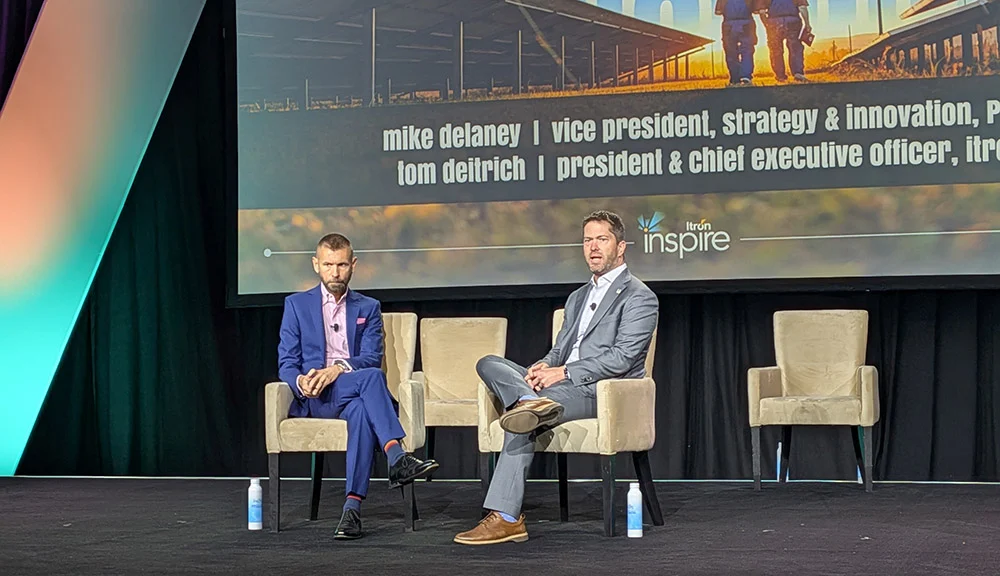
During the Itron Inspire 2026 conference, Mike Delaney, Vice President of Strategy and Innovation at Pacific Gas & Electric (PG&E), articulated a vision for the future of the grid that prioritizes customer affordability and operational agility. In a series of keynote discussions and follow-up interviews, Delaney outlined how California’s largest utility is leveraging data and collaborative partnerships to move beyond traditional "pilot purgatory" and into a phase of massive, value-driven deployment.
The Strategic Imperative of Customer Affordability
For PG&E, the drive for innovation is inextricably linked to the economic realities facing California residents. California’s electricity rates are among the highest in the United States, driven by a combination of wildfire mitigation costs, aggressive renewable energy mandates, and the aging infrastructure of a service territory that spans 70,000 square miles. Delaney emphasized that while the industry often gets bogged down in policy debates or historical post-mortems regarding rate hikes, the current focus must be on using technology to exert downward pressure on system costs.
The objective is no longer just to achieve "flat rates" but to actively lower them. To do this, PG&E is identifying specific "pain points" in the customer journey toward electrification. One of the most significant barriers to the adoption of electric vehicles (EVs) and heat pumps is the requirement for home electrical panel upgrades. A standard residential panel upgrade can cost a homeowner anywhere from $2,000 to $5,000 and involve months of coordination with electricians and utility crews.
To address this, PG&E has introduced programs such as PanelBoost and ChargeBoost. These initiatives utilize smart technology—often embedded within or adjacent to the utility meter—to manage local loads effectively, allowing customers to add high-demand appliances without the need for physical infrastructure upgrades. By avoiding these "behind-the-meter" costs and the associated utility-side transformer upgrades, which can cost tens of thousands of dollars per unit, the utility can significantly reduce the total cost of the energy transition for the ratepayer base.
A Chronology of Innovation: From Smart Meters to Edge Computing
The path to the current state of grid intelligence has been marked by several key milestones over the last two decades. The first wave of AMI (Advanced Metering Infrastructure), deployed in the early 2010s, focused primarily on automated billing and basic outage detection. However, the 2026 landscape, as discussed at Itron Inspire, represents a fundamental shift toward "AMI 2.0."
- 2010–2018: The Digital Foundation. Utilities focused on replacing analog meters with digital versions, reducing the need for manual meter reading and providing basic data on consumption patterns.
- 2019–2023: The Data Explosion. The rise of Distributed Energy Resources (DERs), including residential solar and home batteries, necessitated a more granular understanding of grid edge dynamics. This period saw the initial testing of smart sensors and advanced distribution management systems (ADMS).
- 2024–2026: The Scaling Revolution. As seen in the PG&E and Itron partnership, the focus has shifted to edge computing. The meter is no longer a passive recording device but a platform capable of running applications that manage load in real-time, detect safety hazards, and provide high-fidelity visibility into the low-voltage network.
This timeline highlights a move toward what Delaney calls "the meter as a technology platform." By treating the meter as an edge computer, PG&E can gain awareness of the system that was previously impossible without sending crews into the field. For example, sensor technology can now identify the size and health of service lines remotely, stripping out direct operational costs that would otherwise be passed on to customers.
The Four-Phase Adoption Framework: Ideate to Scale
A recurring theme at Itron Inspire 2026 was the inefficiency of traditional utility pilot programs. Delaney noted that many utilities are "piloted to death," spending years on technical demonstrations that prove a device works but fail to demonstrate how it creates scalable value. To combat this, PG&E has implemented a rigorous four-phase technology adoption process:
Phase 1: Ideate
In this stage, the utility scans the market for potential solutions. While the funnel is wide, the filtering process is increasingly stringent. Delaney expressed a desire for a "pass rate" of only 1% to 2%, ensuring that only the most high-impact ideas move forward. The focus here is on identifying technologies that solve a specific customer problem rather than adopting technology for technology’s sake.
Phase 2: Incubate
Incubation is about "fast failure." Working with partners like Itron, PG&E conducts rapid experiments to determine technical viability and, more importantly, value proposition. The goal is to answer the toughest questions first. If a technology cannot demonstrate a clear path to lowering rates or improving safety, it is discarded before significant capital is committed.
Phase 3: Accelerate
Once a solution passes incubation, it enters the acceleration phase. This involves small-scale deployments designed to build confidence among internal teams. This phase is as much about cultural change as it is about technical integration. By running small experiments, the utility can refine its operational workflows and "win the hearts and minds" of the employees who will be responsible for the long-term management of the technology.
Phase 4: Scale
The final phase is the rollout across the entire ecosystem. At this point, the technology is integrated into the utility’s standard operating procedure. Success at scale is defined by quantifiable impacts on grid reliability and customer affordability.
The Role of Collaborative Partnerships
The relationship between PG&E and technology providers like Itron has evolved from a traditional vendor-client dynamic into a strategic alliance. Tom Deitrich, President and CEO of Itron, has echoed Delaney’s sentiments regarding the need for open, honest communication. In a sector where mistakes can have catastrophic safety or financial consequences, the ability to have "tough conversations" about what is and isn’t working is critical.
Industry analysts suggest that this collaborative model is essential for the broader US energy sector. As utilities across the country grapple with the same challenges of aging infrastructure and rising demand, the PG&E-Itron model provides a blueprint for how to integrate third-party innovation into regulated environments. The partnership allows the utility to leverage the R&D capabilities of a global tech firm while ensuring that the resulting products are tailored to the specific regulatory and geographic needs of the California grid.
Broader Implications and Grid Awareness
The shift toward high-fidelity grid awareness has implications that extend far beyond billing. With millions of data points generated by smart sensors and AMI 2.0 meters, utilities are moving toward a "self-healing" grid. This level of awareness allows for:
- Predictive Maintenance: Identifying failing transformers or vegetation interference before an outage occurs.
- Dynamic Load Management: Balancing the influx of renewable energy from residential solar with the high demand of evening EV charging.
- Enhanced Safety: Detecting "broken neutrals" or other hazardous electrical conditions at the individual household level, potentially preventing fires or equipment damage.
Delaney’s focus on the meter as the central node of this awareness represents a strategic bet on the power of the grid edge. If the meter can provide a real-time map of what is possible on any given circuit, the utility can move from a reactive posture to a proactive one.
Conclusion: A Culture of Continuous Innovation
The insights shared at Itron Inspire 2026 underscore a fundamental truth about the modern utility: technology alone is not a silver bullet. The true value of innovation is realized only when it is accompanied by a shift in organizational culture and a relentless focus on the customer.
PG&E’s approach suggests that the utilities of the future will function more like technology companies—data-driven, agile, and partnership-oriented. As the industry moves toward the goal of a fully electrified, carbon-neutral economy, the ability to scale innovations like PanelBoost and edge-computing meters will be the deciding factor in whether the energy transition is affordable for all.
By moving through the phases of ideation and incubation with speed and discipline, PG&E is attempting to build a grid that is not only more capable but also more resilient and equitable. The "operational revolution" Delaney described is currently underway, and its success will be measured by the stability of the grid and the size of the monthly bill for millions of Californians.
