

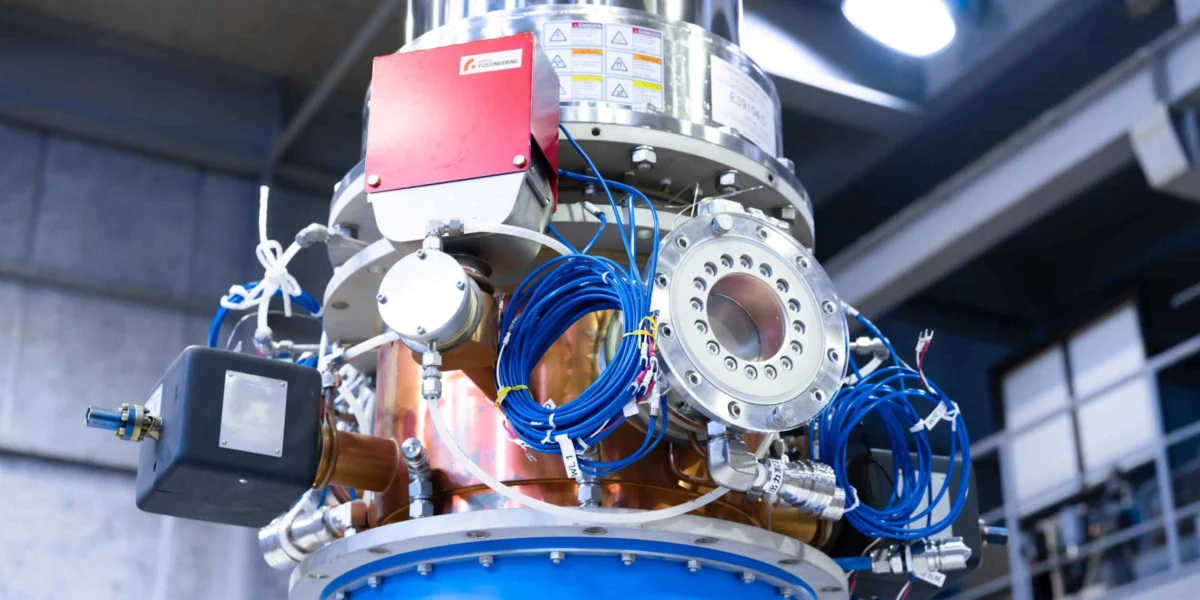
The pursuit of a clean, virtually limitless energy source has taken a significant leap forward as Japanese and German entities forge a strategic partnership to accelerate the development of commercial nuclear fusion power. Kyoto Fusioneering, a prominent Japanese firm at the forefront of fusion technology, announced its collaboration with German industrial and research partners with the ambitious goal of establishing a functioning fusion power plant in Germany within the next ten years. This alliance marks a critical juncture in the global race to harness the power of the stars on Earth, promising a paradigm shift in energy generation and a potent weapon against climate change.

The Fusion Frontier: A New Era of Energy Partnership
The collaboration, spearheaded by Kyoto Fusioneering, aims to leverage the distinct strengths and expertise of both Japanese and German stakeholders. While specific details of the German partners remain under wraps, the announcement signifies a coordinated effort to overcome the formidable technical and economic hurdles that have long plagued fusion energy research. The overarching objective is not merely to advance scientific understanding but to translate these advancements into tangible, deployable power generation solutions. The timeline, targeting a commercial plant within a decade, underscores a palpable sense of urgency and a newfound confidence in the trajectory of fusion technology.
Nuclear fusion, the process that powers the sun and stars, involves forcing light atomic nuclei together to form heavier ones, releasing immense amounts of energy in the process. Unlike nuclear fission, which powers current nuclear reactors and produces long-lived radioactive waste, fusion’s primary byproducts are helium and neutrons, with significantly less problematic waste profiles. Furthermore, the fuel for fusion, isotopes of hydrogen like deuterium and tritium, are abundant, with deuterium extractable from seawater and tritium potentially producible within the reactor itself. This inherent sustainability and cleaner profile have made fusion an enduring holy grail for energy researchers worldwide.

Kyoto Fusioneering: Pioneering the Path to Commercial Fusion
Kyoto Fusioneering has established itself as a key player in the fusion ecosystem, focusing on developing critical components and systems essential for the practical realization of fusion power. Their expertise spans areas such as advanced high-temperature superconducting magnets, which are crucial for confining the superheated plasma within a reactor, and sophisticated diagnostic tools necessary for monitoring and controlling the fusion process. The company’s commitment to innovation is evident in its development of technologies that aim to enhance the efficiency, reliability, and cost-effectiveness of fusion reactors.
The company’s involvement in this German-led initiative suggests a strategic alignment of technological roadmaps and a shared vision for commercialization. The ambition to build a commercial plant in Germany by the early 2030s implies that the partners believe they are on the cusp of solving some of the most persistent engineering challenges. This includes achieving sustained plasma confinement at temperatures exceeding 100 million degrees Celsius, developing materials that can withstand the intense neutron bombardment within a reactor, and engineering systems that can efficiently extract and convert the generated heat into electricity.

The German Landscape: A Fertile Ground for Fusion Innovation
Germany, with its strong industrial base, advanced research institutions, and a national commitment to decarbonization, presents an ideal environment for such a pioneering project. The country has a history of supporting cutting-edge energy research and development, and the move towards fusion power aligns with its long-term energy strategy, which seeks to transition away from fossil fuels and eventually phase out nuclear fission. The involvement of German industrial partners will likely bring invaluable engineering prowess, manufacturing capabilities, and regulatory understanding, crucial for scaling up fusion technology from laboratory experiments to commercial deployment.
Several German research institutions, including Max Planck Institutes and universities, have been actively involved in fusion research for decades, contributing to international projects like ITER (International Thermonuclear Experimental Reactor) in France. This existing expertise and infrastructure provide a solid foundation for the new partnership. The potential for a commercial fusion plant in Germany could not only secure a significant portion of the nation’s future energy needs but also establish Germany as a global leader in this transformative energy sector, fostering economic growth and creating high-skilled jobs.

A Chronology of Ambition: Key Milestones and Challenges
The journey towards commercial fusion power is a long and complex one, marked by decades of scientific inquiry and technological evolution. The concept of controlled thermonuclear fusion gained significant traction in the mid-20th century, leading to the development of various experimental reactor designs, including tokamaks and stellarators.
- Early Decades (1950s-1970s): Initial theoretical breakthroughs and the establishment of fundamental plasma physics principles. Early experimental devices demonstrated the feasibility of achieving fusion conditions, albeit for very short durations.
- The Rise of Large-Scale Projects (1980s-2000s): The construction and operation of larger, more sophisticated tokamaks like JET (Joint European Torus) in the UK and TFTR (Tokamak Fusion Test Reactor) in the US. These experiments achieved significant milestones in plasma performance and energy gain.
- The ITER Era (2000s-Present): The initiation and ongoing construction of ITER, a multinational mega-project designed to demonstrate the scientific and technological feasibility of fusion power on a large scale. ITER’s construction in France represents a global commitment to fusion energy.
- Emergence of Private Sector and Advanced Technologies (2010s-Present): A surge in private investment and the development of innovative technologies, including high-temperature superconductors, advanced materials, and alternative reactor designs, by companies like Kyoto Fusioneering. This has led to accelerated progress and a renewed optimism for commercialization.
- The Current Partnership (2026 onwards): The announcement of the Japanese-German collaboration signifies a new phase, focusing on the engineering and deployment of commercial-scale fusion power plants. The target of a decade for a functioning plant suggests that critical scientific challenges are nearing resolution, and the focus is shifting towards industrialization and economic viability.
The path ahead, however, is not without its challenges. Key hurdles include:

- Plasma Confinement and Stability: Maintaining a stable plasma at extreme temperatures for extended periods remains a paramount scientific and engineering challenge.
- Materials Science: Developing materials that can withstand the harsh environment of a fusion reactor, particularly the intense neutron flux, is crucial for long-term operation and economic feasibility.
- Tritium Breeding and Handling: Efficiently breeding and safely handling tritium, one of the fusion fuels, requires advanced engineering solutions.
- Economic Viability: Reducing the cost of building and operating fusion power plants to be competitive with other energy sources is essential for widespread adoption.
- Regulatory Frameworks: Establishing clear and robust regulatory frameworks for fusion power plants will be necessary as the technology moves towards commercial deployment.
Supporting Data and Technological Advancements
The progress in fusion energy research is often measured by key performance indicators such as the "fusion triple product" (density × temperature × confinement time), which needs to reach specific thresholds for sustained energy gain. While precise figures for the Kyoto Fusioneering and its German partners’ projected performance are proprietary, the ambition of a commercial plant implies that they are aiming to surpass or achieve near-term breakeven (producing as much energy as is put in) and net energy gain.
Crucial technological advancements underpinning this partnership include:

- High-Temperature Superconductors (HTS): Kyoto Fusioneering’s expertise in HTS magnets is particularly significant. HTS materials allow for stronger magnetic fields to be generated with less cooling, potentially reducing the size and cost of fusion reactors and enabling more compact designs. This contrasts with traditional low-temperature superconductors that require extremely low operating temperatures, adding complexity and cost.
- Advanced Materials: Research into new alloys and composites capable of withstanding the high temperatures and neutron bombardment within a reactor is critical. These materials are essential for the structural integrity and longevity of fusion power plant components.
- Plasma Diagnostics and Control Systems: Sophisticated sensors and real-time control systems are vital for monitoring plasma behavior, detecting instabilities, and making necessary adjustments to maintain optimal fusion conditions.
- Tritium Breeding Blankets: The development of efficient tritium breeding blankets, which use neutrons to convert lithium into tritium, is a key area of research for achieving a self-sustaining fuel cycle.
Reactions and Implications: A Global Perspective
While specific official statements from the involved German partners are pending, the announcement is expected to generate significant interest and positive reactions from governmental bodies, research institutions, and the broader energy industry. Officials in both Japan and Germany are likely to view this collaboration as a testament to their nations’ commitment to innovation and sustainable energy solutions.
The implications of a successful commercial fusion power plant are profound:

- Climate Change Mitigation: Fusion power offers a carbon-free energy source with the potential to significantly reduce greenhouse gas emissions, playing a crucial role in global efforts to combat climate change.
- Energy Security: By providing a reliable and virtually inexhaustible energy supply, fusion can enhance energy independence and security for nations, reducing reliance on volatile fossil fuel markets.
- Economic Growth: The development and deployment of fusion technology are expected to spur economic growth through job creation, technological innovation, and the establishment of new industries.
- Global Energy Landscape Transformation: The advent of commercial fusion power could fundamentally reshape the global energy landscape, offering a clean, safe, and abundant alternative to existing energy sources.
This partnership between Japan and Germany represents a bold step towards realizing the long-held dream of fusion energy. By pooling their resources, expertise, and ambitions, these nations are not just pursuing a technological marvel but are actively charting a course towards a sustainable, low-carbon energy future for generations to come. The coming decade will undoubtedly be a period of intense innovation and critical developments as this ambitious vision inches closer to reality.
