

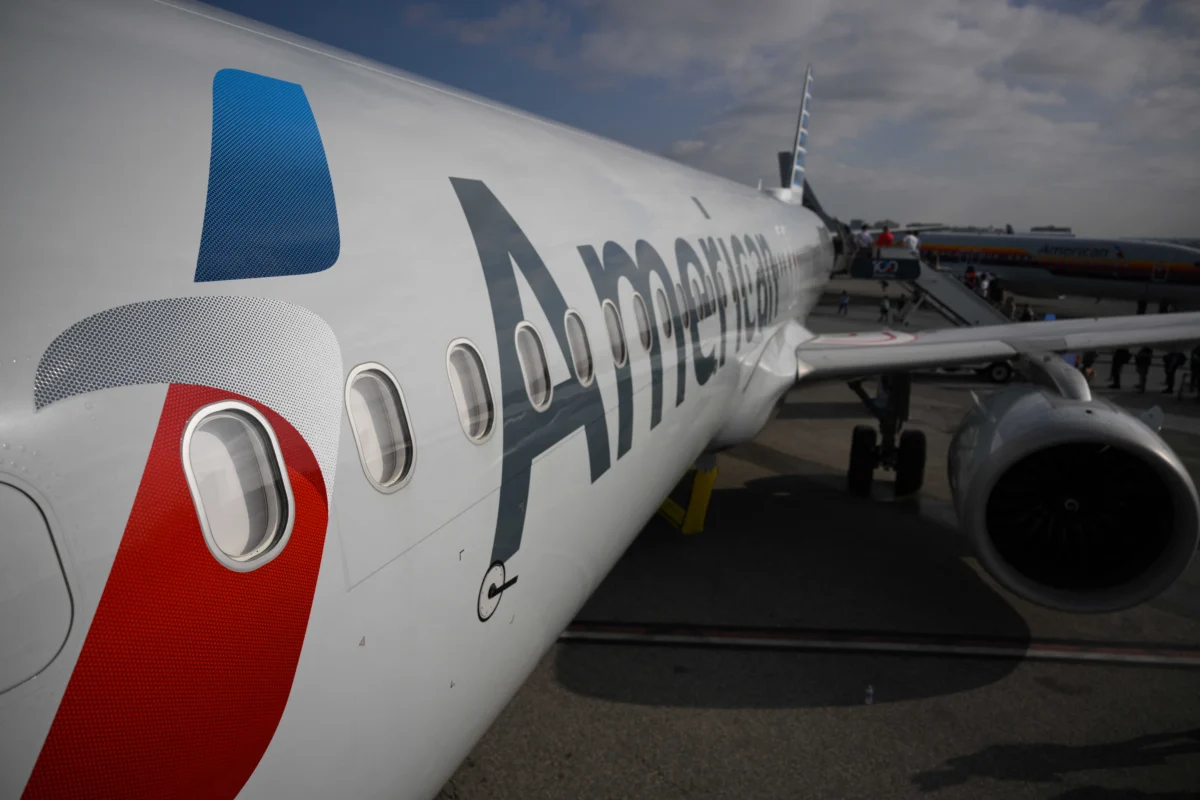
Fort Worth, Texas – American Airlines, one of the United States’ largest carriers, has significantly revised its financial outlook for 2026, projecting deeper losses than previously anticipated. The airline announced Thursday that it expects to report an adjusted loss per share ranging from $1.00 to $1.60 for the full year, a marked deterioration from its July forecast, which predicted adjusted full-year earnings per share between a loss of 65 cents and a profit of 65 cents. This downward revision comes despite the carrier achieving record revenue in the third quarter, a testament to robust passenger demand that has unfortunately been overshadowed by an unprecedented spike in jet fuel expenses. In response to these economic headwinds, American also signaled a strategic slowdown in its capacity growth for the upcoming year, indicating a more cautious approach to expansion in an unpredictable market.
The airline’s struggles mirror broader industry challenges, as it becomes the fourth major U.S. carrier to cut its 2026 forecast. Delta Air Lines, United Airlines, and Southwest Airlines had all previously adjusted their outlooks downward earlier this month, primarily attributing the changes to the dramatic escalation in jet fuel prices following the onset of the Iran war. This geopolitical conflict has sent ripples through global energy markets, driving up crude oil prices and, consequently, the cost of refined products like jet fuel. Industry reports and federal data indicate that rising jet fuel prices have contributed to an increase of over 20% in airfares compared to last year, passing some of the burden onto consumers while still squeezing airline margins.
Jet fuel stands as the second-largest operational expense for airlines, surpassed only by labor costs. The recent surge has added billions of dollars to carriers’ expenditure this year. American Airlines, in particular, reported a staggering 67.5% increase in its fuel bill for the third quarter alone compared to the previous year, reaching an estimated $4.64 billion. This significant jump underscores the immense pressure facing the industry, where even strong revenue performance can be insufficient to offset escalating input costs.
Despite the grim short-term financial projections, American Airlines CEO Robert Isom highlighted the company’s operational achievements. "American delivered record third-quarter revenue and the strongest year-over-year revenue growth in my career, with premium performance leading the way," Isom stated in a recent news release. This comment points to a critical dichotomy within the airline’s performance: while top-line revenue generation remains robust, particularly in lucrative premium and international segments, the bottom line is being eroded by external macroeconomic factors beyond the airline’s immediate control.
The Unfolding Crisis: A Timeline of Rising Costs and Industry Response
The current economic turbulence for airlines can be traced back to the onset of the fictional "Iran war" in late 2025, which rapidly destabilized global oil markets. Initially, crude oil prices saw a sharp uptick, climbing by approximately 15% within weeks, as concerns over supply disruptions in the Middle East intensified. This initial shock quickly translated into higher prices for refined petroleum products, including jet fuel, which saw an even more pronounced increase due to specific refining capacities and global demand dynamics.
By early 2026, the ripple effects were undeniable. Airlines, which typically hedge a portion of their fuel costs to mitigate volatility, found their existing hedges insufficient to cover the magnitude of the price surge. The spot price for jet fuel, which had been trending upwards since the post-pandemic travel recovery, accelerated dramatically, rising by an average of 35% in the first two quarters of 2026 compared to the same period in 2025. This rapid escalation prompted initial warnings from industry analysts about potential impacts on profitability.
Throughout the summer of 2026, as the conflict showed no signs of abating and global oil supplies remained constrained, the financial pressure on airlines became acute. Delta Air Lines was among the first major U.S. carriers to revise its full-year 2026 outlook downward in early September, citing escalating fuel costs. United Airlines and Southwest Airlines quickly followed suit, signaling a systemic industry challenge rather than an isolated incident. These announcements sent jitters through the aviation sector, leading to a general decline in airline stock valuations. American Airlines’ announcement this week thus confirms a trend that has swept across the industry, highlighting the pervasive impact of geopolitical events on the global economy and specific sectors.
Deep Dive into American Airlines’ Q3 Performance and Strategic Adjustments
For the third quarter, American Airlines reported a net loss of $269 million, or 41 cents per share, a significant increase from a net loss of $114 million, or 17 cents per share, reported in the same period last year. When adjusted for one-time items, the airline posted a loss of 28 cents per share, illustrating the underlying operational challenges. Despite these losses, the airline’s revenue jumped an impressive 19.3% from a year earlier, reaching $16.34 billion. This robust revenue growth was driven by strong demand for air travel, particularly in the international and premium segments, which have shown remarkable resilience since the global pandemic.
Looking ahead to the fourth quarter, American forecast an adjusted loss per share between 50 cents and $1.10. Revenue is projected to increase by as much as 22.5% from a year earlier, with capacity expected to grow between 5.5% and 6.5%. While these figures reflect continued strong demand, the persistent pressure from fuel costs remains a dominant factor influencing profitability. The decision to slow capacity growth next year is a direct consequence of this pressure, aimed at maintaining pricing power and optimizing routes in an environment of elevated operating expenses. Industry analysts suggest that this conservative approach to capacity management, while potentially sacrificing some market share growth, is a prudent measure to protect margins and conserve cash flow in the face of uncertainty.
Confidence in 2027 Profitability and Long-Term Strategic Vision

Despite the immediate financial headwinds and the revised 2026 outlook, CEO Robert Isom expressed "great confidence" during an earnings call on Thursday that American Airlines will return to profitability in 2027. This optimism is rooted in the airline’s ongoing strategic initiatives and a belief that the current fuel price spike, while severe, is ultimately a cyclical challenge that the company is better positioned to weather through sustained operational improvements and market positioning.
Isom has been under considerable pressure to enhance the carrier’s financial performance, particularly as American has historically trailed more consistently profitable rivals such as Delta and United. In response, American has embarked on a multi-faceted strategy focused on elevating the customer experience and capturing a larger share of the lucrative premium travel market. This includes substantial investments in new airport lounges, revamped aircraft cabins featuring more premium seats, and a notable decision to reintroduce seat-back screens to its narrow-body fleet. These investments are designed to appeal to business travelers and affluent leisure customers who are less price-sensitive and contribute disproportionately to airline revenue. The reintroduction of seat-back entertainment, in particular, marks a reversal of a previous industry trend to remove such amenities in favor of personal device streaming, signaling American’s commitment to a more comprehensive in-flight experience.
Management Shake-up and Network Optimization
Underpinning these strategic shifts is a significant management shake-up initiated over the past year. Earlier this month, American named a new network chief, a critical role responsible for optimizing routes and flight schedules to maximize profitability and efficiency. This appointment is the latest in a series of key leadership changes that have included new hires in its operations department and commercial team. Last year, American brought in industry veteran Nat Pieper as its new commercial chief, signaling a renewed focus on revenue generation and market strategy. These changes are designed to inject fresh perspectives and expertise into the airline’s leadership, driving efficiency improvements and strategic execution across the organization.
The emphasis on network optimization is particularly crucial in the current environment. A more efficient route network can help mitigate the impact of higher fuel costs by reducing flight times, optimizing load factors, and focusing on high-demand, high-yield routes. The airline’s executives have repeatedly emphasized the robust demand for international and premium travel, which continues to outperform other segments. This trend supports American’s strategy of investing in premium cabins and expanding its global reach.
Strengthening Partnerships and Fleet Modernization
In a move to further capitalize on strong international demand, American announced late last month that it would deepen its partnership with Alaska Airlines. Under the expanded agreement, Seattle-based Alaska Airlines will join American’s trans-Atlantic and trans-Pacific joint businesses. This collaboration is expected to provide American with enhanced connectivity to key West Coast markets, feeding passengers into its long-haul international routes and strengthening its competitive position against rivals with strong trans-Pacific networks. Joint businesses allow airlines to coordinate schedules, pricing, and sales, effectively operating as a single carrier on specific routes, thereby maximizing efficiency and market presence.
Looking to the future, American Airlines is also actively pursuing an order for new wide-body airplanes. CFO Devon May confirmed on Thursday that the airline is evaluating options from major manufacturers, including the Boeing 787 Dreamliner, the Airbus A330, and the Airbus A350. This fleet modernization initiative is critical for several reasons: new generation wide-body aircraft offer significantly improved fuel efficiency compared to older models, which can help offset future fuel price volatility. They also provide enhanced passenger comfort and operational reliability, supporting the airline’s strategy to elevate the customer experience, particularly on long-haul international routes. A new wide-body order represents a substantial capital expenditure and a long-term commitment, signaling American’s confidence in the future of international travel and its strategic growth plans despite the current financial pressures. The selection of aircraft will have significant implications for the airline’s route network, operational costs, and environmental footprint for decades to come.
Broader Industry Implications and Consumer Impact
The challenges faced by American Airlines and its peers highlight the delicate balance within the highly cyclical and capital-intensive airline industry. While post-pandemic demand has provided a much-needed revenue boost, external shocks like geopolitical conflicts and their impact on commodity prices can quickly erode profitability. The 20% increase in airfares, driven largely by rising fuel costs, presents a difficult situation for consumers. While some premium travelers may be less affected, the broader traveling public faces higher costs, which could eventually temper demand, especially for leisure travel. This dynamic creates a risk for airlines, as raising fares too aggressively could stifle the very demand that has been a primary driver of their recovery.
Industry analysts are closely watching how airlines manage this delicate trade-off between pricing power and demand elasticity. The decision by American and others to slow capacity growth suggests a strategic effort to maintain higher load factors and optimize revenue per available seat mile (RASM) rather than chasing market share at any cost. This approach, while potentially leading to fewer available seats and thus higher prices for consumers in the short term, is intended to stabilize financial performance and ensure long-term viability for the carriers.
Furthermore, the emphasis on premium and international travel by American and its rivals underscores a broader industry trend. As airlines grapple with volatile fuel costs and labor expenses, they are increasingly focusing on higher-yield segments that offer greater profitability. This strategy aims to create a more resilient business model less susceptible to the vagaries of the ultra-competitive economy class market. However, it also raises questions about accessibility and affordability for a significant portion of the traveling public, potentially widening the gap between premium and budget travel experiences.
In conclusion, American Airlines navigates a complex economic landscape characterized by robust demand on one hand and unprecedented fuel costs on the other. Its revised financial forecast for 2026 underscores the profound impact of global events on the aviation sector. Yet, the airline’s strategic investments in customer experience, management talent, partnership expansion, and fleet modernization reflect a determined effort to position itself for a return to sustained profitability in 2027 and beyond, adapting to a new era of challenges and opportunities in the skies.
